Magnetic appeal of Kinsale: Where highest standards meet with mellow attitudes
Coastal towns feature for Examiner
It’s hard not to be captivated by your first view of Kinsale. I was just 18, fresh out of boarding school, cruising into the harbour on a glittering summer’s day.
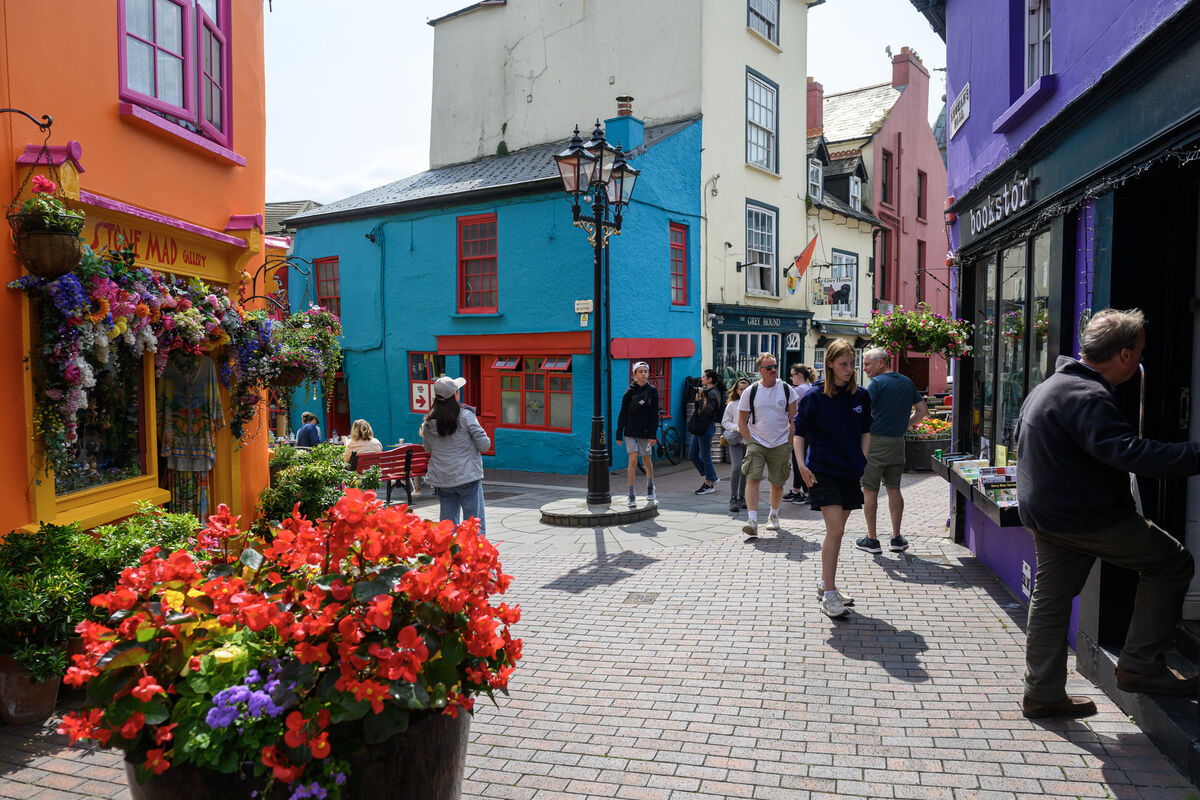
At that point of my young life, it looked like nowhere else I’d ever been. Passing beneath the twin guardians of the harbour – the historically imposing Charles Fort and its little sister, James Fort – that first impression that remains vividly enshrined in the memory many years later. True to the local guide book, the place glories as a “vivid painter's box of streets, scenic harbour and medieval past, the quintessential Irish fishing village and holiday town.”
Boasting a unique position as one of Ireland’s most historic towns, it breathes an antiquity dating back to the Battle of Kinsale in 1601, when a combined Spanish and Irish force ranged against the might of a well prepared, and ultimately victorious, English army. The aftermath became a major turning point in Irish history, resulting in the epic Flight of the Earls to safer haven across the Continent and the wider world. A few centuries later, it has transformed into one of Europe’s most visited vacation towns, and an aspirational home attracting poets, playwrights, rock stars and millionaires from across the globe.
“That will add an extra nought or two to the value of houses around here, not that they need it” – so said a Kinsale acquaintance some years ago as the picturesque town was listed as ‘one of the best places in Europe to retire’ by the influential Travel & Leisure magazine.
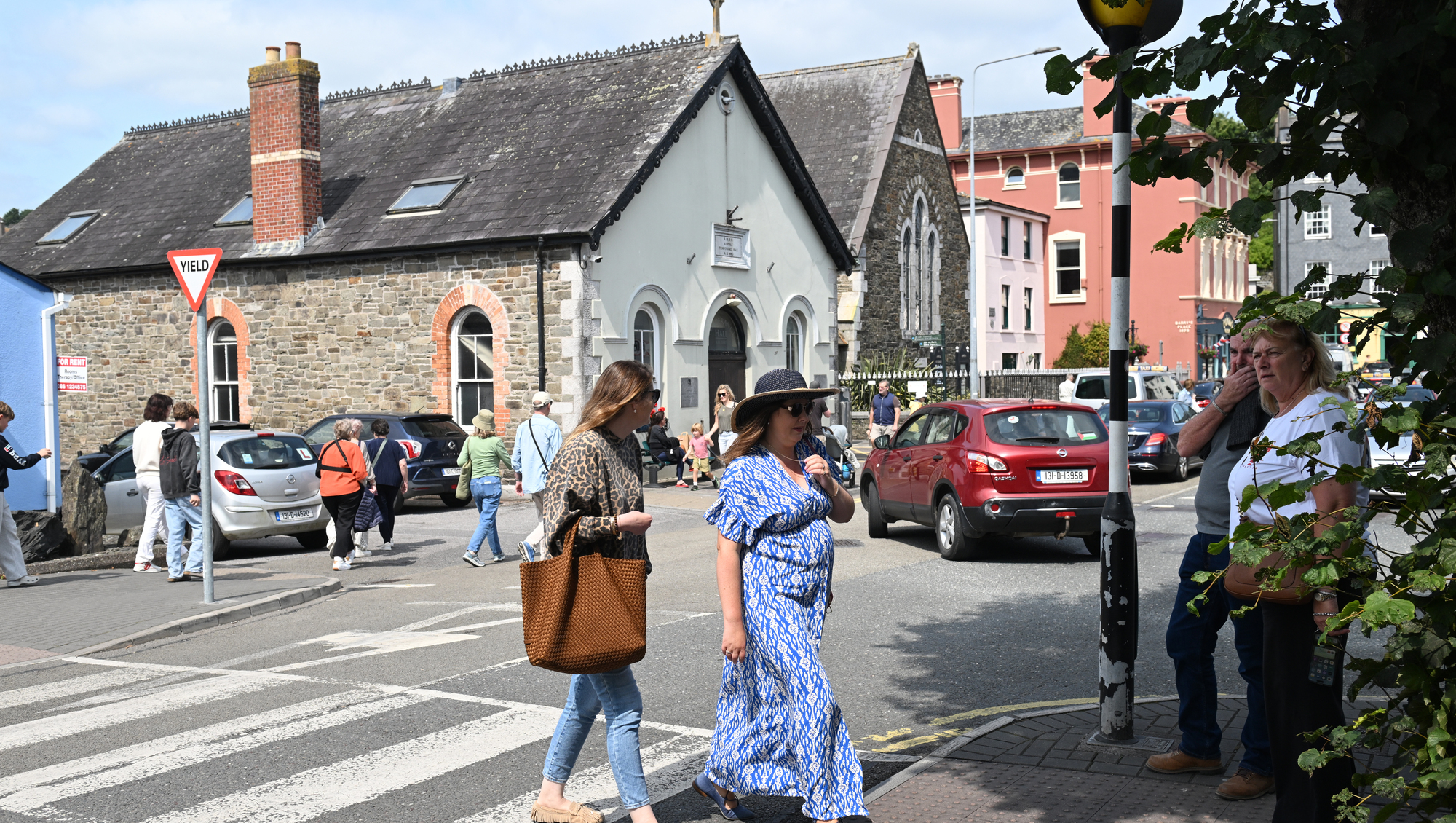
It was yet another honour added to the dozens of similar accreditations accumulated over the past 50 years, the latest literary laurel to impact favourably on property values in a place where even a two-bed apartment can reach seven figures. Walking around the ancient cobblestone streets in dazzling June sunshine, it’s easy to see how towns like Kinsale become global passwords for success, while other equally pretty places don’t quite make the same A+ grade.
Towns become beacons of success not only through their geographic good fortune, but also through the driving force of pioneers, individuals whose determination and foresight lift a population to realising a common goal they might never otherwise have imagined.
Peter Barry was one of Kinsale’s earliest visionaries. A man whose lifelong dedication to pulling his birthright from depressed backwater to international playground merited him a statue in the town’s most prominent square.
Having lived through the dark and dreary 1940s and ‘50s, Peter witnessed the decades of emigration and economic decline – but still saw the stars from the gutter.
“In 1963, the town’s total available accommodation consisted of 10 bedrooms, yet there was the potential here to create something wonderful and unique – and that’s what we did,” he said.
Many a famous Irish chef got their start as teenagers peeling spuds at The Spaniard and The Man Friday during Peter’s ownership, as his vision and drive led to making Kinsale the ‘jewel in the crown’ of Irish tourism. “Everything changed from 1965 onwards,” he recalled. “The town got up a head of steam, there was a buzz in the air, the momentum had begun and we caught the crest of the wave.”
Where once the only diversion available might have been pints of beer and the humble sandwich, Kinsale and its food had now become the essential foreplay for a new generation devoted to life, love and the perfect pate de fois gras. As the 1960s bloomed around it, Kinsale’s prosperity poured forth in magnums of Dom Perignon as Ireland made a reservation for eating out as an entertainment.
“The key to everything was creating a high standard everywhere from the humble takeaway to the five-star restaurant – if the general tenor is high, it forces every operator to rise to that level.”
Such was the mantra of Peter Barry as he devoted his life to bringing the town up to a standard where the world came to play. Peter may have long passed on to the top table in the sky, but the inscription on his plinth in Market Square remains a fitting epitaph: ‘A man for all seasons.’
But fine dining wasn’t going to be Kinsale’s only game. When John O’Connor first saw the Old Head peninsula in 1989, golf was the last thing on his mind.
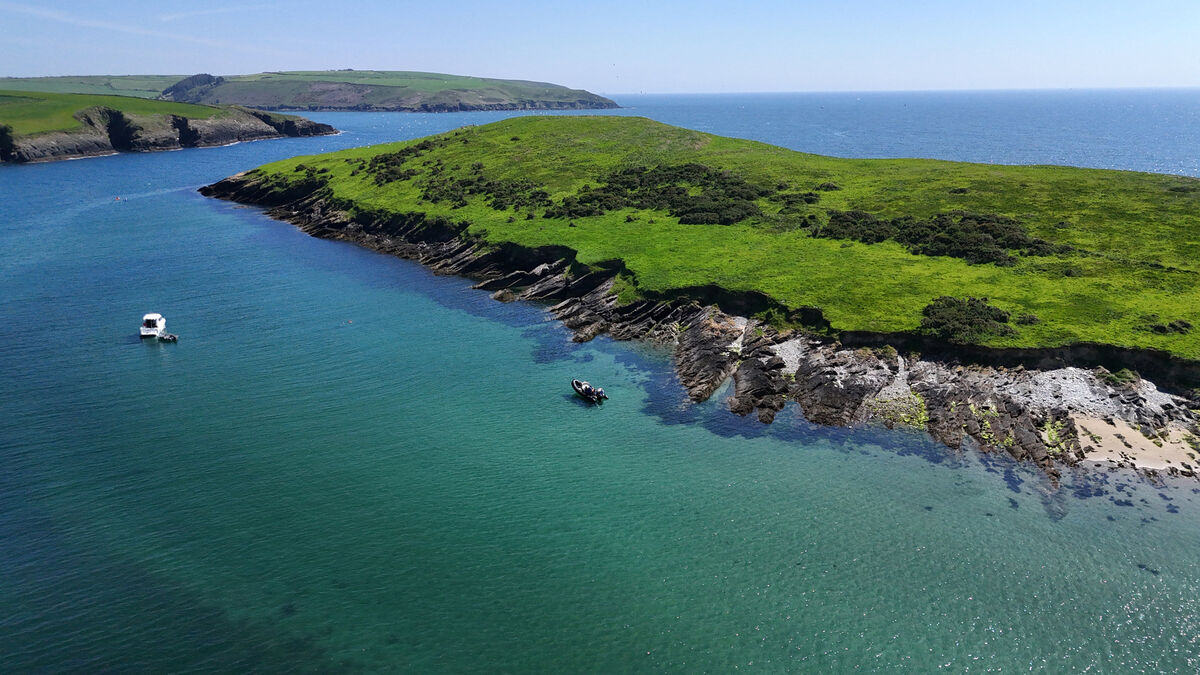
“Creating a world-class golf course wasn’t on my radar, but the idea of doing something impossible slowly began to take hold,” he explained of the mission to which he devoted the final years of his life.
When the Old Head went on to become what one sportswriter termed “a course where golfing angels will congregate and legends will be born”, it brought Kinsale a whole other element of affluent tourism – the type who fly a Gulfstream G700 from New York for three days of golf and big spending.
“We planned on spending a million pounds to make the Old Head unique, only later realising it’s a task that never ends,” O’Connor recalled of his determination to impress golfing greats like Tom Watson and Tiger Woods – which he did in fine style.
“Are you married, single or living in Kinsale?” This is an expression often heard around this picturesque coastal haven, usually accompanied with a twinkling arched eyebrow or roguish wink. The fact that the phrase’s origins derive from colonial days when officers and servicemen were billeted in the 16th-century Charles Fort, safely apart from locals in the town, has been neatly usurped in favour of a modern legend hung upon a peg of hedonism that plays well to visitors.
While such a racy vision might not merit a mention within any prestigious travel magazine, it does no harm to encourage the youthful frolics of the monied clientele who spend freely in the town’s many inviting hostelries. While still clutching steadfastly to its decades-old crown as ‘Ireland’s gourmet capital’, the town’s gift for habitual re-invention has long extended beyond gastronomy to encompass a wider appeal in a changed marketplace.
If the option to linger over lobster and langoustine at places like Max’s, The Black Pig and Fishy Fishy is still a delight, Kinsale’s menu in 2026 now incorporates history and culture amongst its main courses. Despite the builders’ skips and scaffolding, which are a constant feature, the cobblestone lanes and hidden terraces still breathe generations of antiquity.
Detouring off the busy main streets to wander up the Stoney Steps or along The Ramparts is to witness Ireland’s architectural heritage expressed as a cultural crossroads of English, Spanish and French influence. A history lesson at midday followed by an evening sundowner at The Bulman – yes please chant the charmed visitors thirsting for more.
Yet, while fine dining and glorious scenery work their magnetic magic upon the stranger, the key element of attraction Kinsale shares with all those places acclaimed by Condé Nast Traveller is that unique Irish ingredient immune to disasters, depressions and pandemics – attitude with a capital A. Kinsale is a place where status is quietly acknowleged, but never fawned upon.
Pat O’Connor, director of Cal and The Ballroom of Romance, who lived for years in Summercove with his actress wife Mary Elizabeth Mastrantonio, put it best: “Kinsale people aren’t that impressed by notoriety. They have a wonderful ‘live and let live’ attitude you don’t find in too many places anymore.”
It’s a familiar refrain expressed by the other artists, musicians and writers who’ve called the place home. Ray Davies of The Kinks and Andy Summers of the Police put down roots on Compass Hill, along with songwriter Tori Amos in Ballywilliam, who said: “Nobody is important here, just as it should be.” Given the stunning surrounds, it’s no wonder a plethora of poets became residents – including Aidan Higgins, Derek Mahon, Desmond O’Grady and Lennox Robinson.
“Everybody from business people to the man in the street genuinely wish you success here,” opined artist Philip Gray. “It is a wonderful support which I have found nowhere else.”