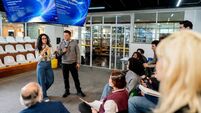
Talent pipeline: Life science firms are keen to recruit graduates
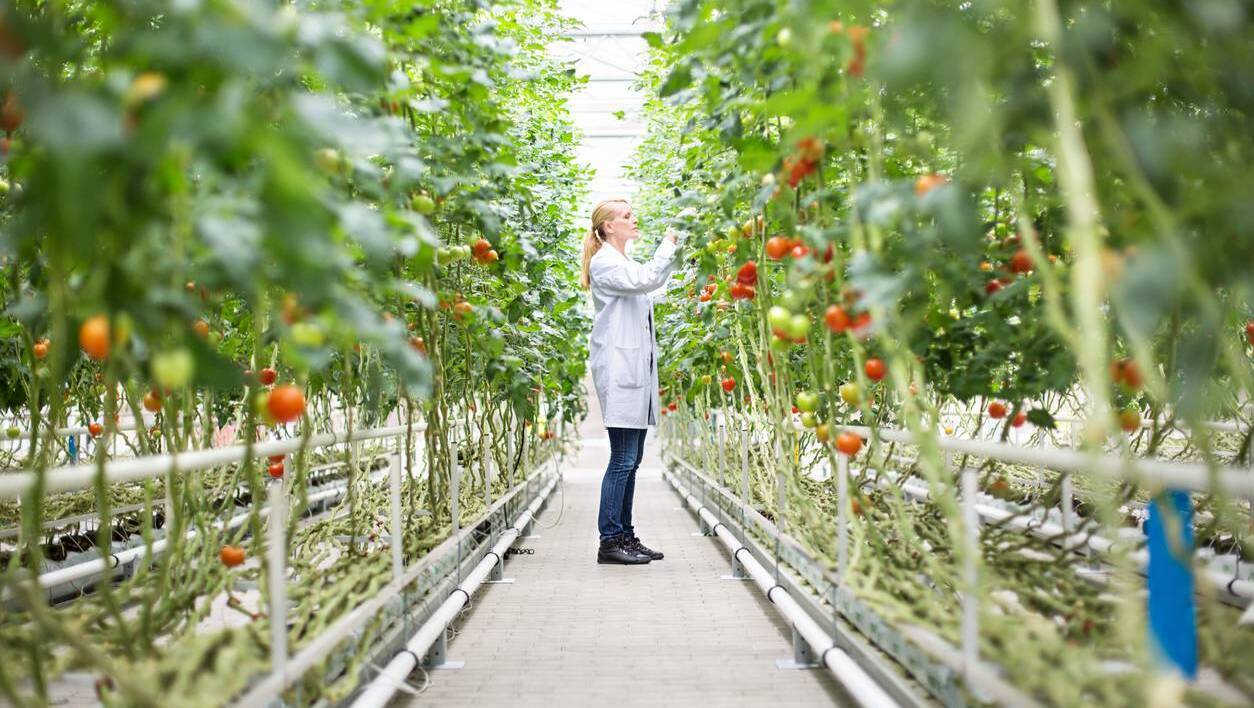
Graduate career opportunities: Veterinary healthcare, contract lab analysis, personalised medicine, and food science are all areas where skills developed in pharma are directly transferable.
Ireland is the third-largest exporter of pharmaceuticals in the world, according to a 2025 IDA Ireland report. The sector is growing, the jobs are there, and for science graduates entering the workforce right now, the pipeline into employment is stronger than ever.
At South East Technological University (SETU), where there is a deep relationship between the university and regional industry, Dr Aisling Tuite and Dr David Phelan see that reality up close every year.
Together, Tuite and Phelan have secured Research Ireland COALESCE funding for a project examining the career trajectories of women science graduates in the pharmaceutical sector — mapping the factors that shape career longevity, progression, and retention, and identifying the skills developed along the way.
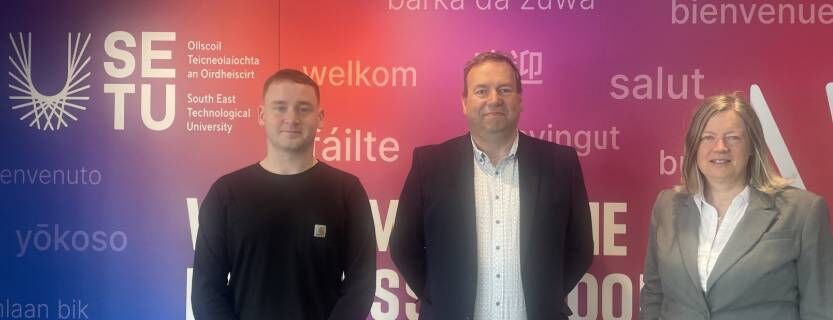
It is research that takes the strength of the sector as its starting point, and seeks to understand how to ensure that women can build lasting careers within it.
I spoke with Dr Tuite and Dr Phelan to get a better understanding of what students can expect from a career in life sciences — both at graduate entry level, and in the long term.
Dr Phelan, who lectures across the “wet sciences” — biology, chemistry, lab-based courses — is buoyantly optimistic on the outlook for graduates: “Almost all of my students currently have work lined up.”
This is nearly 80 final year students, most of whom secure positions with the companies where they complete their final-year placement, with employers treating the four- or five-month placement as an extended interview.
Dr Phelan is already receiving emails from companies ahead of the graduation season, looking for strong candidates before they’ve even sat their finals. In January, SETU held a careers fair with 35 companies attending. The demand is real.
There is, as both researchers acknowledge, a “blip” in hiring being reported at the moment — particularly in the wake of uncertainty around US tariffs and their potential impact on the pharmaceutical and food sectors. But Dr Tuite is clear that this should be read as a temporary correction rather than a structural shift.
“The underlying market for pharma and for life sciences is still extremely strong. This is just companies protecting themselves, and these things happen.” Her advice to graduates who find themselves caught in that uncertainty is straightforward: keep a long-term view, focus on building transferable skills, and don’t panic. “Being in a job — any job — will help you get another job. Keep doing part-time or temporary work, and stay focused on developing your skills.”
One pattern both researchers observe in students is a tendency to think in straight lines - to link a specific degree directly to a specific job, and to overlook the breadth of what the sector actually offers. “One thing about pharma in Ireland,” says Dr Phelan, “there’s lots of it, but there are tons of different jobs in it.”
Beyond the large multinationals, which offer strong graduate training programmes and structured career paths, the SME sector also provides compelling opportunities. “They’re smaller — you get to see everything that goes on in the organisation,” says Dr Tuite.
Veterinary healthcare, contract lab analysis, personalised medicine, and food science are all areas where skills developed in pharma are directly transferable. “The way healthcare is going and changing — it’s only getting bigger and more diverse,” says Dr Phelan.
Ireland’s position in the sector also rests on something that won’t be easily replicated elsewhere: a workforce with deep regulatory expertise, hardwired through decades of working to FDA and EMA standards.
“We are a safe pair of hands — and that’s not going to change. It’s baked in,” says Dr Phelan. That reputation draws international students too: his master’s programme in regulatory affairs attracts around 60 students a year from all over the world, drawn by the English-language environment and high quality of education.
Practical, hands-on skills come first. SETU’s bioscience students spend significant time in labs — around 20 hours a week — and that preparation shows when they arrive in industry. Alongside technical competence, both researchers point to confidence and self-directed learning as qualities employers consistently value.
Of huge value is the ability to work in a team. Pharma is built on teamwork, and any evidence that a candidate can communicate, collaborate, and earn trust is worth highlighting on a CV. “Even if you’re in the lab with 30 people, your results feed someone else’s,” says Dr Phelan. Any experience that highlights your ability to work as part of a team, and demonstrates your reliability, is valuable to employers.
On CVs, both researchers are direct: do not rely on AI to write your CV. “You might think it looks unique, but it’s doing the same for everyone else,” says Dr Tuite. Authenticity and the ability to competently discuss your own experience are the things that interviewers are trying to assess.
Write your CV yourself, make sure you know it, and be able to speak to it when asked about it in an interview. Keep your answers short and specific.
“When people ask you to walk them through your CV, it is your opportunity to make a good first impression and sell yourself,” says Dr Phelan.
Dr Tuite makes a strong case for bringing transferable and personal skills to the foreground — sports, travel, volunteering, caring responsibilities, anything that demonstrates management, teamwork, or adaptability. She gives the example of a student who had travelled to the US as part of a group of Irish dancers, helping to supervise younger participants. “That’s a real opportunity to demonstrate good management skills” — but the student hadn’t thought to frame it that way.
Dr Tuite and Dr Phelan both stress that confidence and “some brass neck” is a hugely important skill to develop when job hunting. Dr Phelan recalls a student finishing her thesis who was hesitant to apply for a role because the job spec listed five requirements and she felt she met only three. His response: “If I had one, I’d already have applied.”
The student had a nursing background on top of her science degree and was treating it as a distraction. He pointed out it was actually her superpower. She got the job.
It is precisely this kind of dynamic — who applies, who holds back, and why - that sits at the heart of the SETU research project. Current research shows that significant numbers of women leave STEM careers within 15 years of graduation, with life sciences among the most affected sectors. Rather than treating this as an inevitability, Tuite and Phelan are examining the personal and professional experiences of women in the sector - the influence of workplace culture, mentorship, family life, and the skills accumulated along the way - with the aim of building an evidence base that can inform both education pathways and workplace practices.
“Who and where are they getting the information from to make those decisions, and who are the people guiding them?” asks Dr Tuite. The goal is not to document a problem but to generate findings that help industry and policy make practical changes - so that a sector with so much to offer can hold on to the talent it works so hard to develop.
For graduates entering the workforce now, the message from both researchers is clear: the opportunity is there. “It’s a great industry,” says Dr Phelan. “The potential for what you can do is incredible - and it’s only getting bigger and more diverse.”