Ireland's fishing industry is “on its knees” and in need of protection
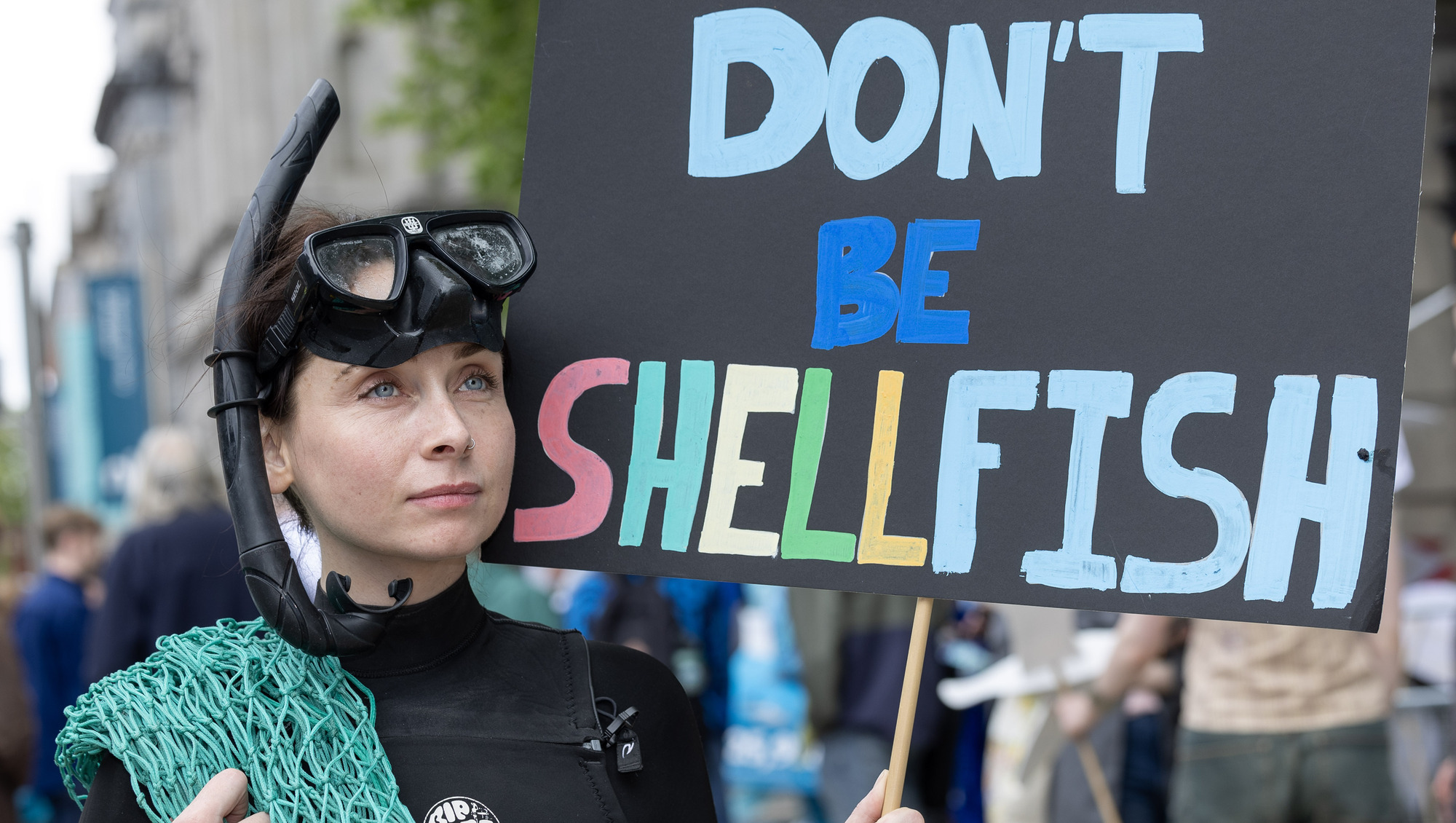
“Effective Marine Protection Areas (MPAs) are the best way forward to improving fish populations," says Grace Carr of Irish Wildlife Trust
Ireland's fishing industry is “on its knees” and in need of protection

Grace Carr, of the Irish Wildlife Trust, takes part in the demonstration outside Leinster House, oganised by the Fair Seas coalition, calling on the Government to publish Marine Protection Area (MPA) legislation. PIC: Conor Ó Mearáin

Grace Carr could be described as a fearless woman.

As marine advocacy officer for the Irish Wildlife Trust, she is no stranger to the often terrifying art of public speaking. As well as regularly presenting compelling evidence to the Oireachtas, she also recently addressed the UN Ocean Conference in Nice.


What’s more, she has no fear of the predators of the ocean, having loved all types of sharks since she was just a little girl. Before becoming a marine biologist, she even worked as a scuba diver instructor, diving alongside all sorts of sharks, rays and more.

A very real fear even for her, however, is the current state of Ireland’s ocean and the marine life it contains. Of particular concern is the subsequent threat these issues pose to the future of Ireland’s fisheries.

“The fishing industry is absolutely on its knees, particularly Ireland’s small-scale fishing communities,” she shares, adding that she has formed close working relationships with many of the people whose livelihoods are being affected.

“One of my favourite parts of my role is engagement with different stakeholders including the fishing industry. This past year I have been lucky enough to build better relationships with people working in all areas of the Irish fleet, from the island communities to the larger trawlers.

“Effective MPAs are the best way forward to improving fish populations for these communities and if they are done right, they will be fish recovery zones. There isn’t a single example in the world of an effectively managed MPA that resulted in less fish. A lack of management plans for species and no effective protected areas have contributed to our current situation. We need to protect the right areas and allow the species there to grow bigger, reproduce more and spill over into surrounding areas. This is something that should have been done decades ago. If it had been, the fishing industry and the marine environment wouldn’t be in the situation it is in now.” 

Grace Carr, of the Irish Wildlife Trust. PIC: Conor Ó Mearáin

 As well as helping reinvigorate the fishing industry, the effectively legislated MPAs that Fair Seas are calling for will go a long way in protecting so many other marine species.

“We are an island nation and it’s devastating that we are allowing our marine life to suffer and deteriorate,” says Grace. “There is a huge range of biodiversity that can be found in Ireland. We have large migratory animals coming through these waters, we’re a critical area for seabirds and we are a global hotspot for the world’s second largest shark, the basking shark. We also have so many unique habitats, like cold water coral forests and coastal seagrass beds. Protecting Irish waters is so important at a global scale because of the ecosystems that can be found here, but sadly, we don’t have a good track record of protecting these amazing animals and habitats.

“Unfortunately a paper published in 2021 showed that global oceanic shark and ray populations have declined by 70% since 1970. Here in Ireland it is species dependent and there are several critically endangered shark species found here. One example is the angel shark. Their numbers have declined so much that Ireland and the Canary Islands are two of the last strongholds for this species. The IUCN has identified several Important Shark and Ray Areas in Irish waters and it’s so important we make sure these areas have effective protection and management measures in place for the vulnerable species found there. Ireland also has huge numbers of sharks to be found in the open ocean like porbeagle and shortfin mako. These animals and many others have faced huge declines in their numbers primarily due to overfishing and being accidently caught. There are many EU vessels fishing in Ireland’s offshore waters and Ireland needs to initiate conservation measures through EU law in order to effectively protect offshore habitats and species.

“The reality is that without adhering to EU laws such as the Common Fisheries Policy, Ireland will not be able to effectively protect 30% of its marine area by 2030. There are mechanisms in this law that allow countries to put conservation measures in place in offshore waters where other EU vessels have fishing rights. Ireland has never used these mechanisms. 

"The Government needs to start this process ASAP as it is a long and complicated one that involves discussions with other EU member states and the Commission. Ignoring the issue because it is difficult will not solve anything and the marine environment and fishing industry will continue to deteriorate without utilising these conservation measures. Protecting nature should be a priority for the Government due to its intrinsic value and the fact that we are a part of it and it is our lifeline, but money and the economy are big factors for many politicians. There are many implications for not adhering to EU laws including legal action against the state and the resulting fines. Aside from these fines, failing to protect and restore our land and sea will cost the Irish economy and many industries so much more in the future.”

x

More in this section

Cookie Policy Privacy Policy Brand Safety FAQ Help Contact Us Terms and Conditions

© Examiner Echo Group Limited