Citizen scientists taking Coastwatch from strength to strength
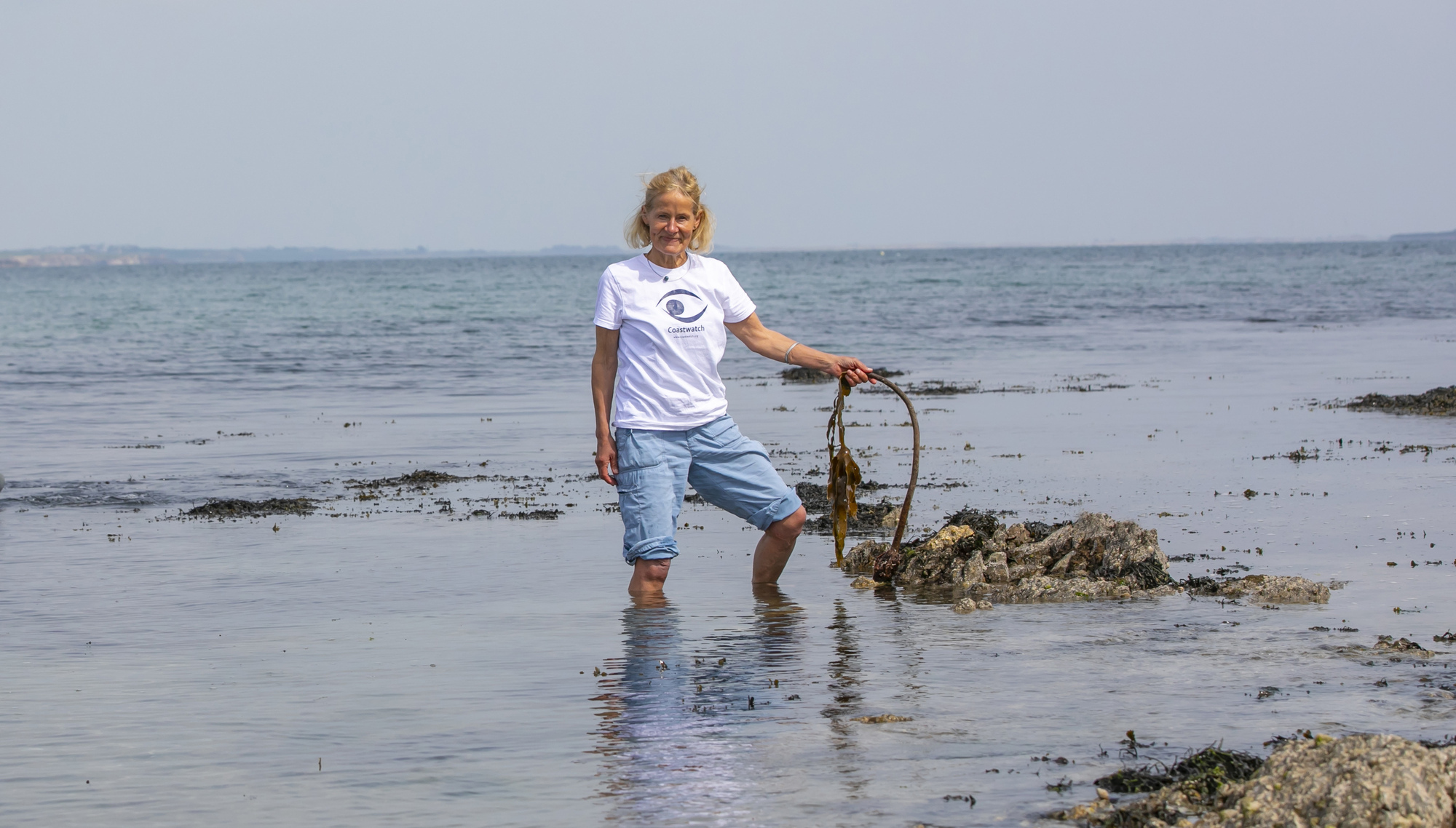
Karin Dubsky, co-founder and director of Coastwatch, pictured at Fethard Quay, Co Wexford. Picture: Patrick Browne
We may be only halfway through the year, but already 2026 has been a landmark one for Coastwatch.
Back in March, the volunteer-led environmental group secured an unprecedented legal victory in Cork Circuit Court, achieving an immediate halt to unauthorised development at Ballycrovane Harbour, a Special Area of Conservation (SAC) in the Beara Peninsula.
“That was a great day for nature,” recalls Karin Dubsky, co-founder and director of Coastwatch. “We were delighted that the Court directed restoration for Ballycrovane, especially since so much damage had already been done.”
That damage included the destruction of a thriving saltmarsh habitat, as well as lush, native seaweed forest that had previously been as tall as a grown man, while a new concrete sea wall that had been illegally built was entirely burying the natural ecosystem.
With restoration works now complete and Ballycrovane well and truly making its way back to its former glory, there are plenty of other wins awaiting Coastwatch later this year.
Notably, Karin is confident that Coastwatch will soon hit a milestone figure in its long-running seagrass campaign.
For many years now, Coastwatch has been engaging citizen scientists in nationwide seagrass surveys to find out more about where and how seagrass habitats occur.
“Seagrass is one of our most precious habitats, and the healthier those habitats are the better results they will deliver for climate change and biodiversity mitigation,” explains Karin. “We are really proud of our seagrass project, because it celebrates citizen scientists who have found seagrass lawns and meadows all along our coast. Last October, we launched a new national map of 89 known seagrass beds that citizens helped us find. This year, we’re trying to get that number up to 100 seagrass beds, so only 11 more to go!
“Summer is the perfect time for more of the general public to get involved and help us out with this project. The weather is picking up, it will hopefully be warm, so it would be fantastic if people could head out at low tide and try to find more seagrass beds.” Also still to come in 2026 is the continued rollout of Coastwatch’s text alert trial.
“We’ve already done great workshops on this with Dun Laoghaire County Council and Galway County Council and basically what we’re working on is a menu of alerts that you can pick and choose from for your particular area, so it could be a WhatsApp group, email, or whatever you decide.
“To give a concrete example of a situation where our alert system could make all the difference; three or four years ago, I got a phone call about oil pollution at the mouth of the Ounavarra river in Wexford and I told the person who called me that he needed to travel upwards alongside the river in one direction and look out from a vantage point, such as a bridge, but then also head downriver in the other direction and check again to tell me which side the oil was on,” says Karin.
“There was water coming in from two sides, so that way I knew which area was bringing it in. So to speed things up we put out an ‘alert’ and got in touch with two or three people that we know in that little river catchment, asking them to go out and check from a bridge where they were based, further along the river. They were able to tell us if there was oil there, whether they could see or smell it, and within 20 minutes we had identified that the oil was coming from a certain point between the two bridges.
"We alerted the authorities immediately, but we were able to shorten the time for authorities to then go and find the source.” It turned out that it was an accident, an oil tank was leaking and the owner didn’t even know about it. The whole incident proved that alerts and community engagement are needed to quickly get to the route of situations like that and halt the damage.
“Of course if someone is doing something knowing that it’s wrong and concealing it, we need other methods, but similarly if people know that we’ll be very quick in identifying sources of pollution going forward, those who are not doing it by accident might be warned off. The whole system can be so valuable for nature, so I’m hoping that we might be trying it out in the Slaney catchment next, as there’s significant interest in it,” notes Karin.
While these Coastwatch-specific projects keep them plenty busy, the team are also a huge part of the wider Fair Seas campaign pushing for effective MPA legislation.
“There is such a sluggishness and unwillingness [from the government] to face these big issues and as a result we are just recording losses rather than actually tackling restoration,” Karin shares. “We need more MPAs alright, but we need a totally different approach to them as Fair Seas is calling for. We already have Natura 2000 sites which are a type of MPA, as well as SACs, Special Areas of Conservation for select habitats and species, and SPAs, Special Protection Areas for birds, but we’ve had them for decades and what it all comes down to is that they are simply not being managed and protected properly. We don’t need more designations on paper, we need designations with energy behind them from local communities who are part of the vision of what those areas could be, and are part of getting it to a good status and protecting it.
“Those communities should include everybody, but of particular value from my experience are those who have detailed traditional and local knowledge that’s just in their blood, like old seaweed harvesters who know which seaweed grows where and why, and how much to take or not take each harvest based on local weather conditioners. It’s the anglers, it’s the local farmer who has shore fields which extend to a bit of sea that he knows inside out. There’s amazing knowledge there which doesn’t have to be translated into science, and I say that as an ecologist who’s spent my life in science! We need to work with all sorts of people and respect that we each have different ways of presenting what we’re noticing around our coasts, then we can get results.”