Birdwatch Ireland, flying high 50 years on
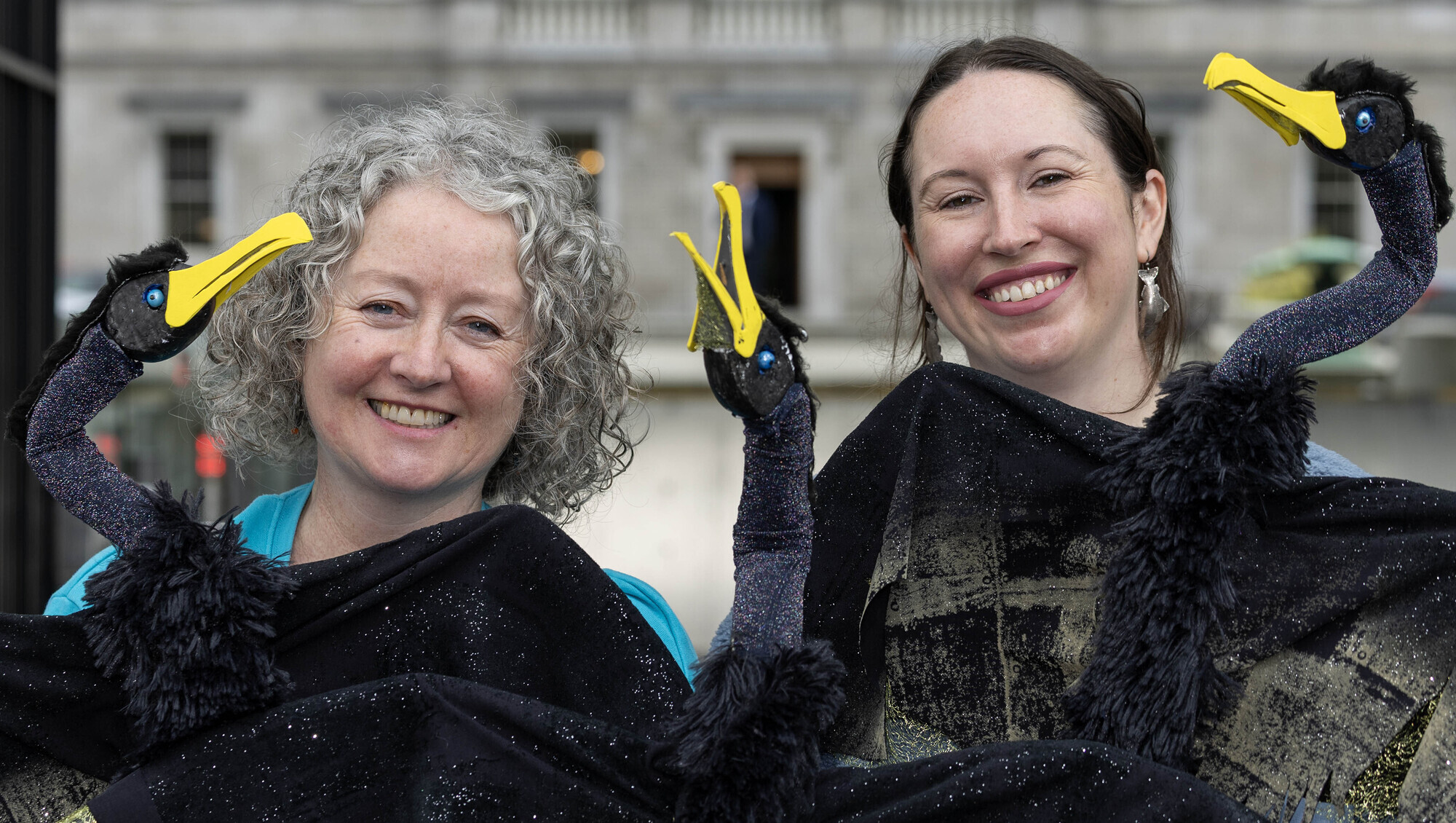
Una Duggan, head of policy and advocay, Birdwatch Ireland, and Rochelle Streker, marine spatial planning officer, Birwatch Ireland, take part in a colourful demonstration, oganised by the Fair Seas coalition, outside Leinster House calling on the Government to publish long-awaited Marine Protection Area (MPA) legislation. PIC: Conor Ó Mearáin
While a thought should be spared for all marine creatures great and small during World Ocean Week, here in Ireland it could be argued that our seabirds deserve extra special consideration.
They are, after all, of celebrity status – more famous than perhaps even Fungie the Dolphin was at his peak.
In fact, if you happen to be a sci-fi fan, Ireland’s seabirds are likely the stars of your favourite films.
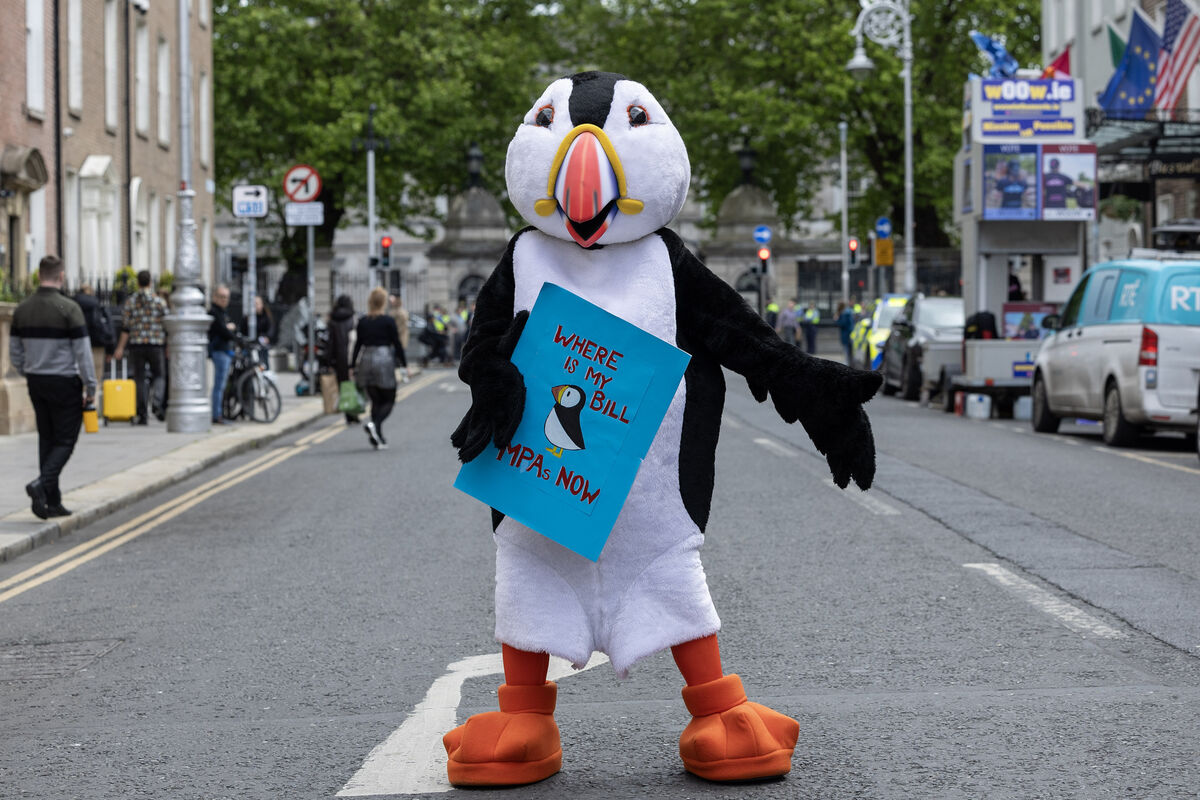
Atlantic Puffins, considered a mascot for Ireland’s seabirds, feature heavily in the Star Wars franchise, although you may not recognise them.
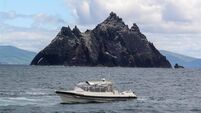
Skellig Michael, where key scenes of The Force Awakens and The Last Jedi were filmed over a decade ago, was so heavily populated with the birds that director Rian Johnson had no choice but to incorporate them into both movies, using CGI to transform them into the fan favourite Porg characters.
But while the Porgs’ biggest threat in the movies was the possibility of being eaten by Chewbacca, sadly their real life counterparts face far more dangers.
Puffins are among Ireland’s most at-risk species of birds, currently red-listed by Birdwatch Ireland, who use a traffic light system to signal the conservation status of each species.
“Our most recent Birds of Conservation Concern report showed some really stark warnings for the Atlantic Puffin and many other seabirds” explains Sarah Hegarty, marine advocacy and campaigns officer for Birdwatch Ireland. “Twenty-three of Ireland’s twenty-four breeding seabird species are Red or Amber-Listed, meaning they are at high or medium risk.
“We’re learning a lot more about the increasing pressures on these birds, particularly when they’re out at sea during winter periods facing more and more storms associated with climate change and global warming,” Sarah adds. “It’s tricky for them when it comes to breeding as well, not only in terms of having the space to breed and the conditions to raise their young sufficiently but also making sure they have enough food, particularly foraging fish species [which are being overfished], to raise very healthy and strong young and get them ready for the great big Wild Atlantic.
“Seabirds are what can be described as a sentinel species, so basically if they’re not doing well, it means things are going to start similarly not going well for us humans and for nature across the board. They’re probably one of the most at risk groups when we think of all marine life, because they are heavily impacted by weather and climate, they are really impacted by food supply shortages because they depend so much on those foraging fish species.
“Then they also suffer from pollution, with a huge risk of avian influenza. So they’re really getting it from all sides, which is obviously troubling to watch and it would be nice to see protection for them, well, yesterday!” Key to that protection, Birdwatch believes, is effectively managed IBAs (Important Bird Areas).
“Birdwatch Ireland identified several IBAs using internationally recognised criteria, which is also recognised by the European Court of Justice. These are standards and criteria that have been used by many other countries, and it is common practice for those identified areas to then be designated as special protection areas.
“There is absolutely nothing stopping the state from incorporating these as soon as they wish, even if that does mean they may want to apply their own techniques and criteria, they would probably be largely in agreement with what the important bird areas are, because a lot of the times we’re operating off of the same available data. Birdwatch International and Birdwatch Ireland are both very transparent in their techniques and their processes in identifying those important bird areas.
“It all comes down to areas that are significant for important populations not only on a national level but oftentimes on a European level as well. Not only that, when we think about our important bird areas because these species travel far and wide for various lifestyle activities and phases, a lot of it is cross-boundary with our nearest neighbours, so important bird areas would not just benefit our own colonies, but those of our neighbours as well.
“It’s no doubt Ireland is lagging behind in terms of actually enacting our legislation that we’ve had for many years with the EU Birds directive and the Habitats directive and various other long standing EU legislation. A few weeks ago, the European Commission announced that it has started infringement proceedings against the Irish government for failure to designate marine Special Protection Areas for seabirds in Irish waters.
“To date, the State hasn’t really ventured much further past our bays and estuaries in implementing these protected areas under legislation. With Fair Seas calling for strong robust Marine Protected Areas legislation, that would just be an added tool in our belt really, one which we are certain would be very beneficial. The evidence is there, the public support is there, and I think the motivation is there country-wide. There’s a very unified voice from environmental NGOs, so they can’t really lag on this any longer.”
While the pace of progress is slow, Birdwatch Ireland is determined to stick around until real change is made. The group celebrated its 50th anniversary this year, and is all set to be in action for another half-century to come.
“50 years on, I think there’s a lot to be celebrated. Birdwatch Ireland has thousands of members nationwide and it’s only increasing, especially as we have such strong relationships with other eNGOs.
“Each of those members has a lot of really important knowledge to contribute, and has helped us create not only a really strong workforce, but also a pool of experts not just in ornithology, but ecology and conservation as a whole. We rely on a huge network of volunteers, as most of the projects that Birdwatch Ireland has run for decades, such as the Garden Birds Survey, are completely down to volunteer input and the crucial information they provide us.
“It really is a concerted effort by all involved and I think there’s a lot to learn from charity organisations like Birdwatch about what can be achieved when we work as one big team.”