Irish students urged to consider maritime related degrees
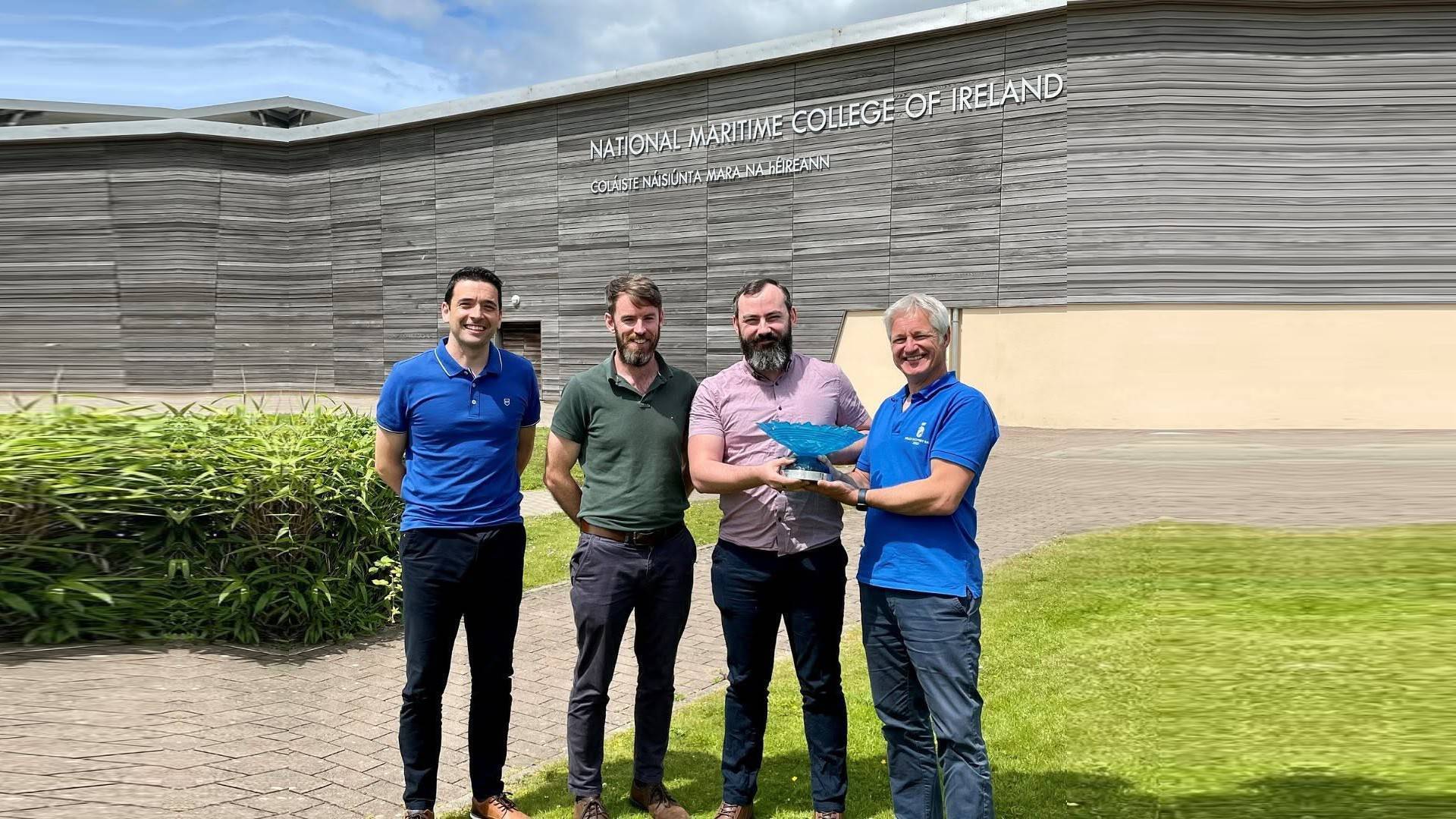
As the CAO change of mind deadline approaches, students with a passion for seafaring are advised to look into options at NMCI
Irish students urged to consider maritime related degrees

The NMCI offers three undergraduate degree courses: the Bachelor of Engineering in Marine Engineering, the Bachelor of Science in Nautical Science and the Bachelor of Engineering in Marine Electrotechnology.

The National Maritime College of Ireland (NMCI), one of Munster Technological University’s six campuses, is located in Ringaskiddy, a short drive from Cork city.

Its students, however? Well, they can be found working at sea in exciting locations all over the world – most often before they’ve even graduated!


NMCI offers three undergraduate degree courses; the Bachelor of Engineering in Marine Engineering, the Bachelor of Science in Nautical Science and the Bachelor of Engineering in Marine Electrotechnology.

Each of these courses involve significant hands-on experience as part of their core curriculum as Brian Devitt, NMCI’s Head of Department of Maritime Studies, explains.

“Our Marine Engineering and Marine Electrotechnology degrees are both four-year programmes that involve three years of study here in the college and one year of work placement. Our Nautical Science degree is slightly shorter at just 3.5 years, but that involves more time at sea, so two years with us in the college and 1.5 years of work placement.” 

The work experience for all three courses sees students placed in a commercial ship to gain not only the necessary ‘seatime’ to obtain a Certificate of Competency from the Department of Transport, but also a wealth of practical experience.

“The type of person who enjoys being a student here and later having a career at sea would have to be someone who likes the practical side of things. All our courses involve a lot of practical work, working with your hands and being outdoors,” advises NMCI lecturer Donal Keane. “It’s also very much a team game, as you’re going to be on a ship with say, 10 or 15 others if it’s a small cargo ship, or there might be 30 of you if it’s a big cargo ship. For a big passenger ship, you could be looking at 1,500 crew and a couple thousand passengers. So you’ll always be involved in teamwork of some kind.

“Our undergraduate students also get a lot of responsibility while they’re still quite young, so NMCI is ideal for anyone who might find that satisfying. A great way for students to motivate and encourage themselves is to be left in charge whilst on their work placement. There’s very few of their old schoolmates I think who have that same kind of responsibility at that age, so it can be very empowering.” Equally empowering for NMBI students, however, is knowing just how many doors their degree can open with future employers.

“There’s a whole variety of career paths available to our students and they all go down different ones,” Brian shares. “Ireland’s ocean economy is worth €7 billion per year and employs over 33,000 people in full-time employment, so there’s a huge scale of opportunities there.” 

NMCI alumni across the globe are proof of that, working as lecturers, chief engineers, power station and plant operators, shipping auditors and in hundreds more diverse roles.

“If you do want a maritime career, your life will be nothing like your friends’ who may be doing teaching, or going into the guards, or nursing, or let’s say a finance career or a law career. Those are all great career paths, but one thing we can certainly guarantee you in NMCI is that if you enrol here and have a go at one of these careers, you’ll be beginning a unique, exciting journey that’s very different compared to your friends.” 

The unique quality of these degrees is highlighted by the fact that they face less demand than Ireland’s more conventional undergraduate courses. As a result, NCMI’s courses require much lower points for entry than you might expect.

In 2025, just 227 points were required for entry into Engineering at NMCI, while that rose slightly to 230 points required for entry into both Nautical Science and Electrotechnology.

“The CAO system kind of works based on supply and demand,” Donal explains. “Our courses don’t have a huge demand just because of the lifestyle that comes with them, being out at sea for extended periods. It’s a bit of a vocation and it’s not for everyone. It’s not like a common arts degree, for example, where everyone’s sticking it down on the CAO form. Because there’s not a lot of people applying, the points tend to be a bit lower but that doesn’t reflect on the quality of the course or how difficult the course is. You can’t just say ‘ah you only need 200 points there. Sure any old dope will get through that.’ It doesn’t work that way, there’s still plenty of hard work required. Many of our students would have actually earned much higher points than that in their Leaving Certificate, with 443 being the average number of points for entrants into Electrotechnology in 2024.”

More in this section

Cookie Policy Privacy Policy Brand Safety FAQ Help Contact Us Terms and Conditions

© Examiner Echo Group Limited