Groundbreaking ‘shark speed dating’ set to continue this summer 
Off Ireland's west coast you can see Torus courtship behaviour, where male and female basking sharks go round and round in a giant circular motion 
Groundbreaking ‘shark speed dating’ set to continue this summer 

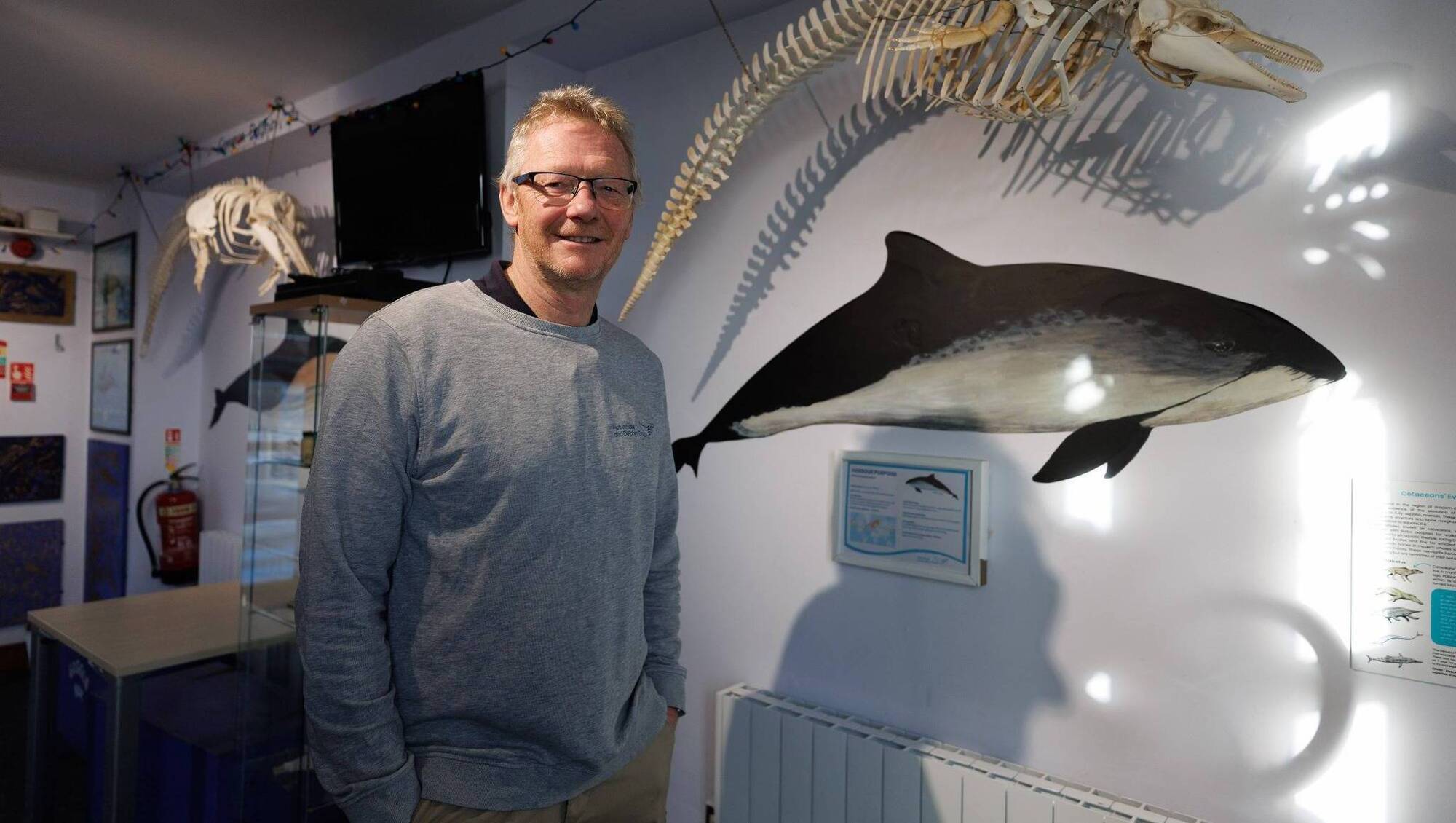
Dr Simon Berrow, CEO of the Irish Whale and Dolphin Group and co-founder of the Irish Basking Shark Group

Ireland has long been associated with romance. 

The likes of Wilde and Yeats gave us some of the world’s most celebrated love poems, while the Claddagh ring, famously originated in Galway, is still worn by many across the globe today as a symbol of romantic availability.


Even a piece of St Valentine himself can be found right here on the Emerald Isle, with the patron saint of love's remains enshrined in Whitefriar Street Church in the heart of Dublin.

While Ireland’s romance factor certainly has a lot of history to it, however, it is by no means a thing of the past.

In fact, a fascinating new type of romance has begun unfolding in Ireland in recent years – one entirely between basking sharks!

Dr Simon Berrow, CEO of the Irish Whale and Dolphin Group and co-founder of the Irish Basking Shark Group, says Ireland has become a global hotspot for “shark speed dating”.

“What’s been happening over the last few years is just unbelievable, and I can die happy having seen it,” Dr Berrow shares. “It's something we call Torus behaviour, where male and female basking sharks go round and round in a giant circular motion, basically just checking each other out! They’re doing this with closed mouths, so we know they’re not doing it for feeding. It's purely a courtship behaviour and it’s been spotted around in particularly high numbers in the west of Clare, just off the coast of Loop Head during late summer, which is totally different to what used to be the normal pattern of seeing them in the spring when they’re feeding.

“It’s amazing behaviour, and we’re so lucky to witness this in Ireland. It was first recorded in Ireland in 2016 and then 2019, then again in 2020 and then nothing happened for a while before we saw these spectacular giant circles of sharks in 2024. Before we recorded it here in Ireland, it had only ever been documented in Canada in the 70s and 80s while researchers there were doing their own surveying, but then the torus was never recorded since, so it’s as though the whole shark courting or dating party has moved to the west coast of Ireland! It’s just remarkable.” 

It’s just one aspect of the species’ enduring connection to Ireland that has left experts baffled.

An aerial view of the Torus courtship behaviour, where male and female basking sharks go round and round in a giant circular motion. It has been spotted in particularly high numbers around the west of Clare, just off the coast of Loop Head during late summer.

“What’s fascinating is we’re the one country in the world that’s holding its basking sharks population steady and seeing good numbers of sharks every year,” Dr Berrow outlines. In fact, according to the IWDG’s latest annual data, a total of 187 basking shark sightings were reported last year, while the greatest number of sharks recorded in one sighting in 2025 was 125 individuals in August at Bridges of Ross, Co. Clare.

“It’s mad because if you look at Scotland, Cornwall, the Isle of Man or even the east or west coasts of the United States, basking sharks are becoming more scarce and it’s quite rare to see them. We don’t know why exactly Ireland is still a great place for them whereas other countries that historically were good spots aren’t seeing sharks in the same amount or the same frequency as they used to. We’re certainly honoured to have them here on our shores, it’s fantastic for us that we’ve become a real global hotspot in recent years for this iconic species.” When it comes to speculating as to why exactly basking sharks are so attracted to Irish waters at the moment, however, Dr Berrow does admit there may be some concerning underlying reasons for the trend.

“To put my cynical hat on, they could be changing their patterns due to rising ocean temperatures caused by global warming, another major reason would be that they’re plankton feeders and they have plenty of that here.” In a healthy ocean, there would be an abundance of forage fish species such as herrings, sandeels and sprat already laying claim to this supply of plankton and feeding off of it. However, as a result of overfishing, Ireland’s stock of these fish has plummeted, meaning there is an excess of plankton now available for predators higher up the food chain, such as basking sharks, instead.

In any case, whatever is drawing these magnificent creatures back to Ireland year after year is showing no signs of stopping. Several basking shark sightings have already occurred in 2026 with plenty more expected to follow.

While the very first basking shark recorded on Irish shores this year was unfortunately a fatal stranding on Inishmór Co Galway on St Patrick’s Day, five to six of them were later spotted within the same week, swimming happily just off Ventry in Co Kerry, and more since have been reported in West Cork.

Dr Berrow has high hopes that a large number of similar sightings, not just of basking sharks, will be reported to the IWDG this year thanks to their brand new app.

The IWDG reporting app, launched just two months ago, can be used on any device and is designed to be accessible for a wide range of users including citizen scientists, researchers, boat operators, and wildlife enthusiasts.

If you are using the app to record basking shark sightings this year, however, Dr Berrow warns that there are many things to keep in mind. The Irish Basking Shark Group has a recently updated Code of Conduct for members of the public who are eager to see the species but don’t want to cause any disturbance or break any rules. These guidelines include NOT trying to reach out and touch the sharks if you’re swimming or diving near them, as well as reducing your speed within areas of shark activity if you’re in a watercraft.

The biggest thing that people may not realise, however, is that it is illegal to photograph or video basking sharks on or near their breeding areas in Irish waters without first obtaining a license from the National Parks and Wildlife Service.

The particularly stringent measures apply to basking sharks in particular because they were granted official legal protection under the Wildlife Act back in 2022 - a landmark piece of legislation that the IWDG would love to see more of for other species.

“Unfortunately, during the summer, unintentional harassment and disturbance of basking sharks is a growing problem,” Dr Berrow shares. “It is our duty to do all we can to protect them while they are feeding and courting in Irish waters and are under our charge, which is why legal protection and the code of conduct are so necessary.”

More in this section

Cookie Policy Privacy Policy Brand Safety FAQ Help Contact Us Terms and Conditions

© Examiner Echo Group Limited