PR industry seeks to work harder to reflect the Ireland it speaks for
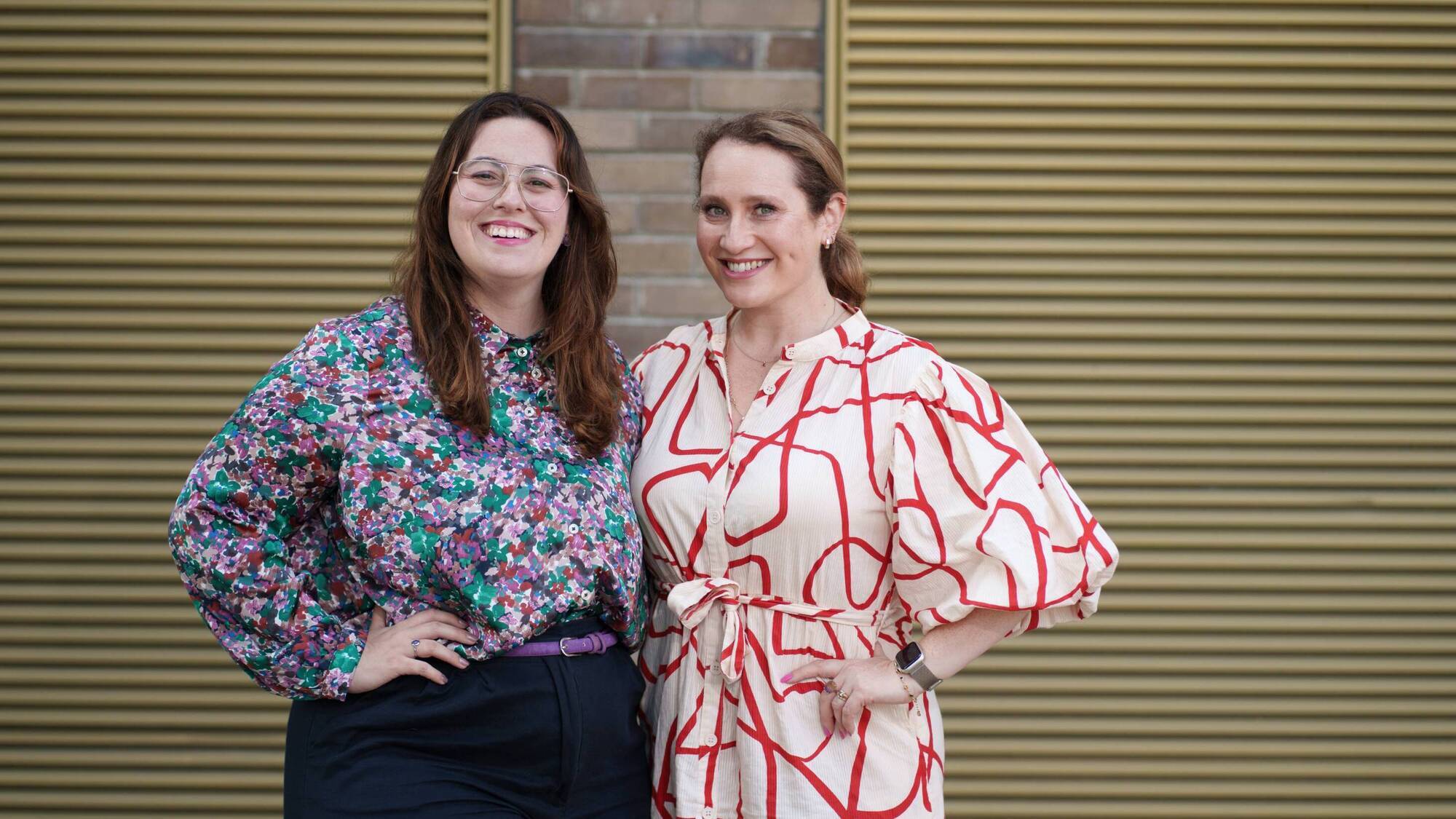
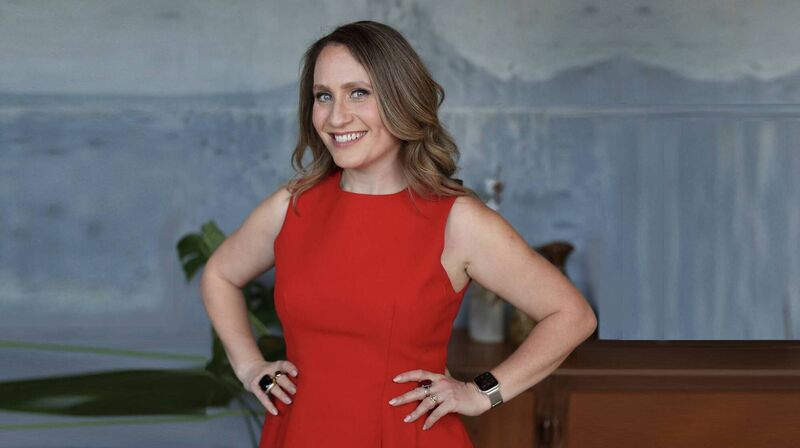
Carolina Lucca, from Brazil, a recipient of the Harris PR bursary, with Sonia Harris Pope, founder and managing director of Harris PR.
Ireland has changed in the past few decades. To our enormous benefit we have more ethnic diversity in our communities, (slowly) increasing gender equality, better understanding of neurodivergency, and more widespread LGBTQ+ inclusion. And yet the industry responsible for shaping how organisations communicate with the Irish public has been slow to catch up. The PR sector has a diversity problem - and until recently, nobody had actually measured how serious it was.
That changed in March of this year, when Harris PR published the inaugural Public Relations DEI Report: the first comprehensive benchmark for diversity, equity and inclusion across Ireland's PR industry. I recently spoke with Sonia Harris Pope, founder and managing director of Harris PR, to find out what drove it, what the research discovered, and what employers – in PR and beyond - can actually do about it.
Sonia has been in public relations for 25 years. She built her career without the traditional qualifications, fought for her place at the boardroom table, and was too often the only woman at that table. She is clear-eyed about both the barriers she faced and the privileges she had - education, language, the confidence to network. It's a combination that gives her unusual credibility on this subject.
The report grew directly out of the Harris PR DEI Bursary, now entering its third year, which offers a fully paid nine-month internship and a place on the PRII Diploma in Public Relations to candidates from underrepresented backgrounds. As the bursary evolved, a question kept surfacing: how bad is the wider industry, really?
"We knew anecdotally that we weren't the best industry for DEI," Sonia told me. "But we wanted to put serious stats around it. Most people in this industry respond well to research. Rule one of PR: get the research right."
The report was developed in partnership with the Public Relations Institute of Ireland, the Public Relations Consultants Association, and the Open Doors Initiative, and draws on research from almost 500 businesses and employees.
The findings make for uncomfortable reading. One in five PR agencies in Ireland report having no employees from a diverse background whatsoever. On average, just 17 per cent of employees across all sectors come from a diverse background - and within in-house PR and communications teams, that figure falls even further to 15 per cent. Only 42 per cent of small businesses have a formal DEI policy in place, compared to 89 per cent of large organisations. Of candidates from diverse backgrounds who applied for PR roles and were unsuccessful, 83 per cent received no feedback at all, leaving them in the dark as to how to progress.
The barrier most commonly cited by small employers for not hiring diversely is a perceived lack of suitable candidates. Sonia finds this hard to square with reality. According to the last Census, over twenty percent of people in Ireland were not born here. Fifteen to twenty percent of the population identify as neurodivergent. Twenty-two percent live with a disability. And this is just a small sample of DEI statistics. "When I hear employers saying the greatest barrier to diverse hiring is a perceived lack of candidates," she told me, "it just doesn't make sense."
The research suggests the problem is less about supply and more about where and how employers are looking - and who they're unconsciously screening out before a candidate ever reaches interview stage.
Alongside the report, Harris PR has published a free DEI Toolkit for Employers, developed with the Open Doors Initiative. I found it refreshingly practical - less a policy document and more a working guide for businesses that know they should be doing something but aren't sure where to start.
The toolkit covers the full employment journey, from how job descriptions are written - jargon-heavy ads and requirements for "a good level of English" can deter strong candidates before they've even applied - to how interviews are structured, how feedback is given, and how workplaces can be made genuinely welcoming once someone is hired. It addresses unconscious bias directly, including the concept Sonia says transformed how her own agency approaches recruitment: the difference between "culture fit" and "culture add."
"We were looking for people who watched the same TV shows, who we could have the water cooler chat with," she told me. "When you open your mind a bit, you might discover TV programmes you didn't even know existed." A strong metaphor for the benefits that increased diversity and broader experience can bring to every team.
The toolkit also covers reasonable accommodations, mentorship structures, and LGBTQ+ inclusion, and includes a self-assessment checklist so businesses can establish where they currently stand. Much of what it recommends costs nothing to implement - good news for small companies which are increasingly cash-strapped and time-constrained.

The PR industry may like research, but it’s the human stories in the report that have stuck with me. Vika Hurska came to Ireland in 2022 after being displaced by the war in Ukraine. She had years of PR and communications experience. She volunteered, she adapted, she built local knowledge - and still couldn't get an interview.
"What I struggled with wasn't capability, experience or language," she says in the report. "It was access." The Harris PR bursary gave her that. She has since been promoted twice in six months.
Carolina Lucca arrived from Brazil eight years ago. She worked as a childminder, discovered a passion for strategic communications, and applied for the bursary. The internship, she says, was not just a professional turning point but a moment of genuine belonging in her adopted country.
Clearly, Vika and Carolina have both been valuable additions to the team and the wider PR industry. I asked Sonia what she had learned from experience through these placements that no report could have told her. Her answer was immediate and threefold: The cultural add that diverse backgrounds and experiences bring; the potential for tools (including AI) to bridge barriers such as language proficiency; and the benefits that mentorship brings to both mentors and mentees.
One conversation with Sonia left me in no doubt that Harris PR is more than capable of driving significant change in this space. Her passion, drive, and focus left a big impact on me. And she’s just getting started. Sonia’s next goal is to address inequality perpetuated by unpaid internships. She is working on something that will help connect the right candidates - from all backgrounds - with agencies and in-house teams willing to commit to paying at least a living wage for at least six months.
It can never be overstated that the business case for inclusive hiring is not just a moral argument. Diverse teams perform better on every metric. In an industry built on understanding and communicating with the public, a team that doesn't reflect that public is operating at a structural disadvantage.
The report and the DEI Toolkit for Employers are both free and available at harrispr.ie/Culture.Whatever your industry, whatever your headcount, these resources will give you both the evidence to make the case for change and the practical tools to take your next step.