How green is a 'green' house? Try 40 shades of confusion
Kya deLongchamps explores the Home Performance Index, a certified standard in energy efficient building that is already eclipsing a lofty A2 BER
How green is a 'green' house? Try 40 shades of confusion

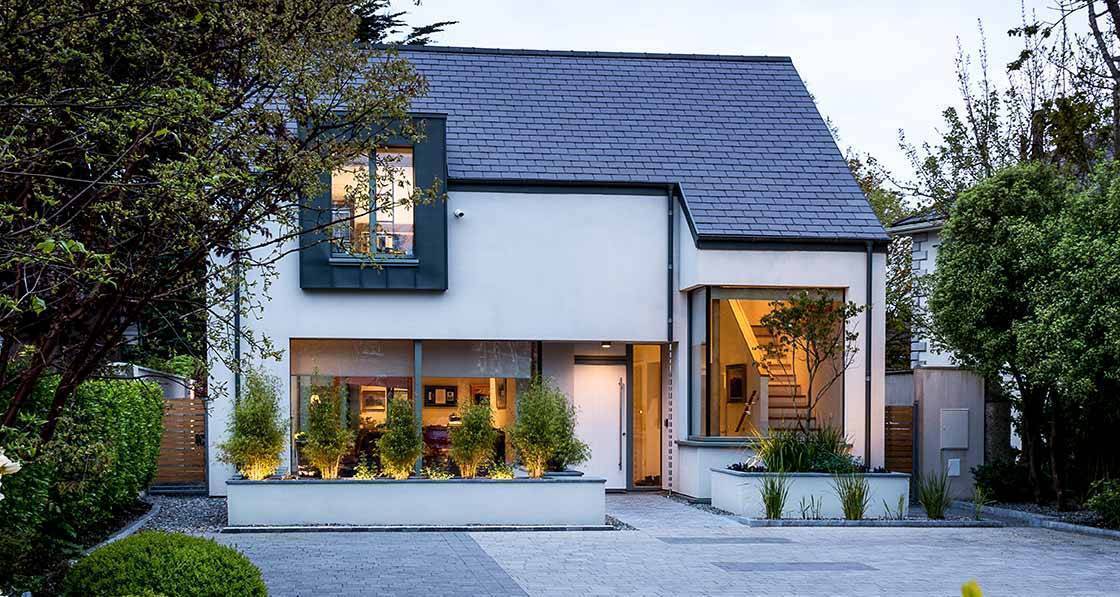
"Banks haven’t made the effort to understand what green homes are, and... the impacts caused by building, powering, and heating homes." This HPI home in Cork city is by Wain Morehead Architects and featured in Passive House Plus magazine see passivehouseplus.ie

COLOUR us confused...

With ‘green’ mortgages and home-improvement loans on offer from building societies, banks, and credit unions, Irish house buyers and self-builders have been coaxed in to the belief that a BER of A2 is the gold standard for sustainable construction. Today’s new home has to be 70% more energy efficient than in 2005. That’s merely legal compliance. However, what’s tinted a smug emerald by marketeers in the Irish banking sector is not regarded as high accomplishment by energy efficient builders and designers across Europe.

Progressive building specialists and low-energy advocacy groups from Ireland have joined the Smarter Finance U project (Smarter4EU). This EU-LIFE funded project is backed by a wide consortium determined to improve energy-conscious practices across the construction industry. The consortium includes green building councils (GBCs) from Romania, Ireland, and Spain, the Portuguese National Energy Agency, Habitat for Humanity, two Ukrainian energy efficiency NGOs, and Passive House Plus, an Irish company best known for its award-winning magazine of the same name. 

Smarter4EU aims to unlock €100bn of funding for a higher standard of fully certified, green new home builds across Europe. Here in Ireland, 2,500 residences have been built and certified to a new standard, with another 25,000 on the drawing board or on site.

Jeff Colley, project spokesperson and editor of Passive House Plus, explains, “There’s an enormous amount of confusion in the market as to what constitutes a green home. This is reflected in banks offering notionally green mortgages on the basis of BER score. This is not fit for purpose, and actually risks misleading the public, while failing to satisfy the EU’s requirements. The Irish Green Building Council (IGBC) are partners in the Smarter4EU project, and their green home certification system, the Home Performance Index (HPI), is starting to move the market in Ireland. Europe is committed to decarbonising and greening its housing stock and has set in place a number of drivers to compel developers and financiers in to action.

“The three GBCs involved have all established green-home certification programmes, all of which are being updated to align with EU policy under the likes of the EU taxonomy on sustainable economic activities. This sets some sustainability parameters for property investors, including banks, funds, etc. Our Ukrainian and Portuguese partners are developing their own certification systems as part of the project. We’re also seeking to encourage organisations in other European countries to develop certifications, too.”

Having written my way through the brief years when the German passive house model was championed, and then observing these specifications being trimmed back to net-zero energy standards, was the current BER system of certification ever enough to stamp a house as green?

Jeff Colley explains that build quality assurance must go further.

“It’s certainly not just a good BER. It’s a home that is energy efficient, warm, quiet, with good indoor air quality and water efficient. It’s a home that doesn’t require you to drive for miles and miles to get about your daily life, and gives you the option of walking, cycling, or using public transport. A home built to protect biodiversity on the site, with all the delight that brings. A home designed to be adaptable as your family grows up. And it’s a home where efforts have been made to quantify and reduce the embodied carbon of the materials used.

“As for the BER,” Jeff continues, “Don’t get me wrong: Energy performance is one of the most important aspects of a green home. But I have my own significant misgivings about BERs. For instance, BERs allow you to effectively offset renewable electricity generation against energy efficiency measures. This means you could achieve an A1 BER on an uninsulated, single-glazed stone cottage, provided you installed a big enough solar PV array. You could catch your death of hypothermia in a supposedly net zero-energy home.”

So, determining the quality of Irish residential builds using the HPI standard (first trailed by the IGBC in 2016), how would we access this untapped funding from Europe? Jeff says, “Access could come from a combination of measures: For example, lenders offering discounted green development finance, developers building certified green homes, and retail banks offering discounted mortgages for Home Performance Index certified homes.” 

What about capital outlay? Will we pay more for a better home built by a developer or contractor to a HPI-certified standard, compared to an A2 build under the current BER regime? “As ever, it depends,” Jeff says, “But, in many cases, the extra upfront costs will be negligible — or even zero. Some of the measures that help you gain HPI certification can actually help reduce development costs. For instance, reducing parking spaces is one such element. Reducing construction and demolition waste can save money. Being smart with design and not making homes larger than you really need is another. And at the end of the day, you get a better-quality home that’s built to last, built to lock in reduced energy costs for decades to come, and built to appreciate in value over time.”

With 25,000 homes registered for HPI certification, developers in Ireland are clearly engaging with HPI quality at scale. Jeff says, “The bigger developers are under pressure from investors and new EU rules to do their bit to reduce their impacts on the environment. And the State is also starting to meaningfully engage. To its enormous credit, the Land Development Agency has adopted the HPI, and some local authorities are starting to use it, too. Some of the HPI-certified projects we’ve had the privilege to write about (in Passive House Plus magazine) include George’s Place social-housing scheme in Dún Laoghaire and Silken Park passive-house scheme in City West. In terms of individual dwellings, the likes of Wain Morehead Architect’s wonderful HPI Gold-certified passive house in Cork City is a thing of beauty (pic, above. See passivehouseplus.ie/magazine/new-build/a1-passive-house-overcomes-tight-cork-city-site.)

There’s a disconnect between what’s possible and the lesser energy efficiency standards of what has been delivered. How can we end this compromise? Jeff says, “In part, it’s about just keeping on doing the hard yards of informing and educating as many people as we can, up to and including the banks and the property and construction sectors. It’s tremendously disappointing that the banks haven’t moved further, to be frank. As it stands, homebuyers can claim a discounted ‘green’ mortgage on homes that don’t even comply with minimum energy performance or ventilation standards under the building regulations. That’s absolutely unacceptable, even before we consider the litany of other ways in which they may be falling well short of any green claims.

“It’s crystal clear to me that a large part of the problem is that the banks simply haven’t made the effort to understand what green homes are, and to recognise the responsibility lenders have to help reduce the enormous climate and environmental impacts caused by building, powering, and heating homes. With big developers, like Cairn Homes, showing that it stacks up to commit to genuinely ambitious green home standards, I don’t think anyone has any excuses anymore.”

  • see: www.smarterfinance4.eu  
  • Passive House Plus magazine can be found at passivehouseplus.ie. Discover more about the HPI, including a list of developments registered for HPI certification, at homeperformanceindex.ie. The Irish Green Building Council, a network of organisations from the entire built environment value chain in Ireland, manages the HPI and can be found at igbc.ie. Also, see smarterfinance4.eu.

More in this section

Revoiced

Newsletter

Sign up to the best reads of the week from irishexaminer.com selected just for you.

Cookie Policy Privacy Policy Brand Safety FAQ Help Contact Us Terms and Conditions

© Examiner Echo Group Limited