Builders, architects, QS and project managers. Who manages what when building a home
Expert builder Kieran McCarthy on how to keep a project on time and on budget
Builders, architects, QS and project managers. Who manages what when building a home

Building is quite complex nowadays, and there are many moving parts, but it is possible with the right approach to manage the process

Hi Kieran,
Myself and my husband have a family site where we are planning to build our home. We have our finances in place and despite the current inflation we want to move ahead with the project. My question is about builders and project managers and how they interact with each other. I have friends who said they project managed their own projects themselves but we both work full-time so I’m not sure if that would work. Could you explain from the builder’s point of view how project managers, builders, architects, and quantity surveyors (QS) all interact on a project like a house build?
Thank you, Imelda, Killorglin

Hi Imelda,
This is indeed a wonderful question and one very close to my own heart. When I started my professional career as a foreman/engineer with some of the big building companies in Cork and Dublin, what baffled me at the time was how complicated building appeared to be.
It seemed that all the professionals (architects, engineers and QSs) and all the builders (plumbers, electricians, carpenters and masons) seemed to be happily working away in the confines of their own trade or profession, but at the end of the day the poor client was left on the sidelines and projects seemed to run on way past their deadlines and budgets were blown wide open. I couldn’t understand it.

Yes, building is quite complex nowadays, and there are many moving parts, but it is possible with the right approach to manage the process so that the end customer can have some security and peace of mind that their project is running on track.

When you consider that you have a host of trades and professionals involved, how could these well-documented home-building issues arise time after time? The issue is very simple. A project needs a project manager and in the absence of someone in this role, you end up taking on this position of stress and responsibility and by the time you realise this, your project will likely be well off track.

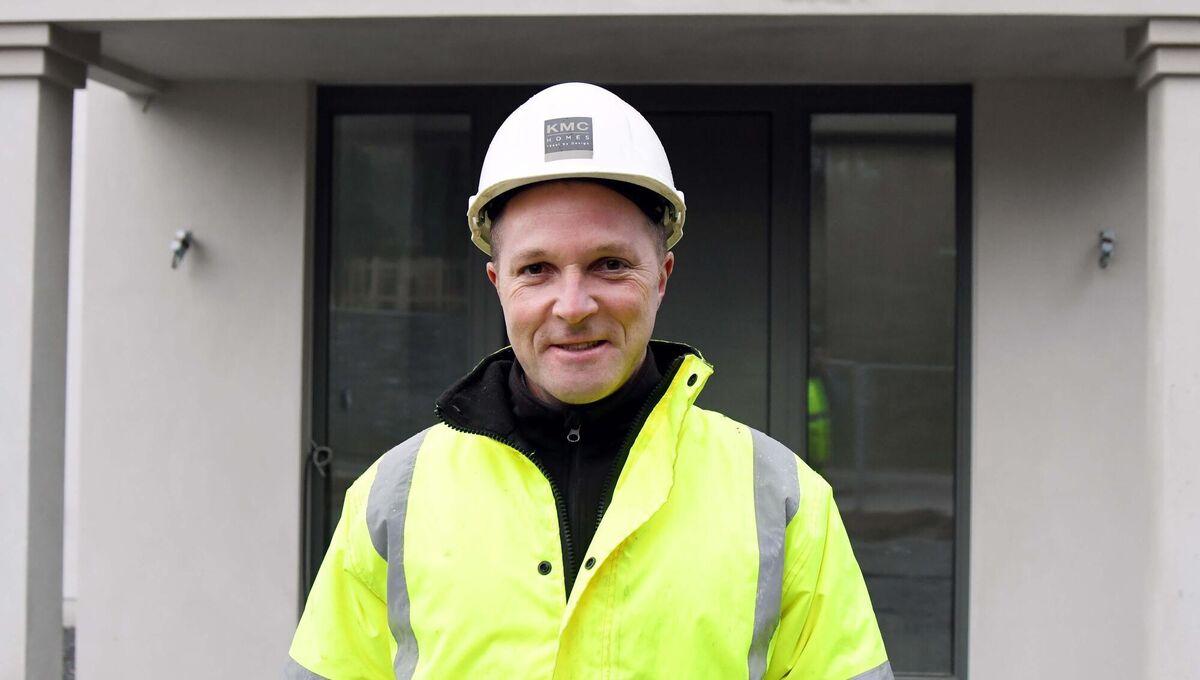
Kieran McCarthy: 'A project needs a project manager and in the absence of someone in this role, you end up taking on this position of stress and responsibility.'

So, what are the options here and how does it all work?

Well, we have established that it is of paramount importance that someone controls the budget and the time schedule.

You could be forgiven for assuming that this is the builder’s job. Well, in a perfect world where drawings don’t change from the very start of a job, no unforeseen issues are unearthed either in the ground, in an existing building or in the drawings, and clients don’t change their mind or hold up the builder in any way, then this would be the case. But, we don’t live in a perfect world.

Another option is to have a project manager and a host of subcontractors and suppliers. Yes, this is certainly one way to build your project and provides you with a reasonably professional interface but now that you have all the contractors and suppliers appointed separately, you are taking the risk of the interface between all these bodies in terms of warranties, budgets and, to an extent, timelines as you will be paying all these companies and indeed the project manager, separately.

You could of course have a project manager managing your builder. So this does in fact alleviate many of the issues above in terms of cost overruns and budgets but you still have two separate entities to manage in terms of responsibility and communication as well as the cost of these two layers.

To answer your question in this regard, I have, on occasion, worked in this format and I have always felt that, as the builder, you have much of the control and responsibility on-site and, in my case, what was missing was the rest of it.

I always felt there was an unnecessary barrier between us and the client and I feel there was no need or indeed value for either party in this (that is just me and not all builders feel this way).

For me, I felt that if we were involved with a client from the very beginning (ie, the very start of the design journey) we could get the project off on the right footing and set realistic expectations and parameters around timescale and budget and design the building to suit.

There is a third option that aligns with this approach. It is called ‘Design and Build’. It is where one party takes on the full responsibility of a project in terms of both design and building. Because they manage the project from the very beginning, when project goals are set, and manage all professionals, trades and suppliers from there, they can project manage the design, budget and schedule accordingly and provide a singular point of contact. They can manage the design to meet the budget, get it through planning, manage all the builders internally and provide an end-to-end in-house solution, which of course is ultimately what most clients need.

Civil engineer Kieran McCarthy is founder, and design and build director with KMC Homes. He is a co-presenter of the RTÉ show Cheap Irish Houses. His new podcast Built Around You airs shortly.

x

More in this section

Revoiced

Newsletter

Sign up to the best reads of the week from irishexaminer.com selected just for you.

Cookie Policy Privacy Policy Brand Safety FAQ Help Contact Us Terms and Conditions

© Examiner Echo Group Limited