Secluded splendour in a €675,000 Cork time capsule on Glasheen Road

Coronella Glasheen Road Sherry FitzGerald
|
Glasheen Road, Cork city |
|
|---|---|
|
€675,000 |
|
|
Size |
196 sq m (2110 sq ft) |
|
Bedrooms |
5 |
|
Bathrooms |
3 |
|
BER |
E1 |
TIMES have definitely moved on since Coronella was first built, just over 100 years ago, in quite stirring days.
One of the earliest houses built on Cork’s Glasheen Road, it dates to 1917, and thus was constructed as Russia had its revolution, as the First World War ground on and death tolls mounted, and as Home Rule was held out for Ireland by David Lloyd George after the previous year’s Easter Rising.
And, as this handsome Edwardian semi-detached house itself rose up, it was against a backdrop of market gardens along and off the Glasheen Road and up to the Lough, as well as the herding for cattle along the road, on the way to city abattoirs, far messier surely then than students.
Back in those earlier decades, residents here had the luxury (as was the norm) of butcher boys doing deliveries, grocers and bakers delivering by dray or float or bike, the milkman too. After decades of commercial and retail dominance by supermarkets, the wheel has nearly turned, with options galore for food delivery, by van or bike and Deliveroo, or by Tesco and other supermarkets doing home deliveries: Truly, the wheels turn and turn again.
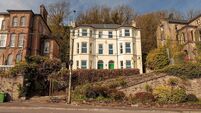
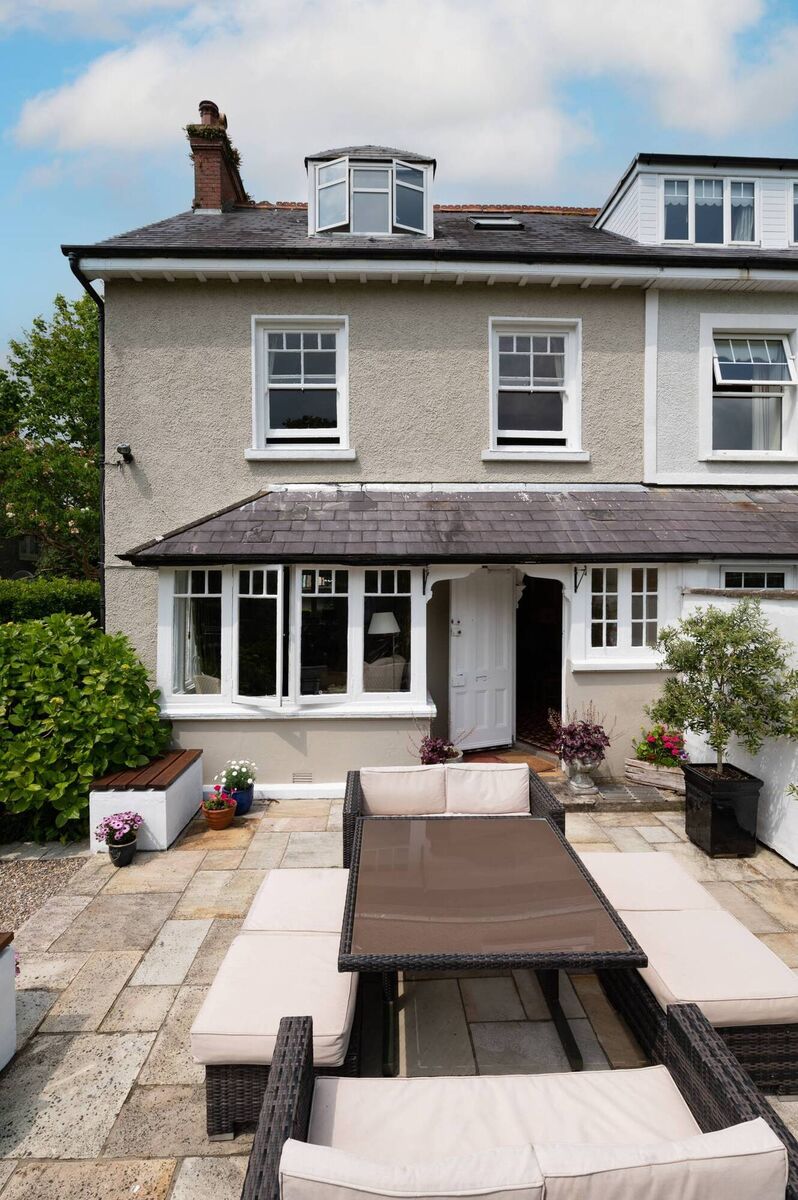
Coronella’s set at the prime part of the Glasheen Road, just west of Hartlands Avenue, and thus part of a run of good-size, substantial homes that have a strong residential/owner-occupier profile. It’s also one of the more private ones, set behind a high screening wall to the road, with lush south-facing back gardens.
The family living at Coronella for the past 30 years are keenly aware of the history of this stretch of the Glasheen Road, having picked up titbits of anecdote and family lore from neighbours during their decades of minding this fine and accommodating house.
They are only the fourth family to have lived here, and say when they moved in, they were the first Roman Catholics to call it home, in this stretch long associated with various clergy of different faiths. Continuing its ecumenical path, they add that their own children and their visiting friends have always remarked about how zen the vibe at this property feels, a bit removed from the daily hubbub, even though it’s only a mile to the city and half a kilometre or so to the UCC campus.
Buyers and sellers of some of Coronella’s neighbours have included UCC academics and medics at the Bon Secours, CUH, or Mercy hospitals, and now it’s an open question as to who’ll get to grace the private zen world behind the anonymous entrance gates to this tall, three-storey five-bed solid and authentic home.
Coronella is a sort-of back-to-front proposition, with its finer and more formal ‘front’ entrance around the back, with sheltering porch and a bright, southerly aspect, under a slate canopy next to a reception room’s bay window with original casement windows.
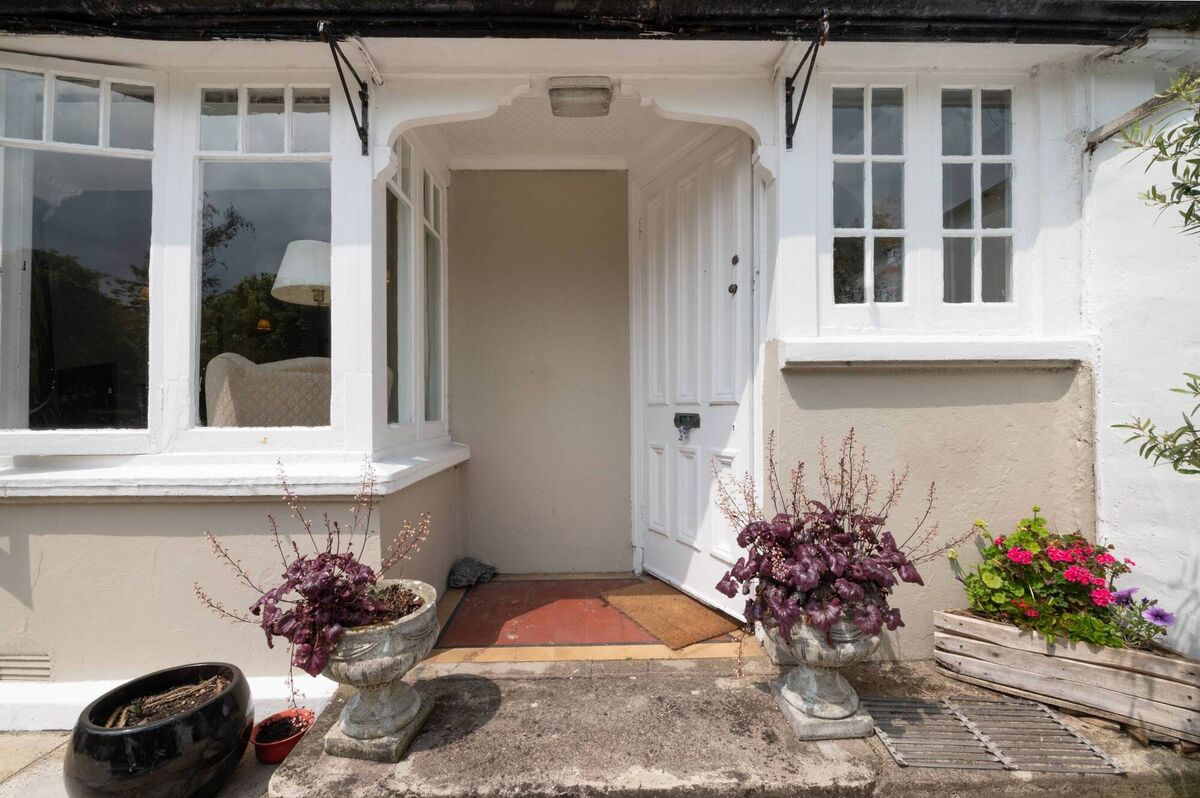
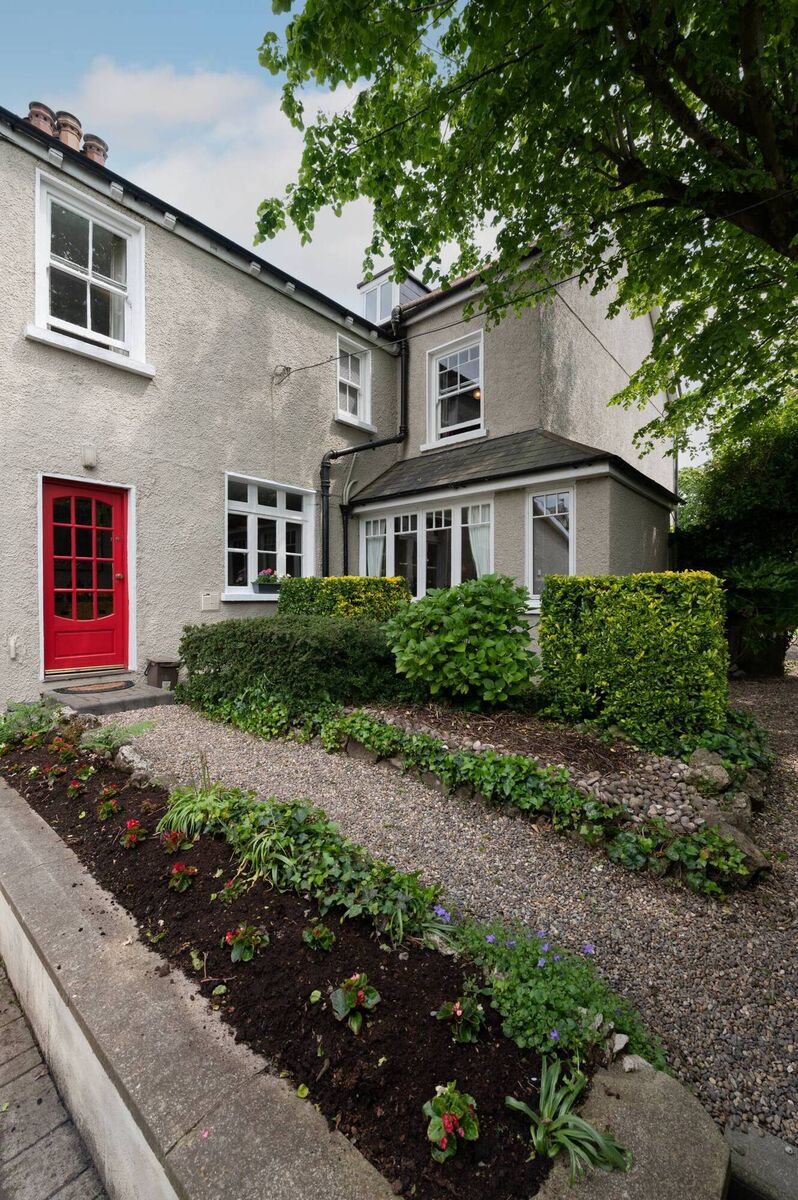
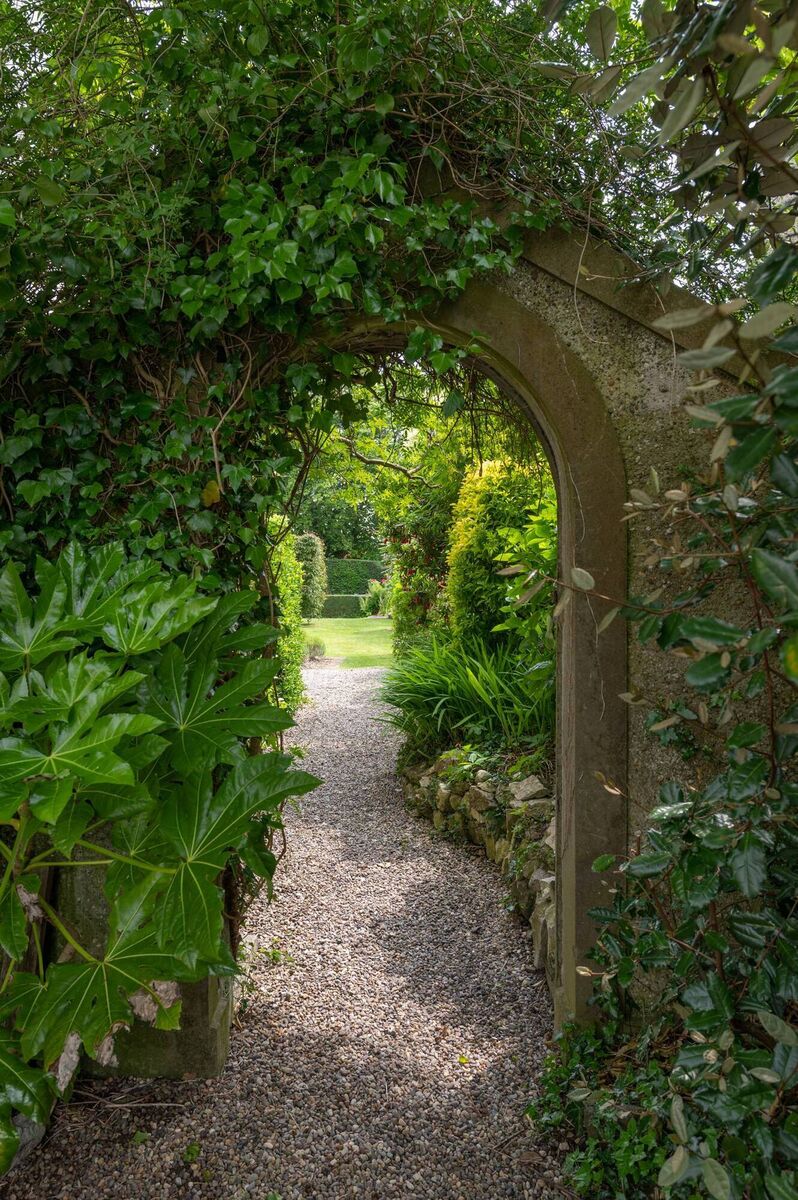
That’s only encountered, though, after going down the leafy side passage and past an arch with large fatsia plant and rampant greenery.
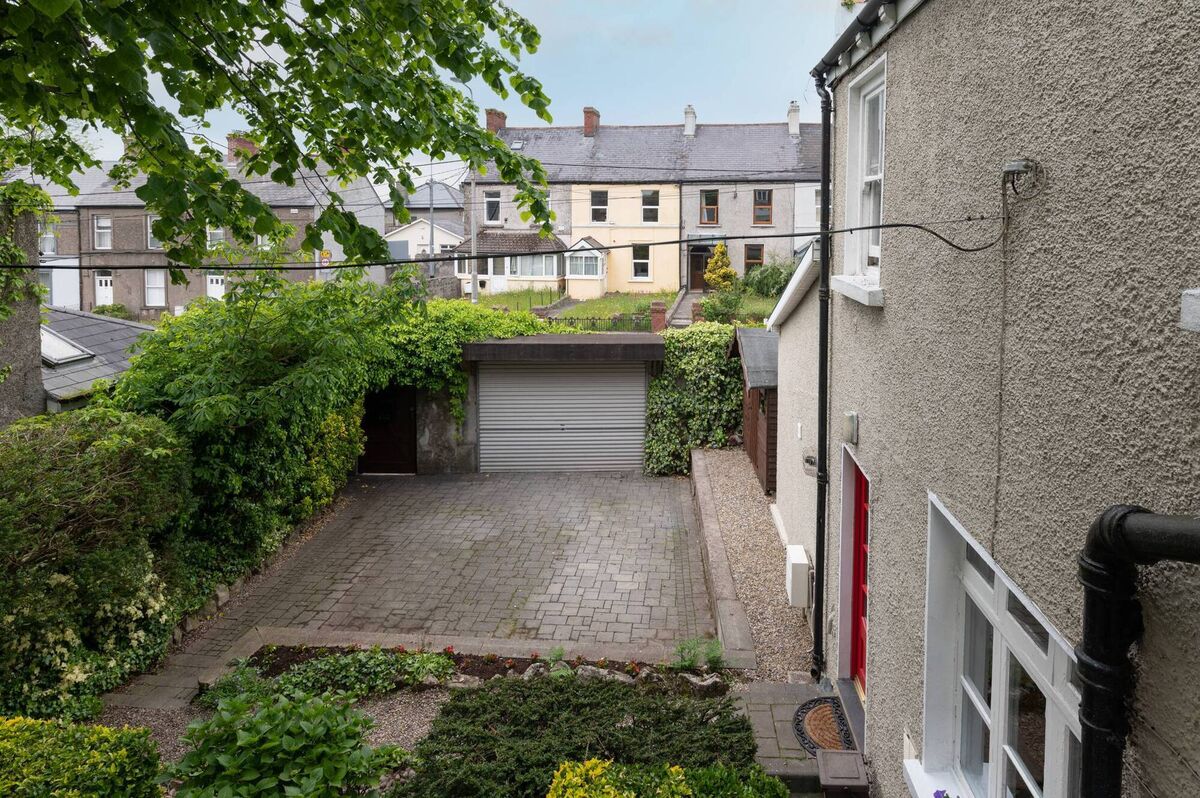
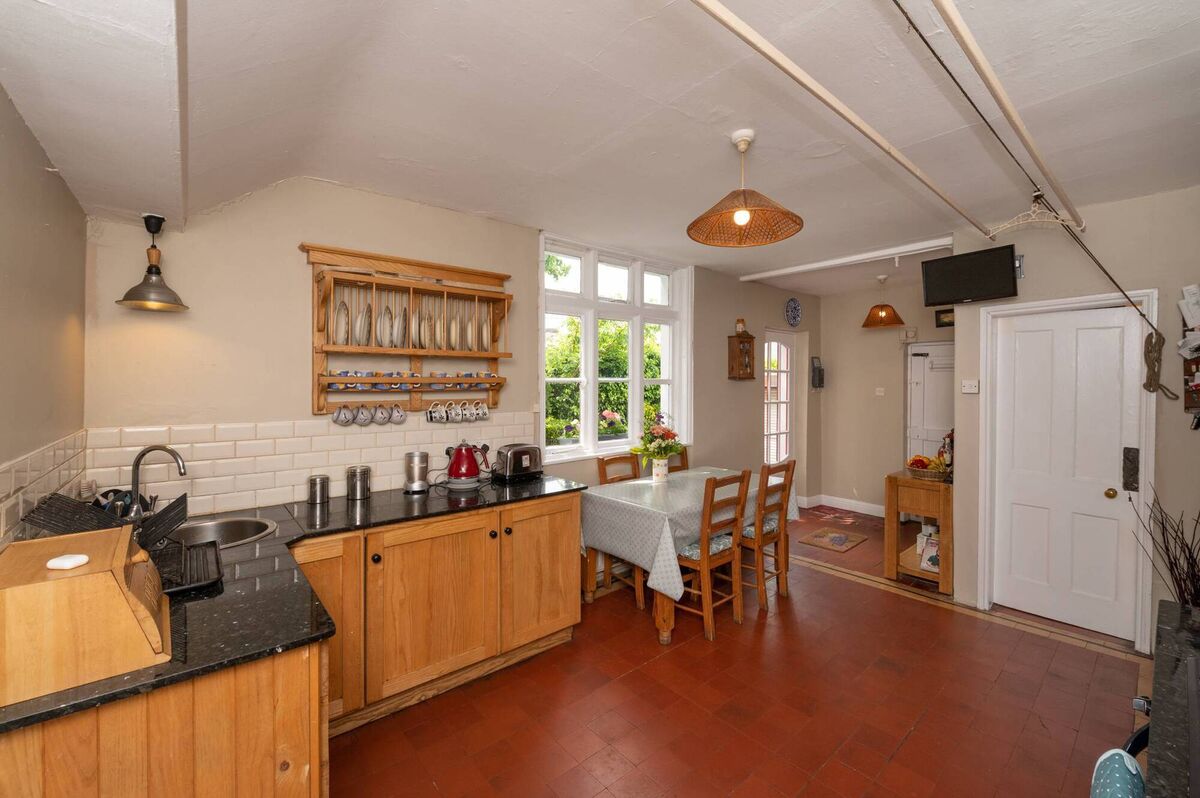
The more usual, day-to-day family approach to this hospitable home is via the ‘back’ door which is at the front (if you get the drift) which leads to a warm and homely kitchen, done decades ago in solid ash with granite tops, by Homegrown Kitchens plus gas stove in an old range alcove, all overlooking a private and sheltered courtyard.
This is all of course only encountered once through the sentinel automatic roller shutter door to its off-street parking slot for a couple of cars, with a further solid and separate pedestrian door for the many, many occasions when cars aren’t needed and can be parked up for days on end: This is easy city living personified.
For the past 15 months, the couple and a few of their adult children have been living and working from home, with four separate home offices set up at various levels inside and all thrumming along with CAT 6 cabling for very fast connectivity: One of the couple had been working online from home in any case for a few years in advance, so it was already well-plugged and ready to go to work.
It’s now downsize time. They are making a move down to a smaller, more modern home in West Cork and, as a result, Cononella is fresh to market, only glimpsed from the outside world thanks to things like the castellated roof ridges over a two-storey wing.
It’s gleaming and original and intact with utter integrity, listed with estate agent Johnny O’Flynn of Sherry FitzGerald, who guides it at €675,000, and who says it oozes charm, character and originality.
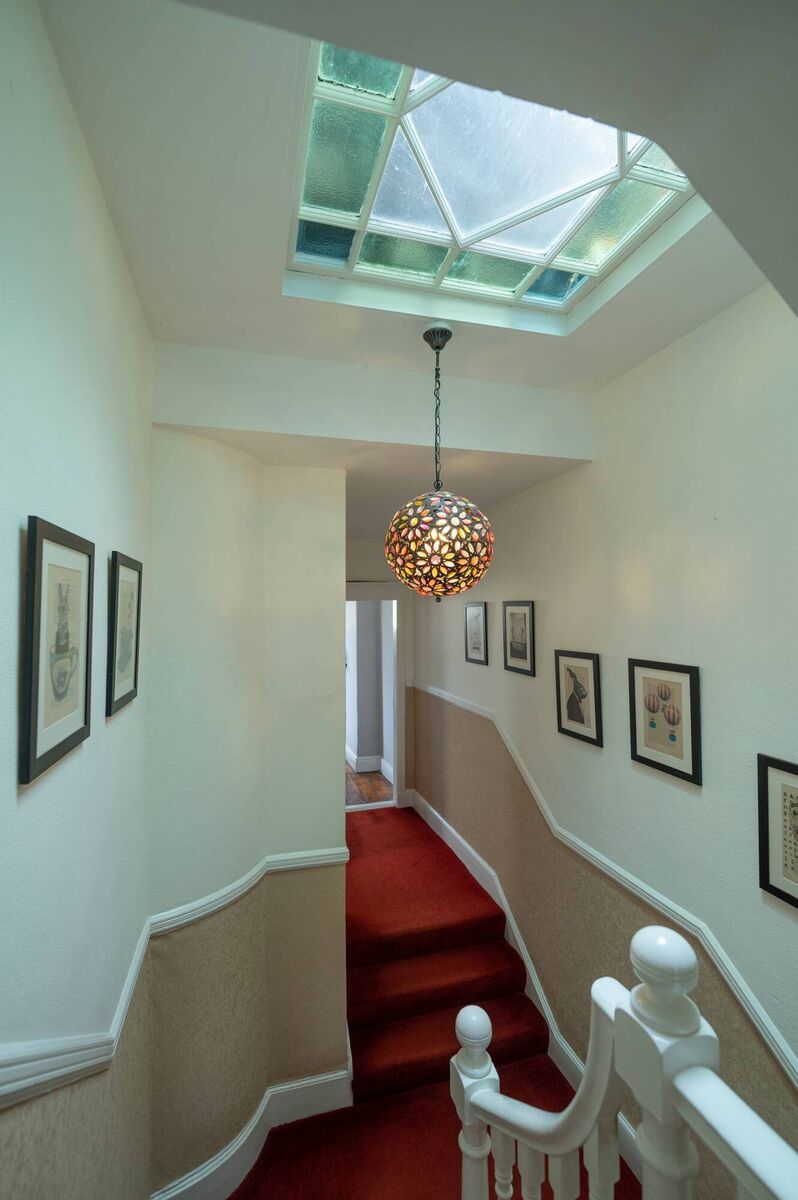
Retained original features include fireplaces, stained glass, picture rails, coving and dados, wall panelling, and a glazed rooflight over the landing where the stairs split to front and back sections.
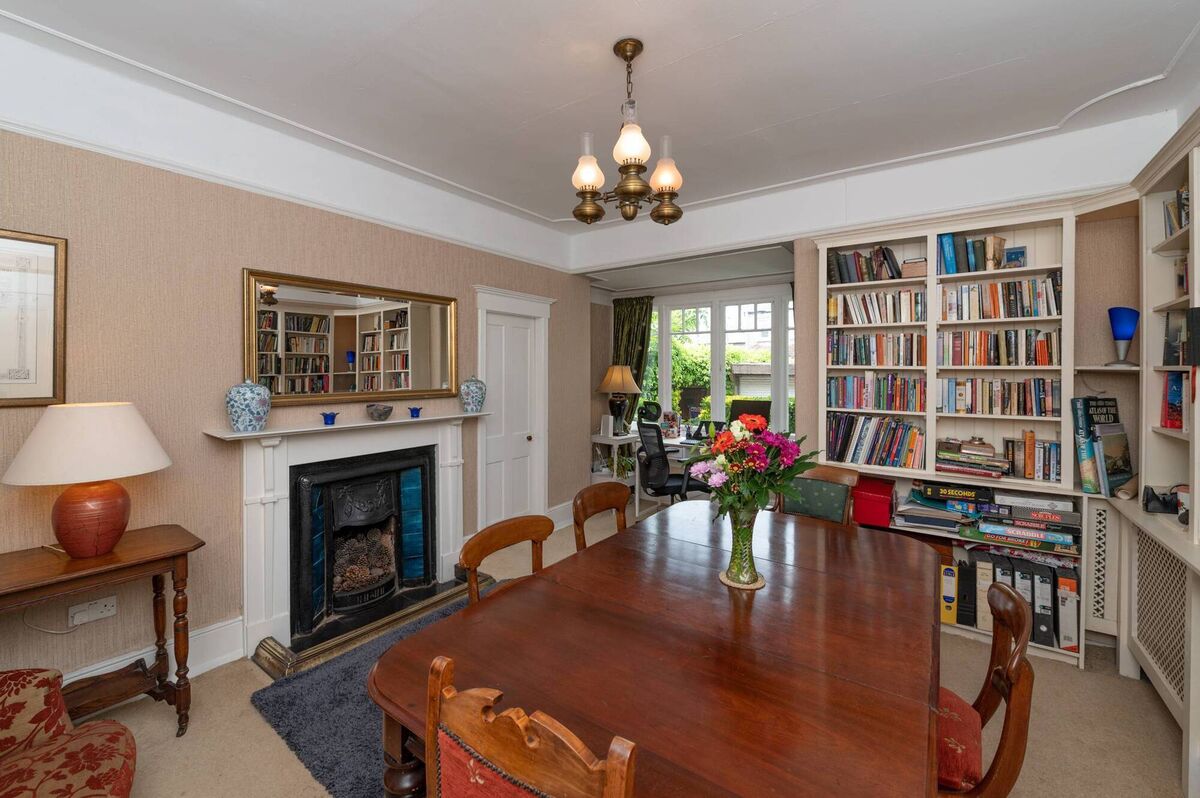
But surely the finest features are the windows — a mix of sash and casements, with the upper sections in divides and small panes, over lower and larger single panes.
It takes a bit of work to keep an old house as good and original as this, the departing owners admit, with spit and polish in evidence and, though they don’t say it, it probably is hard not to throw a bit of modernity in as well — a temptation they have resisted. How will it fare in new hands?
Their own changes and tweaks were very delicate, sensitive, and necessary: At the time they bought, the previous family owners had split it into two flats, with separate entrances, one fore, the other aft, and with two kitchens to serve.
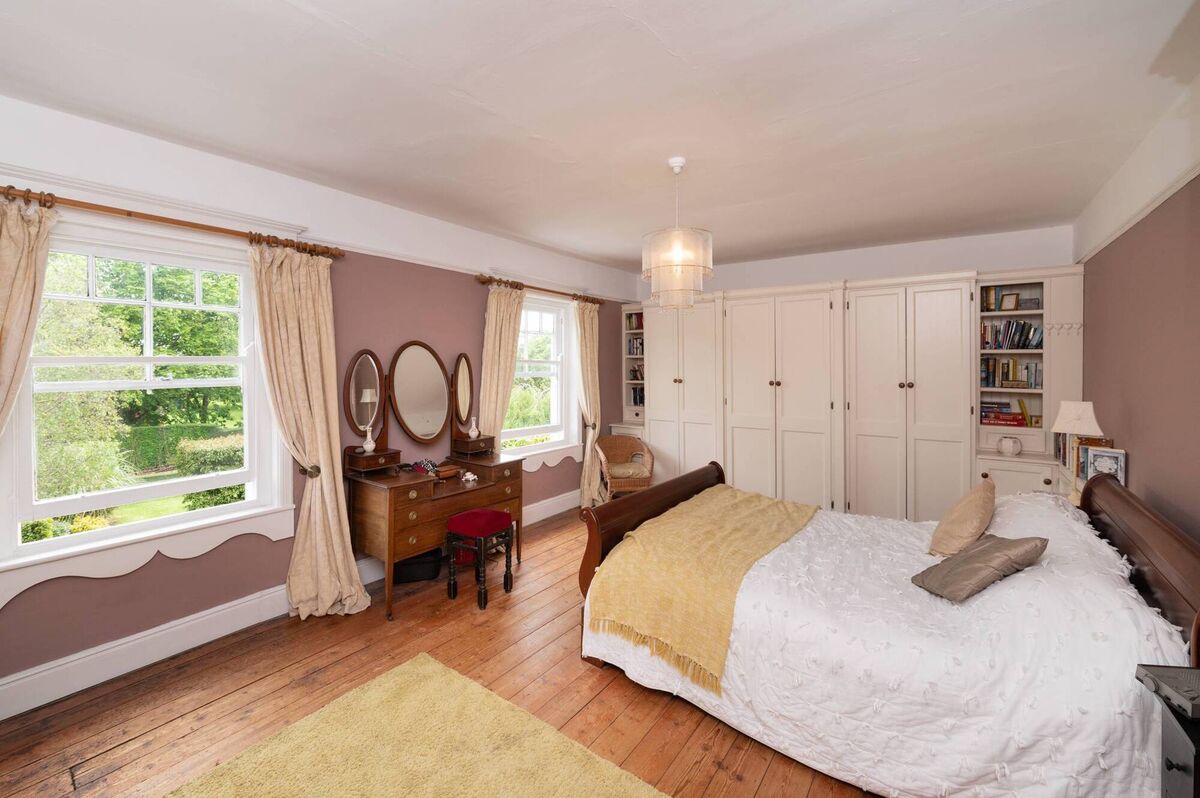
Where one of the bright first-floor kitchens had been is now a bedroom, with fireplace, and two windows overlooking the bright and well–planted and neatly-kept back garden.
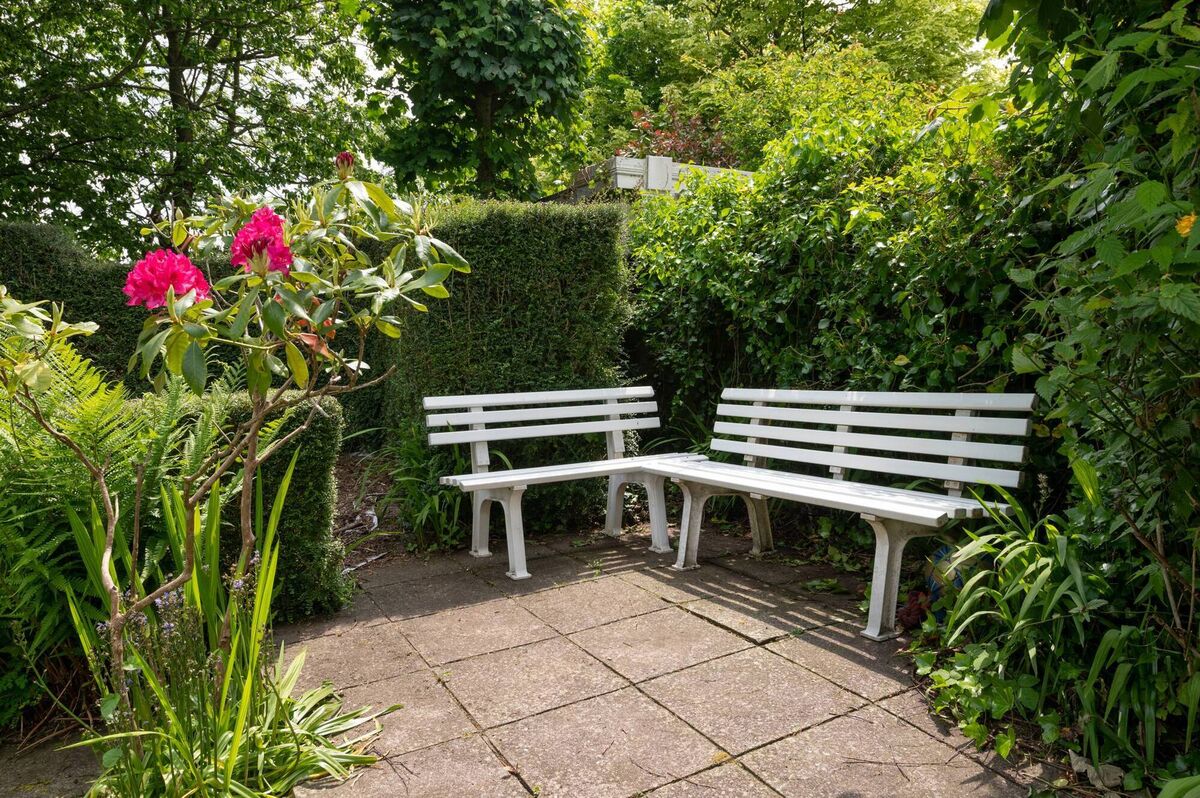
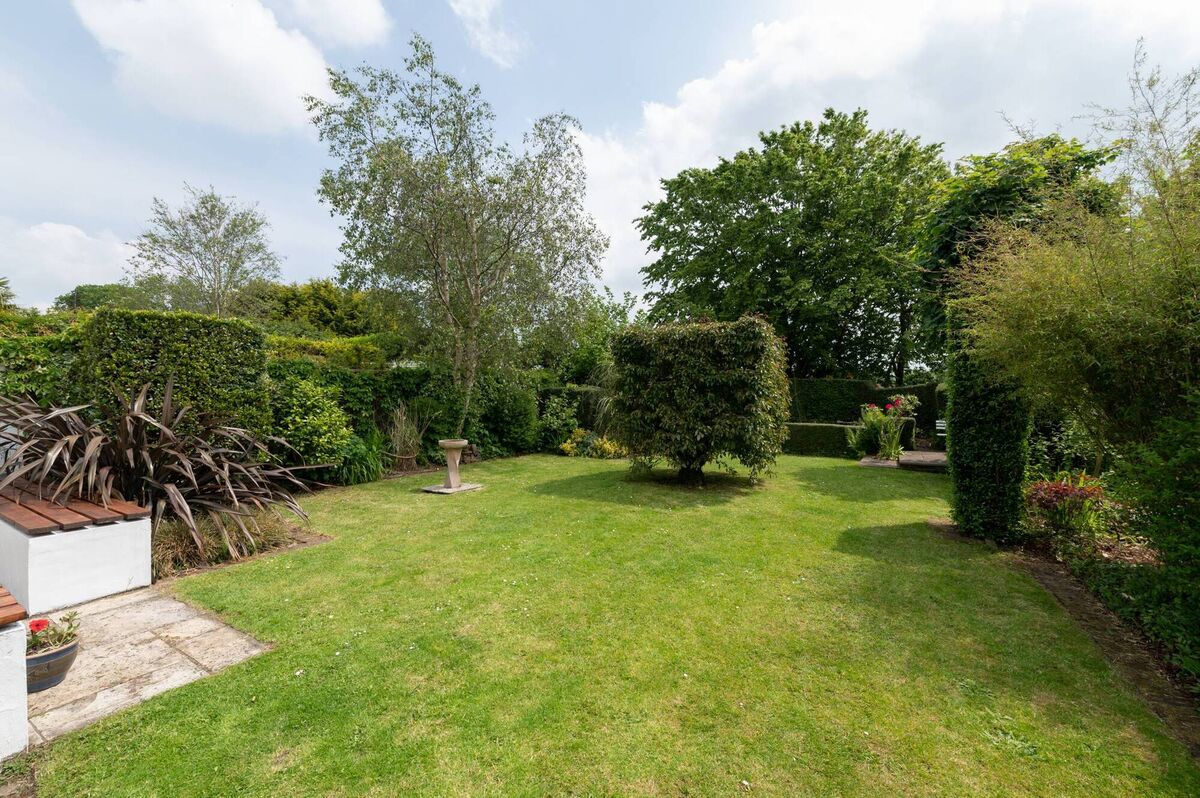
Well down the south-oriented and verdant garden with veg patch and more, is a tall hornbeam tree, just over the far boundary wall with Lapp’s Court, a long-established retirement community with long Church of Ireland links.
Poignantly, the previous private owner of Coronella had moved into Lapp’s Court in her older years, able to look to her former home from her newer one, proximity that must have varied from being a wrench to being a solace.
Coronella’s owners say the land their Edwardian semi-d is on had originally been market gardens controlled by the Hosford family, with another family of market growers, the Hartlands, also with swathes of veg, fruit, and flower gardens close by, still recalled in the address of Hartlands Avenue which runs down to the Lough.
Happily growing and well-rooted here now (but a bit dwarfed by the Hornbeam next door) are trees such as lime, silver birch and sycamore/acers, hazel, cherry and lilac, as well as bamboo, box, holly and privet hedges, along with shrubs such as mahonia, pyracantha, lavender, bay, hydrangea, hypericum, laurel, a Chinese lantern tree and camelias: there’s never going to be a shortage of cuttings and flowers to take indoors to adorn the interiors, and in a timeless fashion too.
Sherry Fitz’s Johnny O’Flynn underscores the tranquillity of the setting, with suntrap sandstone terrace/patio, and internally are two good-size reception rooms, connected by twin, glazed doors with smaller panes at the top in mottled glass, picking up on the main window motif of varied pane sizes.
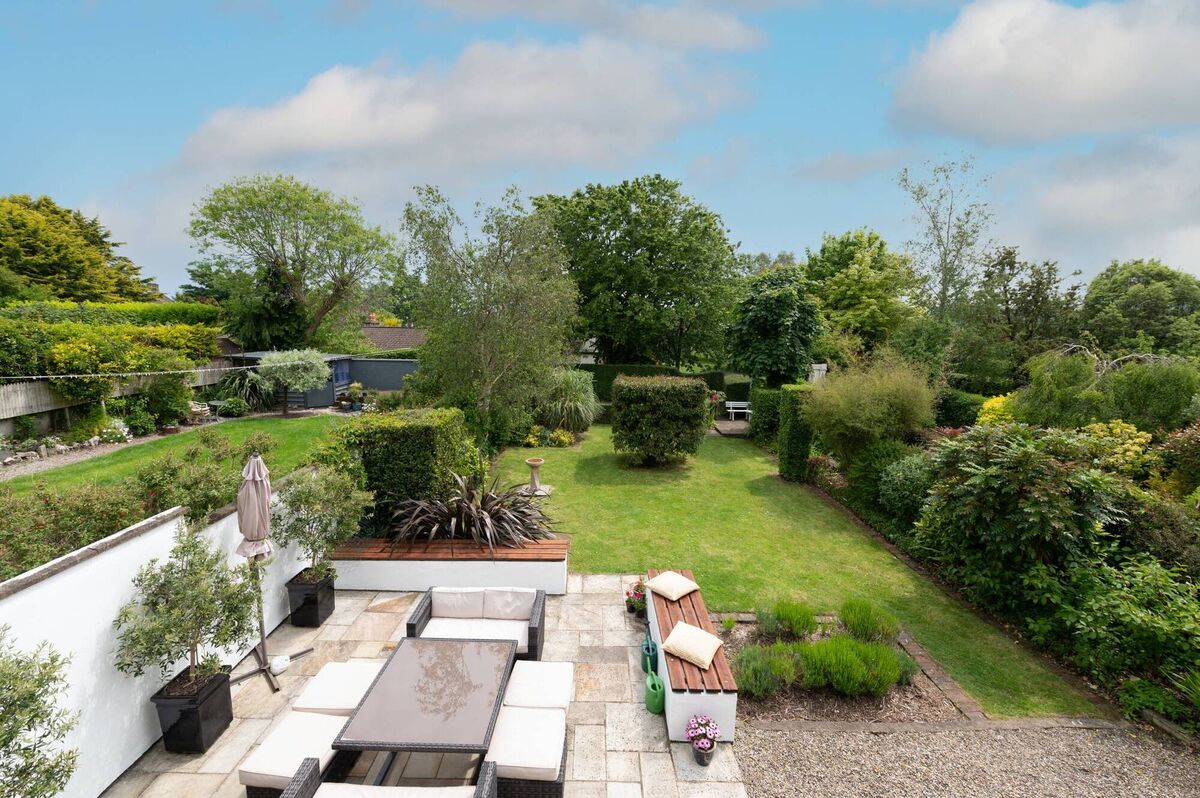
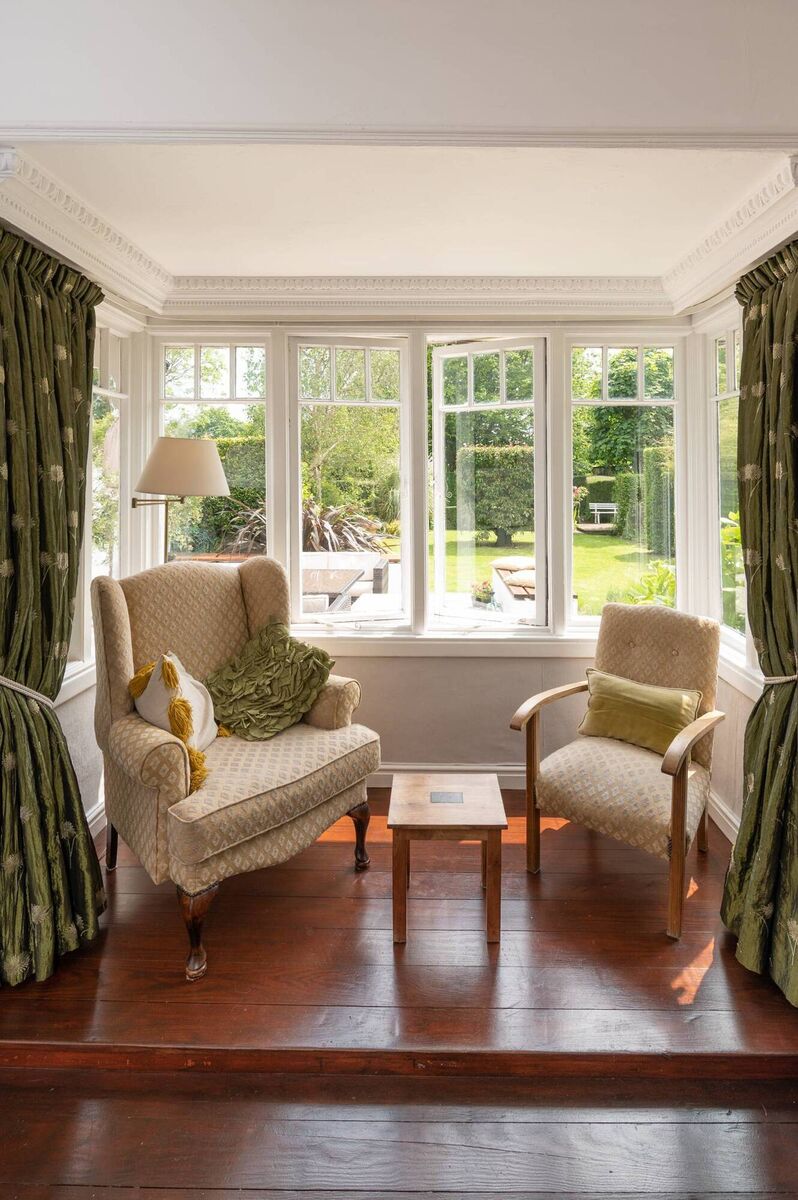
The brighter room, facing south, has a slightly raised seating plinth into the window bay, a spot from which to admire the garden outside, while the other, facing the entrance courtyard, is shelved and book-lined, with a butler’s pantry off to the side, currently used as one of the several home offices.
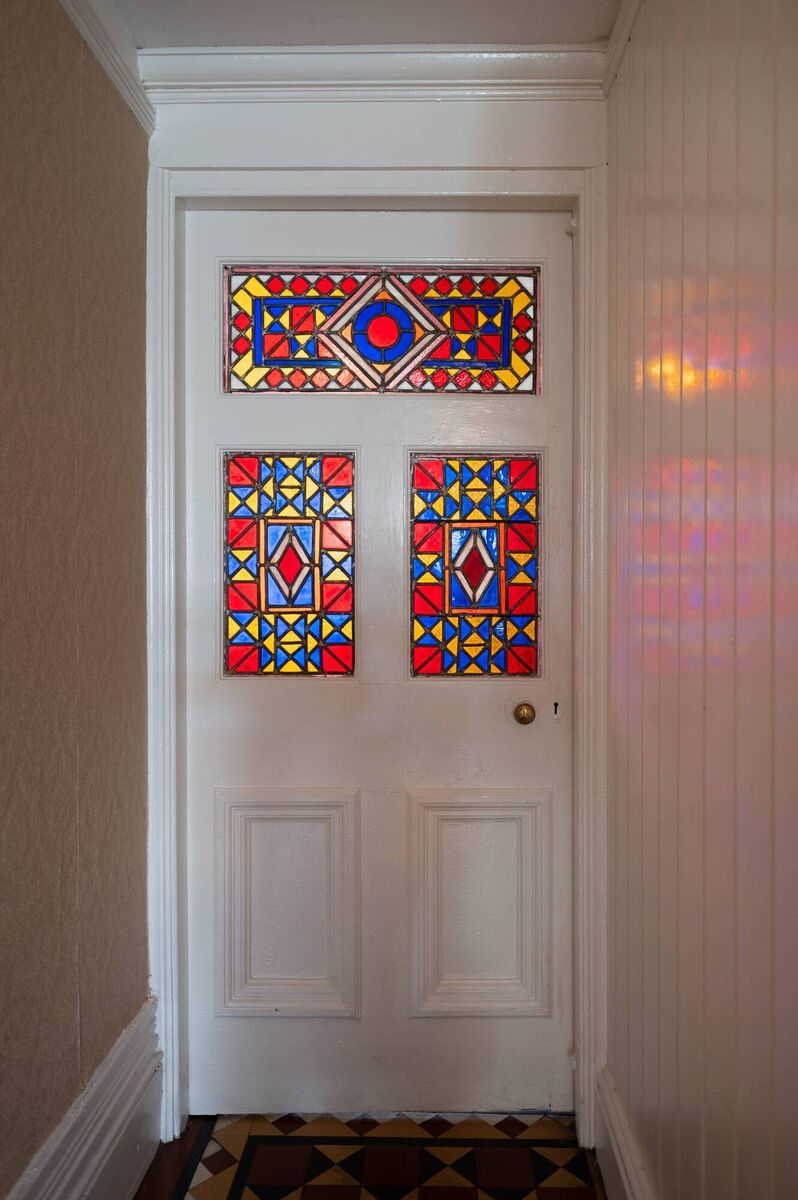
The side hall has original encaustic floor tiling, with a feature curved arch along its length, while it’s also divided by a door with very geometric stained-glass panels, in primary blue, red, and yellow glass patterns.
Depending on the time of the year — and the day, and the slant of the sun — light pouring through the house gets refracted from either side by this glass into coloured shafts, like their very own mini-Newgrange, the owners say in admiration of the free light shows.
As it’s such a deep home, as well as being three storeys tall, the stairs divide to access the first floor’s three bedrooms and main family bathroom, with overhead glass rooflight as a daylight source, with central diamond pattern and pale green/blue side panels.
There’s a slight curve in evidence in a wall with dado on this quarter return level — and, on the other side, the reason for it is revealed: The wall space cocoons the curved end of an original large cast-iron bath, with the bath skilfully re-enamelled and with gleaming soap trays by the brass taps and tall wastewater chute: It’s a lovely piece of architectural and sanitary ware heritage, with the entire a tribute to its builders of 100 years ago, Barretts.
In the same room too is an overhead cast-iron cistern, also original to the home, painted a deep navy, and bearing the maker’s name and brand, The Rowexcel, made by ironworks Black & Son, in Tuckey Street.
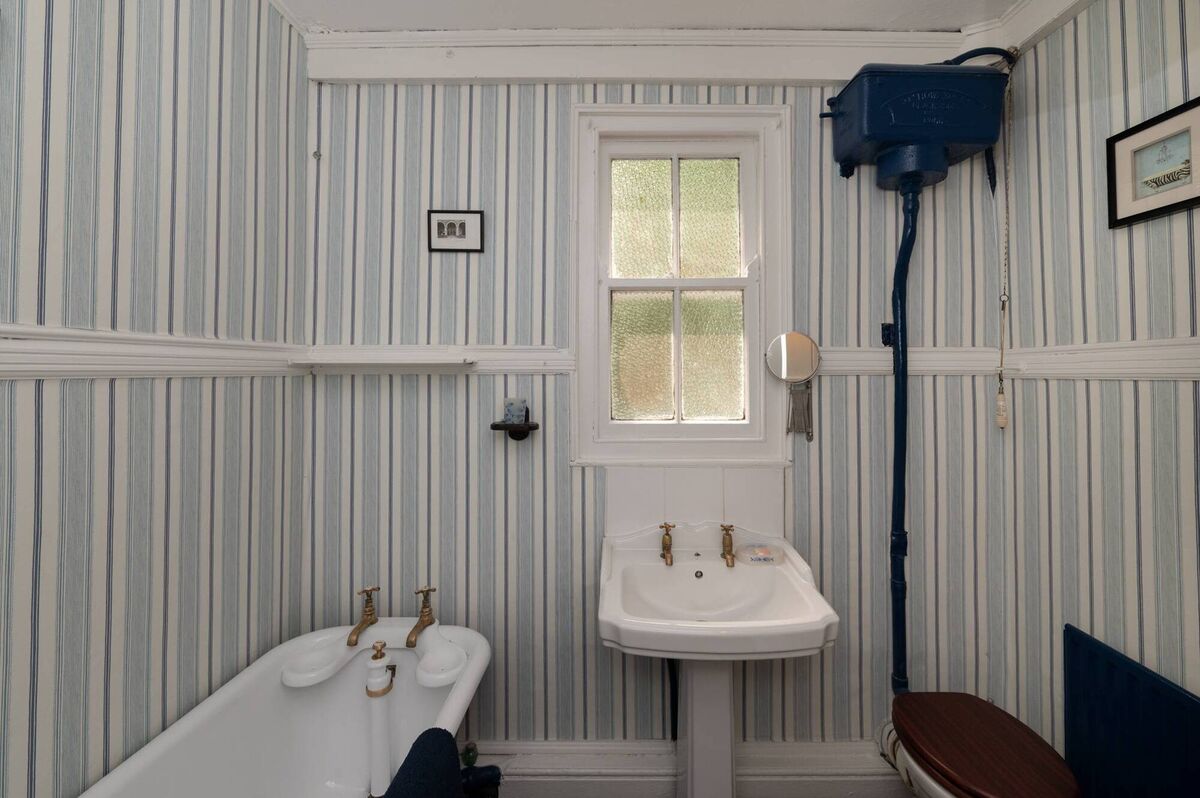
The Black family are still in the metalwork business elsewhere in the city’s surrounds, and Coronella’s vendors have done a photo swap with them — an image of their cistern in return for an old photograph of some of the Black company’s workforce. The cistern flush still works, encouraged on its way by an ornate porcelain chain-pull bearing the name of its makers, M Barry, Sanitary Engineers, Marlboro Street.
It’s just the little details like this, or the many original polished brass fingerplates on doors, all lovingly recounted and highlighted, that underscore the departing owners’ high regard for their home, and they admit to moving on from it now with very mixed feelings.
Yet, for all that retention and the presence of rooms like a kitchen pantry and a separate butler’s serving pantry, “offers the comforts of a modern home ready for its new owners to move into,” says auctioneer Johnny O’Flynn, pointing to backup things like the ground floor’s very useful guest WC with walk-in shower, and five bedrooms over the upper two floors.
He’s gearing up now for first viewings, and expects to be busy, with individual viewings likely to be quite protracted as there’s quite a bit to absorb.
The most recent comparable sale is likely to be that of a near neighbour on this genteel stretch of the Glasheen Road, called Trinity Manse.
Like Coronella, it dates to the early 1900s, has a similar back-to-front main facade orientation to the south, had been owned by various clergy of different faiths and by UCC professors and, similarly, featured lots of period trim such as stained glass windows and fine fireplaces.
Coincidence continued too, in that Trinity Manse’s vendors had been in situ for c 30 years, and they sold to move to West Cork. It had a €650,000 AMV, and the Price Register shows that other semi-d sold for €665,000.
: Coronella’s sort of a microcosm of suburban Cork life, for a century and more.
CONNECT WITH US TODAY



Be the first to know the latest news and updates