Sustainable homes for under €150k? It's doable
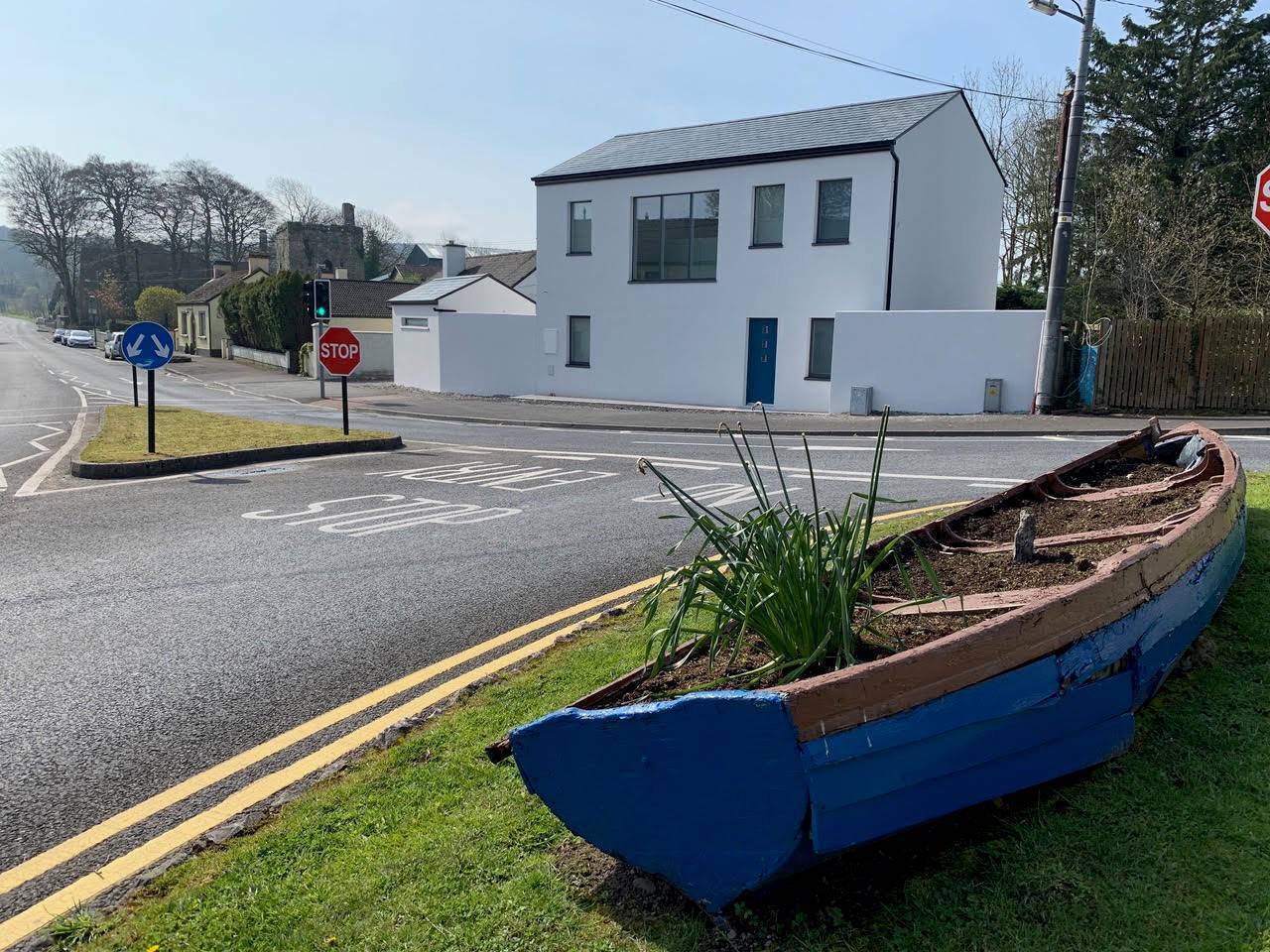
The sustainable and affordable house constructed by Fergus Merriman SCSI at Tuamgraney, Co Clare.
The very low supply of houses, particularly affordable ones has been well documented in Ireland, particularly in recent weeks. Housing experts, politicians and commentators have all cast their nets far and wide in search of a solution to the supply issue.
We could construct sustainable, affordable homes with no energy costs for less than €150,000. I've done it and we just need the change in mindset required if the model is to be replicated at scale.
There is a widespread misconception that sustainability and affordability do not go together.
According to this narrative building sustainable houses to current, near-zero energy standards is both an overly complex and costly process.
CLIMATE & SUSTAINABILITY HUB
My experience however is the opposite.
My own journey towards sustainability began in the late 1960s with those iconic images from space of our wonderful but vulnerable planet. I realised then that studying the built environment was my vocation simply because buildings use so much of the earth’s valuable resources.
Where there’s a will there’s a way.
I didn’t have to wait long to put my theories to the test. In the early ’80s a client approached me after being left money by his father. To ensure that he did not squander his inheritance his father had stipulated that the money be spent on building a three-bedroom house. As a result, my client required a large, but low maintenance, three-bedroom house to be built on a budget considerably below the norm.
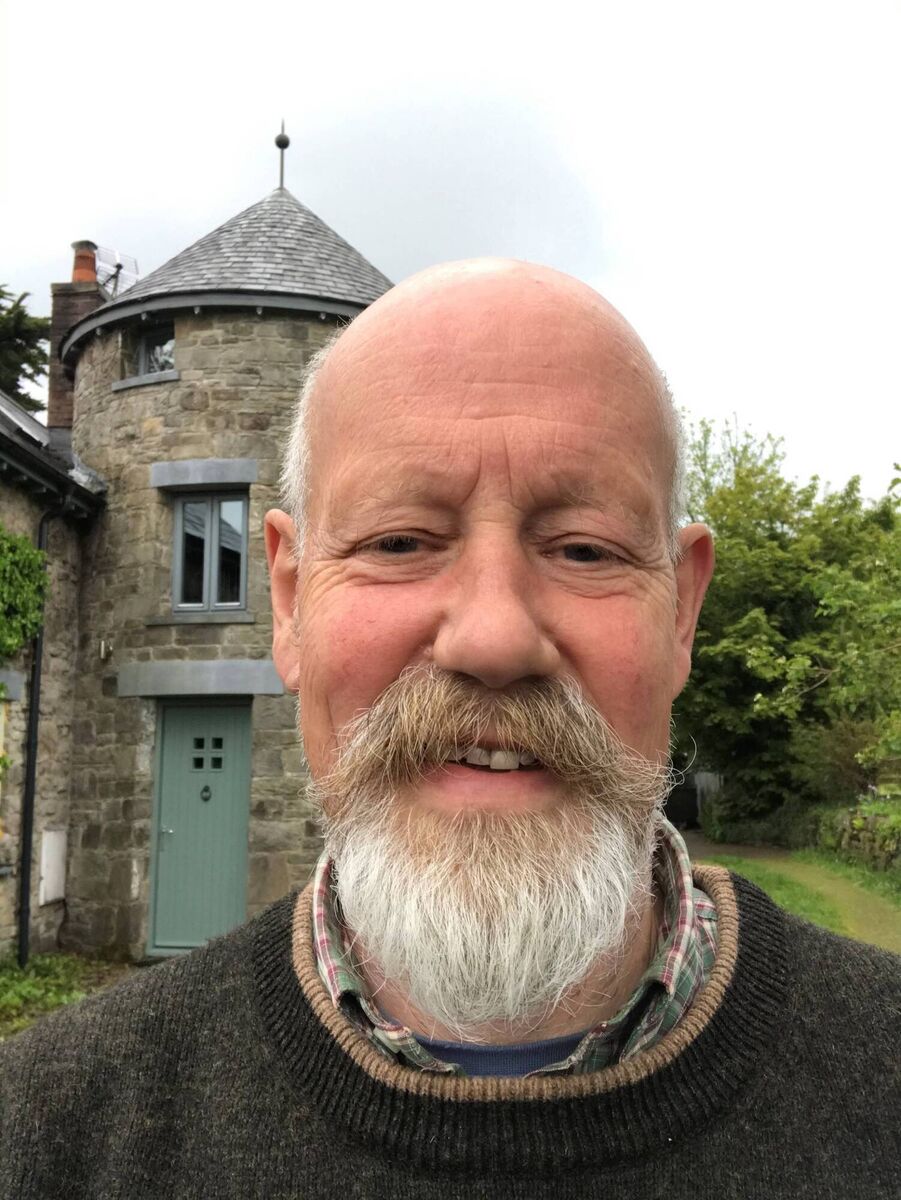
This didn’t just require thinking outside the box, it required thinking from outside the country. My final design was made in a factory in Finland, then delivered to site complete with windows, doors, insulation, and internal finishes.
The house, which was of exceptional quality was erected within a few days and was ready to occupy in a month — leading to huge savings and ensuring there was money left in the budget. Today the house still runs at near-zero energy consumption and might now be claimed as ‘passive’. My client remains very happy after nearly 40 years.
As a chartered building surveyor, I continue to investigate how and why we build the way we do, the inherent difficulties of realising buildings, and the challenges posed by regulations that attempt to promote better standards. Can these same ‘offsite’ principles be applied to modern housing developments?
They can, but a change in mindset is required. My experience is that the construction sector, as we know it, employs an additive process that attempts to build on practices which are not necessarily appropriate to the fundamental requirements of creating healthy, affordable sustainable homes.
In contrast, by using a reductive process and applying modern industrial techniques — using mainly recycled sustainable materials of course — I believe it’s possible to build an average-sized, three-bedroom home — with no energy bills — for under €150K (this includes hard and soft costs but excludes land costs). Doing this at scale would of course reduce costs yet further while also helping to address the housing crisis and the shortage of affordable homes.
What are the basic requirements of a sustainable home? It has to be strong, protect one from the elements, and provide a healthy internal environment. It must also be made with materials which minimise its environmental footprint, are multifunctional, and can also be recycled at the end of a long life.
Speed and ease of erection are also critical criteria in our damp climate to ensure that materials are not affected by rain or even frost during or after a build.
Based on the above parameters, I’ve found that light-gauge, steel frames provide all the necessary attributes for the basic structure of a house. They are flexible, easily fabricated, have little waste and are lightweight and robust, all of which allows efficiencies to be gained elsewhere. Critically, steel gauge frames are made from recycled material and are of course fully recyclable.
Having decided on the basic structure we can move onto the foundations. Traditionally strip footings go down to firm ground, deep enough to avoid frost. However, if we are insulating properly then frost is no longer an issue.
Recycled foam glass aggregate — which can again be recycled — provides excellent support and insulation while also dispersing radon. The reduced loads mean that only the minimum of interventions into the ground are required, resulting in more cost and time savings.
We now have the basic structure, upon which can be attached whatever insulation, windows, doors, and finishes that the aesthetic design requires.
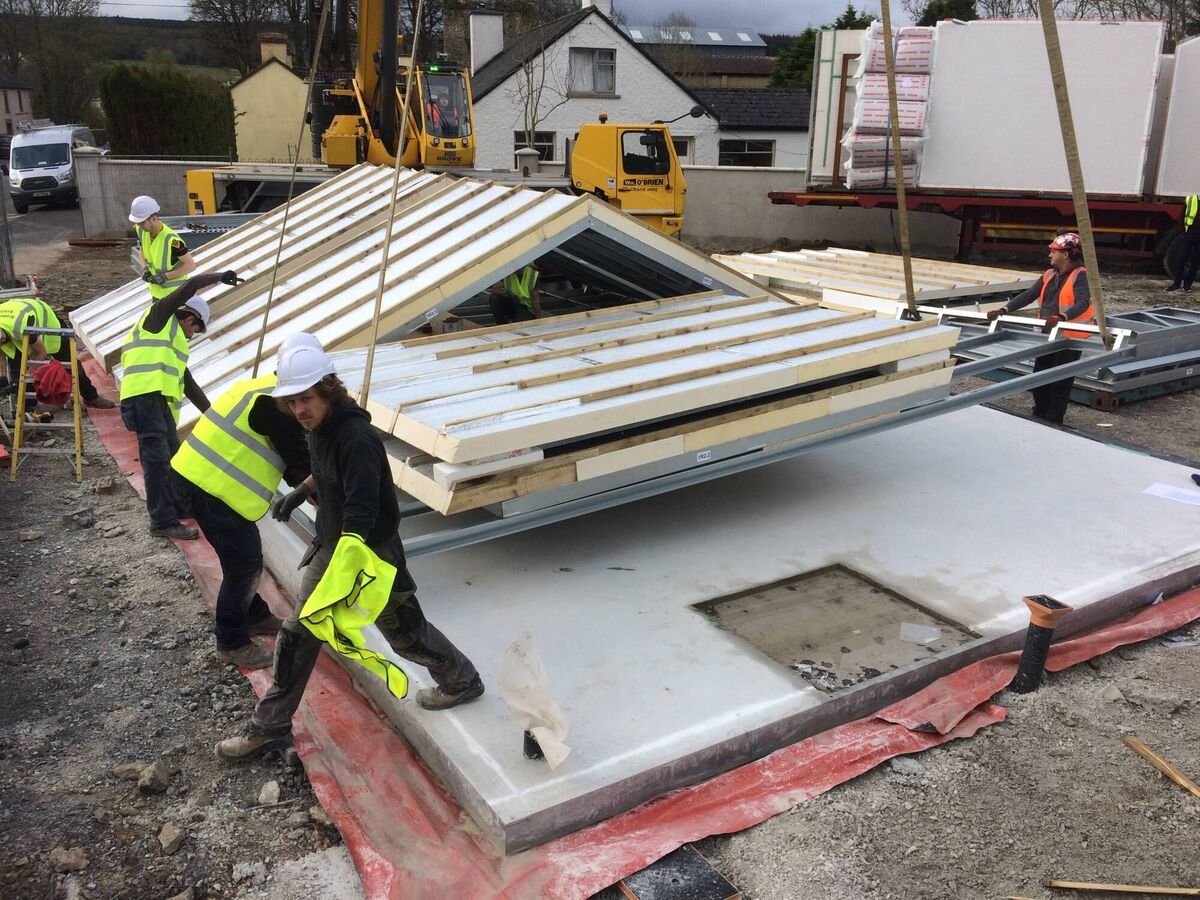
Building the roof structure on the slab whilst waiting for the superstructure to arrive means that it can be finished with the chosen roofing material without the need for scaffolding.
Whereas a normal building site will generate multiple heavy transport movements with associated inefficiencies and huge carbon footprint, the delivery of frames from a centralised manufacturing plant can be reduced to two or three trucks.
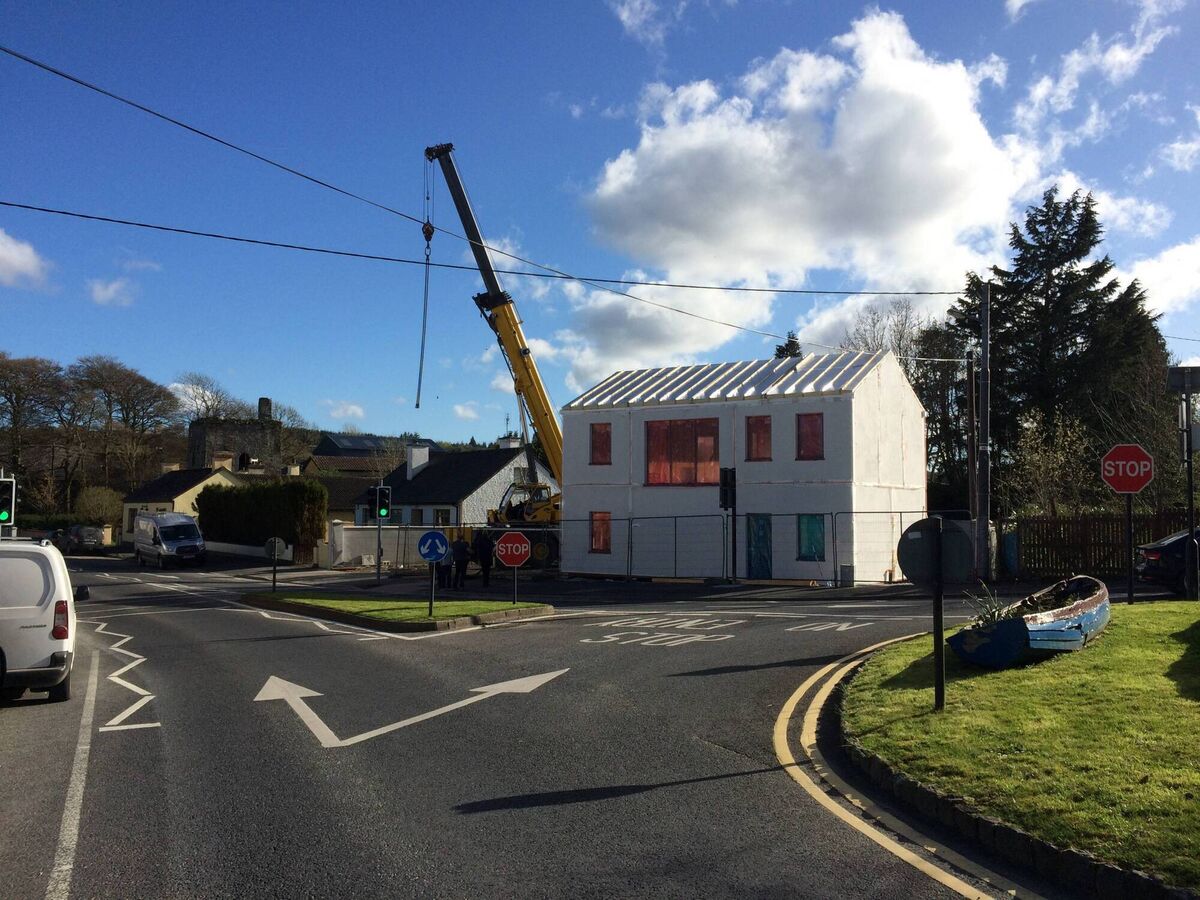
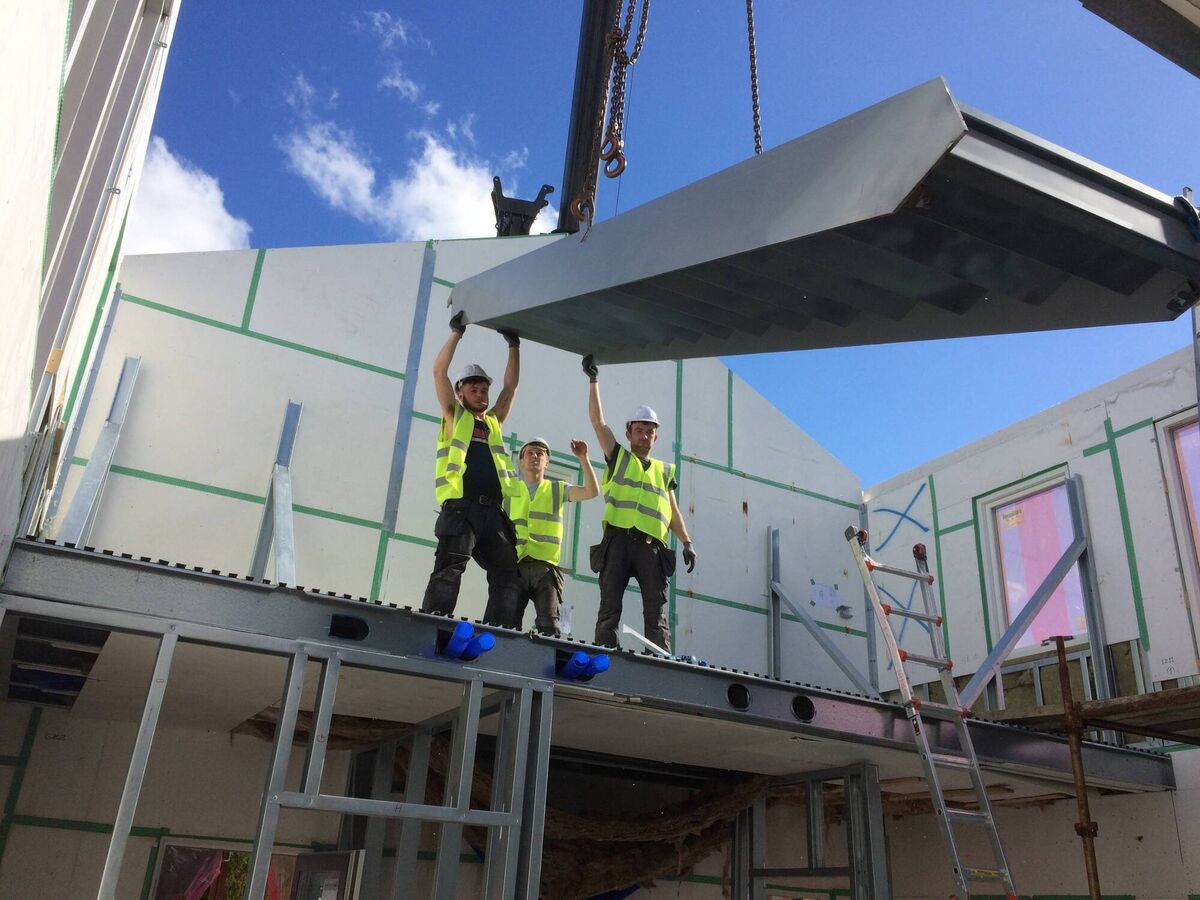
When they arrive, a crane lifts the prefinished roof to one side and the panels are then erected.
With efficient design this can take as little as two days. Placing the roof on top completes the main construction process.
Internal and external finishes can then be applied with the advantage that the house is already weather independent, again a huge saving with much-improved quality too.
To get to a truly energy-efficient house means taking advantage of the good insulation and airtightness of quality assured production whilst ensuring that air quality and health are not adversely affected.
This can be achieved through heat recovery ventilation using exhaust air heat pump systems which prevent any energy being expelled in stale exhausted air.
These units recycle existing energy so we can sequentially bring the entire house up to a set temperature then keep it there without any need to recapture outside energy repeatedly.
These double duct heat pump systems run at a maximum of 1.5kW instead of the usual 6kW to 8kW of normal air to water heat pumps with the added advantages of hot water production, simple controls, and excellent air quality all in one eco-friendly unit.
Despite having their own individual design, some of the houses already built using these offsite methods, have been finished at a fraction of the cost of traditional builds.
Unfortunately, we have as yet only begun to explore the efficiencies which could be gained from mass application of these sustainable structures and systems. I believe they could potentially reduce building costs to less than €1,000 per square metre, significantly less than the cost of current building methods with more advantages to the environment, the labour force, and our social and moral responsibilities to them.
Purchasers, long dismayed by the cost of traditional builds might be enlightened by the advantages of not only more affordable houses but the better living conditions and equity that a sustainable home can provide.
If this is to happen, the construction sector has to overhaul its approach and apply the same type of dramatic changes we have seen in other industries such as car and computer manufacture.
The Government has to truly incentivise innovation while financial institutions and insurance companies have to realise that innovative and sustainable designs can provide robust, risk-free real estate which enhances the ability of homeowners to service loans and increases their disposable income — all the time reducing the impact on the environment.
That’s a win-win for everyone. We just need the will and confidence to take that step.
- Fergus Merriman is a chartered building surveyor and a member of the SCSI’s Sustainability Group.
- He set up his own company Merriman Solutions in 2011. More than 300 surveyors and 45 leading firms have signed up to ‘Surveyors Declare’ a recent SCSI initiative whereby signatories commit to following sustainable business practices in their day-to-day operations.
- For further information go to www.scsi.ie
Watch the video: How to build a house in 36 Hours.
CONNECT WITH US TODAY



Be the first to know the latest news and updates