Comfort up, carbon down: 'Deep retrofit brings the whole home to a very high level of energy efficiency and sustainability'

An increasing number of Irish householders are engaging with the sustainable policies contained in Ireland’s Climate Action Plan and adding at least 1% in value to every increment they scale on the BER’s green ladder. Pictures: iStock
We’re moving steadily towards a more sustainable future, starting right behind our A-rated front doors.
Retrofitting promises year-round comfort, so whether you’re hovering on the brink of a whole-house energy renovation, preparing to refurbish a vacant or derelict house, or simply want to add a touch more efficiency to slim down your utility bills, focused energy upgrades are proven investments. Just about every building sulking in the Cs to Fs of BER ratings is a diamond-in-the-rough.
Energy retrofits are feasible, affordable, and make short and long-term sense. When it comes to the property market, they are not boutique investments; they are now standard and expected. As Engineers Ireland neatly put it, it’s comfort up, carbon down, and the BER is no longer a footnote on property specs.

An increasing number of Irish householders are engaging with the sustainable policies contained in Ireland’s Climate Action Plan and adding at least 1% in value to every increment they scale on the BER’s green ladder.
This is not simply about the argument between efficient gas boilers and electric heat pumps.
Plumbing and wiring in even a highly efficient new heating source (adding a new gas or oil boiler or an air source heat pump/ASHP) is not something that should be handled in isolation when your BER is in the Ds or even Cs.
Who knows how we will be heating our homes in 30 years? The key is to keep the energy inside the home (fabric first), upping insulation levels and airtightness while introducing exquisitely managed ventilation.
So, what financial help is on offer? Let’s start with the two home-energy grant routes from the Sustainable Energy Authority of Ireland (SEAI),
SEAI’s individual home energy grant route works well for capable, self-directed householders making incremental improvements, giving them the flexibility to suit their needs and budgets. Homeowners must use SEAI-registered contractors for grant-aided works. They often combine independent SEAI grant aid and non-qualifying work (for example, insulating the attic with a grant and carrying out home renovations at their own expense).

And of course, there is a new individual grant for windows and doors available under Better Energy Homes. A family might develop a two to five-year plan as the most economical and practical way to nudge up that BER, making general (non-grant-aided) building improvements in tandem.
Do your own footwork when using individual grants and follow the SEAI advice to get quotes from at least three companies on the SEAI register. “A handy tip, if you are applying for more than one grant, even with different contractors, it is best to put all the grants in one application so that you will only need to do one BER assessment when all the works are finished,” says Emer Burton, SEAI programme manager for the Better Energy Homes scheme.
“It is important to ensure you have your grant application in place before you purchase any materials or start any works. You have eight months to carry out your energy upgrades and to return your completed grant paperwork to us. Do make sure you have completed all sections of the grant paperwork with your contractor and your post-works BER assessment.
“When we receive your completed grant paperwork, and everything is in order, your grant amount will be paid directly to your bank account, usually within two weeks. We take a sample of homes for inspection. Should your home be selected for an inspection, a grant payment will be made after the inspection process is complete.”

These are grants you handle yourself — applying, receiving notice of your final grant acceptance, paying your SEAI-registered contractor upfront and then completing the process, together with any necessary paperwork and professional commissioning. You will then be directly in line for a fixed-grant payment towards the qualifying services and materials.
When applying for the heat pump grant or new windows and doors grant, you must meet the eligibility criteria of having a well-insulated home before applying for these grants, you may not qualify for the grant payment. Heat pumps and renewable system grants apply to houses built and occupied before 2021; the rest cut off before 2011. Some grant amounts vary by build type.
A holistic approach is offered towards existing homes with troubling, seasonally dependent comfort levels and unmanageable energy costs. SEAI’s Complete One Stop Shop Grant (National Home Energy Upgrade Scheme) combines various elements of SEAI grant aid.
Full-house insulation through the walls, floors and roof, sustainable heating, renewables and refined technical control, deep retrofit brings the whole home to a very high level of energy efficiency and sustainability.
Raking back as much as €39,250 in grant aid, there is the potential to deliver over months rather than years what feels like a re-imagined home that’s a joy to live in, neatly future-proofed as your biggest single investment.
A BER of B2 is the baseline on completion. Utilising savings, the low-cost Home Energy Upgrade Loan through the Strategic Banking Corporation of Ireland (SBCI), remortgaging, and SEAI grant assistance, many determined homeowners manage to do far better.
With the One Stop Shop route, you are working with an SEAI-registered service provider. “They will also manage your project from start to finish, including your grant application and the quality of the installation work,” says Stephen Farrell, SEAI programme manager for the National Home Energy Upgrade scheme. “Your One Stop Shop will guide you through the process, helping you to decide on the appropriate upgrades.
“The great thing about going through an SEAI-registered One Stop Shop is that they will deduct the grant value from the cost of works upfront, helping with the financing of larger retrofit projects.”
The beauty of a deep retrofit is that the inevitable disruption and rewards are planned for, managed and delivered in one period. Energy efficiency improvements can proceed in parallel with general renovation and possible extension. Part L of the building regulations demand that your home’s energy efficiency overall is raised to a B2 when altering more than 25% of the property’s envelope.
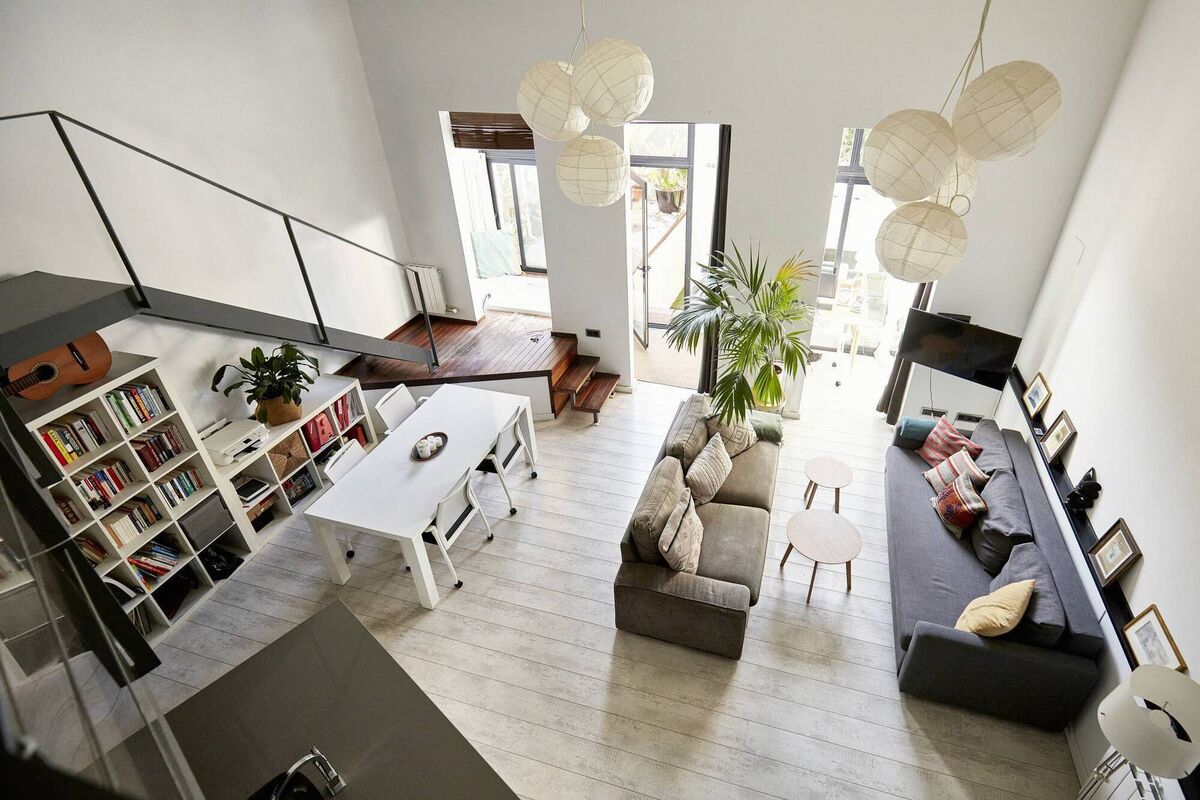
There are multiple scenarios which may persuade you towards energy upgrades through the One Stop Shop mechanism. Ensure you know which part of the project is likely to be SEAI grant-aided work rather than general building costs.
A median cost for a detached home taken from a D2 to an A2 (end of 2025) was €45,067 for energy upgrades alone, according to figures published by the SEAI, after €24,500 in SEAI grant aid.
During the process of a deep dive energy renovation, radical new detailing of insulation delivers a snug, seamless “box” through walls, floors, and the roof to keep warmth inside the house. U-values are substantially lowered in exterior walls, windows, and doors. There’s an end to cold-bridging where cold and moisture can jump across materials.
With homes more tightly sealed, managed ventilation, mechanical and passive, ensures that the air we breathe is fresh and low in humidity, returning its warmth to the house before being expelled and exchanged.
While many of the registered one-stop shops listed are also able to carry out building works in addition to energy upgrades, these non-grant-aided works are not financially supported, inspected, or overseen by the SEAI.
As for a predictable timeline on this deep dive, Stephen Farrell adds, “On average, we are seeing waiting times of three to four weeks for the completion of the Home Energy Assessment, which is the first essential step.
“There is a stand-alone grant of €350 for this assessment, so it’s a great starting point for homeowners unsure of where to start.
“They are under no obligation to proceed with works after their assessment and may even choose to go the individual grant route and carry out just one or two upgrades.
“Once that has been completed and you have agreed on the works you wish to carry out, your chosen One Stop Shop will advise you of their delivery times. This is pretty similar to any major home renovation, like an attic or garage conversion.” There are currently 36 firms registered as OSS with the SEAI nationwide.

CONNECT WITH US TODAY



Be the first to know the latest news and updates