Take me to Church: A 19th-century Co Cork building given a new lease of life
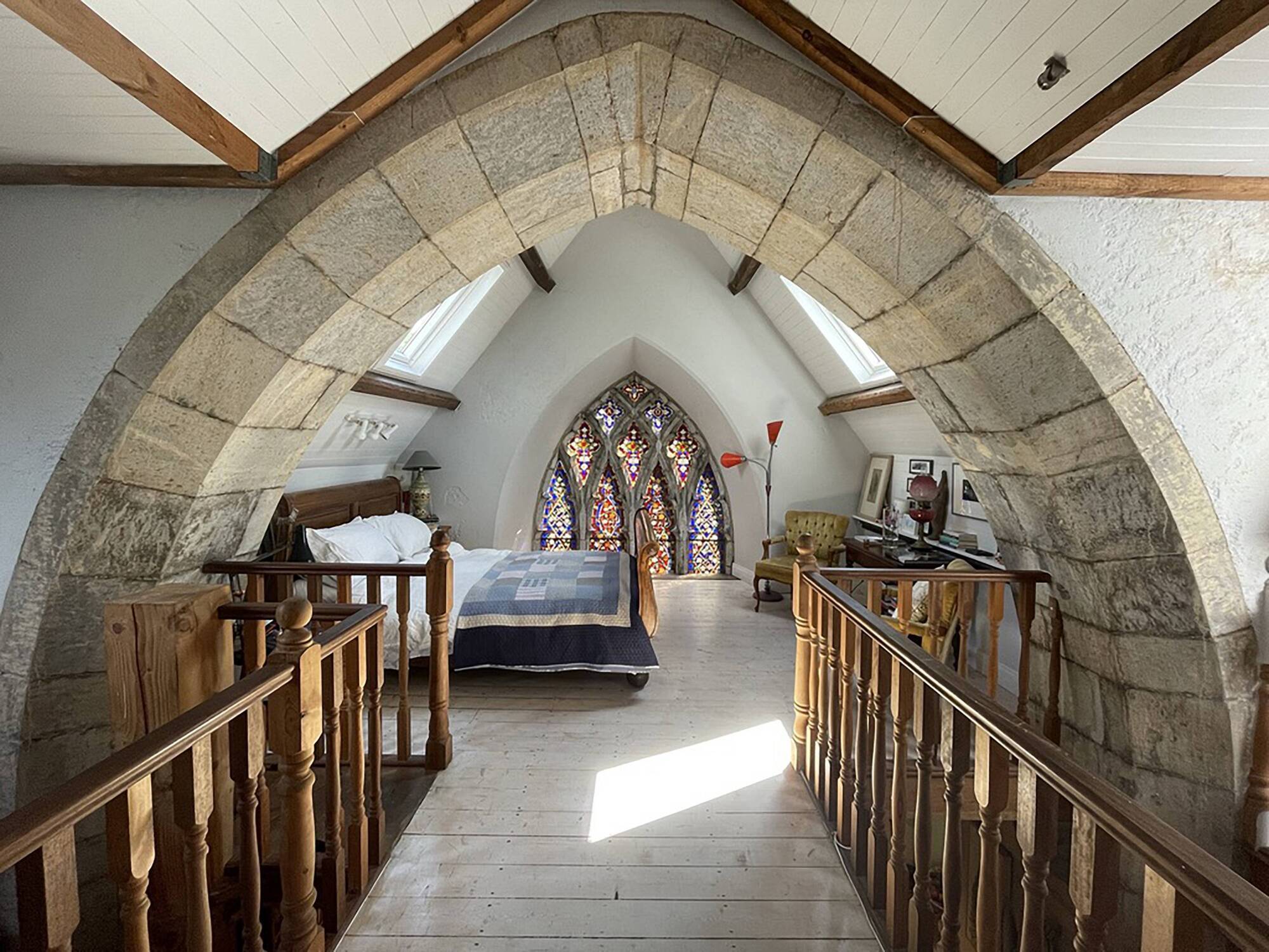
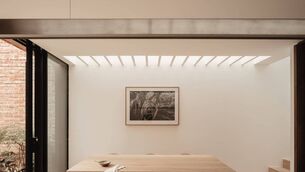
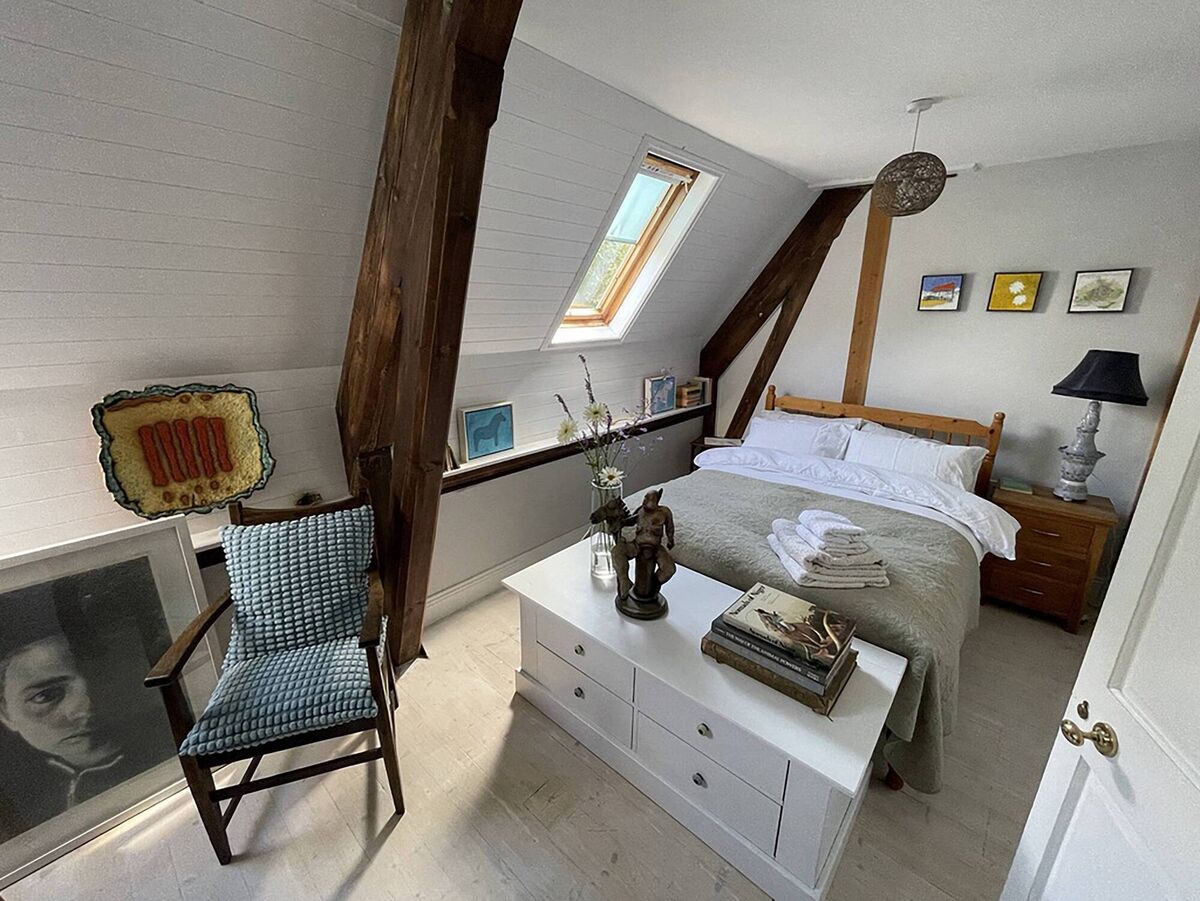
Morning sunlight floods the bedroom, located at the altar end of the building, above the kitchen.
ARTIST Johanna Connor will never forget first walking through the door of The Old Church, The Glebe, in Coachford, Co Cork, in 2020.
The Schull native was entering the residence, workspace and gallery of sculptor Michael Quane RHA, who was to become her husband. (The couple met on Instagram.) Connor says: “Basically, I didn’t know what to expect. You see a church on the outside and have no idea of what’s inside. You have a preconceived idea; maybe pink walls, tiles and harvest flowers. But when you come in, you are arrested by this magical kitchen and wonderful spaces and staircases.”
We are seated around a wooden table in the large kitchen where Connor serves a scrumptious breakfast of coffee, fresh fruit and poached eggs on homemade toasted sourdough. The lights are on because, during the winter and early spring months, the window high above the table is shuttered for insulation.
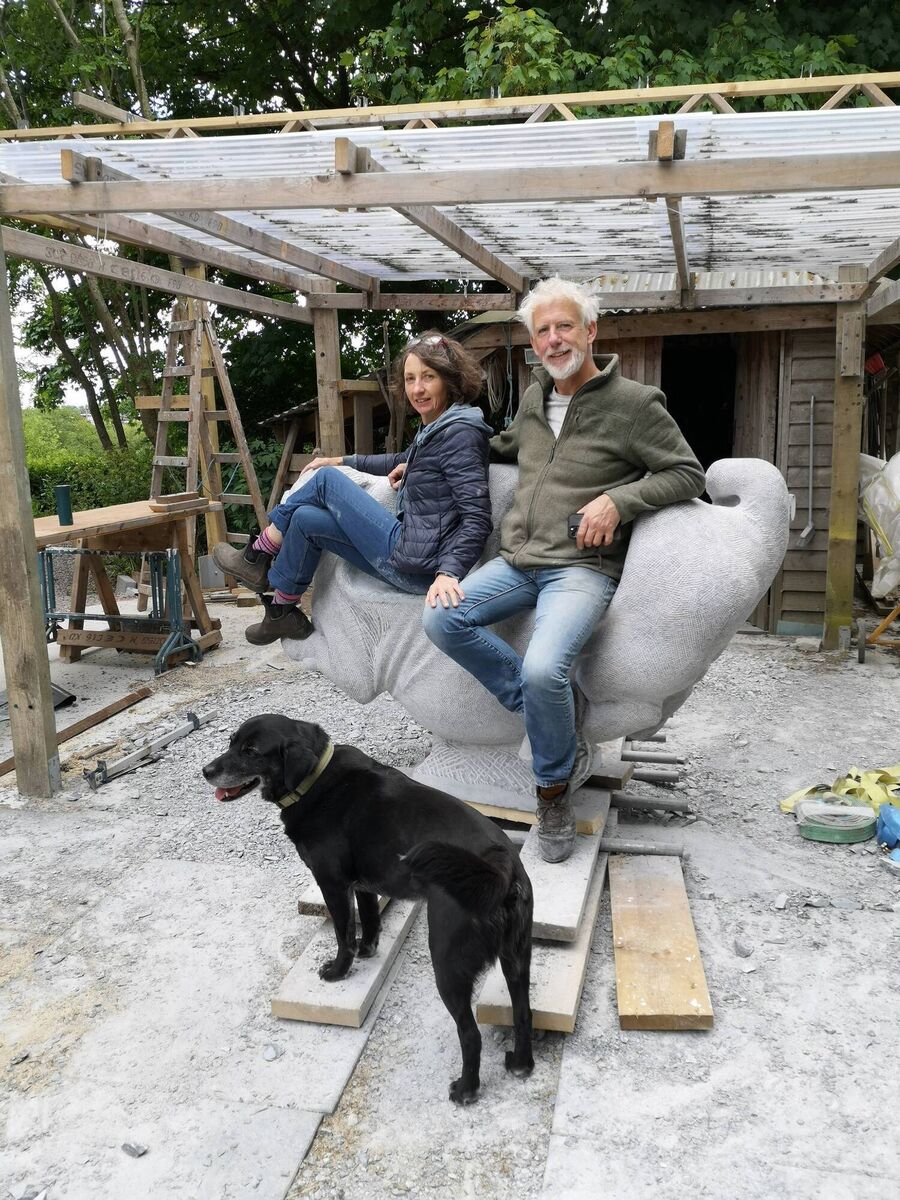
Quane, whose public commissions include sited in Midleton, and at the Mallow Roundabout, quotes Kevin McCloud of Channel 4’s Grand Designs, who said that loose-fitting shutters are as good as double -glazed windows. (And they’re a lot cheaper.) While the couple miss the icy, silver wintry light that should be coming into the kitchen, they’re hoping a new window they’re installing will insulate the room. Work on their home is never finished, but it is very much a labour of love.
Quane, brought up in Douglas and later in Ovens, bought this 19th-century Church of Ireland building in 1994. His sister Una and her husband were looking at houses all over Co Cork. They came across the church just on the edge of Coachford village. Although they didn’t want it, they thought Quane might be interested in taking a look at it.
Read More
At the time, Quane was aged 32, living at home with his parents and realised that as an artist, he would never succeed in getting a mortgage. He had some money saved, and the £25,000 price tag on a building that no one wanted was within his reach. (The congregation had died out with the last churchgoer being Gwendoline Jellett, a relative of the early 20th-century Irish artist Mainie Jellett.) “So I bought the church. I saw its potential for being a home and for being creative,” he says. “In a semi-detached house, you wouldn’t have much room to do things.” He is handy around the house and did as much renovation work himself as he could.
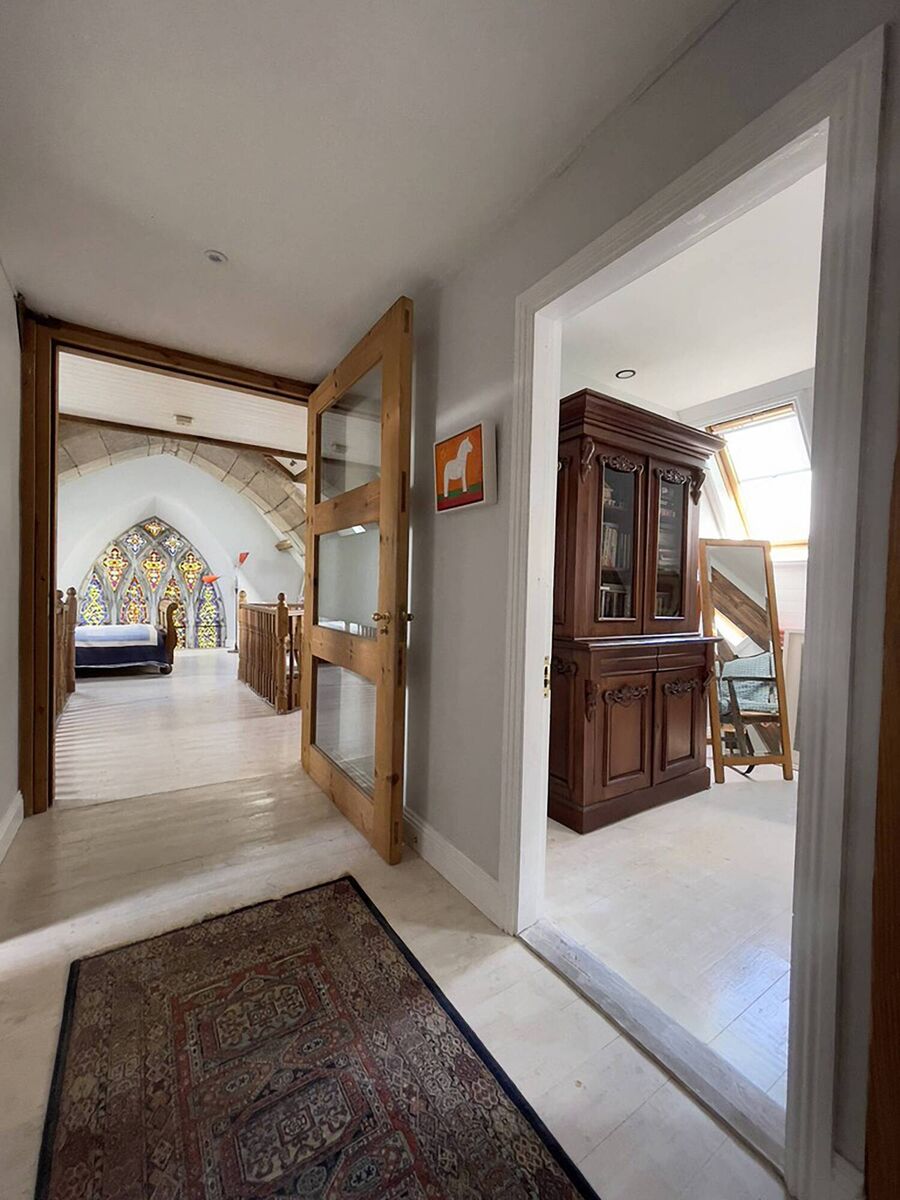
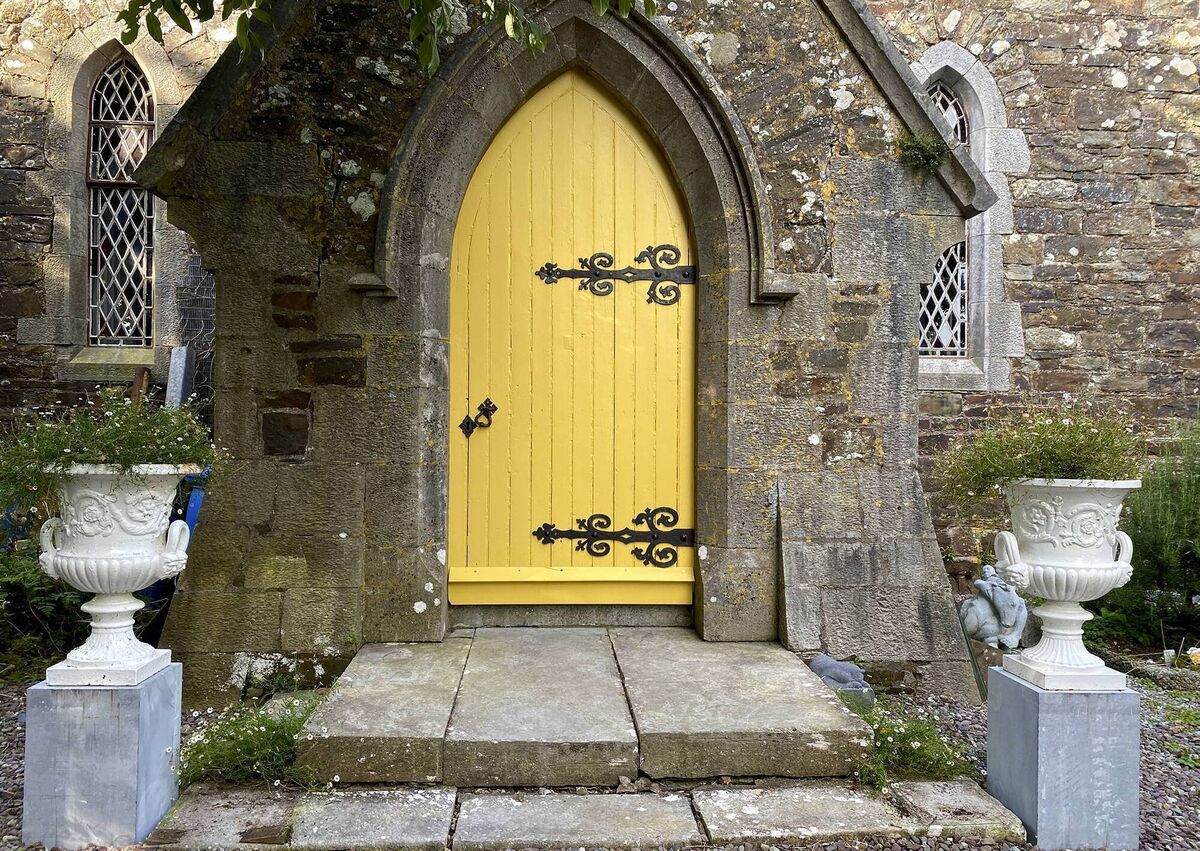
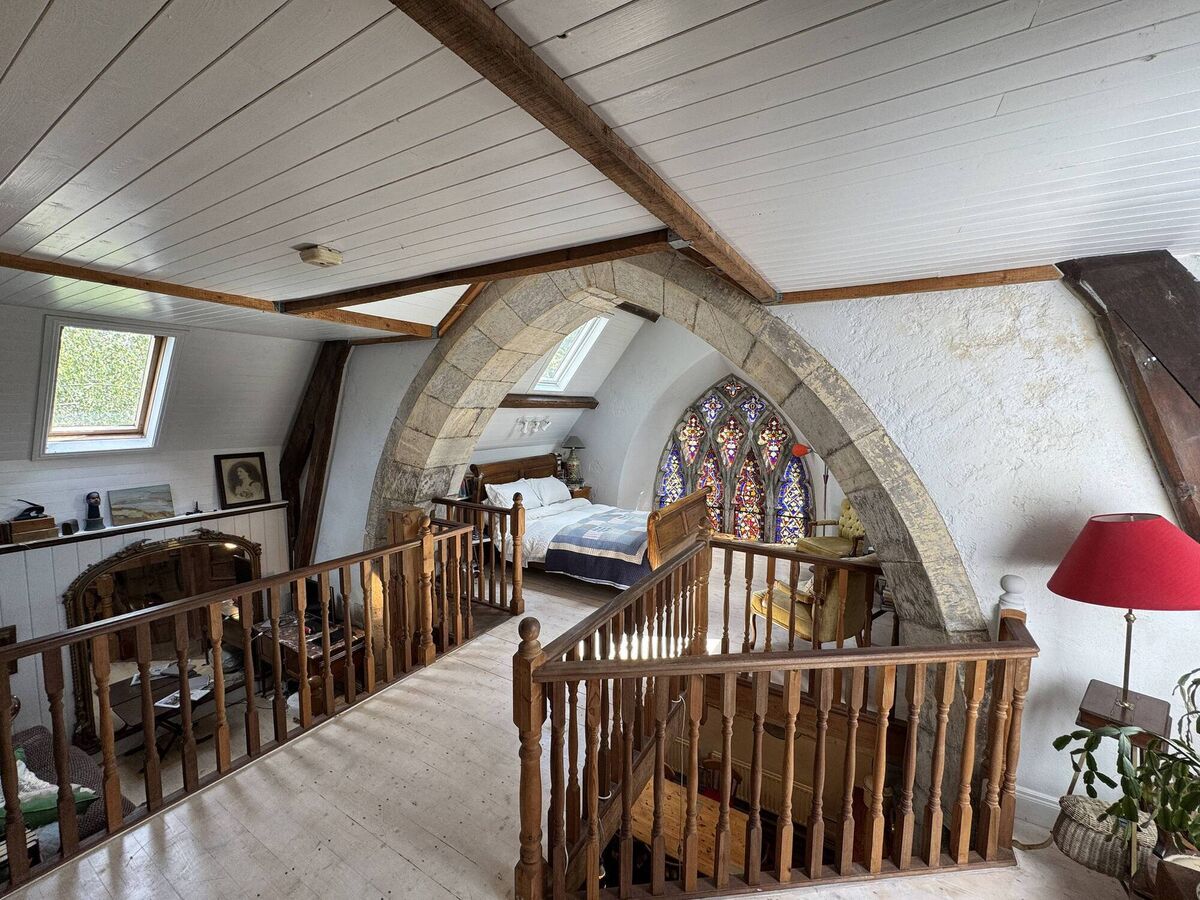
Quane, like Connor, has the happy talent for visualising the potential of a building and its interiors. With timber and stone, the former church “really lends itself to a creative approach”, adds the artist. It measures 4,000 square feet with two-and-a-half floors that Quane put in. Within a year of buying the church, Quane moved in “with just the bare minimum done,” he says. “The superstructure was put in, using Douglas fir, known as the engineer’s timber. There were beams and pillars and columns. The floors had been put in, but none of the insulation. So there were some very cold nights here.”
In all, from the ground floor to the roof, the building is 31 feet high. Quane says he didn’t realise until later that the most important part of the design was where the main stairs would be situated. An architect, Flor McCarthy, “was very helpful. The stairs determined how the building would be built”.
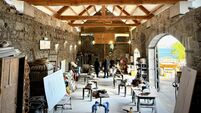
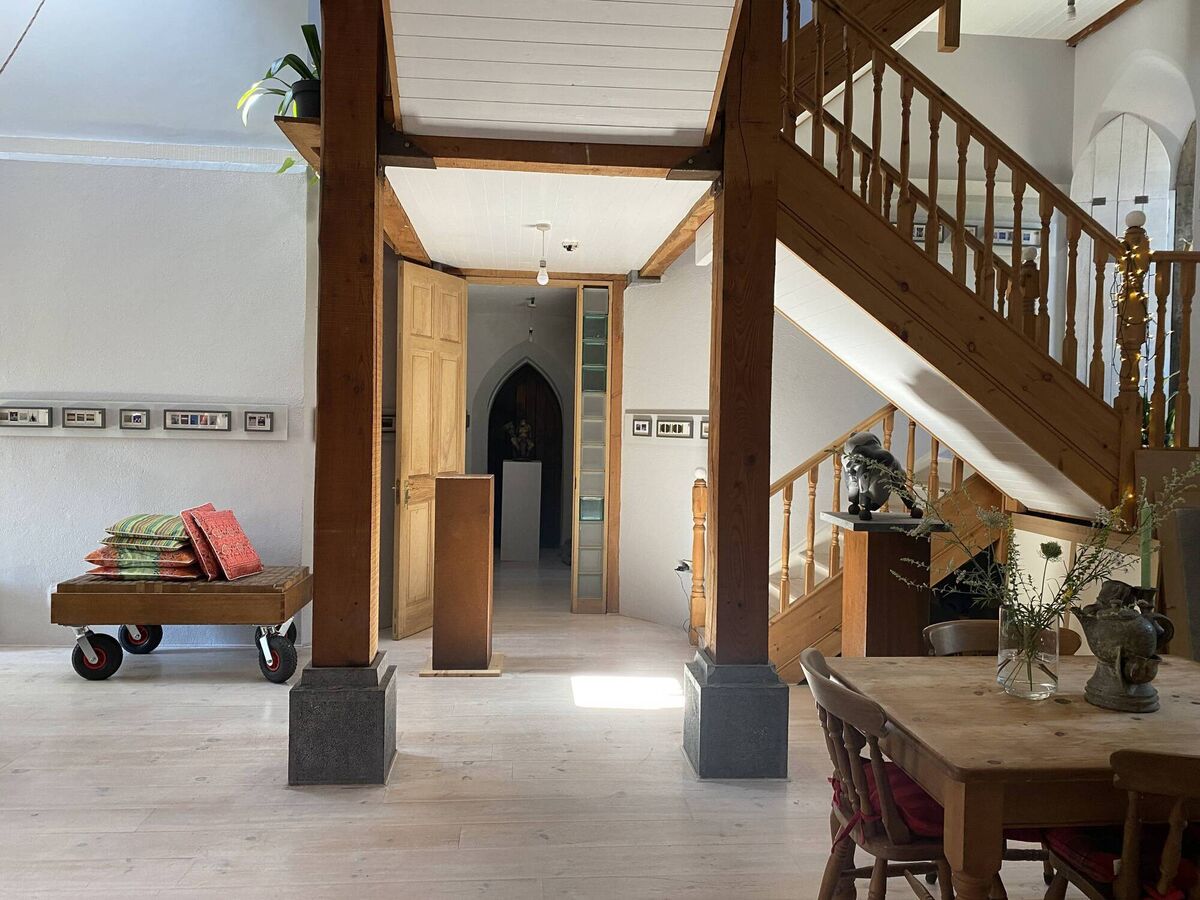
The main stairs (built by “a very good builder, roofer and carpenter, Frank Casey”) are in the spacious gallery (28 feet by 30 feet). Because there are different levels in the building, the windows (some made from stained glass) are at varying levels.
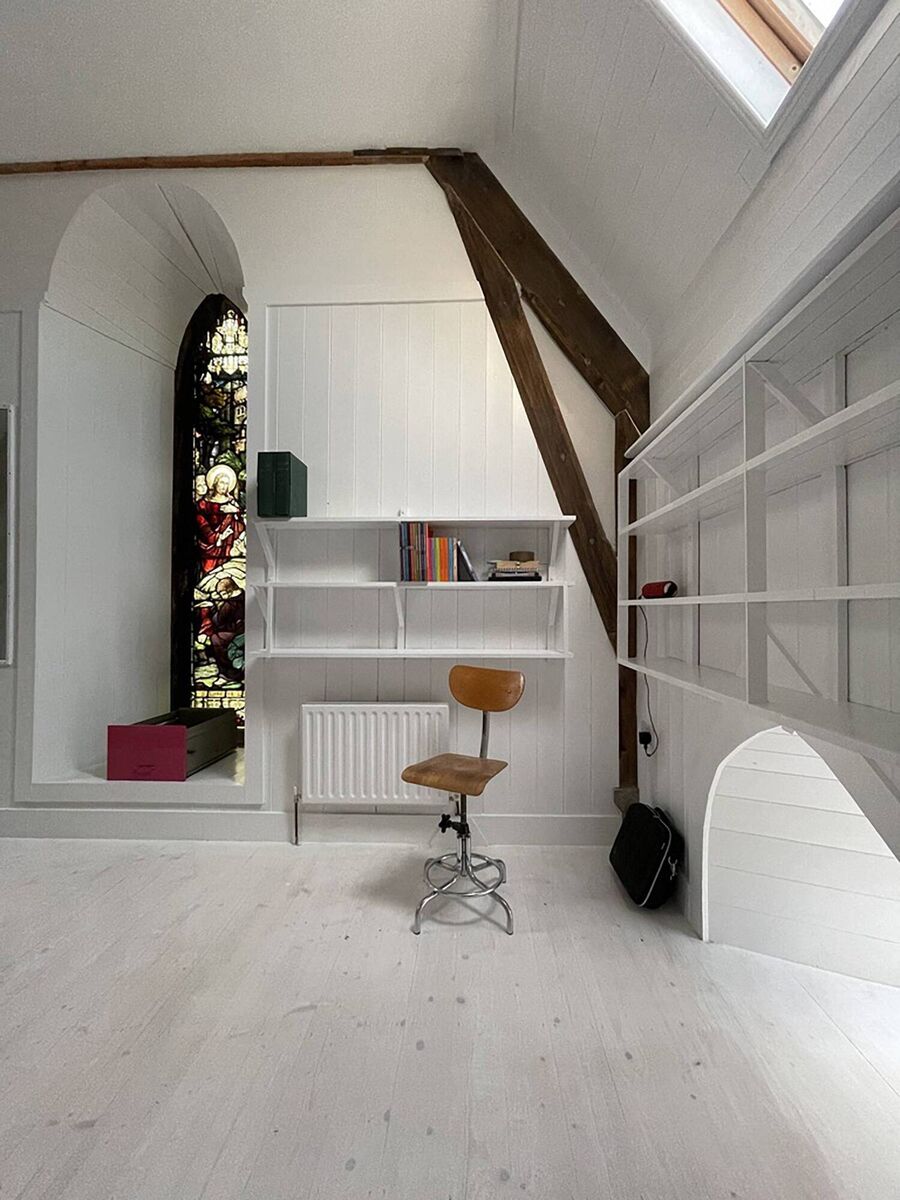
In the kitchen, we are seated where the altar used to be. (The disused church, utilised by local theatre group, the Coachford Players, was deconsecrated around 1986.) There are marble steps down beyond the table to the main area of the kitchen with a floor of black and terracotta-coloured original tiles.
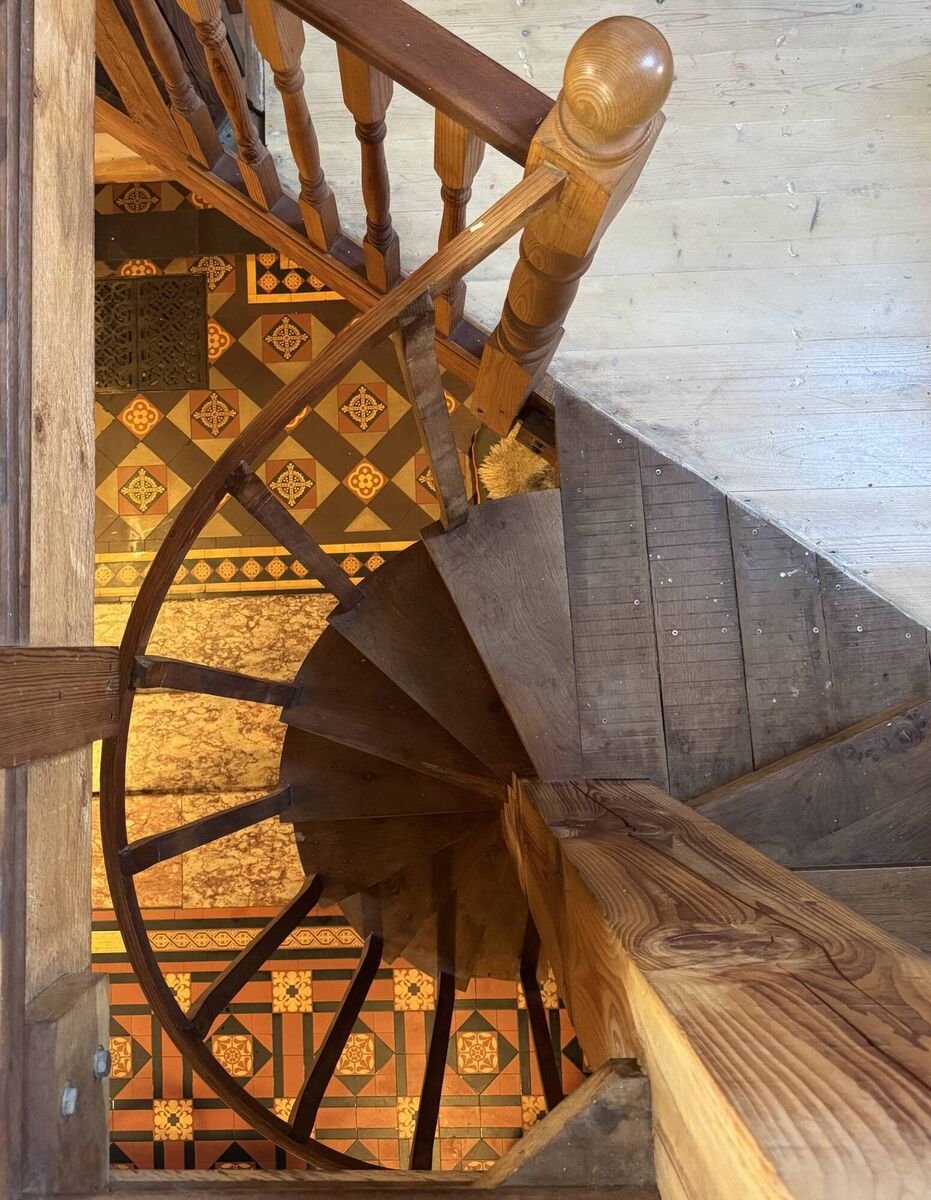
A spiral staircase in a corner of the kitchen leads to the mezzanine floor. “It’s like a half-landing where we go for some R&R,” says Quane. In this comfortable space are armchairs, books and lamps. It’s the only room in the house where the windows are at “a normal level. Every other window is looking up at the sky”.
Quane says he’ll give anything in the construction line a go. He worked out how the spiral staircase would be built: “All you need is a floor plan, and you pull everything up from the circle and divide your rotation into how many steps it will take to go one full rotation. It’s made out of Douglas fir, which is incredibly strong timber.” A beech tree in the grounds of the church “spontaneously fell one day”, he says. In keeping with being as sustainable as possible, Quane got a local sawmill to extract the timber from the tree. Out of this material, the kitchen was built by Denis McSweeney. There is a dresser, nearly ten feet tall, made from beech, as well as cupboard doors and the surrounds of a counter. “It was always going to be a sustainable project because stone houses are limited editions. They’ll never be built again. So if you use one, you’re bringing it back to life. And that’s what we’re doing. It has been a difficult project with these big stone walls that are holding the rain and the damp. But we’re about to come to the end of making the place wonderfully habitable with more dry-lining and insulation.”
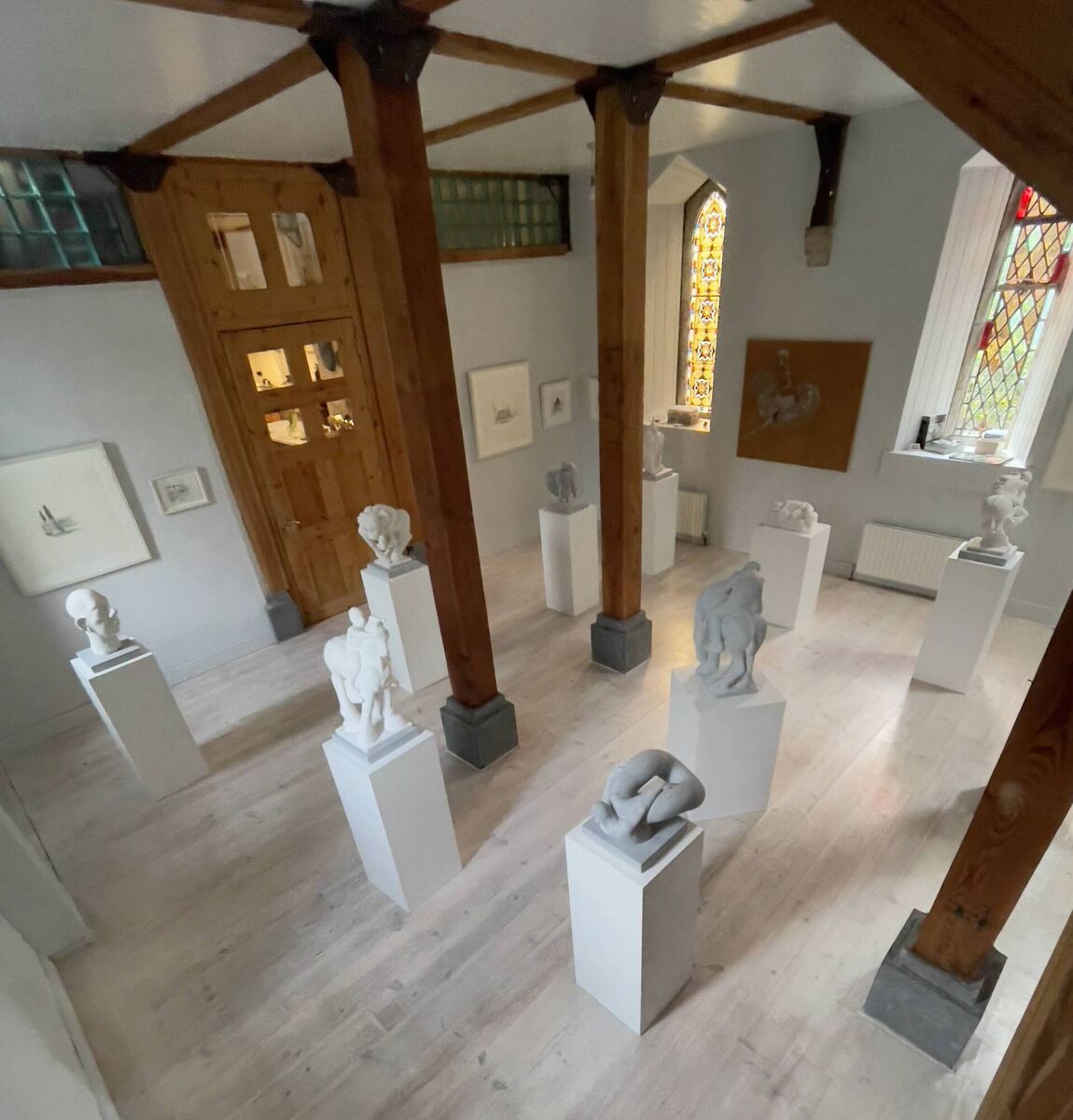
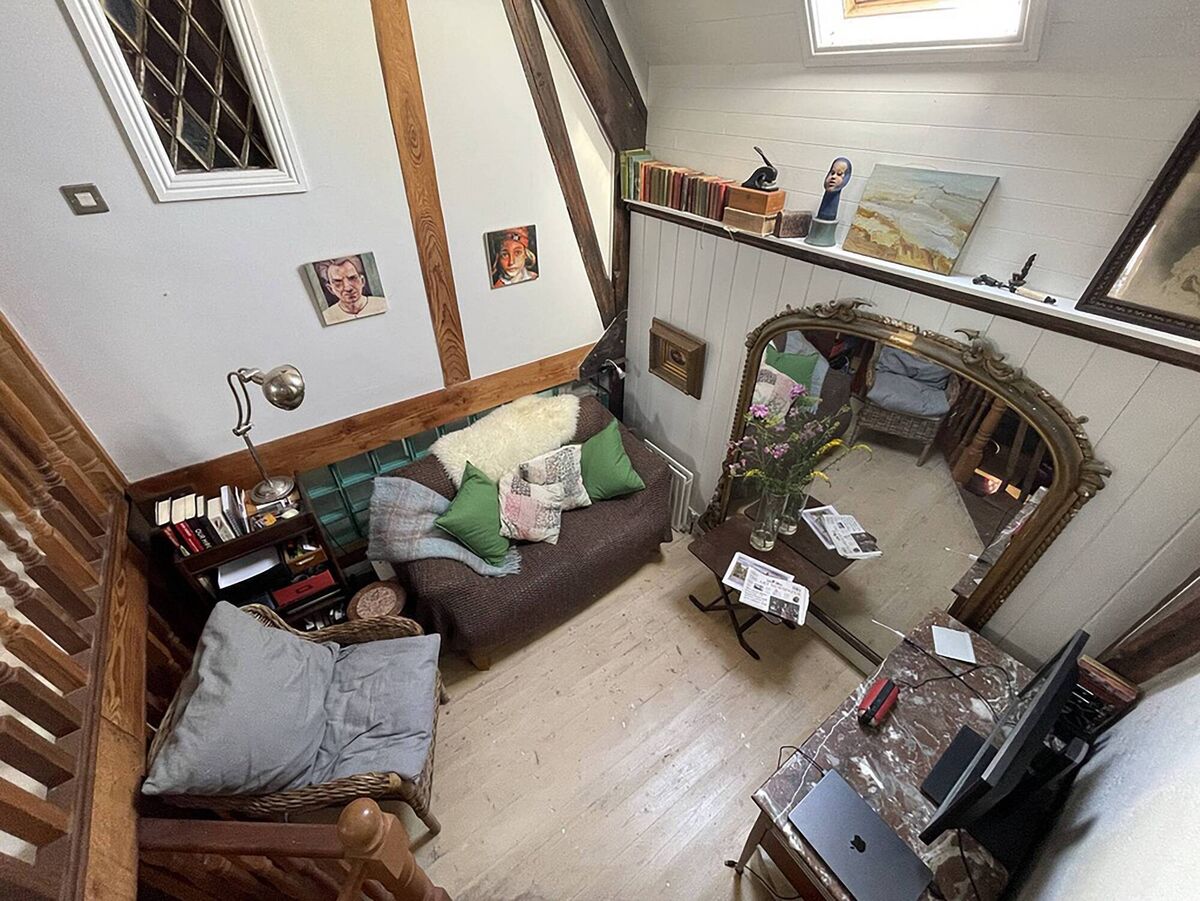
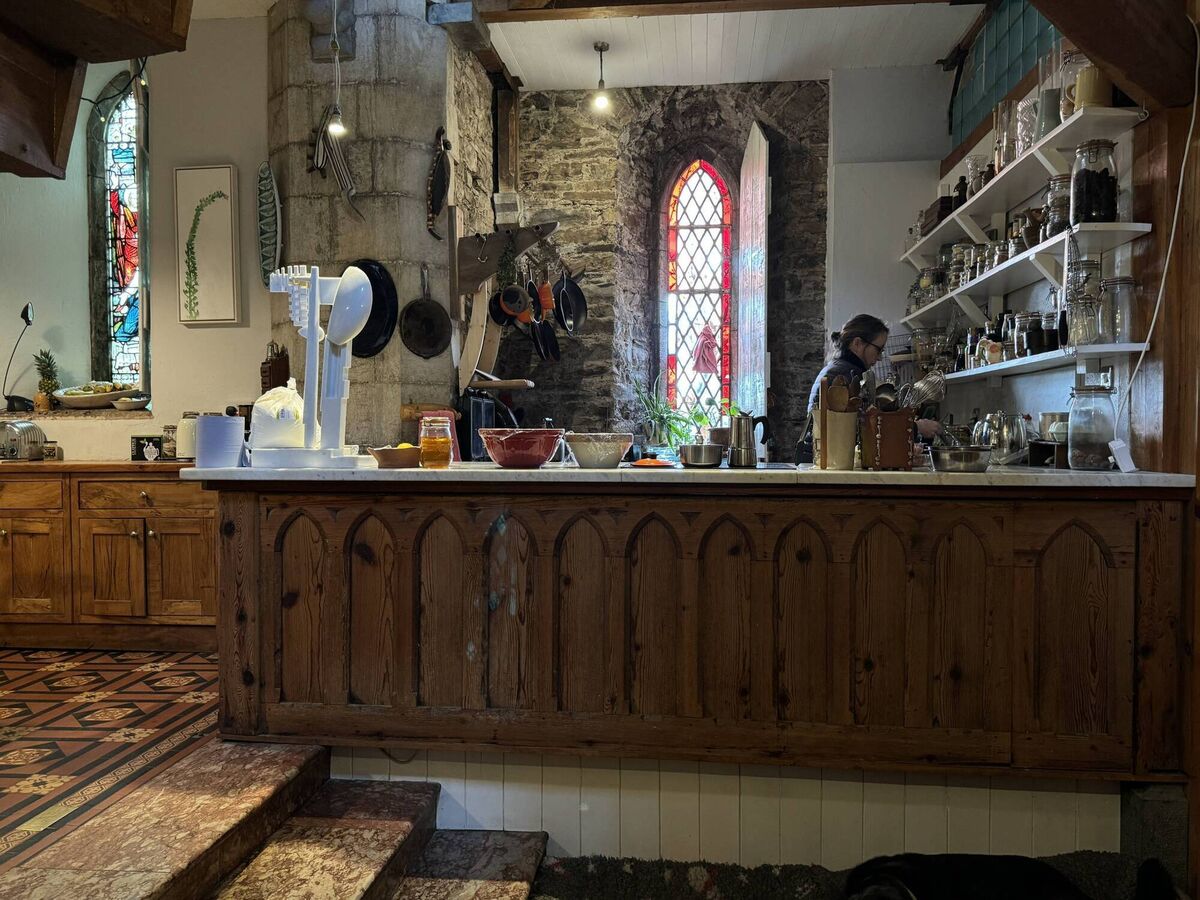
The four-bedroomed residence is full of art by artists including Peter McTighe, Tom Climent, Eileen Healy and Anna Barden, as well as ceramics by Pat Connor, who is Johanna’s father. There is also quirky pottery by Quane’s late mother, Eve, who called her enterprise Potty Pots.
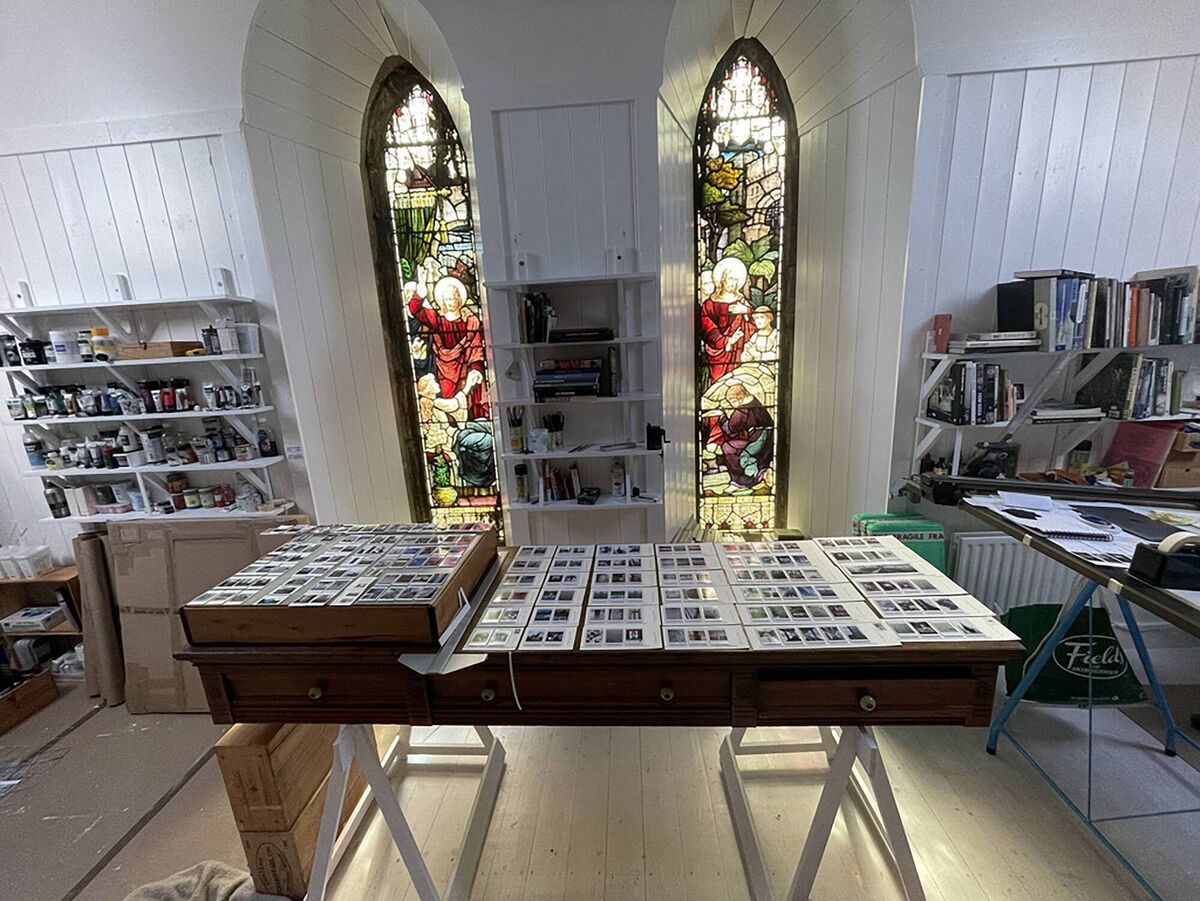
Appropriately enough, Connor’s own art (drawings on paper) is of often-forgotten scenes found in the mundane. Her intricate work, created at her in-house studio, is all about finding beauty in the landscape of things and traces. And that is what she and Quane (whose studio is a partly open, ventilated space at the gable end of the building) have done on a large scale.
Connor is handy about the house when it comes to painting and sanding. “I would consider myself a very practical person,” she says. “I’ve always done things with my hands.” (She was formerly a theatre set designer). When it comes to the decor of the reimagined church, Connor says: “It’s kind of simple. We work with the limitations of the building and our budget. It’s about choosing simply. There are a lot of objects and pieces of work and paintings, so it’s nice to have a simple backdrop (of white walls and wooden fixtures).”
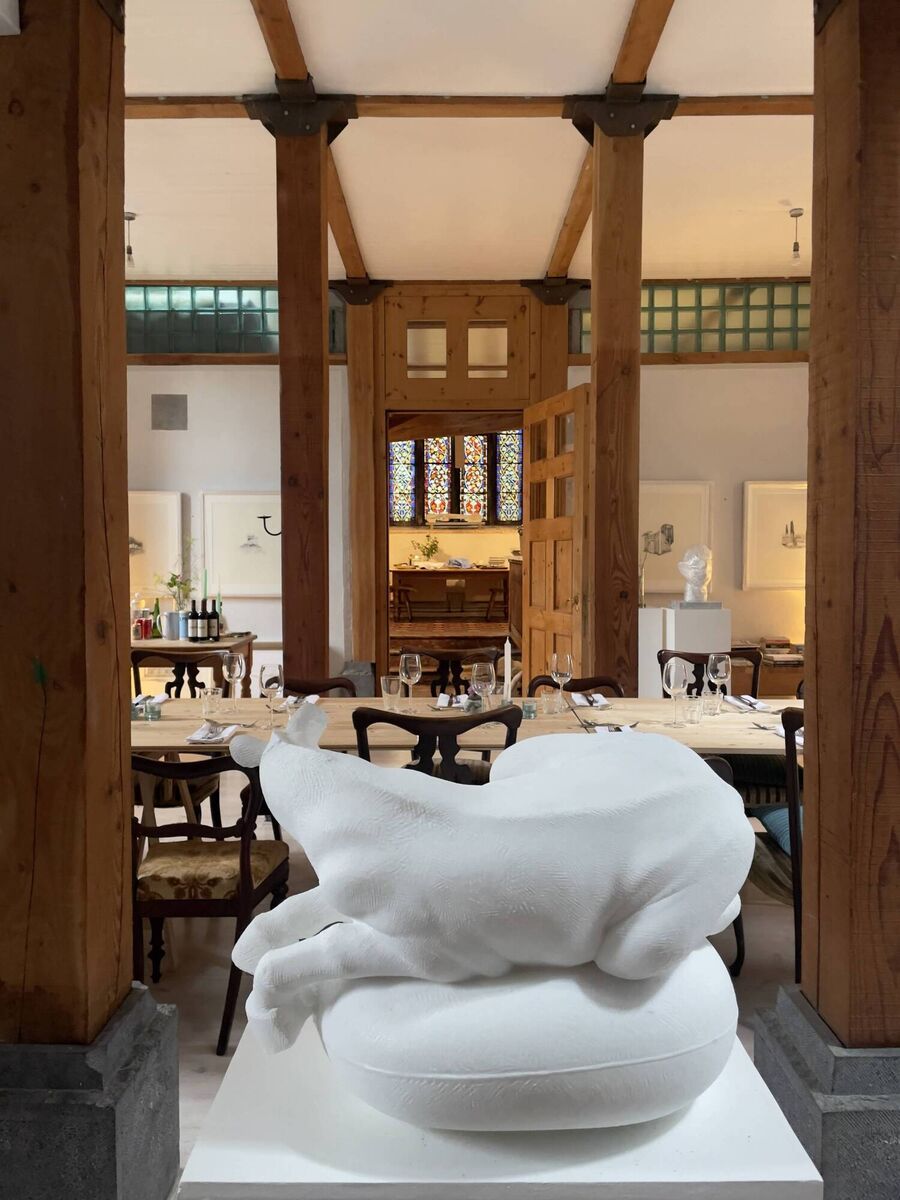
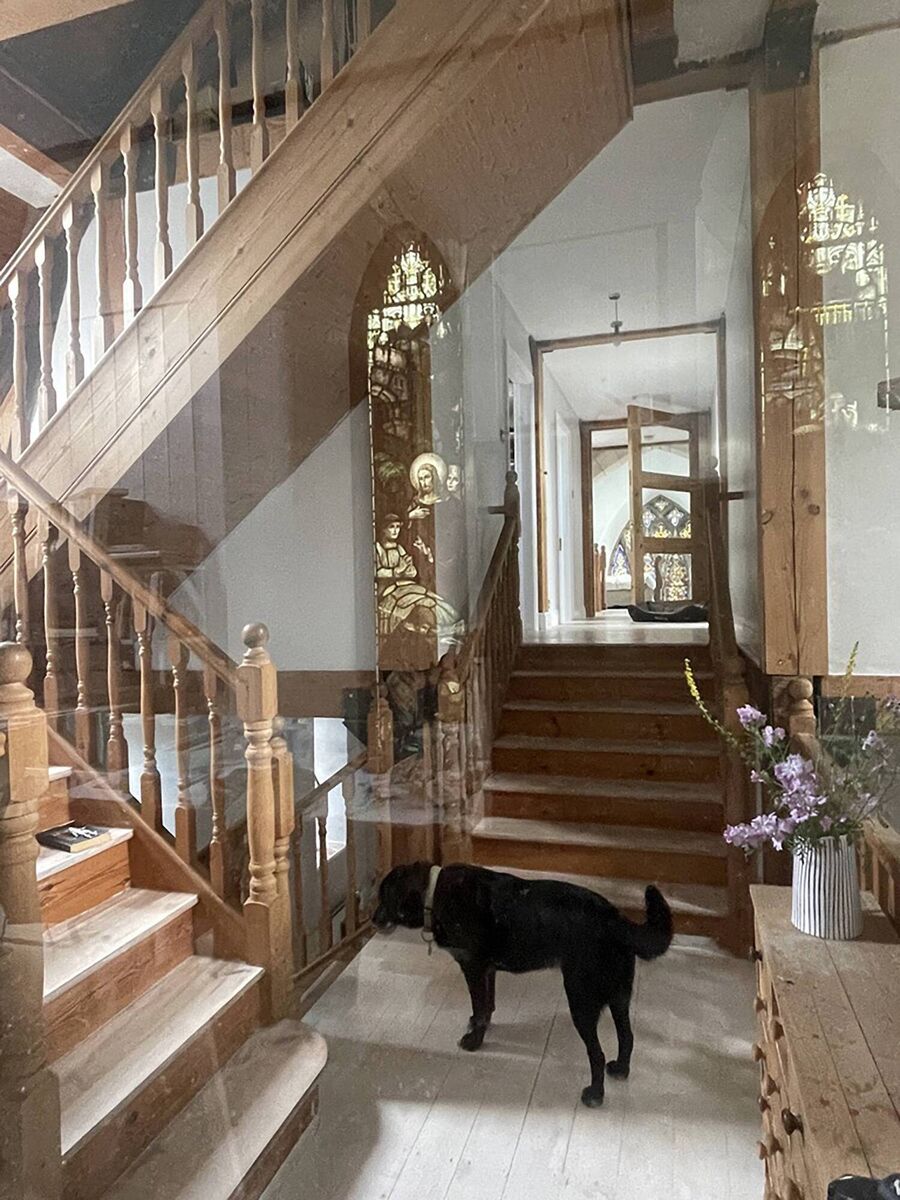
Connor says Quane is “empathetic to the windows. People renovate churches all the time. But a lot of the time, it’s about making a house that involves almost trying to put a house into a church rather than working with the proportions and the space that already exists. Michael plays with the space, so you have some wonderful irregularities such as bridges and landings in places you wouldn’t necessarily expect.” Pride of place in the main landing are Quane’s pencil portraits of his grown-up children, Joe and Lucy, from his previous relationship with herbalist Nikki Darrell. He has been pointing out to his children the importance of not being in mortgaged debt for life to the bank. A dinger at DIY, Quane is able to see the wood for the trees.
-
Family Matters is an exhibition of sculpture, paintings and drawings by Pat Connor, Michael Quane RHA and Johanna Connor opening on August 20 and running until September 6 at Cnoc Buí Community Arts Centre, Ardagh, Union Hall, Co Cork


CONNECT WITH US TODAY



Be the first to know the latest news and updates