Peter Dowdall: How screening adds a new dimension to the garden
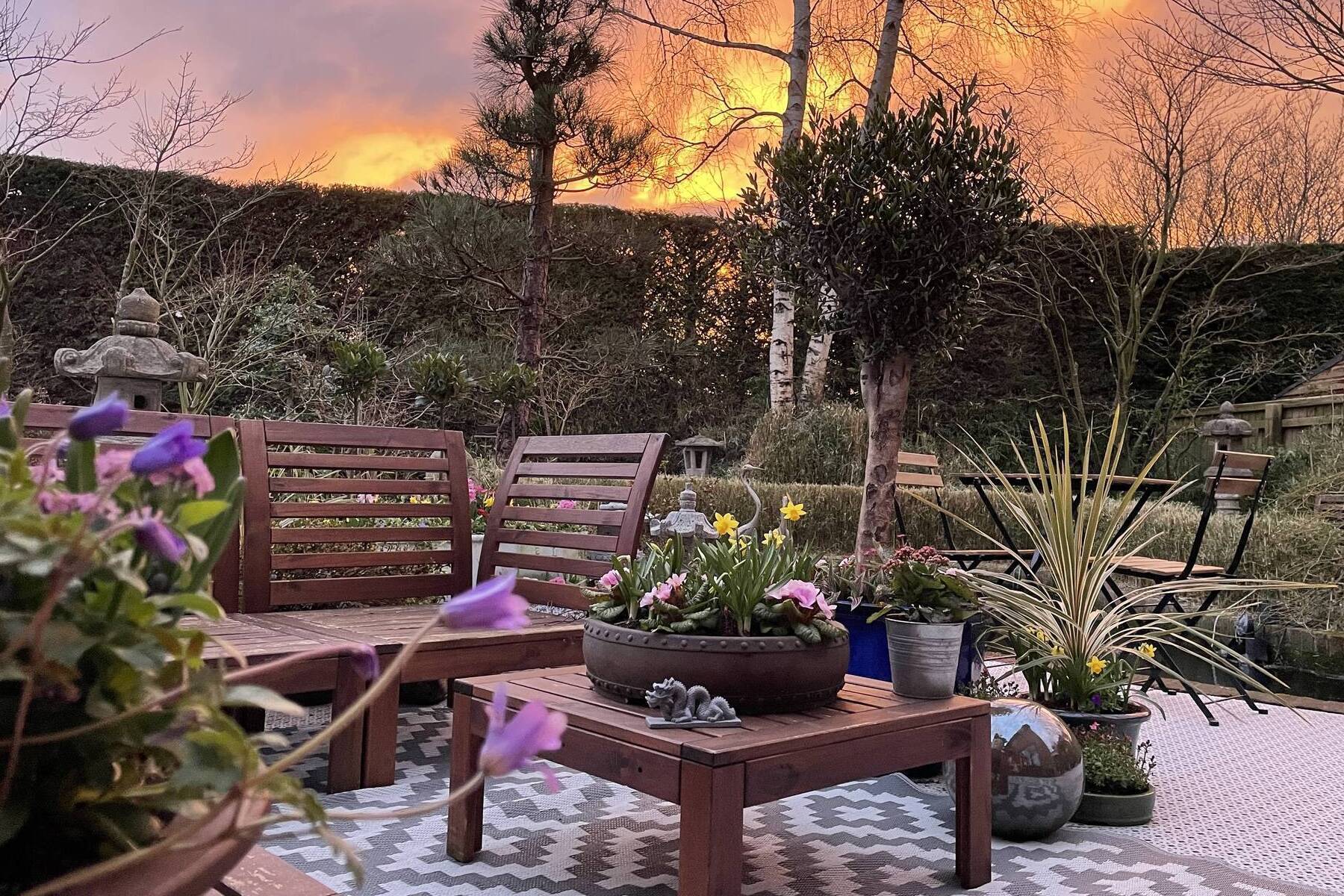
Most of us can't wait to get into our gardens each morning at this time of year. File pictures
Around about now, as the temperatures begin to climb and the evenings stretch out, the garden starts calling us back. We find ourselves outside more, coffee in hand, actually using the space rather than glancing at it through the kitchen window, and it is often only now that we notice what it needs, what is missing.
For many gardens, what is missing is a screen, and I don’t mean of the electronic variety. Mor do I necessarily mean a fence or a wall, though sometimes those are the right answer, but something that gives the space a sense of enclosure and privacy.

Something to give shelter from whatever is outside, a road, a neighbour's windows, a prevailing wind, a view you would rather not look at. Give some thought when choosing a hedge, as it is probably the single element that most transforms how a garden feels.
Sometimes the temptation is to head to the nearest garden centre, reach for whatever is cheapest or fastest-growing. Stop, don’t go with that frame of mind, for if you do, you may well regret it. Think instead of screening as an opportunity to add another whole dimension of interest to the garden.
When you are decorating a room, you do not grab the cheapest or the first tin of paint that comes to hand. You think about the colour, the finish, the way it will work with what is already there, how it will look in different lights.
Give the same thought to your hedging as a good hedge is also a backdrop, providing both shelter and a foil for the planting in front of it. It will provide colour, texture, seasonal change, ecological benefits, homes for wildlife, and so much more.
The first decision is whether you want evergreen or deciduous, and the answer to that is that it depends on what you are screening. Evergreens give you year-round cover, which matters if the issue is a view or a neighbour's windows.
Deciduous gives you something that shifts and changes through the seasons, and in many situations, the loss of cover in winter is no loss at all because you are not out there.
My own favourite hedging plant is Fagus sylvatica, the common beech. Strictly speaking, it is deciduous, though it has the useful habit of holding onto its dead leaves through winter in that lovely copper-brown until earlier this month, as the fresh emerging, new leaves push the old ones off, and it is really only see-through for that short two or three weeks.
Apart altogether from the seasonal changes in Beech, it is a good hedge, dense, responsive to clipping, and very long-lived. Plant it at the right spacing, keep it clipped, and a beech hedge, whilst not the fastest, will absolutely reward the patience.

For something with real wildlife value, a mixed native hedgerow is hard to beat. Hawthorn, blackthorn, hazel, holly, field rose, spindle, a mixture of these gives you a screen that is also a habitat and a food source for birds and insects across every season. It will reward you with fantastic seasonal interest and ecological diversity that no single-species planting can match. If you have the space and the inclination, this is one of the best things you can do in your garden.
For exposed and coastal situations, elaeagnus is worth getting to know well. It is not glamorous; its flowers are small and easy to miss, though very fragrant and important for pollinators in an otherwise difficult period. But it is extraordinarily tough. It will take salt winds and exposed aspects that would shred or scorch most other shrubs, and once established, it creates a really effective shelter belt.
Elaeagnus ebbingei is evergreen, relatively fast-growing, and unfussy about soil. If you are gardening in an exposed spot and struggling to get anything established, Elaeagnus is the plant to start with and build around.
One plant to avoid is common laurel, Prunus laurocerasus. It is everywhere, partly because it is cheap and quick. I understand the appeal, but laurel has become a real problem in the Irish landscape. The National Biodiversity Data Centre lists common laurel as invasive and classifies it specifically as a High Impact Invasive Species.
It seeds freely into woodland and wild areas, outcompetes native species, and creates a dense understorey that suppresses almost everything beneath it. Beyond the conservation issue, it is not a particularly interesting plant either, large, coarse-leaved, and dull for most of the year. There are so many better options.

If evergreen is what you need and you want to stay native, the truth is that the choices are limited. Holly, Ilex aquifolium, is a beautiful native evergreen that clips well and berries freely if you have both male and female plants.
Yew, Taxus baccata, is the other native option, one of the finest hedging plants you can get. Once mature, it is dense and dark and wonderfully responsive to clipping, though it is very slow to establish and needs to be kept away from livestock and children, given its toxicity.
Beyond those two, if you want evergreen screening without reaching for something invasive, Portuguese laurel, Prunus lusitanica, is an excellent choice, smaller-leaved and more elegant than its notorious cousin.
Berberis darwinii is another evergreen option worth considering, tough, dense, and smothered in small orange-yellow flowers in spring, and because of its prickly foliage, it also makes a great security barrier.

- Got a gardening question for Peter Dowdall? Email gardenquestions@examiner.ie