Is a home battery worth the cost? The 2026 pros and cons of PV solar storage in Ireland
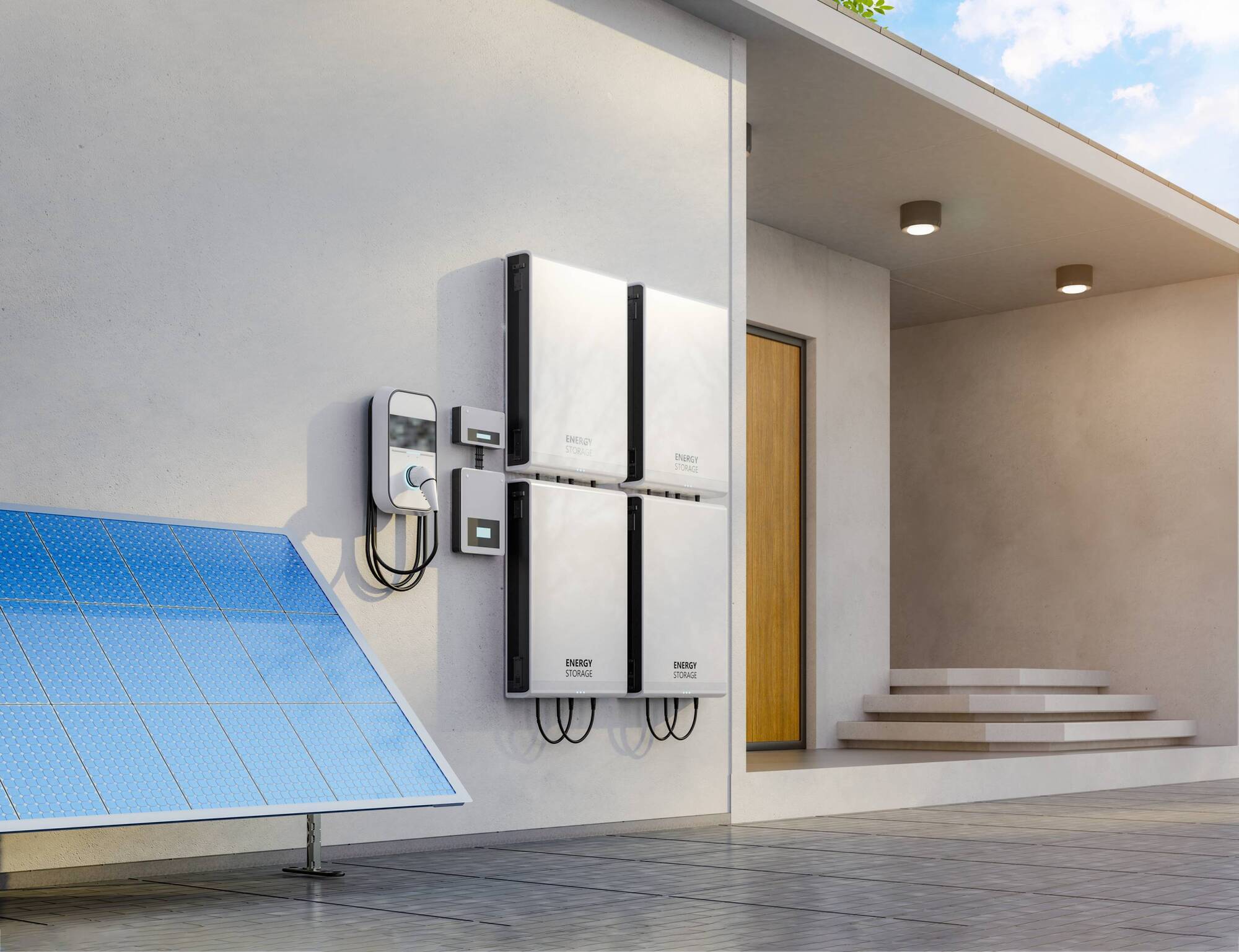
Batteries add to the versatility of your PV-solar system, keeping it serving the house after the sun goes down. It is also currently possible to push low-cost EV overnight tariff units (downloaded for as little as 8c) back to the Grid (18c – 25c paid to you for each unit) directly from your battery for credit on your bill. Picture: iStock
This is a question I get regularly from readers, so let’s examine the pros and cons of including a domestic storage battery in a prospective solar system for 2026.Â
First of all, let’s just outline in very lay terms what a PV-solar appropriate battery is. These are lithium-ion power storage devices that are used to store direct current (DC) gained from collection from a PV-solar array or, say, a wind turbine. This stored energy is then converted to alternating (AC) current by a device called an inverter, as it’s needed in the home. Domestic batteries can also hold power downloaded from the Grid and redeploy it. Many people use batteries for both duties, setting the hybrid PV-solar inverter manually on its interface or via an app, to dictate what the battery is used for. Storing up free solar gain, a battery extends the useful hours of a PV-solar system right into the night by as much as 10 hours, depending on what you’re doing after dusk. A solar array can work independently of a battery, and a set-up with an inverter, a battery can be used to draw power from the Grid without a solar system being in place.


Depending on your needs, most domestic PV-solar batteries range somewhere between 4kWh and 12kWh, with 5kWh being a popular average. We have a 6.5kWh battery here at Castle deLongchamps, and we’ve found this more than adequate for a 4.2kWp of panels, with three people here and a reasonable amount of water heated through a solar water-diverter (a smart plug that takes sips of solar power). Families detailing off-grid systems will often include larger capacity, linked batteries. These are intended to hold twice their daily power demand, as there’s just no backup if the sun hides its face or their domestic turbine is idling.
Grid-tied, our battery is about the size of a large floor-standing gaming PC. The physical intrusion is minimal. Most batteries can be mounted on a frame on the wall and placed anywhere dry and secure, out of the traffic path, where they won’t suffer wild temperature fluctuations. Some are designed to sit outside in a battery/inverter housing. Your supplier will map out the best location. It’s regarded as safer to site larger capacities of batteries outside the home envelope, in say an outbuilding, due to the slight danger of fire.
Your system’s battery will be sized to the array on the roof and your energy consumption. Otherwise (with a huge battery for a small house and modest array), a battery would be undercharged consistently, or unable to store the gain of a larger array – making an expensive install inefficient. Undercharging a battery repeatedly can cause it to degrade more quickly. Because a battery has a capacity of say 10kWh, it does not mean you can take a full 10kWh from it after dark. Generally, the battery will run down to 10% - 5%, and at that point, your consumption switches back solely to the Grid. This is what’s called depth-of-discharge (DOD).
You cannot rip as much as you like out of a battery at one time, either. How much power it can deliver depends on the specs of the inverter (its AC output) and the battery (its maximum discharge rate). If you’re running a 9kW electric shower, the kettle is boiling, the oven’s on, and your 70” OLED is blazing after the sun has gone down, it’s likely that the Grid will also be serving the house. If you have a 5kWh battery, you will need to be more careful to avoid going to Grid usage, whereas with a 10kWh with a good discharge rate matched to an adequately performing inverter, there’s just more hours of standard usage available to you.

So, what are the benefits of having a domestic battery? Obviously, storing energy from the gain on the roof, your solar system can continue to serve the house with free power after dark. In summer, this can result in only a tiny download from the Grid for what’s termed “cycling” the battery (often less than 1kWh if your array is performing well, and you’re not going bananas with the power from 7pm). Through the Micro-generation Support Scheme (MSS), you can fill a moderate battery by lunchtime in the high days of June to mid-September, and then allow any excess power created off the roof or ground-mounted array to feed back to the Grid, appearing as credit on your bill in kWh units (feed-in-tariff or FIT). We usually start the brighter days of spring and summer with as much as 40% storage in our battery, so it’s topped up by late morning, and we are then flogging FIT power back to ESB Networks.
Larger arrays with an optimal pitch and zero shadowing by trees and buildings can continue to make considerable gains even in winter when the arc of the sun becomes lower and shorter in duration. However, even where your gain collapses, the talents of the battery don’t have to be dormant until spring. With a few taps, you can set your system to download power from the Grid to your domestic battery on a cheap tariff – an EV night-time tariff would be ideal. This can come in well under 10c/kWh or less (including VAT) from most suppliers. Depending on its size, the battery will charge from the Grid in just 1-2 hours. Ensure your EV charger is set up as to not compromise your overnight PHEV/BEV car battery charging needs (this will matter with a long commute and a demanding 70kWh car battery).
The next morning, with a full domestic battery, you can then use that power to offset your winter Grid use, saving a good 50% to 60% on the units. Again, if the weather cooperates, the array can contribute to your usage during the day too. Some users I’ve spoken to go as far as farming Grid units year-round, downloading cheap nighttime EV tariff k/Wh - pushing them back to the grid via the MSS for two to three times what they bought the units for. This “load-shifting” involves extra cycles of the battery, potentially reducing its lifespan. Like most users, we just concentrate on the needs of the house and taking a nibble out of our standing charges with the MSS credit from ESB Networks. If you think you might want to expand your battery storage in the future, ensure you choose a brand that can be connected in series and physically stacked or wall-hung side-by-side, like the Tesla Powerwall.
The only real con regarding including a PV-solar battery is the additional loading of €1500 – €3000 for the cost of the battery, together with the increased cost for a dedicated hybrid inverter needed to include a battery in a PV-solar system. Some users prefer to simply put more panels than they actually need to run the house onto the roof or a ground-mounted array and rely on FIT to provide a sufficiently inflated credit to keep down bills. Even if you don’t want a battery at this point, it’s a good idea to set up a system that’s versatile enough to include one.
Most of us make little out of MSS, but the €400 income tax disregard here allowed by Revenue was extended in the Budget to the end of 2028 – good news for owners of high-performing solar systems. Feed-in tariffs from homes and farms are helping to decarbonise Ireland’s power Grid, whatever the reward to customers. With electricity prices skyrocketing, the payback period on the up-front costs of a PV-solar system is growing shorter, battery or no battery. There’s no allowance in the SEAI grant for a battery; however, the maximum SEAI grant award for a PV-solar system is set to remain at € 1800 for 2026, and supply and installation remain VAT-free.
To find out more, go to the PV-solar pages of the SEAI (seai.ie) and talk to your prospective supplier about your specific needs and expectations. I always recommend membership of the Irish Solar Owners’ Group on Facebook if you’re even thinking about a PV-solar system to discuss pricing, installation, and everything sunshiny on the roof.