Art and soul: The Cork artist who faced injury, concrete drains, and a derelict shell to save a Cobh house

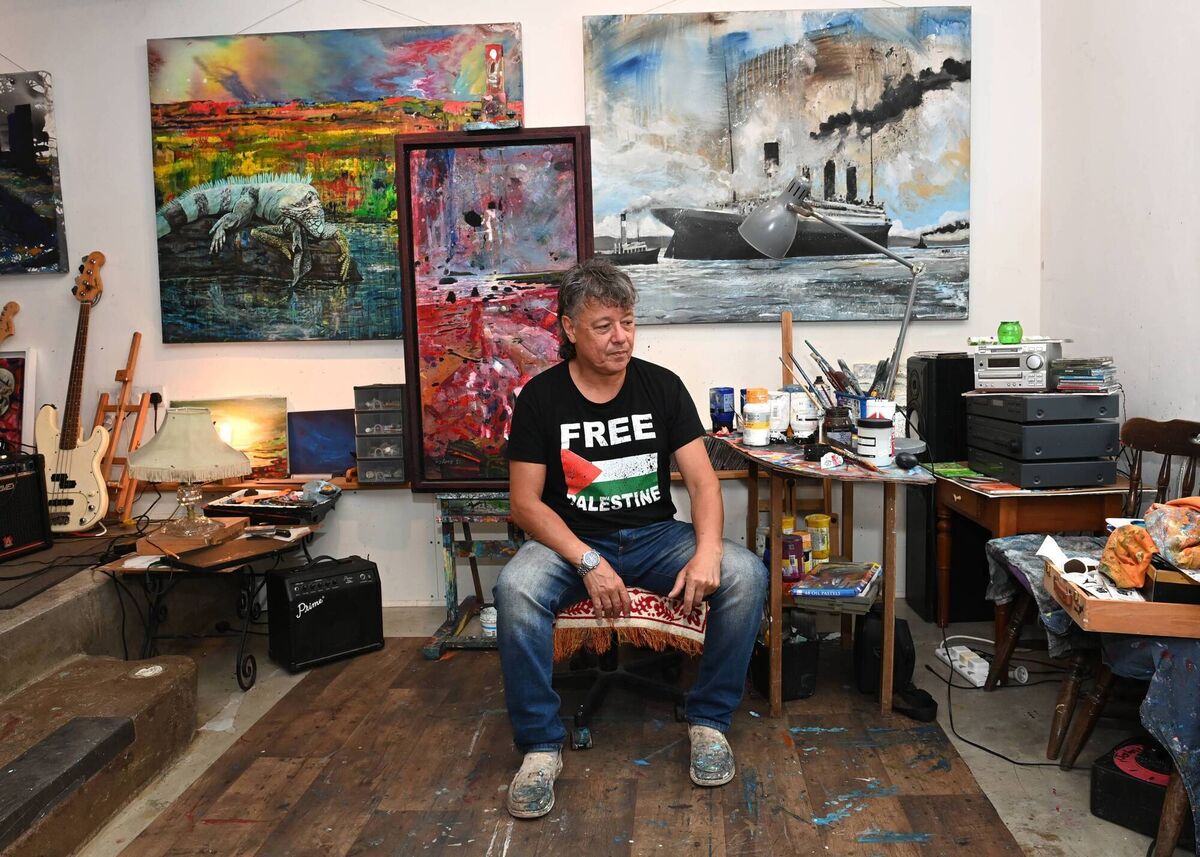
Artist John Adams at work in his studio.
John Adams wears his art on his sleeve. The artist bought a derelict house in Cobh in 2014 and carried out an onerous renovation over three years. Now, the three-storey house, built in 1896, bears a sign on the door that reads “The Artist’s House”, with website and mobile number included.
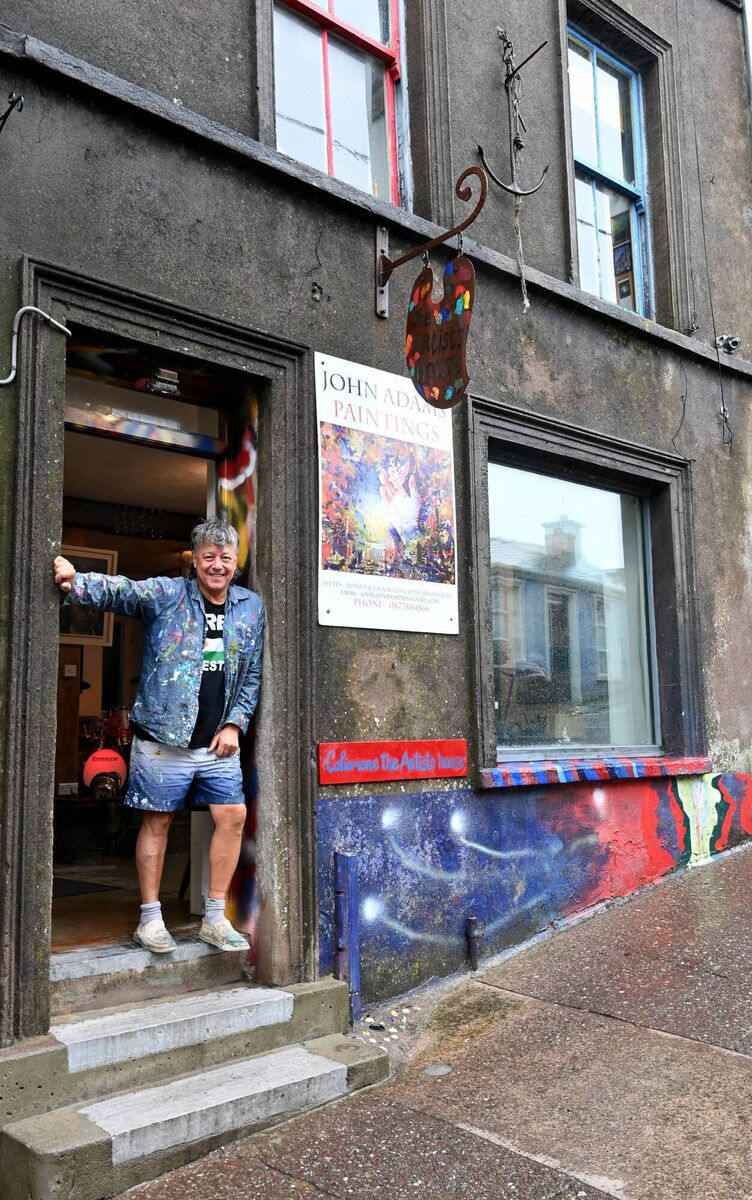
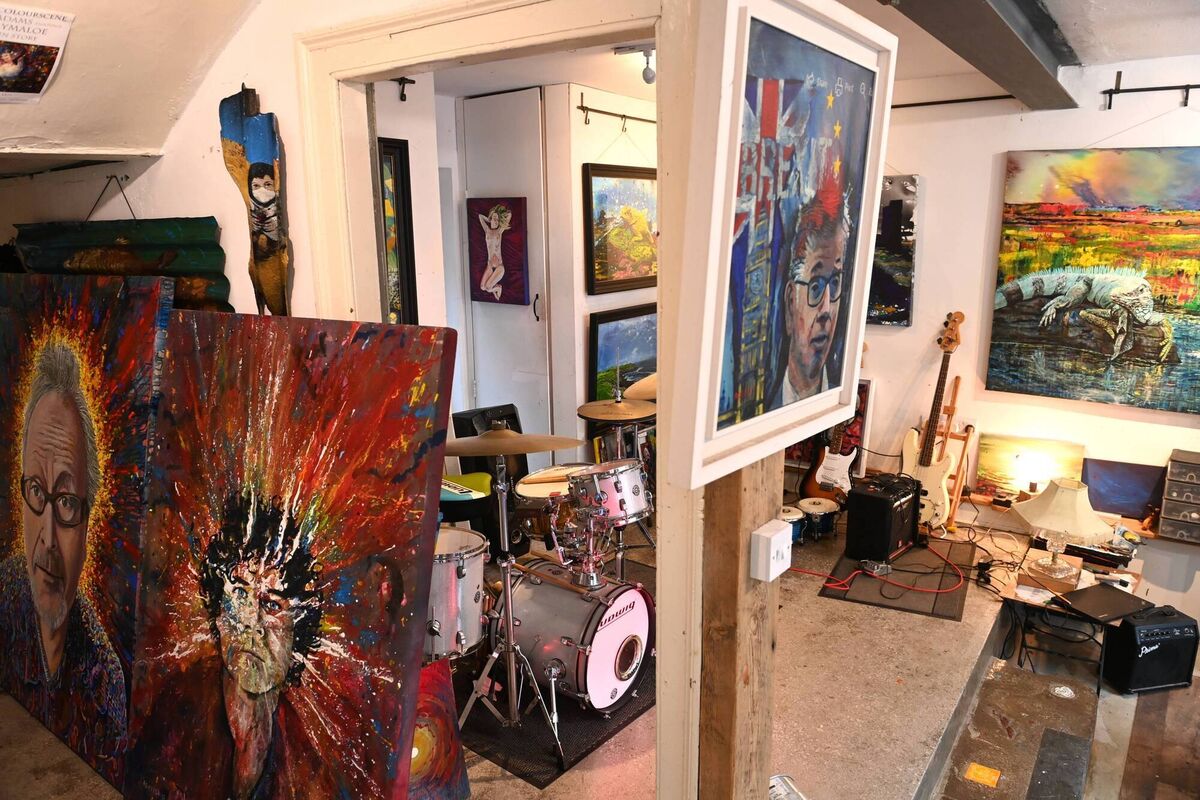
There is an artist’s palette above the door, and when you look in through the glass section of the entrance, you can see paintings hanging on the walls and propped up on the floor, waiting to be hung. (There is also musical equipment — John has played the drums in various bands.)
Originally from Dún Laoghaire, John’s purpose in opening up his house — on a non-commercial basis — is to host cultural events in it, on the ground floor. He sees it as reviving the old Irish tradition of dropping in to neighbours’ homes for songs and stories. John also uses this space as his studio. “Over the past seven years, I’ve hosted fantastic evenings of entertainment for the locals,” says John.
“There have been groups like the Haulbowline Theatre Group and the Cobh Animation Team here. There are poetry readings here, too. The Cobh Readers and Writers Festival have also used the space.”
On a commercial basis, John has one bedroom for Airbnb guests. He is a resourceful guy who put his inheritance to good use. His “dear Auntie Frances” left him €42,000. Poignantly, this money was paid to her by the Residential Institutions Redress Board. Frances and her five sisters — including John’s mother — were put in an industrial school when their mother died.
Although their father didn’t want his children to be taken away, the authorities stepped in and insisted on it.
The full name of John’s house is Coliemore, The Artist’s House. This is in memory of his aunt who, once she got her freedom from the industrial school, used to love visiting Coliemore Harbour in Dalkey, Co Dublin.
John bought the property for €58,000 and put about €60,000 into its renovation, with financial help from his late father, Quentin, and from his sister, Lindsey, for which he is grateful.
The residence, which is on the street, hadn’t been lived in for 30 years and was in a terrible state when John bought it, he says. While he knew he had taken on a big job, John was in for a shock when he discovered that the house was built on rocks, necessitating the hire of rock breakers for a week that made ferocious noise.
He did as much of the work himself as was possible. Having done stints in art colleges around the country, John moved to London and worked on
building sites there. “I really did learn my trade the hard way, doing carpentry on the sites. I have a good background in building. I love working with timber. I didn’t realise that this house was built on rock until I decided to put in a concrete floor downstairs. There was a wooden floor, but most of it had rotted away.”
The drains were full of concrete. This was because workmen, years ago, were cleaning their tools in the drains. These workmen were putting concrete on the cliff at the back of the house because the cliff was falling down. “They had to put concrete on the whole face of the cliff, the length of the town. And this house was used for the job as it was derelict.” In the end, John got a new sewer installed, for no charge.
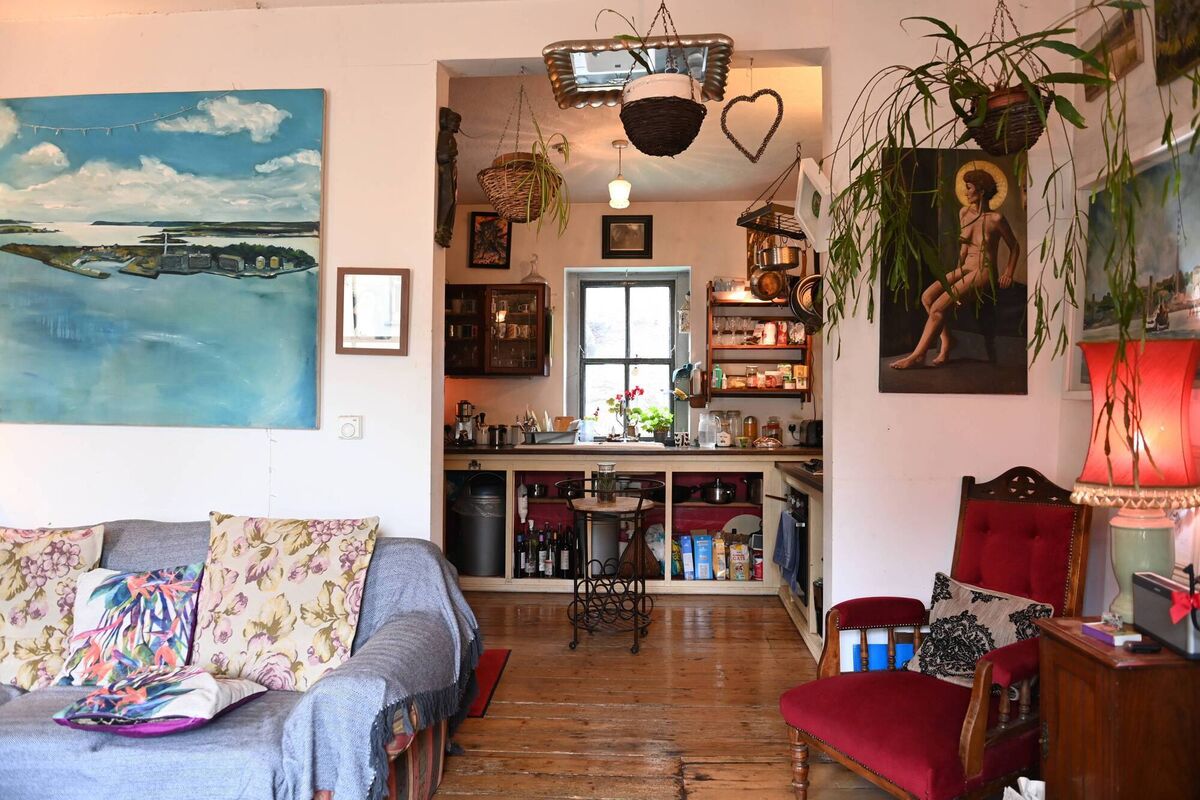
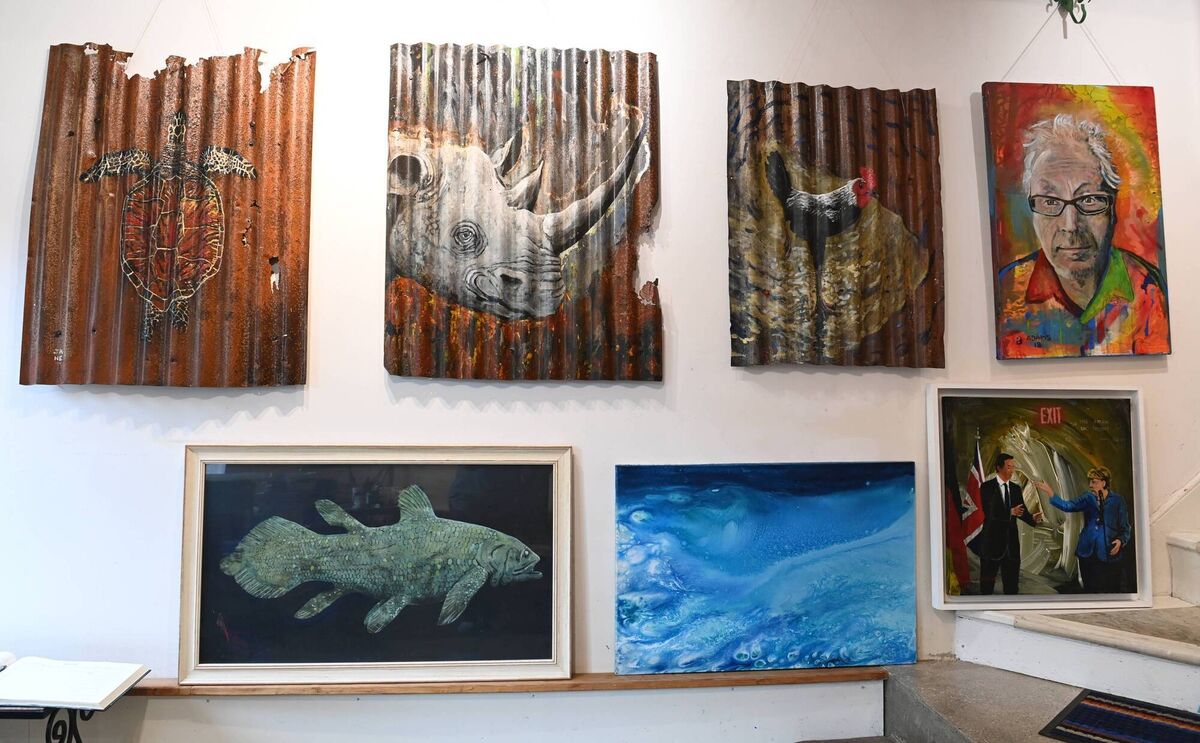
But while he scored financially, doing up the house took its toll physically on John. Sitting on a low-slung couch in his living room (with the walls covered in his paintings of both maritime and urban scenes of Cork and portraits of friends), John says he exacerbated an old back injury and also broke his ankle in the course of turning this former wreck of a house into a bohemian-looking living and cultural space.
The L-shaped living room with sash windows opens onto the kitchen.
The living room, which is on the first floor and overlooks the street, has a wood-burning stove that keeps the house “toasty” during cold weather. John had to take out “an old, ugly fireplace from the 1950s with brown tiles” to install the stove. “You wouldn’t believe the amount of rubble behind the fireplace. I filled 19 sacks with it,” he says. This comfy south-facing room has a baroque-looking red velvet throne chair as well as various plants and a solid mahogany table that can seat 10 when the leaves are extended. “All the furniture in this house is second-hand,” says John.
“The table and chairs were actually free. They were going to be thrown into
a skip by friends of my sister. Everything else in the room was under €30 with the telephone seat costing €25.”
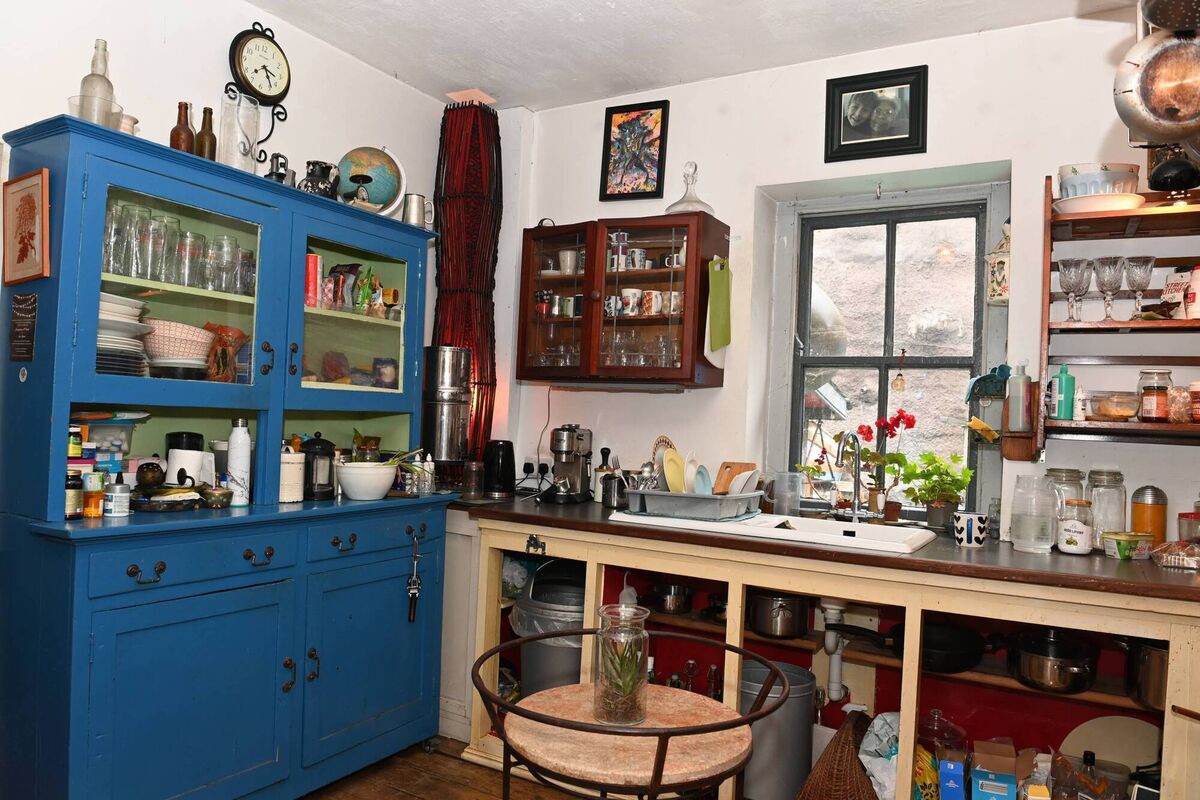
The kitchen, to the rear, has attractive wooden cabinets hanging on the walls. The big old blue dresser, which had to be stripped back, cost €100. This room used to be the bathroom. But John felt the space was wasted and to replace it, he created a wet room on the second floor.
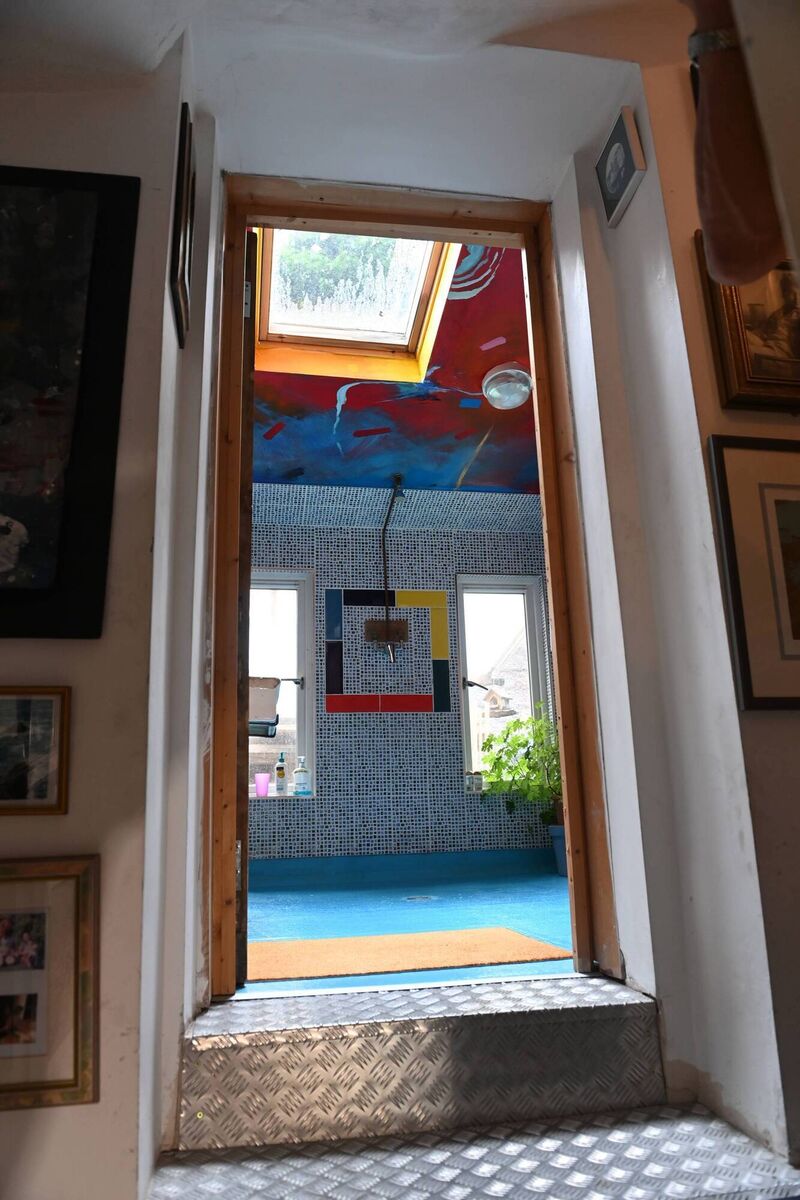
His friend, Murph, taught him how to make a fibreglass floor. “It’s amazing. It’s 11 years there and it looks the same as when it was put down. It’s easy to keep clean and it’s non-slippery. I’d really recommend it in a bathroom.
“To make the floor slant down to the drain, I had to build it up with layers of plywood and cut it in such a way that it goes down, gradually.”
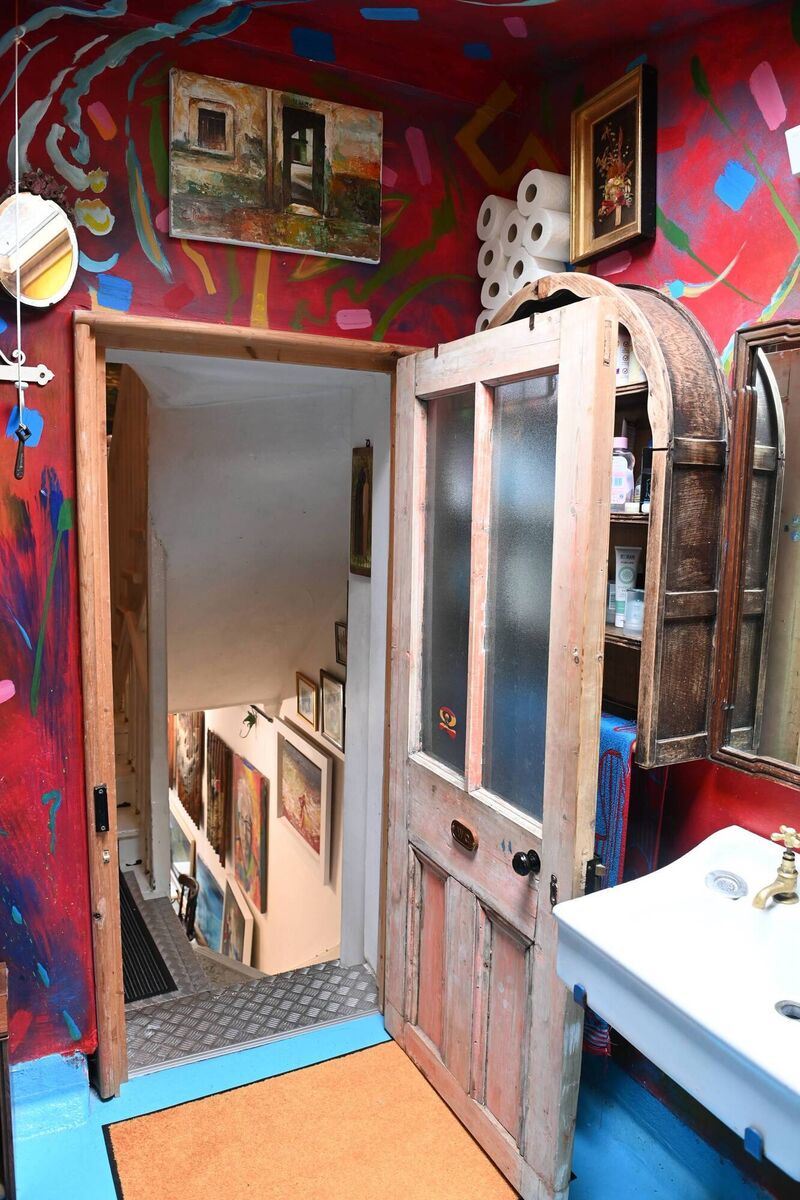
While the wet room, with its blue and white mosaic tiles, is north-facing, it is light-filled as it has four windows. The Belfast sink has beautiful brass taps and the toilet chain and cistern are high up. “I’m trying to recreate the feeling of an old house,” says John.
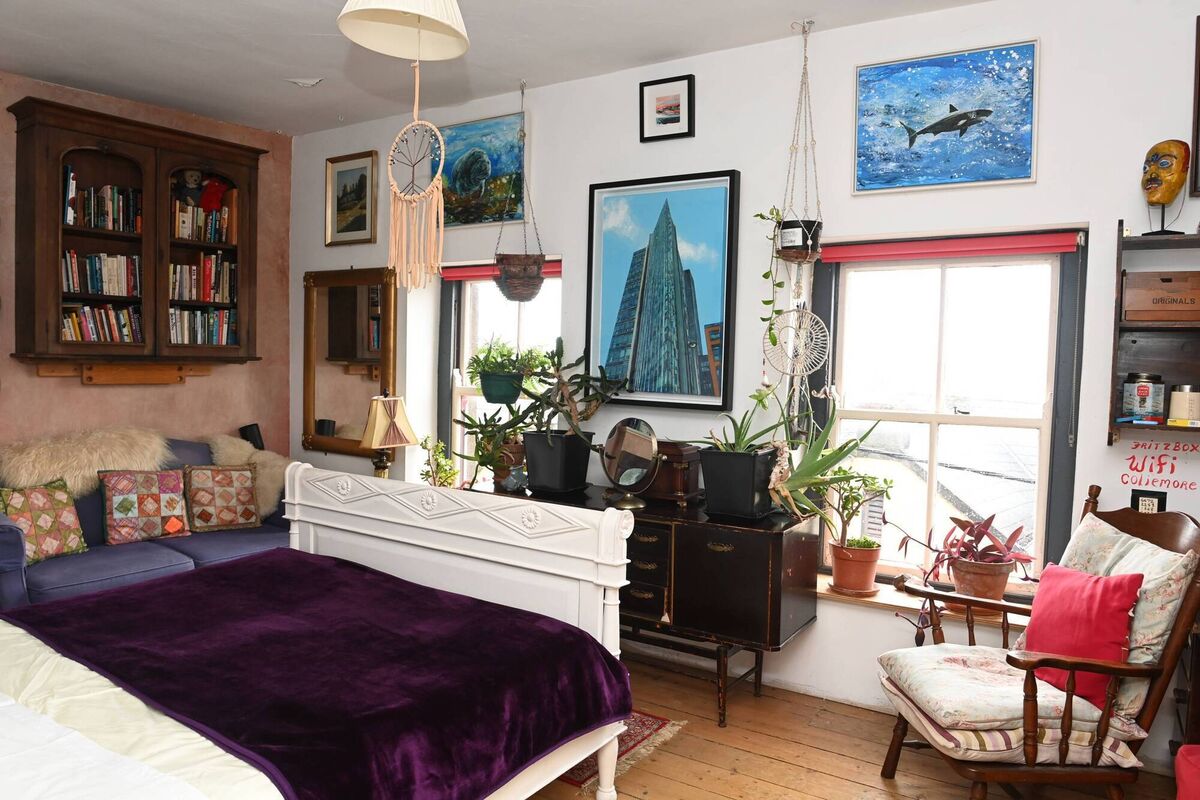
On the second floor are the two bedrooms. John has painted his bedroom in a warm wine colour. The guest room has views of Cork Harbour and at 17ft by 12ft is “a multipurpose room, a living room as well as a bedroom with a double bed and a couch that can turn into a bed. There’s a desk, a bureau, and an armchair with nice rugs exposing the wooden floorboards”.
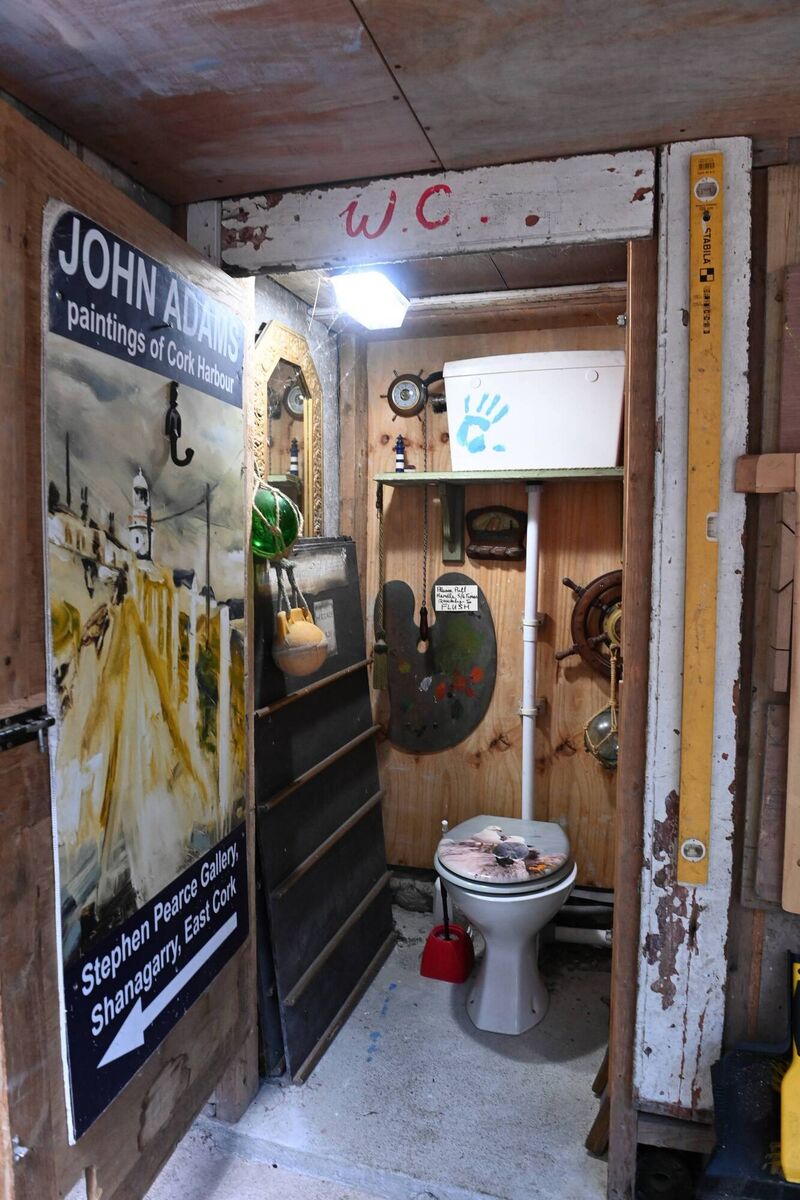
John’s workshop is situated in the extension he built onto the back of the house. It includes a toilet for guests. And there is a washing machine there. “The extension is built on steel girders. You can walk underneath it. It’s open plan and doesn’t take up too much space in the backyard,” he says.
John plans to put a sauna into the yard with a plunge pool and waterfall. He will get help with this project and is thankful for the help he got to renovate the house. “Toddy Stafford, electrician and president of Cobh and Harbour Chamber, did the wiring and was very kind to me,” he says.
It is only in recent months that John has been back painting, having been diagnosed with cancer in 2023. He says he is back to full health.
Was the back-breaking work at The Artist’s House worth it, injuries and all? “Absolutely; I love this house and I love Cobh,” says John.
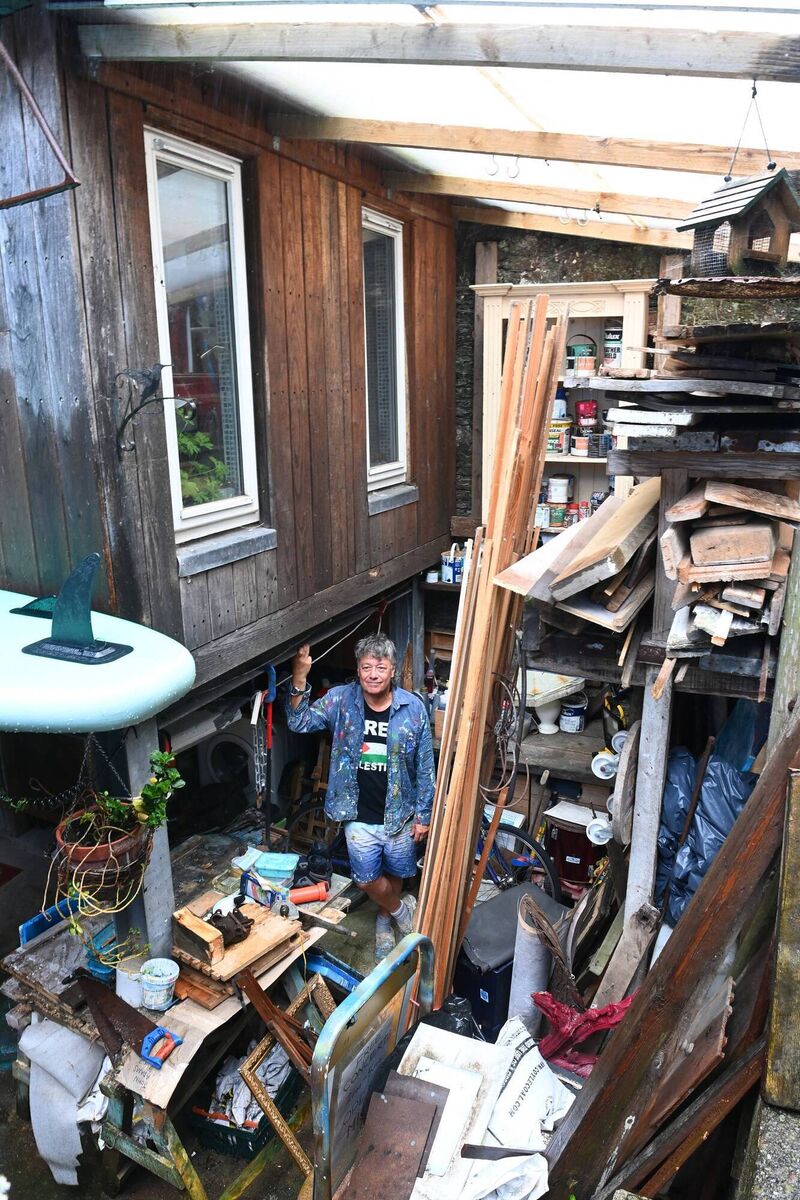
While in London, as well as working on the building sites, he painted theatre sets, worked as a carpenter, and ran an art gallery in Brixton. It was an apprenticeship that came in handy when John spotted his bargain buy on Cobh’s Rahilly Street.
See Johnadamspaintings or email johnadamsartist@gmail.com
CONNECT WITH US TODAY



Be the first to know the latest news and updates