From extinct to backyard regular: Bringing the woodpecker back to your Irish garden

Father and (presumed) woodpecker son (right in flight). Great spotted woodpeckers (dendrocopos major).
This summer, I was out shoving the mower around when a persistent mechanical bleat broke through the racket I was making.
I’m a life-long wildlife lunatic, so I executed a soft pad/side shuffle to the edge of the woodland. The consistent pleading of an unfamiliar bird was right overhead. I threw myself down on my back amid the woodlice, muck, and mouldering leaves, peering up the trunk of an old and partially rotting oak tree.
There was good reason to be excited. We had the signature drumming of a woodpecker in the same oak some weeks earlier, and I had even got a few distant shots of an adult male doing his territorial head banging. Anyway, several stifled screams of cramping agony and midge bites to the backside later, the first of two adult woodpeckers cackled on landing and zipped mechanically up the bark. There was the unmistakable lift in tempo, signalling that youngsters were being fed. We had great spotted woodpeckers nesting in the garden.
No stranger to crouching in a pop-tent or sweltering in micro-fibre camouflage, I set up a spot to watch the parent birds, only visible via binoculars. Disturbing nesting birds and their fledglings of any kind is illegal in Ireland. Despite any delightful shots of clownish puffins you might see on photographic sharing sites, the message in Section 22 of the Wildlife Act (1976) is clear: Stay well back.
I froze every muscle in my neck and shoulders following those pied rockets. It was penitential.
However, by the end of June, the sounds stopped, the woodpeckers vanished, and I was left with a few leaf-clouded pictures of the most beautiful and fascinating birds I had ever seen. I was totally obsessed at this point, boring strangers in the line at Tesco, Facebook victims — anyone who would listen to me twittering on about woodpeckers and their ways. Did the bin man know that woodpeckers’ tongues are wrapped around their brains to prevent concussion? He does now.
What I didn’t realise, while mourning their absence and wondering if a magpie had got the chicks, was that this woodpecker summer was far from over.
Woodpeckers have staged an epic comeback here in Ireland. Thought to be extinct since the 1700s, from 2005 forward, great spotted woodpeckers began to appear in the North. Sporadic recordings developed into the certainty that the great spotted woodpecker was now breeding in nest cavities in the Republic in oak woodlands and areas with coniferous woodland close by. Reports steadily ticked up on Bird Sightings Ireland. Woodpeckers were slower to appear in the south and west, with every county bar Mayo reporting activity by 2023.
If one thing has probably encouraged the success of breeding woodpeckers here in Ireland, it’s the scourge of ash-dieback: A fungal disease which has left thousands of trees across the country dead and decaying — perfect for grub hunters. It’s high times for woodpeckers as a species.
You can learn more about the return of the great spotted woodpecker in ecologist Anja Murray’s wonderful feature for the Irish Examiner here: irishexaminer.com/lifestyle/outdoors/arid-41529965.html. What I want to chisel out is how I’ve managed — through trial, error, and a lot of carpet crawling under the windows — to have four woodpeckers now visiting my bird feeders every single day for over three months.
Having hatched, fledged, and flipped off as worthy woodpeckers should, we were startled into high hysteria when a stunning adult male started taking apart the field fence in early July. Marked out by the scarlet underside of his tail and a small red cap to the back of his slightly pterodactyl head, he became braver, making regular appearances.
I became determined to do anything necessary to encourage him to stick around (I live in a wooden house — so this could all go horribly wrong).
The first attempt was a peanut feeder zip tied to a tree at the furthest extreme of the pitted boreen we describe as a driveway. Peanuts are catnip to woodpeckers, jays, and many other native birds. It worked immediately, and I could also sense this fella was collecting nuts, not simply eating them. Watching him dart repeatedly into a hide of branches, it was clear that someone quietly parked there was being fed by dad.
About two weeks had passed, and having become a bush in my attempts at better pictures outside, I decided to invest more into this project.
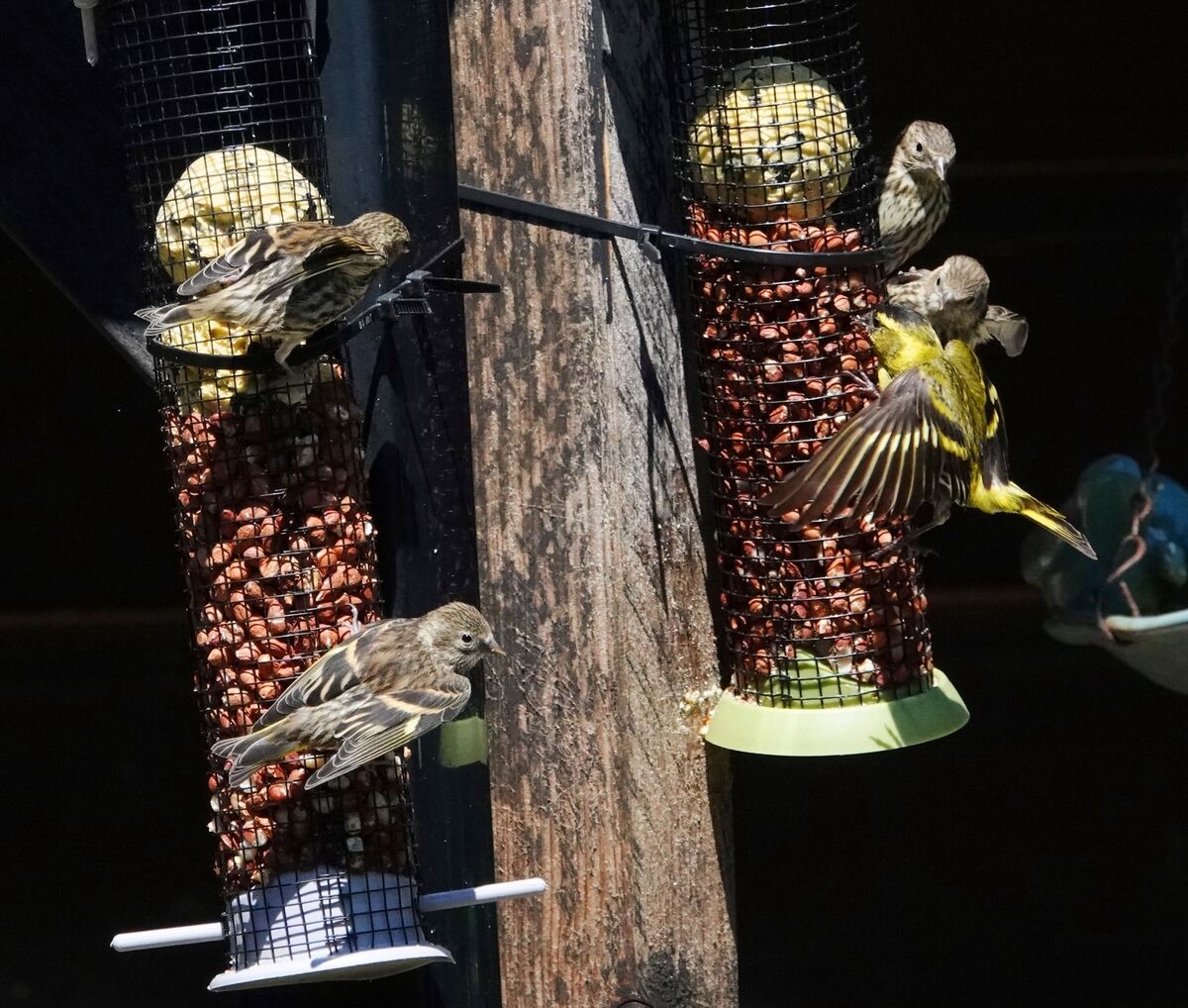
I went out and bought multiple, dedicated peanut feeders, more zip ties, a box of Peckish fat balls, and materials to set up a watering/bathing station or two. I boldly moved the feeding position closer to the house, a good distance from the back door, but where I knew I could prop open a blind and window if the unimaginable happened. Feeders should be set about 1.5m off the ground to prevent a charging cat from taking any bird, so I used the front posts of a shed, setting it all up with a small step ladder, and yes, it is a nuisance to refill the bound-on feeders. The birds appear to favour the feeders set in place rather than those swinging loose.
The summer became hot, so we cut a few plastic bottles in half along their length and kept them full of water in the gutter of the same building. I was relying on the legendary greed of a woodpecker for a peanut, but if all else failed, the small birds thought they were at the Ritz Carlton, and siskins — a species I had never tempted in 25 years — arrived in flocks.
Three days after the yard feeder went up, the male great spotted woodpecker showed up. A week later, the first of two fledgling birds were poking out nuts. At the end of August, an adult female also appeared (she may have been parenting a female fledgling as these are roles taken by same-sex parent birds). It’s still impossible to gender the smudged, watercolour teenage birds, but I’m guessing by the persistence of their red heads and thuggish attitude to every other bird, they may be male.
By now, I had driven two, sweaty hours to Newbawn Wild Bird Feed in Wexford, crossing three counties twice for more grub, and dedicated ‘woodpecker butters’ and had completely lost my mind. We’ve also recently installed a few branches in the building, drilled out and filled with peanut butter. This is because, as their human mother, I’m convinced I’ve interfered with the youngsters’ drilling and foraging education.
They are spoiled and entitled, thrashing around in my bird bath and fisting up suet, and dozing on the posts. This is most likely all in my bird-addled brain, as for most of the daylight hours they are not present.
In closing, if you have any idea you might have woodpeckers in the area — go straight to clean, quality peanuts, sunflower seeds, and slices or butts of apple. In the right metal grid, metal or plastic feeder, peanuts are taken slowly and work out as economical compared to mixed seed (do offer these too, if you can). Give the area enough room for these shy, flighty lovelies to come in confidently high to keep them safe, put your binoculars on the windowsill, and good luck!
CONNECT WITH US TODAY



Be the first to know the latest news and updates