Peter Dowdall: Fifty shades of this super shrub to select

Evergreen shrubs and plants offer with glossy foliage are ideal for any gardener seeking to add year-round interest to their garden and home's exterior. File pictures
Early spring and winter are wonderful times to really examine a garden as you get to see the bare bones of the space. Naked trees stand like silhouettes in the low winter sunshine. Dead flower stems hold up their seedheads to needy birds and insects. Often frost-covered lawns and more recently, the results of storm damage are evident during the season.
It’s a chance to look at the balance in the garden and in this case, I’m talking about that balance between deciduous and evergreen. For yes, the winter stems and barks are glorious to admire but I think every garden needs some of the consistency that comes with omnipresent foliage. We need it aesthetically, but more importantly, it’s needed ecologically.
Evergreen plants form the backbone of the garden, providing structure, colour, and texture throughout the year. The backdrop, in front of which those naked trees and dead seedheads can shine, ensures that even in the depths of winter, the garden is alive with foliage. Evergreen plants can also be invaluable for defining spaces and creating shelter.
One of the most overlooked yet exceptional genera of evergreen shrubs is leucothoe. These elegant, arching plants with their glossy foliage are ideal for any gardener seeking year-round interest.
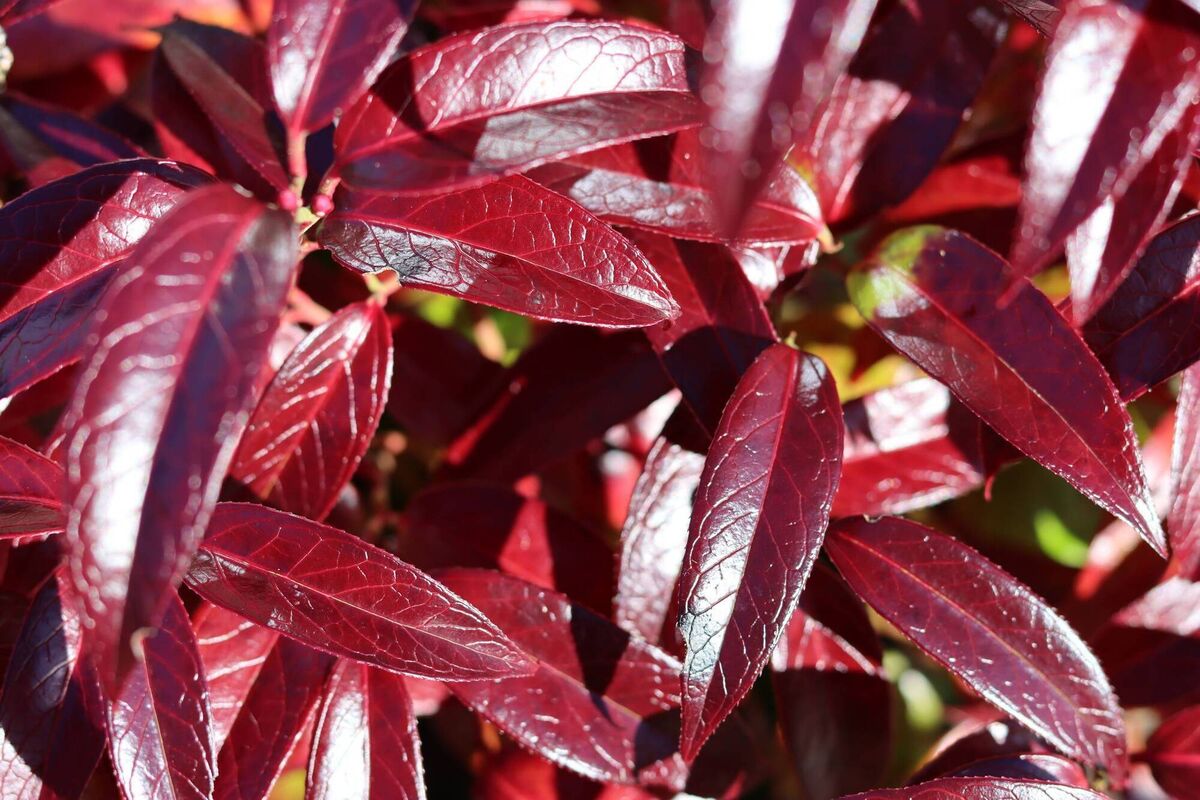
Native to North America and parts of Asia, this evergreen plant is fascinating because it changes colour through the seasons. Not in the same way as deciduous plants, you don’t get the fantastic autumn display that some deciduous give us before leaf drop, but you do get really dramatic and seasonal changes in the hues and tones of the foliage.
Check the textbooks or online and you will be advised that leucothoes are particularly well suited to woodland settings where the dappled light will allow it to thrive.
However, I have found that, once you grow a leucothoe in the right conditions, which is a moist, acidic soil, then the level of light that they receive is what makes or breaks them in terms of colour. I have grown some and in particular, the variety ‘Rainbow’, in a woodland setting and whilst they have grown well, they haven’t given any of the lovely colouring during the autumn and winter as they need more light.
Grow them in a position of full sun and then you will get the best of the colour change but then, I have found that the new growth can be quite vulnerable to frost damage, so it really is a balancing act. I would suggest a semi-shaded position with more sun than shade. Try growing them in an aspect facing West as the frost won’t be burned off by the early morning sun which will leave them less likely to be scorched.
Once they are happy in their space, then leucothoes are really a low-maintenance addition to any garden.
A medium-sized shrub, leucothoe, depending on the variety, generally reaches between 50cm and 1.5 metres in height, with a spread of up to 1.5 metres, forming a graceful, cascading shape. It works well in a variety of settings, whether as a ground cover plant, a specimen in a container, or grouped together in a border.
There are over 50 varieties of leucothoe from which to choose, each bringing something unique to the garden.
Leucothoe fontanesiana ‘Rainbow’ is a particularly beautiful cultivar, with its variegated foliage in shades of pink, cream, and green creating year-round interest. As temperatures drop, its leaves take on a reddish-bronze hue, bringing even more seasonal beauty. A lower growing choice is Leucothoe keiskei ‘Burning Love,’ which remains compact, growing to around 60cm in height. Deep red-bronze new growth matures to dark green and its vibrant foliage makes a huge impact in a small garden. In a larger space try growing 3 or 5 of them in a grouping for more impact.
I met a new variety recently and it looks beautiful. I’ve no idea how new it is, but certainly new to me, Leucothoe ‘Firestar’ is a true showstopper, with its constantly changing foliage ensuring that it never fades into the background. In spring, the new growth emerges as a bright red before maturing into glossy green. As the seasons move on, it transforms again, with the arrival of autumn bringing deep crimson and burgundy tones that seem to glow against the darker greens of the garden.
It does produce cylindrical, bell-shaped, white flowers in spring but, as with all Leucothoes ‘Firestar’ is primarily grown for its foliage. It’s not too small, growing to around 80-100cm in height and spreading up to 1.2 metres. Mulching around it will help as, same as all leucothoes, it dislikes prolonged drought and so, a layer of organic mulch, such as leaf mould or bark, will help to retain moisture in the soil.

- Got a gardening question for Peter Dowdall? Email gardenquestions@examiner.ie

CONNECT WITH US TODAY



Be the first to know the latest news and updates