Jennifer Sheahan: I removed my chimney to free up floor space in my tiny house. Now I'd love an 'instant fireplace'
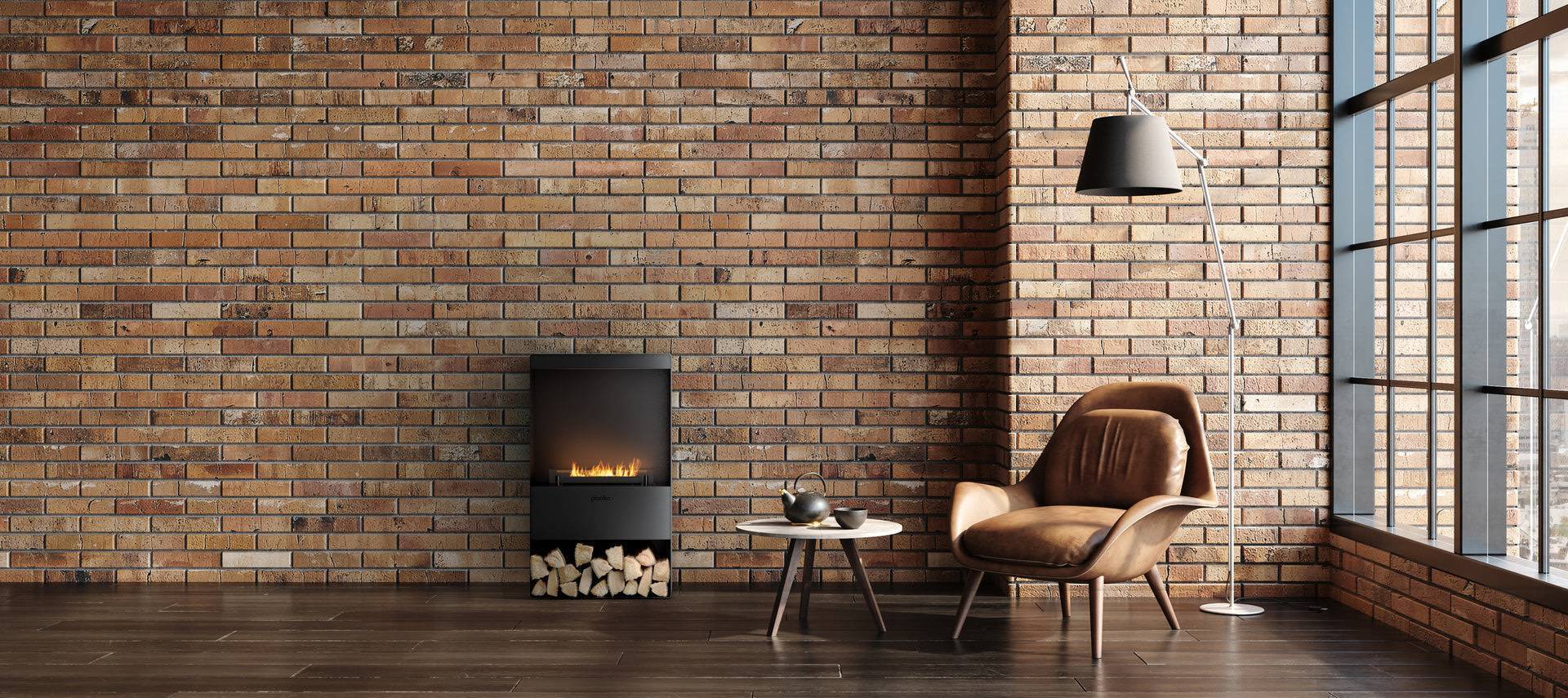
Jennifer Sheahan doesn't currently have an open fireplace, but loves the idea of stoves in living spaces.
I'm in the midst of my annual struggle about whether or not I should install a fireplace in my living room. I don’t currently have one, having removed the huge central chimney to free up much-needed floor space when I renovated my home in 2020, and I couldn’t put in a replacement as open fireplaces have effectively been banned in Ireland since 2014. Regardless of your feelings on these regulations, the fact remains that many of us flame-loving creatures must find alternatives to replace a roaring fire in a wide-open hearth.
Luckily, there are plenty to choose from. And actually, I’m glad I haven’t installed a fireplace until now, because the options today are far superior to what they were even five years ago. I don’t want to go through any installation hassle, and I’m not going to drill a hole in my external wall for a flue so I’m only looking at ones that I can simply plonk down in a corner and enjoy. I also want the lowest possible maintenance.
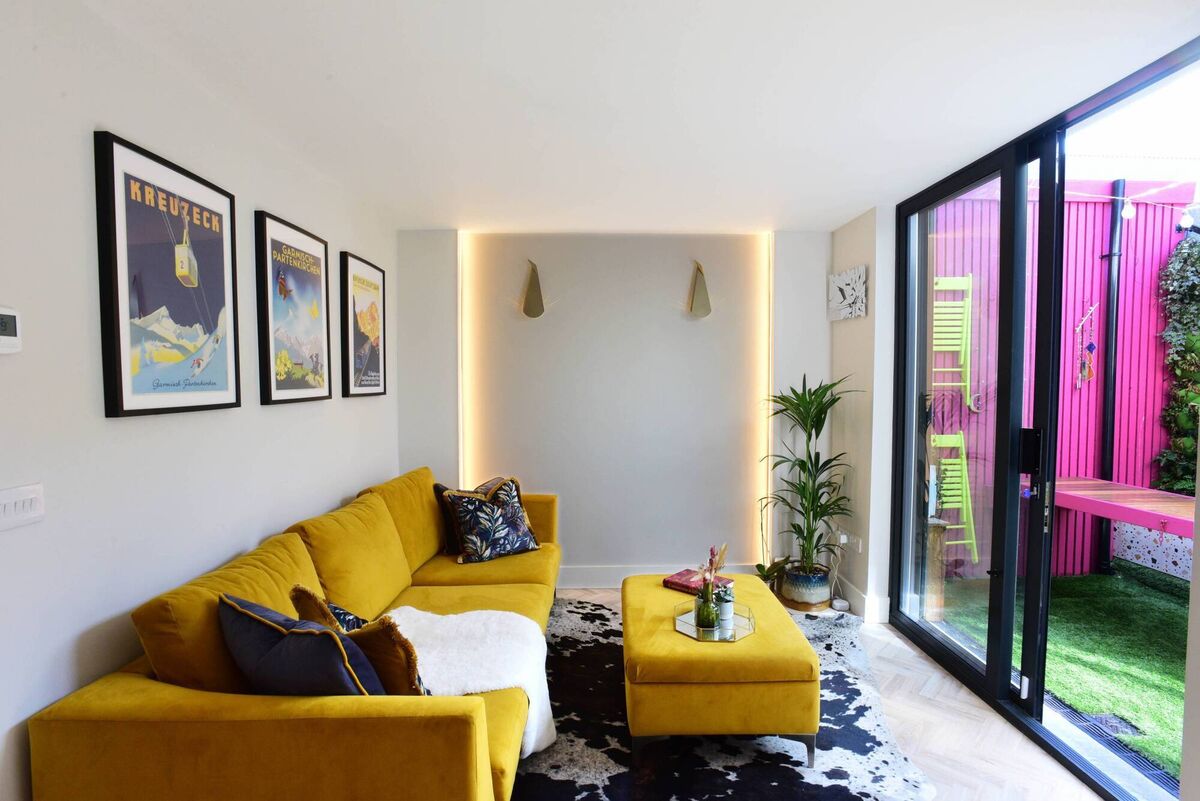
That leaves three main options to choose from, and in order of my personal preference, these are biofuel, electric, and gas. I’m ruling out gas, because while flu-less gas stoves are available and indeed many swear by them, I don’t like the idea of even low emissions and the tiny effort of connecting the stove to a gas input is still too much for me.
So then there were two — biofuel and electric. I’ve narrowed down my options to some preferred styles. Here are the ones I am currently trying to decide between.
I’m starting with a clear favourite here. There are really very few downsides to biofuel fires or stoves, the majority of which burn bio-ethanol. Ethanol burns clean, emitting only water vapour and a small amount of carbon dioxide (about as much as a couple of candles). This means it requires no ventilation, so a bio-ethanol fire can be placed anywhere you have the space for it.
Crucially for me, it also means minimal maintenance as there is no soot or ash to be cleaned up. Ethanol burns as a real flame, so it looks and feels authentic. One factor that is commonly listed as a downside is that bioethanol fires don’t give out as much heat as traditional solid fuel fires (although this is mitigated somewhat by the absence of a chimney).
This is actually a positive for me, as my home is recently renovated and very well insulated, so a full-blown fireplace would melt me altogether. I am aware that bio-ethanol is relatively expensive, though on the flipside it is far better for the environment due not only to the emissions but to the fact that it’s created from renewable vegetation, not fossil fuels.
A very rough estimate brings me in at around €1.75 per hour of burning, though that can be reduced by buying in bulk.
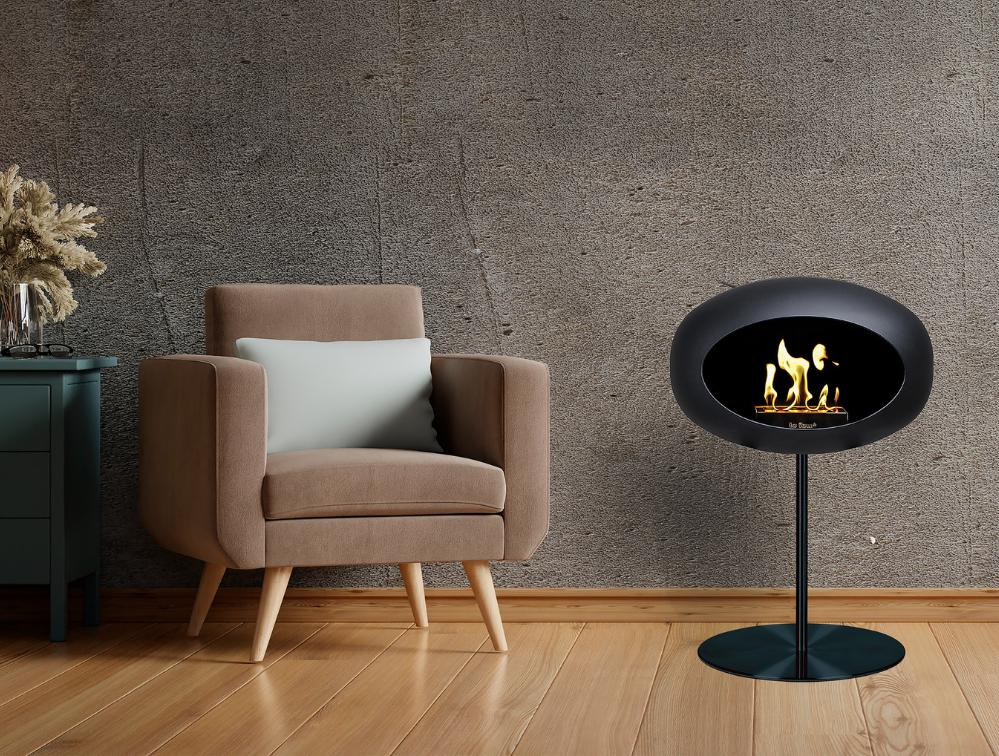
My current leading favourite is the rather retro Dome bio-ethanol fireplace from Danish company Le Feu. I love the steel standing model, possibly because absolutely zero installation is required and I can move it around if I wish, and I also adore the hanging version which would require some effort from me to affix it to my ceiling.
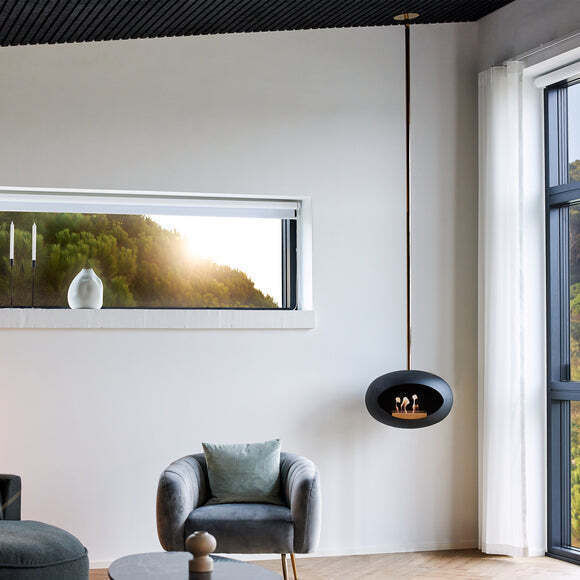
They’re not cheap, both coming in at approximately €1930 before shipping, but I am repeatedly drawn to the beautiful design. More information and models are available at lefeufires.com.
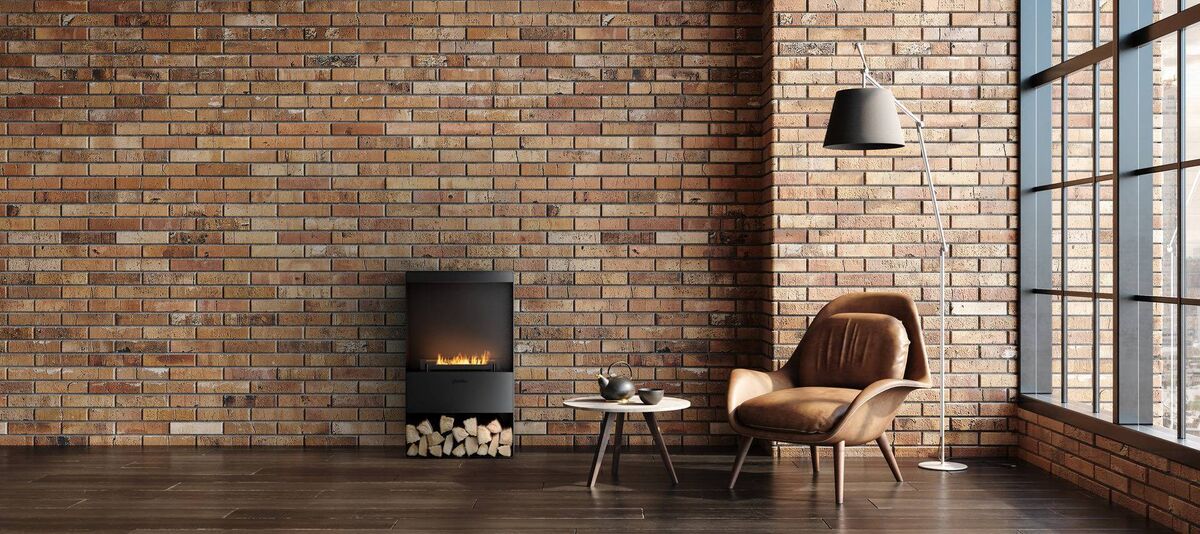
It’s hard to beat a traditional stove for the cosiness factor, and bio-ethanol stoves are, to me, indistinguishable from their solid fuel counterparts. Minus the crackling wood of course, although there are stunningly realistic logs made from ceramic that can be safely placed inside for effect. While I do like an old-fashioned ornate cast-iron stove, for my own home I love the clean lines of the Senso stove— available for €1500.49 from Polish company Planika (planikafires.com).
Although I most likely will go for a bio-ethanol fire, electric fires have come a long way from the fake flame and ersatz crackle of older models. It’s hard to beat a real flame, but it’s also hard to argue with the cost — electric fireplaces are currently a lot cheaper to run than bio-ethanol ones. They are equally maintenance-free, and require nothing more than to be plugged in.
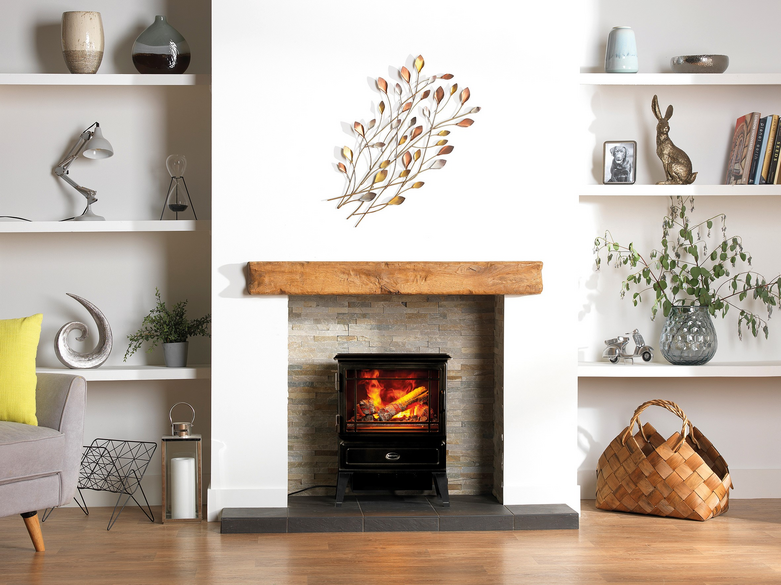
Most electric fires have separate controls for the heater, so a bonus is that I could choose to have no heat at all which suits my warm little cottage. So I haven’t ruled out the option, and I am quite impressed by the realistic flame-effect produced using water vapour by Irish company Dimplex (dimplexfires.com), For my own home I’m looking at their neat little Optimyst freestanding electric stove.
I have decision fatigue on this topic — if you have strong thoughts on which of the above would go best in my little living room, or you’ve spotted something even better, send them on, marking the subject "Fireplaces", c/o home@examiner.ie
CONNECT WITH US TODAY



Be the first to know the latest news and updates