Don't rip out your laminate kitchen, give it a ritzy revamp
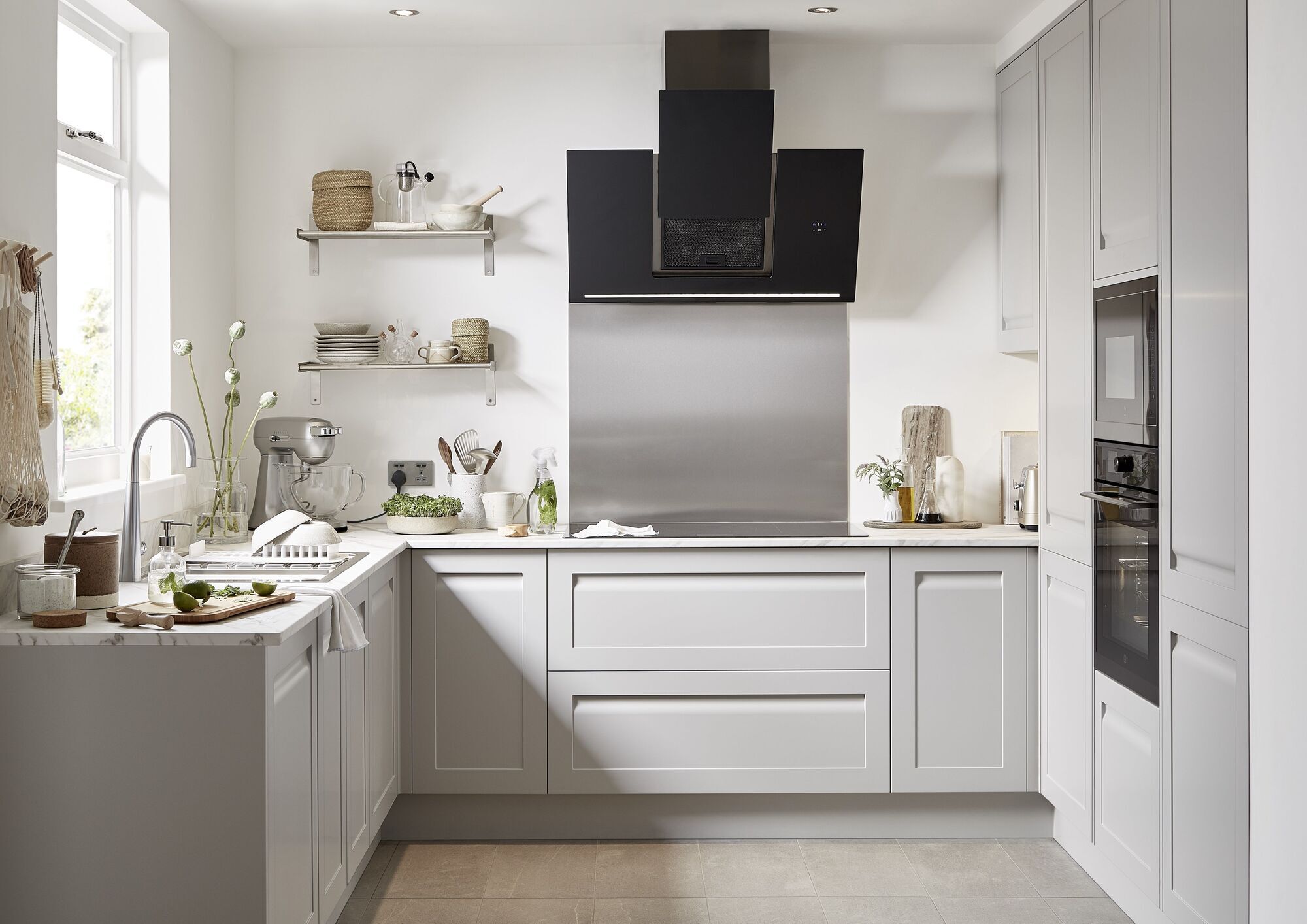
When you stray into several hundred euros worth of work, it’s time to ask yourself, is it time to just take that counter out? B&Q Goodhome Garcinia matt stone doors with Goodhome Algiata marble style laminate top, €176 for 3m, diy.ie.
Your countertop takes up a lot of visual mileage in the kitchen. If you have a cheap laminate that has dulled, scratched, and fallen out of fashionable favour, ripping it out might seem to be the only viable option. However, there are multiple DIY ways to flip your kitchen that don’t involve finding an installer or facing a worktop heave-ho to the only place laminate and composites can go — the landfill. If you’re repainting the cabinets, retaining the position of your bases, want to be more sustainable, and save a considerable amount of money, here are some potential, budget-friendly and food-safe fixes to refresh your surfacing. If you’re in a rental, check with your landlord before flipping the kitchen, and only wrap counters in products you can lift off.
Now, with paint, please take note. Hesitate before applying permanent paint over stone, real timber or quality composite surfacing like quartz urged on by a grinning online influencer. There are some troubling trend-happy lunatics out there, wrecking honest counters and encouraging others to do the same. These other materials can be treated, filled, sanded, repaired or even taken out and sold on to pay for your brand-new worktops. We’re addressing typical laminate in good structural condition, composed of resins and papers set over particle board.
Painting laminate takes patience and really careful adherence to the instructions with a dedicated countertop or universal-surface paint formulated for heat and moisture. There are generally three coatings, and there may be multiple coats involved in those coats, including any free-hand veins if you’re attempting a marble look (Rustoleum do a good primer here: youtube.com/watch?v=fbIOcVgFOdI). The paint colour can even be taken up over the wall or splash-back for a superb cohesive look.
A self-levelling primer ensures the paint sticks firmly to the laminate resin, the paint is the actual decorative surface, and the top coat (where required in the system you choose) is the protective finish. Always start with a thorough clean to get off any grease and dirt, before scuffing with sand-paper to provide a rough key without shine to catch that primer (acrylic paints will always demand a primer).
Primers come in pale and dark colours just like wall paint. Take time for prep including masking off your sink. Cut in with a two-inch angled brush to start. Otherwise, applying the paint, a high-density foam roller used with a light hand will provide an even, streak-free finish. Observe those drying times as if your life depended on them — the survival of your counter job certainly will. Abuse a painted surface with sharp tools and it will chip; seven-day curing times are standard. Then, continue to protect the worktop with boards when cutting or placing down heavy, hot pans just as you would with anything. Beyond Paint, Countertop Kit with optional shake-on “flecks” from €119, thepainthub.ie.
Laminate is a wrap of resin and paper bonded to a supporting board, and we can refresh this with another treatment of self-adhesive contact paper in a wide range of colours and textures. If you’re short on funds — contact paper wraps to an existing laminate, new hardware for drawers and cabinet doors plus a paint job for walls and units can deliver a startling change over one weekend’s graft. Most papers are easily reversed, lifted off from the corners and seams. Decorative choices include marble, wood, slate and the sort of solid colours you would expect in say heritage Formica — my favourite.
Having done both painting and wraps, I would say wraps are easier for most householders to handle but are most easily spotted. Only use products designed for kitchens with the requisite weight, scuff resistance and water repellence for the job. Most contact papers are not designed for repetitive scrubs with bleach. You do get what you pay for in terms of weight and longevity. Does contact paper hold up in kitchens? Well, keep in mind that even quartz composite is not supposed to be gouged with a knife or regularly scalded. Choose a quality paper, install it to the letter and look after it.
Seams are the greatest challenge with contacts, so look for longer, deeper lengths that won’t demand joining and cutting off those factory-prepared, straight edges, and only use wraps on undamaged, smooth materials. Papers are laid out, a corner of the backing paper raised, and then the paper is slowly unfurled and stuck down. If you don’t have a smoothing tool, try a credit card to drive out any waves or bubbles. For tricky areas like sinks, look up the dozens of YouTube and TikTok guides. Most papers can be lifted and adjusted where you do go awry and random patterns will cover tiny gaps and corner grins showing the base material, with ease.
Avoid elaborate wood grains if you’re not good with wallpapering repeats. The figuring can be difficult to match up. On the bright side, if it’s a disaster, you can just rip it off. For a selection of UV and scratch-resistant, vinyl, architectural wrappings for walls, countertops, wardrobes, doors and desks, from €36 for 1.2m x 2m, try layed.com (includes video tutorials).
If you have a little more skill and ambition, there are a couple of other ways to put a new shine on surfacing. First of all, you could add a new counter to the existing one. Now this is something that’s often overlooked in thrifty kitchen adventures but it’s a simple approach, ideal for worktops not requiring a complex cut, or where raising the depth is imperceptible. Existing, level counters can be covered by plywood, engineered wood counters, butchers’ block or even new slender profile 22mm laminate or composite. Work out who you intend to hold the new counter down and to disguise any fixings.
Fight shy of tile — the grouting will catch grot and overall, and the tiled counter is a dated, visual stutter that rarely succeeds. Where your project runs into a sink, choose the skinniest depth available to avoid a step-down, and seal edges carefully. Product ideas would include slender 28mm Ekbracken from IKEA in a marble effect, €105 for 2.46m with two edging strips, ikea.com/ie.
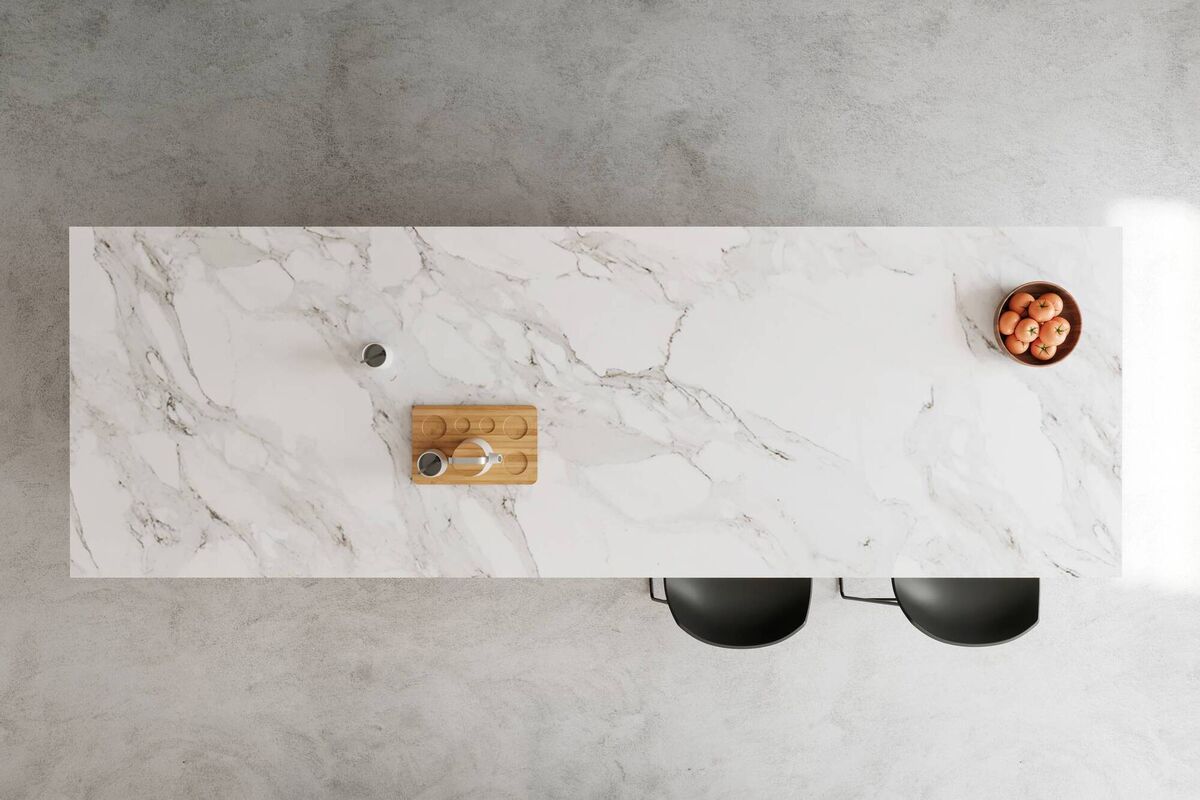
Micro-cement is gaining popularity and taken from commercial fixes to domestic DIY kit form it can be spread over properly prepared and primed counters bar solid wood (which swells and retracts naturally, shattering a thin micro-coating). Without a dedicated bonding solution, the cement simply won’t adhere. Micro-cements are applied at 1mm-2mm in at least two layers and are spread just as you would lay a thin skim over plasterboard — not for the faint-hearted. Careful, repeated sanding and extensive drying times will ensure a good final finish.
Expect to take about a week to finish a small kitchen and take the sink out where possible to avoid spoiling the edges. Cement is porous and must be fully sealed to retain its beauty. Micro-cement fine/medium (Component A) and acrylic resin (Component B), €80 for small kit in 10 colour choices, epodex.com.
Once you start spending hundreds of euros on a laminate counter upcycle, it’s worth looking more closely at full replacement, factoring in the cost of an installer. Approach a local firm and do some footwork to find exactly what you want in terms of materials and accessorising. For a quick guestimate, here’s what I spent on a recent project on the wet side of a long galley kitchen with no plumbing shifts, VAT included; €129 for a single bowl S/S single bowl sink, €90 for a very generic, chrome styled, one-hole, two-lever tap, €16 for a waste kit, €360 for 3m square edge 40mm Formica Axiom laminate, all installed professionally for €230 labour inc. VAT with cut-outs, metal edging and one, tiny “while-you’re-here” addition of a 40mm cabinet. The results? Fabulous.

CONNECT WITH US TODAY



Be the first to know the latest news and updates