How to choose between three top wood-style flooring options

The price of your flooring will depend on branding, the species of any real wood veneer and the core materials. Pergo laminate flooring (synthetic); Chalked Oyster Oak, from €55 per square metre.
We all understand the prestige and appeal of solid wood flooring, but what about the three popular alternatives — engineered wood flooring, LVT and laminate? Is it a compromise to vouch for a pretender? Here’s what you need to know before hitting the showroom floors.
The first thing we need to get out of the way is that laminate and luxury vinyl tile (LVT) flooring is not wood flooring, at least the face of the boards or blocks you’re looking at, are never wood. In a sturdy plank, think of laminate as a high-density fibreboard with a top coat of highly scratch-resistant melamine. It’s not entirely plastic, but it’s finished with a synthetic top surface.
LVT (luxury vinyl tile) is a PVC product right-through that can be offered in wood looks with a soft or hardcore. It is entirely synthetic apart from an additional underlay (cork is popular).
Aesthetically, the imitation of timber in laminate flooring and LVT is impressive, with a digital image with little to no perceptible pattern repeats. When standing on a sample with textured relief, it is hard to detect from real wood.
Once you touch it, however, the difference is clear. Offered as cheaply as €10 per metre for laminates with impressive guarantees for durability and UV stability of up to 20 years for the popular Quick-Step range, the appeal is obvious.
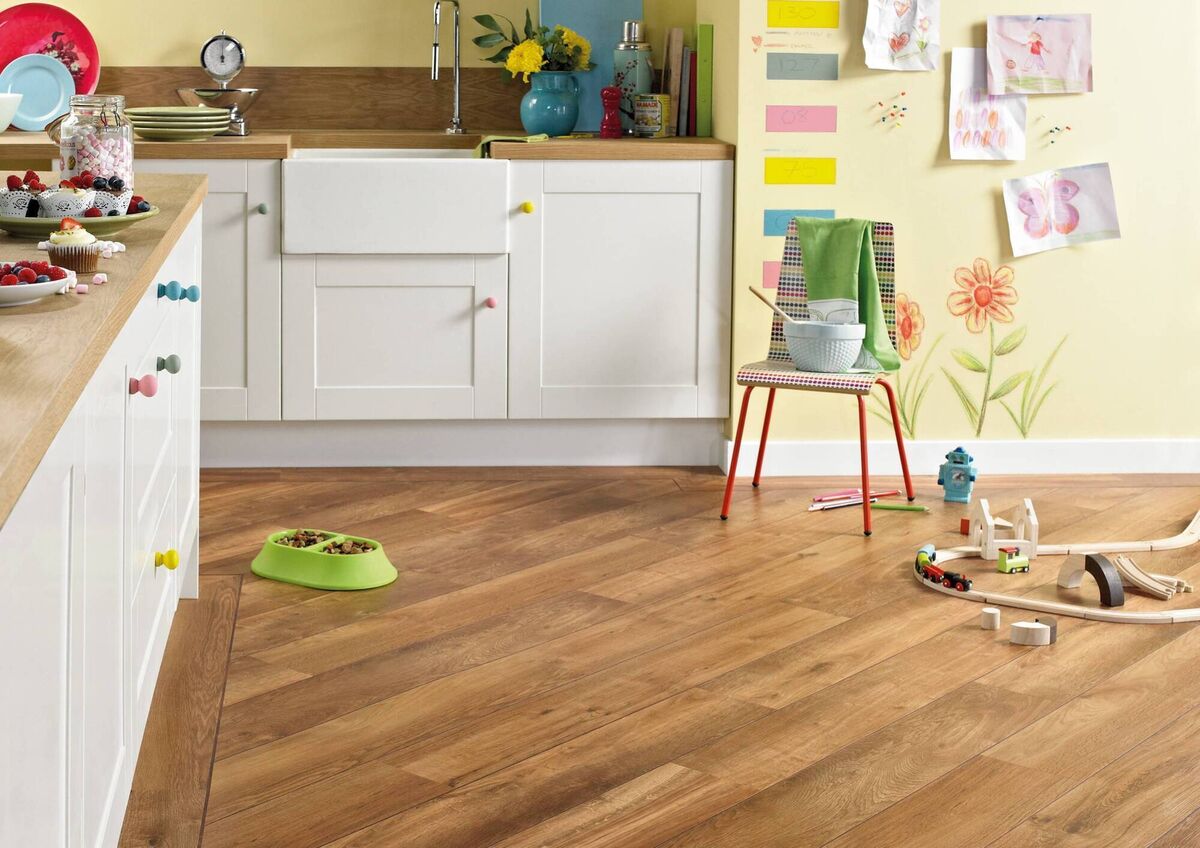
Good LVT wood flooring may be phoney timber, but it’s tough, attractive, well regarded and it’s not cheap starting in the area of €37 per square meter.
Laminate flooring is graded for use, and it can stand up very well to even high foot traffic in halls and busy family rooms. The high-density-fibreboard (HDF) used in its making is resistant to humidity and temperature changes, making it a good choice for economical flooring over UFH.
The depth of your laminate or LVT choice has nothing to do with its durability. Every LVT and laminate floor will carry an Abrasion Class (AC) rating.
An AC rating of one or two is typical for domestic flooring. An AC3 or AC4 rating is used for heavy domestic use and some water-resistant laminates. Check the spec closely, and budget for a dedicated waterproofing kit and PE foam; prices from €25-€50 per square metre for an 8mm water-resistant laminate product not intended for a wet room.
For a fully waterproof floor, that’s warm on your toes, explore LVT options from €40-€80 per square metre. LVT can glue straight onto existing hard flooring or be floated as a click option.
Laminates do not offer the same longevity as solid wood or engineered flooring. After 15 years, most will start to show a beating.
If you think about the sustainability of your flooring in terms of its lifespan, good LVT is tougher than laminate and comes with a 10-year guarantee as standard. Laminate flooring and LVT can be protected against damage, easily cleaned, and even replaced in parts, but cannot be rejuvenated once seriously damaged.
Use a wax filler kit for light scratches or replace the area of planking. LVT can be warmed, to melt out minor damage with a burnishing tool. If you’re thinking of opting for LVT over laminate flooring, be aware that while laminate comes in at 8mm to 14mm thick, LVT is 1.5mm to 5mm. Cushioning underlay will matter.
The environmental impact of laminate flooring? It’s a chemical-centric product, carbon-heavy, releasing VOCs during it manufacture. It cannot be repaired when significantly damaged (this allows it to be described as maintenance-free).
Not as durable as solid wood or engineered wood flooring, when you pull it up, laminate flooring is a mixed material product that cannot be peeled apart for its constituents. Look for products that at least include FSC wood fibres and recycled materials in their manufacture with the best warranties on performance that you can afford.
LVT can contain up to 50% recycled materials and because it’s made of one material (PVC) — it can be fully recycled if your local amenity will take it. In terms of off-gassing, look for the Eurofins Indoor Air Quality Gold Standard for minimal VOC emissions in flooring going into your home.
Engineered hardwood flooring is also, not solid wood through and through, but in some respects, it is not only on par with quality, solid wood flooring but is a better performer.
On the surface, they are indistinguishable and have the same hand-installed, tight seams and beautiful figures delivered by solid timber. Where there’s a bevel, the depth of the veneer presents as what it is — real timber. Whatever timber you choose — birch, maple, oak, American beech, walnut or cherry, you’re looking at authentic timber, not a rendering of timber. Good, engineered flooring will be ethically and sustainably sourced from responsibly managed FSC forestry. As a 100% wood product, it is 100% recyclable. In good condition, it can often be refreshed and reused.
Finished or unfinished, you’ll find little difference in price per metre between standard, solid wood products and quality engineered flooring (€50-€100 per square metre). In some instances, the engineered floor, and good LVT will cost more and will demand just as much to have installed. So, why choose engineered over tough vinyl, or authentic timber blocks and boards?
Solid wood has a grain that runs in the same direction. If responds to getting soaked or very high temperatures by shrinking. The wood will all pull in the same direction. Engineered wood is made of a veneer (the depth will depend on the product).
This authentic wood (for instance, 2mm) is fixed onto a multi-layered substrate of plywood, block-board ply or more economical HDF. This supporting base is a sandwich of boards, with the lamina running at 90-degree angles giving it improved structural stability.
If engineered flooring gets seriously wet (not an ideal happening of course), the plywood or HDF base may swell slightly, but because of the way it's constructed, it will pull in different directions. This makes it stand up better to environmental stressors, and resistant to swelling, shrinkage, warping, twisting and cupping.
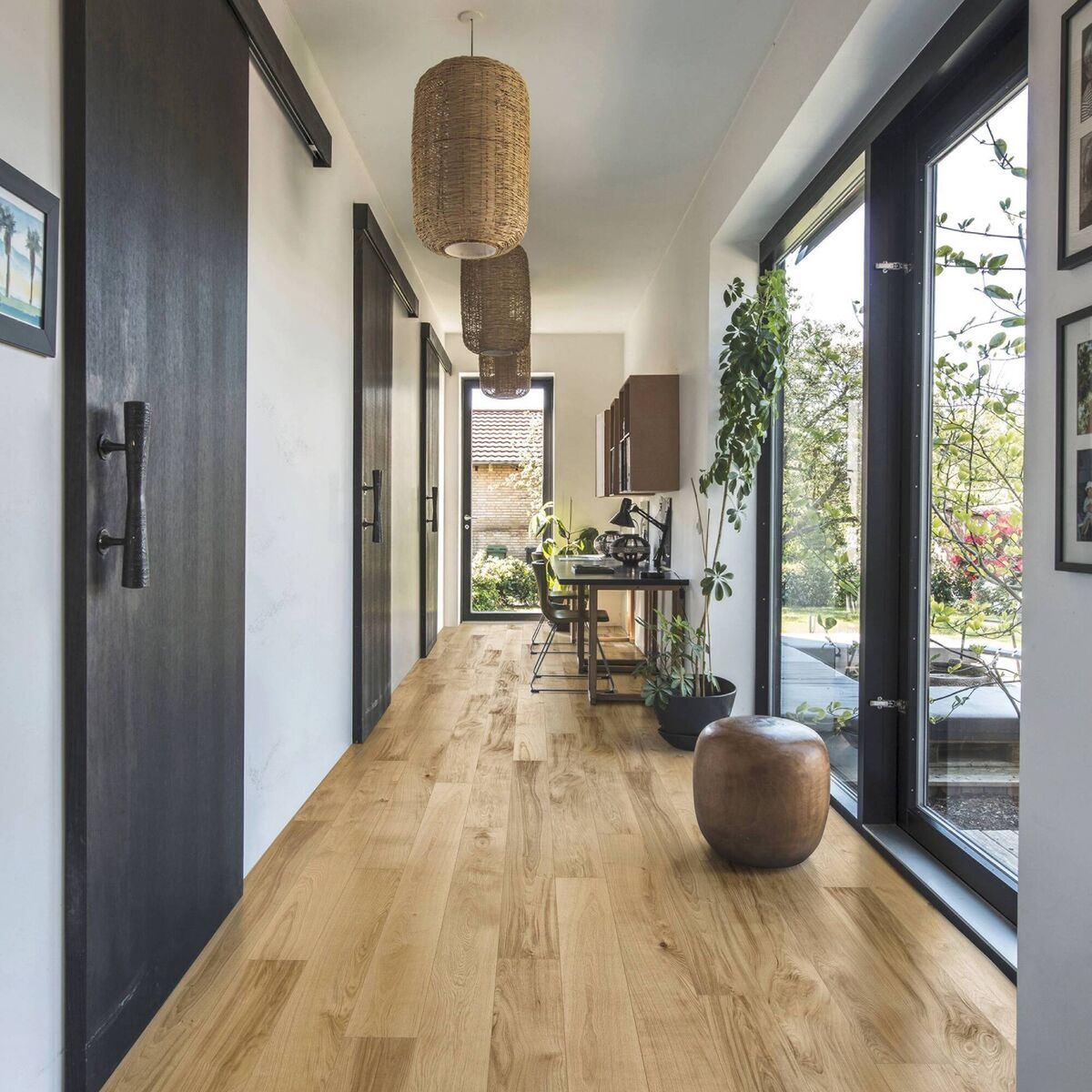
Engineered boards can be manufactured in big widths because they are made to stay in place but are not intended for the high humidity and pooling water conditions of a bathroom.
A crucial difference between engineered flooring and laminate or LVT flooring after materials and construction, is that engineered planks and blocks can be sanded and refinished, at least two or three times. If you ding the floor or it gets some sort of staining damage, it can be lightly sanded, sealed, waxed or oiled.
Now, with solid wood, this can be done multiple more times, and you can roughly double its potential lifespan over engineered wood flooring for that reason — but 30 years in a floor is a long time.
Installing engineered flooring offers nailing, floating and glueing options. This includes DIY-friendly, click-lock systems that cannot be delivered in a solid wood board, which at best will fit together in the hands of a good carpenter with T&G joints. Both these floors are natural, reactive materials, requiring the provision of an expansion gap along walls, stairs, pillars, doorways, kitchen units, islands and so on.
The surface it goes onto must be exquisitely level to prevent squeaking and creaking (it has a reputation for being noisier than solid wood).
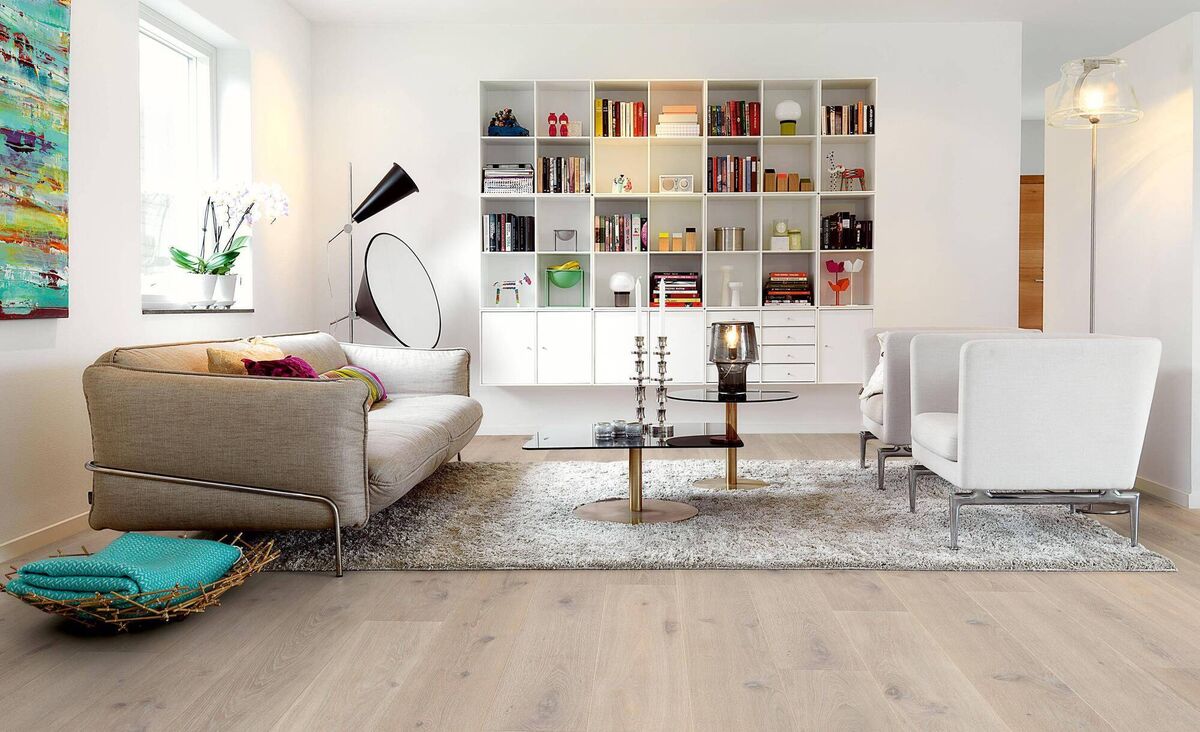
If you have new sub-flooring, a moisture meter will ensure that the room is ready for any real timber floor to go in over a moisture barrier (readings will be from 0.3% to 3% depending on the sub-floor type). They must also be completely acclimatised to the room.
When the floor is delivered, your installer should inspect your order for any bowing along the length of engineered boards resulting from improper storage.
Most engineered flooring is suited to UFH, but a good tip to settle the flooring in is to turn the UFH heating on gradually and then back it off for a few days. In the first week, raise the degrees of the UFH 5C a day and then leave it on for two weeks. Then turn the heating off for about a week.
CONNECT WITH US TODAY



Be the first to know the latest news and updates