Peter Dowdall: Let's innovate to prioritise our green spaces
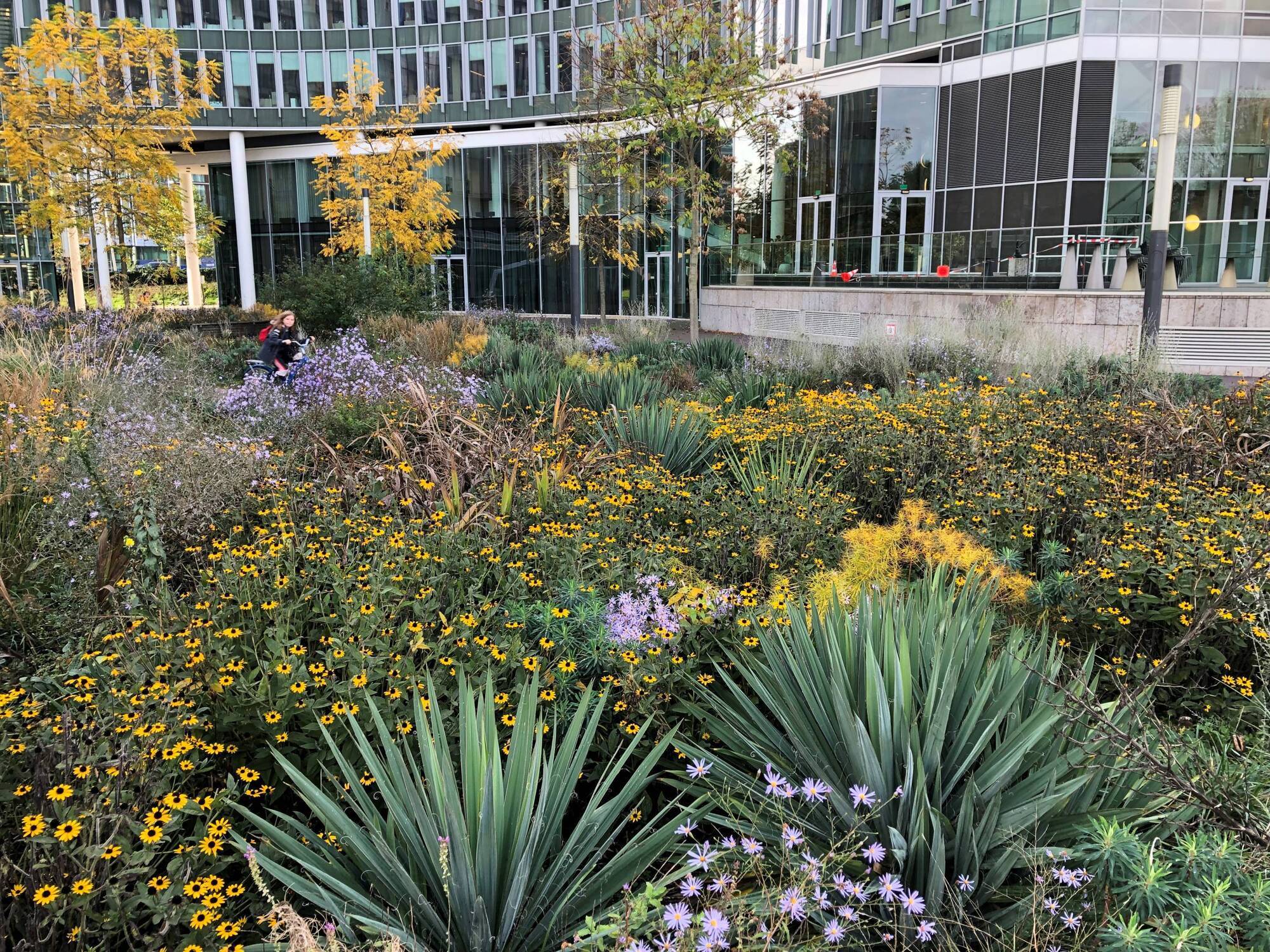
Ton Muller's work in Beethovenhovenplein, Amsterdam.
In a world which is facing many challenges, I feel that in the garden we are closer to solutions than in many other places and that, as a professional in the field, our industry has a critical role to play right now in coping with many of these challenges.
One organisation that has been at the forefront of education, inspiration and action when it comes to this is the Garden and Landscape Designers Association, (GLDA).
Nowadays, sustainability and environmental awareness are real buzzwords and have been picked up on by the marketing sector but for many years now the GLDA has been informing us about rewilding, urban greening, ecologically sound garden design and gardening practices. Its industry-leading annual seminar takes place this year, on February 24, at the Crowne Plaza Hotel in Santry, Dublin: ‘Space to Grow: How our gardens and open spaces can help us achieve a liveable future’.
Our world is becoming increasingly urbanised, so how do we keep our cities liveable? How do we ensure people have what they need to ensure a good quality of life in urban settings? How do we lessen our impact on the planet and support biodiversity while improving our day-to-day experience of modern living?
These are just some of the questions which will be dealt with by a team of expert speakers on the day and what a panel of speakers we have to look forward to this year. This year, there will be six speakers to discuss innovative solutions to the challenges we face. Stephanie Mahon, editor of Gardens Illustrated, will host the event.
“Liveable” is not just about surviving but thriving and living a good quality of life while lessening our negative impact on the planet and biodiversity. Gardens should be places that enrich our lives, help us deal with the challenges of a changing climate, reverse nature depletion, reduce waste and carbon emissions and nourish mind, body and spirit.
As space becomes an increasingly rare commodity, there is pressure in new housing developments to reduce garden sizes and access to green space. Front gardens are paved over for parking. There is no doubt that spending time in nature is good for us. During covid lockdowns for example, many people turned to gardens, parks and natural landscapes as they found them to be calming and restorative. We must recognise the immense potential of gardens and green spaces and their effect on our quality of life.
A recent report suggests that, globally, up to two million species may be at risk of extinction. The main driver of this dramatic decline is the loss of natural habitats. In response, regulations are slowly changing so that planners, architects and designers must engage more with strategies that encourage greening and support biodiversity. In future projects, it may be necessary to include infrastructure to support biodiversity to comply with planning requirements.
We would do well to adapt now and prioritise making designed spaces work, not just for people but also for the many species that are under threat. Local actions supporting nature can have dramatic benefits that increase exponentially over time.
By engaging skilled designers and embracing ecologically responsible practices, we can create sustainable spaces that enrich the lives of individuals, communities and wildlife. We can create not just an interface between people and nature but a melding of nature and human activity for the benefit of both.
And at the same time, we can help to lessen the impact of a changing climate on our local area and its ecology. The conference will hear how green spaces help to cool in times of searing temperatures, slow runoff during deluges, reduce flooding, improve water quality and provide screening and noise reduction. The many benefits are crucial and far-reaching.
The seminar will discuss the need to prioritise and value green spaces and how disconnection from nature has a detrimental effect on quality of life. The speakers are innovators and critical thinkers who are at the forefront of developing liveable design principles. By adapting design processes to maximise liveability, we can make spaces eminently more beneficial.
The speakers will include botanist, ecologist and garden designer Jo Wakelin who has won international acclaim for her drought-tolerant garden near Cromwell in Central Otago on New Zealand’s South Island; Ton Muller, head landscape designer at the Municipality of Amsterdam; and John Little, Essex, an expert on grass roofs and sustainable urban planting and landscaping. Giacomo Guzzon, landscape architect, academic tutor, and lecturer in planting design at the University of Sheffield, the University of Greenwich, and the KLC School of Design in London, will also address the seminar. His team has worked on high-profile projects, one of which is at the Elephant Park development in London, part of the regeneration of the Elephant and Castle area. It aims to deliver a sustainable community space that promotes recreation, relaxation and social interaction while also managing the effects of climate change and supporting biodiversity.
Stefano Marinaz, who manages a rich mix of projects all over Britain, Italy and the Netherlands, and Mark Gregory, a proud Yorkshireman, are also in the lineup. The latter is a familiar face due to his appearances at the Chelsea Flower Show where he has been involved in the design or construction of over 100 gardens. He is also a regular advisor and garden judge at Bord Bia’s Bloom Festival. Recently, Mark returned to his roots at RHS Wisley where he trained. “Horticulture is becoming more important than it has ever been,” says Mark. “Going forward with climatic changes and the environmental issues we have; horticulture has an answer.”
Tickets are on sale now at glda.ie
CONNECT WITH US TODAY
Be the first to know the latest news and updates