How to train your thermostats so you cut costs and keep cosy
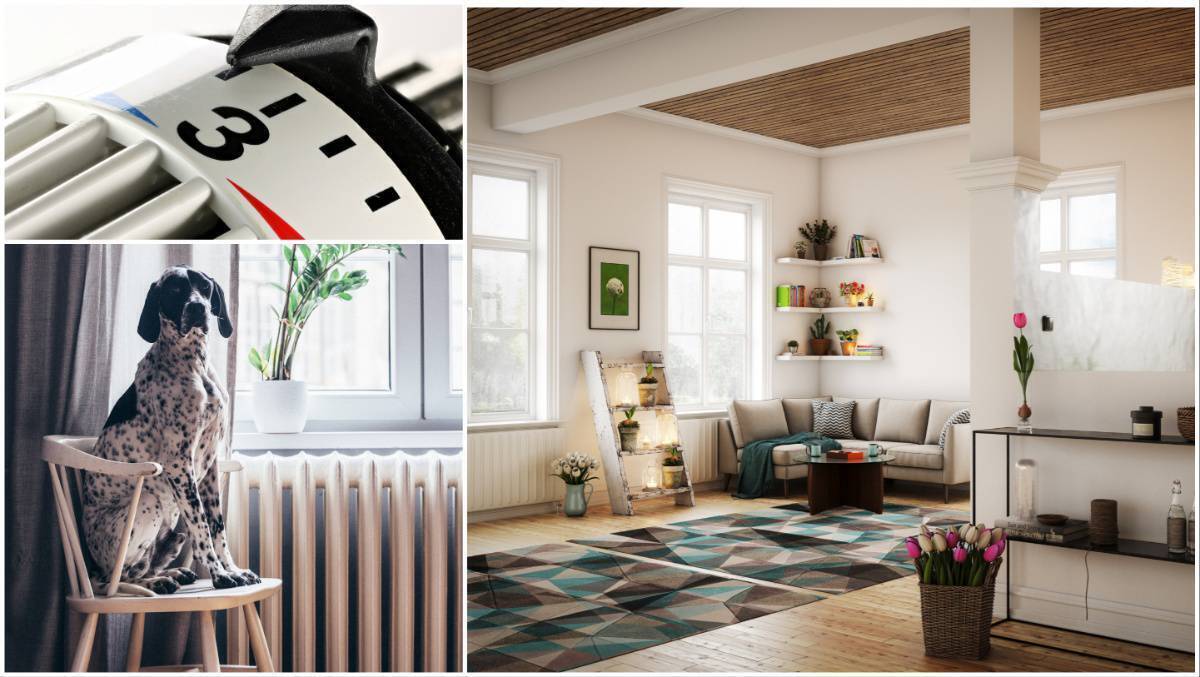
Set thermostatic radiator valves correctly when temperatures plummet and you'll stay warm while dialling down heating bills
How to train your thermostats so you cut costs and keep cosy

Ensure your room is at a comfortable temperature. File picture

Temperatures will plummet to lows of -5C this week as the cold spell continues to bite thanks to Arctic air and as a Status Yellow low-temperature and ice warning impacts Munster, Leinster, Connacht, Cavan and Monaghan, we're doing our best to stay warm as well as safe. Although we try to keep those heating bills under control, we don’t always completely understand the settings that trim those costs with wet central heating. 

One of the most powerful basic additions to even the most challenged system begging for an upgrade is a thermostatic radiator valve or TRV. But there is some confusion about what they actually do. 

It’s tempting to just dial the radiator up and down in the belief that this makes them hotter or colder to suit, but the clue is in the name.

TRVs monitor the temperature in the room, they do not operate on the heat of the radiator. File picture

TRVs measure the ambient temperature of the room, not the heat of the water in the radiator. They are stand-alone little heroes working under a setting on the head (or via your app if you have smart TRVs). 

Thermostats rely on the temperature of the air surrounding them, and this includes TRVs. It’s made up of two elements, an actuator set in the head of the TRV that responds to the temperature set on it, expanding and contracting. 

The second is a sprung mechanism that allows hot water in and out of the radiator valve prompted by the actuator. The TRV modulates the flow of hot water to that rad.

When hot water enters via the valve, it mixes with the water already in the radiator. So, if you set your radiator at a top setting on the TRV (a five or sometimes a six) — the actuator is open and no matter how hot the room becomes the radiator will keep drawing hot water supplied by the boiler (the temperature of that water is set on the boiler controls), unless a room thermostat linked to the heating controls tells it otherwise.

If you have the TRV set on two or three, it will regulate the temperature and once it senses the room is warmed (this could be from other sources like your fireplace or heat drifting in from other rooms) it will close the valve. 

Sometimes you will be using a TRV to just keep a room from getting too cold, where condensation might develop for example, so the TRV is set right down at a frost setting of about 6C (most have a little snowflake symbol to guide you). 

When the heating is on, the radiator will draw just enough hot water to mix with what’s in the panel to keep the room from chilling. 

Ensure your room is at a comfortable temperature. File picture

The zero setting turns the radiator off completely. Ensure you know the difference between the frost and 0 if you’re going away in winter and leaving the heating on standby.

TRVs have nothing to do with boiler settings and master heating controls, bar helping to regulate the central heating from calling on the boiler too often. 

If you have a room thermostat in a room, it doesn’t require a TRV on the radiator. The heating controls will take care of the temperature. The other thing to keep in mind is that as the TRV has a thermostat, this must be out freely measuring the temperature of the air. Don’t sit them behind long curtains or blocked by furniture that will impede the normal currents of air drifting around the room.

Read More

Setting a TRV, start at a setting of two or three and turn it up only if the room feels uncomfortable. It’s just small increments when it comes to working temperature, so opening your TRVs right up will not make the room shoot up in temperature any faster. 

It’s negligible. In a large room, you’ll soon discover what seems most comfortable when using two radiators. 

If your home is colder than usual as it’s Baltic outside, and your insulation levels are just so-so, the TRV will bring the room to your setting (let's imagine it’s 20C) in just the same way as it did on a warmer day. 

Honeywell Smart TRVs, 4 for €250, screwfix.ie.

You don’t have to dial up the TRVs, and it won’t make the CH work much faster if you do. What it will do, is increase the pressure on the boiler and your draw of gas, oil, electricity or solid fuel.

In general, you can expect your radiator to strive for a room temperature of 20C at a setting of three, 23C-24C for a four setting, and 26C-30C fully open at five, which will bring the water to a very high temperature. A setting of five will disable the TRV's usefulness, as it will just keep calling on the boiler to keep the radiator scalding regardless of the room temperature. 

That does not mean that heat is not being stolen by draughts, poor insulation and open doors, but with a TRV set from two to four, the radiator will do its best to open and close and maintain that temperature setting based on the air around it. 

When a radiator set for two or three is very hot, unless the TVR is broken, it is simply getting the room to the set temperature.

The working engineering of TRVs has changed little but their aesthetic design, finish and remote setting smarts have been transformed by wireless operation. 

But this does not alter the information on settings. What smart TRVs can do is show you the temperature of the room and allow you to set your desired temperature rather than a one-six setting. The real temperature you’re moaning about may be a wake-up call if you’re sitting around in shorts and a vest.

Still not sure whether a room is maintaining a reasonable temperature? Pick up a cheap, digital room thermometer. I keep one of these beside my desk stuck to a filing cabinet, as my body temperature signals are unreliable. When I see the room is 19C, but I’m still feeling chill, I will have a walk around the room, pull on a jumper or have a cup of coffee rather than firing up a blow heater. 

Ensure your room is at a comfortable temperature and that the TRVs are working with a quick screw off and check. File picture

In bedrooms and hallways, you may want to keep the temperature at a lower 18C for example (close doors so that one space is not compromising another). 

Vulnerable householders may need to keep the house or at least a couple of rooms at a higher setting using their TRVs.

If your TRV sticks open (it can stick open or closed), try the following before installing a new one. With the heating off, set the TRV to its highest number. Unscrew the TRV from the radiator by hand. You’ll find a tiny piston which should spring up. 

If it does or does not, give it a dab of WD40 and a little tickle with your index finger. Keep your TRVs in tip-top condition by brushing off any accumulated dust and debris and lubricating the valves occasionally with a little dab of WD40, as occasionally sticking is not unusual with so much dry heat and moving metal parts.

More in this section

Revoiced

Newsletter

Sign up to the best reads of the week from irishexaminer.com selected just for you.

Cookie Policy Privacy Policy Brand Safety FAQ Help Contact Us Terms and Conditions

© Examiner Echo Group Limited