Jennifer Sheahan: How to use pattern in your interior design

Mix patterns with blocks of colour, as Jennifer does in her hallway. Pictures: Moya Nolan
The very thought of bringing pattern into your interior design might evoke all kinds of feelings in you — excitement, uncertainty, and maybe even fear. However you feel about patterns, the fact is that they are not going anywhere — their popularity remains high, and there’s no sign of that fading any time soon.
Good news for us all, because patterns are not only a brilliant way to bring interest and personality to your home, but they can also work visual magic tricks to make small rooms appear more spacious. I’m all for pattern clashing and layering, although some prefer a more simplified look. Whichever you prefer, there are a few simple heuristics to help you use patterns to maximum effect in your home.
Choosing one prominent pattern in your room will make it much easier to layer in additional patterns. This is likely to be on a dominant item such as wallpaper, curtains, or a large rug. Once this anchor pattern has been chosen, you can choose complementary patterns on other items such as furniture or soft furnishings. It’s a nice idea to repeat the anchor pattern, either by picking up the same or a similar pattern in another piece or by repeating a colour within a different pattern. For example, if your dominant pattern is blue and white vertically striped wallpaper, you could add in other striped accents such as a vase or an armchair, or you could use a similar blue within another pattern.
A great way to make sure your patterns don’t overwhelm is to mix small prints with large ones. This also creates visual depth in a room, which is always a good goal for small rooms. There’s an often-repeated adage that you should use large patterns on large areas and small patterns on small ones, but I don’t personally think that’s necessary. A small repeating pattern on a large surface is particularly great in small rooms, because it gives an endless illusion, giving a visual feeling of more space. Likewise, I love big chunky patterns on throw pillows and other small accessories. As long as you mix different sizes together, I wouldn’t worry about what surface they’re on.
Even if you love lots of patterns, it’s still a good idea to narrow your selection to around three or four patterns in one room. You can repeat these patterns, but too many different types will look unbalanced and you risk losing the effect your patterns are aiming to achieve. As with pattern size, it’s a good idea to mix pattern type — for example, layering geometric patterns with florals and animal prints.
Too many patterns of the same type look disorganised and start to lose impact. Mixing types is a matter of trial and error, so make sure you order samples to see what works!
It’s always a good idea to stay within your colour palette when mixing patterns; however, you should try to contrast different pattern colours so that they stand out and don’t all blend into one. You can do this by using contrasting colours within your palette, or by choosing lighter and darker shades of a colour to help differentiate individual patterns.
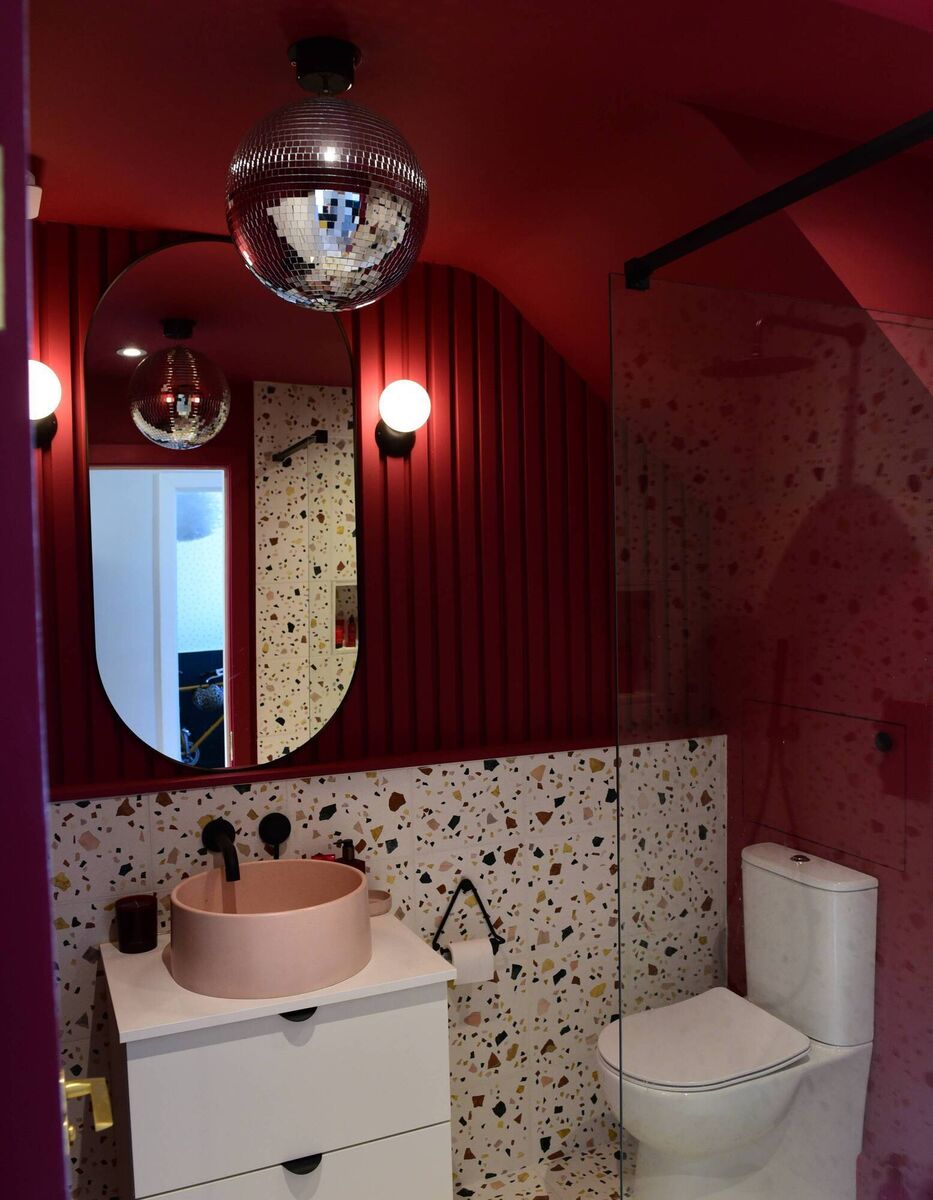
With all that being said, patterns don’t have to be all about colour — you may personally find that overwhelming.
If you prefer the minimalist look, you can still bring in plenty of patterns without any additional colour. Tiles and wood flooring already bring in some pattern, and you can layer in more by choosing textured wall cladding, embossed wallpaper, and textured soft furnishings.
Even the most pattern-loving among us would find nothing but patterns overwhelming in a room. Use blocks of colour such as a solid-coloured wall, couch, curtains, or a large accessory to give some visual relief in your room. This will also serve to highlight the patterns that are there, which may otherwise be drowned out in the chaos.
Distribute your patterns evenly throughout a room — for example, if you have patterned curtains on one window in a room, balance this out by having patterned cushions on a couch on the other side of the room. Don’t concentrate all patterns just in one area.
If you, like me, want to make your small room feel bigger, then there are some patterns that work magic tricks to achieve this.
The best of all are vertical stripes. Vertically striped wallpaper or curtains are fantastic for drawing the eye upwards and making the room feel higher and larger than it really is. If you find stripes a bit much, remember that you can bring them in without adding additional colour by using wainscoting or fabric that is textured, but in monochrome.

CONNECT WITH US TODAY



Be the first to know the latest news and updates