How to make your home a happier, more functional space
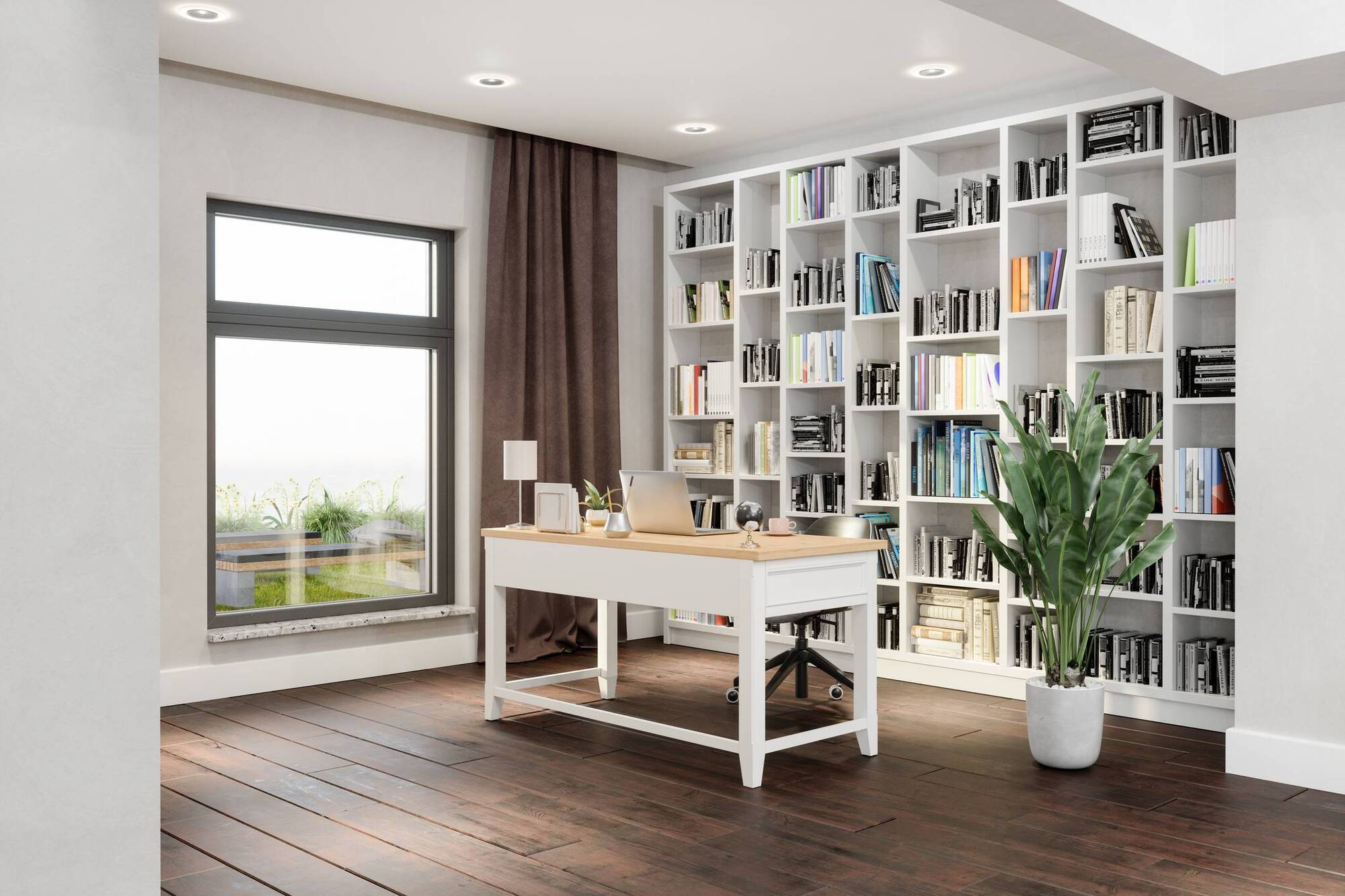
If you apply the principles of ergonomics in your interior design, your home will be a joy to live in, not just to look at. Picture: iStock
The word "ergonomics" usually evokes images of ugly office chairs and feelings of guilt about how much time we spend slouched over our laptops.
The reality is actually much more exciting than that. Ergonomics — also known as Human Factors — really means designing a space that best meets all the needs of the person using it.
Usually, it’s applied to workspaces, but I’m here to lead the revolution for applying ergonomic principles in our homes. Think about what this means for you — if you apply the principles of ergonomics in your interior design, your home will be a joy to live in, not just to look at.
Our homes should provide wellbeing, comfort, and functionality — they should not be sources of frustration where we keep banging into corners or squeezing around badly–placed doorways.
I love the concept of ergonomics so much that I did a master's degree in it (Human Computer Interaction and Ergonomics at University College London, if anyone is interested).

HCI is the study of how humans interact with computer interfaces (the most ubiquitous example being your phone) and ergonomics is the wider study of how we interact with all objects and surfaces in our environment.
I used my knowledge gained from this degree so much when I was renovating my home, because thanks to my ergonomics professor I am now obsessed with making sure I design my environment to work for me.
As our lives, our families, and our bodies change over time, it’s important to ensure our environment is adapting to meet our needs. Here are ways to incorporate ergonomic principles into the design of your home to make sure it’s working for you.
The first step in ergonomic design is to consider your own needs and those of others living in your home. There is no set height, no perfect size, and no right shape — there is only what is right for you.

If there are multiple people living in your home, a common approach in ergonomic design is to define the extremes and design to accommodate those. This means, for example, that your doorways should accommodate the height of the tallest person— nobody should be ducking!
Perhaps it may mean that your kitchen countertop — or a section of your kitchen countertop — is lowered. Maybe ramps should replace steps where possible, doorways should be wide enough, and rugs should be as flat as possible to make it easy to move around.
It is important to be selfish here — your needs are never the problem, it is only that your environment is not properly meeting them.
Two key principles of ergonomic design is to reduce excessive force and to keep things within easy reach. Within your home, this simply means that the items you use most should be easy to pick up and put down.
There are two ways to design for this in your home: the first is to ensure your furniture and cabinetry are at the right height for you, and the second is to decide where to put what.
Take some time in each of the main rooms in your home to consider where you have stored your most frequently used items and whether this needs to change to meet your needs.

In my kitchen, for example, I designed for the oven to be at my chest height.
This means that I do not have to bend down low or reach up high with hot and heavy roasting dishes or baking tins.
I designed a rail so that the pots and pans I use most often hang directly above my hob. I also chose to store my crockery and cutlery in drawers beside my dishwasher, making it super easy for me to unload.
In the bedroom, I designed my wardrobes so that the items I use most are right in front of me at chest height. Lesser worn items are on the top shelves or along the bottom.
Light switches are right beside my bed, in a position that is easily reachable without twisting or half falling out of my bed. In my bathroom, I added built-in sunken shelves in the shower so that I didn’t have to constantly bend down to reach my shampoos and soaps.
Another key principle of ergonomics is to provide clearance. Simply put, this means leaving enough space for you to move around the items in your home.
Typically, for example, you should leave a minimum space of 780mm around pieces of furniture such as your bed and your couch, so that you can move freely without tripping or banging into anything.
Keep in mind that this is the minimum recommended space for an average home, and you should adjust where needed.

Your furniture should also support your posture.
Super soft couches look inviting to sink into, but spending long periods of time on them can start to cause discomfort — a good supporting pillow is a great way to address this.
If you’re designing from scratch, built-in furniture is a great way to ensure you have everything at the right height for you.
If you have multiple people using the same item, consider where adjustability can help — for example, adjustable height chairs, lamps, desks, and shower heads.
Finally, an overlooked but important principle to consider is good lighting, temperature, and air quality. Lighting is, for me, one of the most important aspects of good interior design. See here to read more on my article on lighting design.
I love to incorporate different lighting for different times of the day — for example, spotlights in the kitchen when I’m cooking or baking, and warm lamps for when I’m relaxing. In the office, it’s a good idea to have your monitor facing the window and to ensure there’s no glare on your screen.

An ideal room temperature is around 18-20 degrees Celsius, but this depends on your personal preference. You may also consider whether an air purifier or dehumidifier would enhance the air quality in your home for maximum wellbeing.
- Got a question for Jennifer Sheahan? Email home@examiner.ie