Twenty-four hours of time-travel at Fairmont Carton House

Irish Examiner Home Editor Eve Kelliher goes back to the future in the historic country house in County Kildare
Twenty-four hours of time-travel at Fairmont Carton House

All 170 guestrooms and suites have been fully refurbished and decorated Fairmont Carton House.

Centuries worth of feet scampering bedwards via the back staircase at Fairmont Carton House have made their unique mark on the stonework. 

Each tread is slightly different but I am informed they cannot be changed: Like many parts of this stately building, the slabs are protected.

The Duke's Rest wine room.

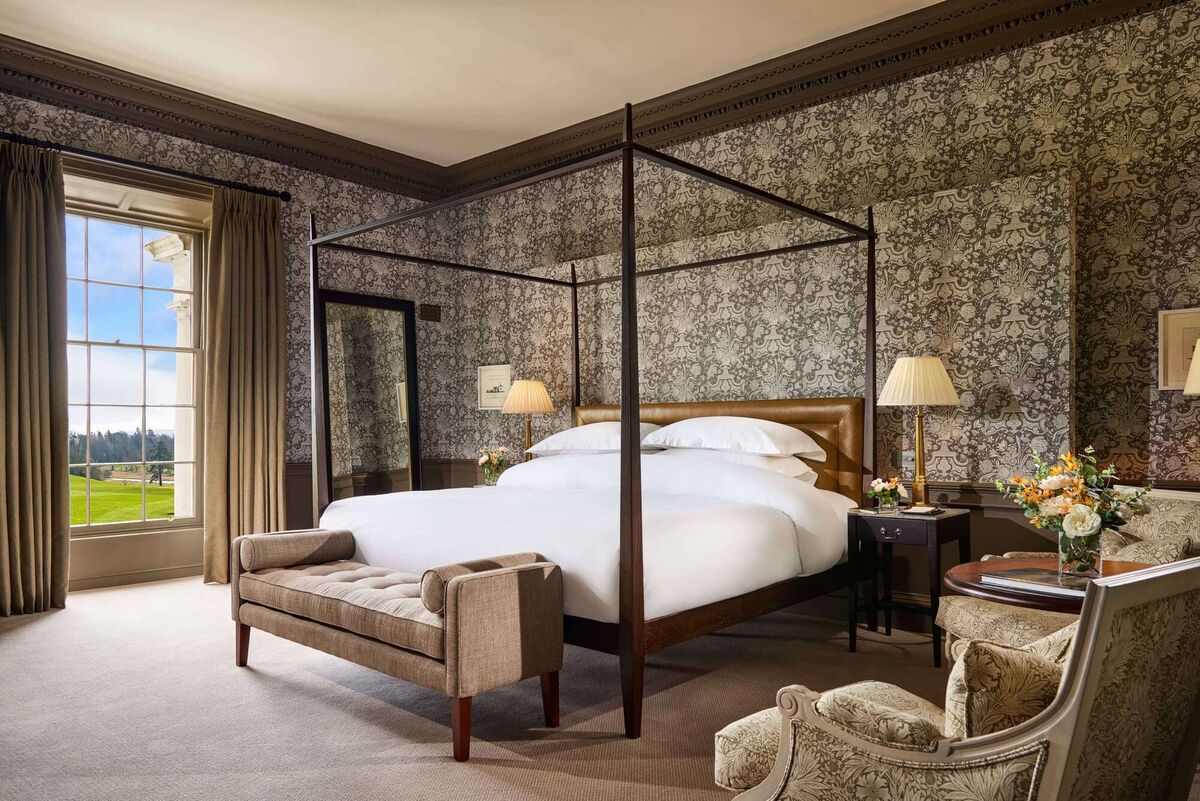
As for my own steps, they are taking me to the lavishly decorated winter suite. 

Featuring a bedroom, spacious private sitting room and bathroom, this wing of the manor has summer, autumn, and spring counterparts because the family who originally set up home here liked to follow the path of the sun as they roamed around their residence throughout the year.
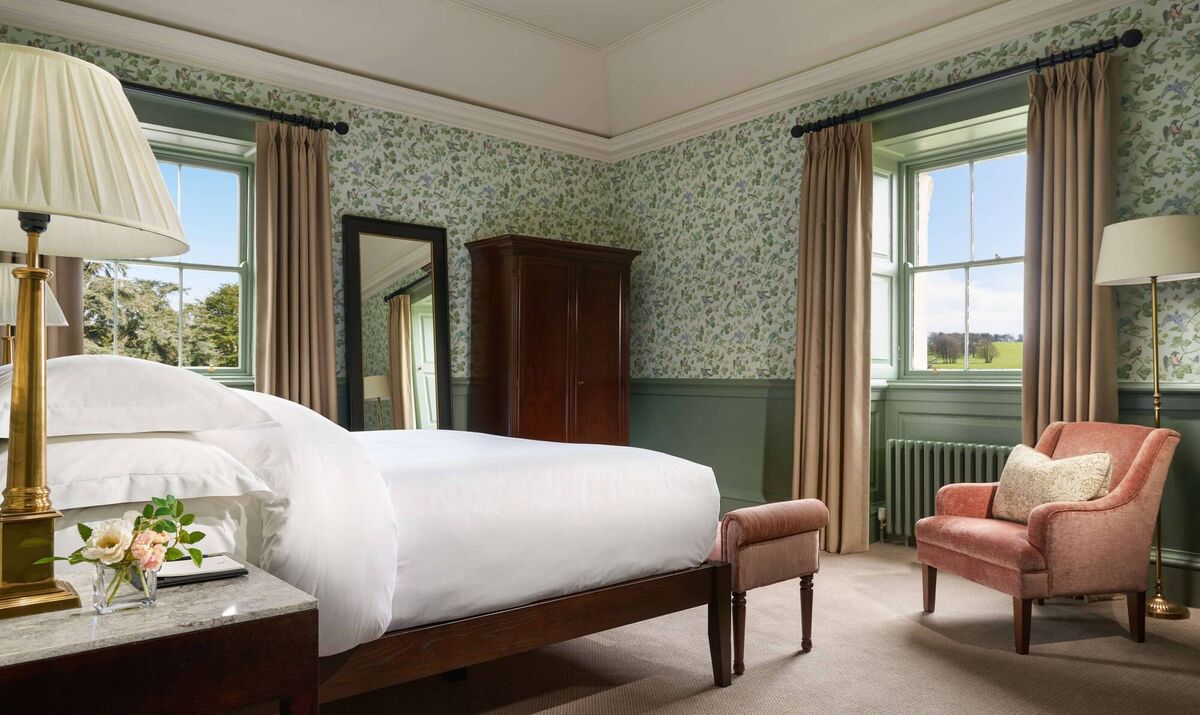
Bedroom in The Winter Suite. 

What a fabulous idea, I think. 

Except we don’t all have the luxury of 170 rooms or suites to choose from.

I arrive at 12.30pm on a Sunday and in the 24 hours before checking out on Monday, I've taken a whistlestop tour of the mansion and 1,100-acre grounds that's whipped back and forth across centuries of history.

Now a five-star hotel, Fairmont Carton House was once the seat of the FitzGeralds. 

I get an idea of the scale of the walled estate while riding shotgun on a golf buggy. Triona Flood from the Carton House team is at the wheel. “It’s amazing how many business meetings I can have out here,” she tells me as we whizz along.
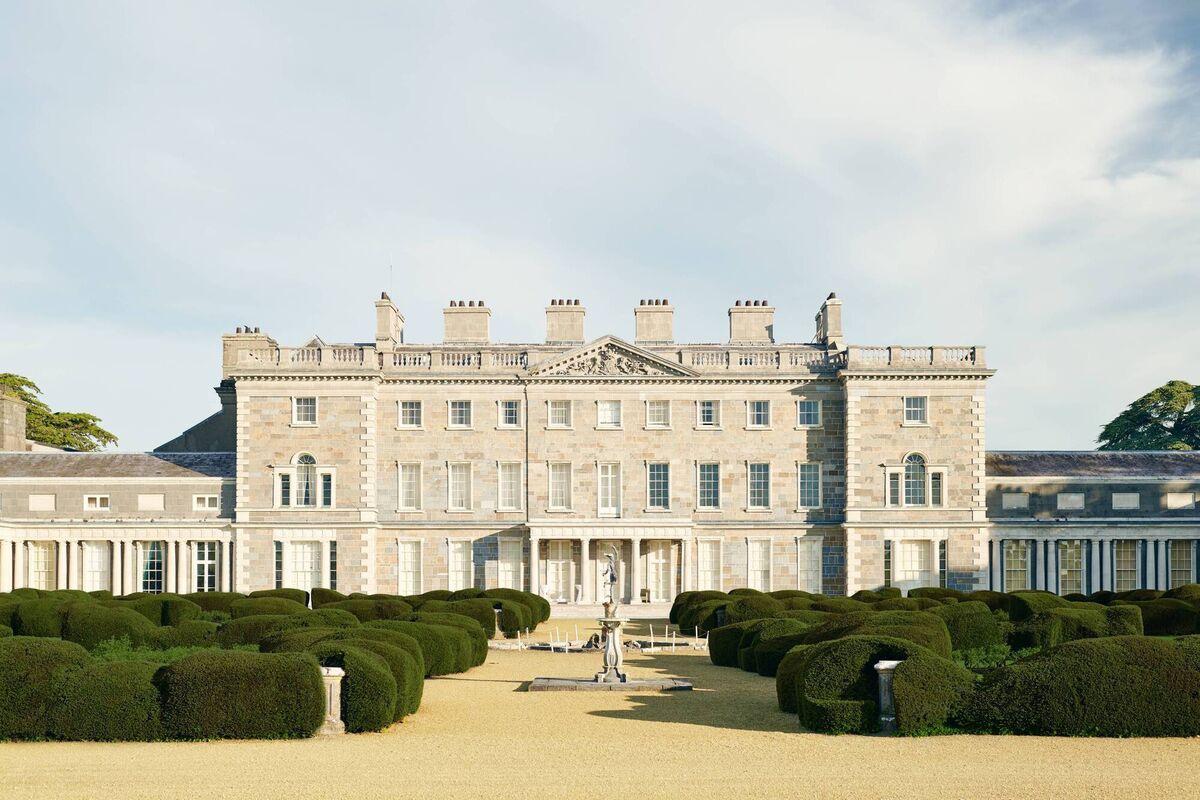
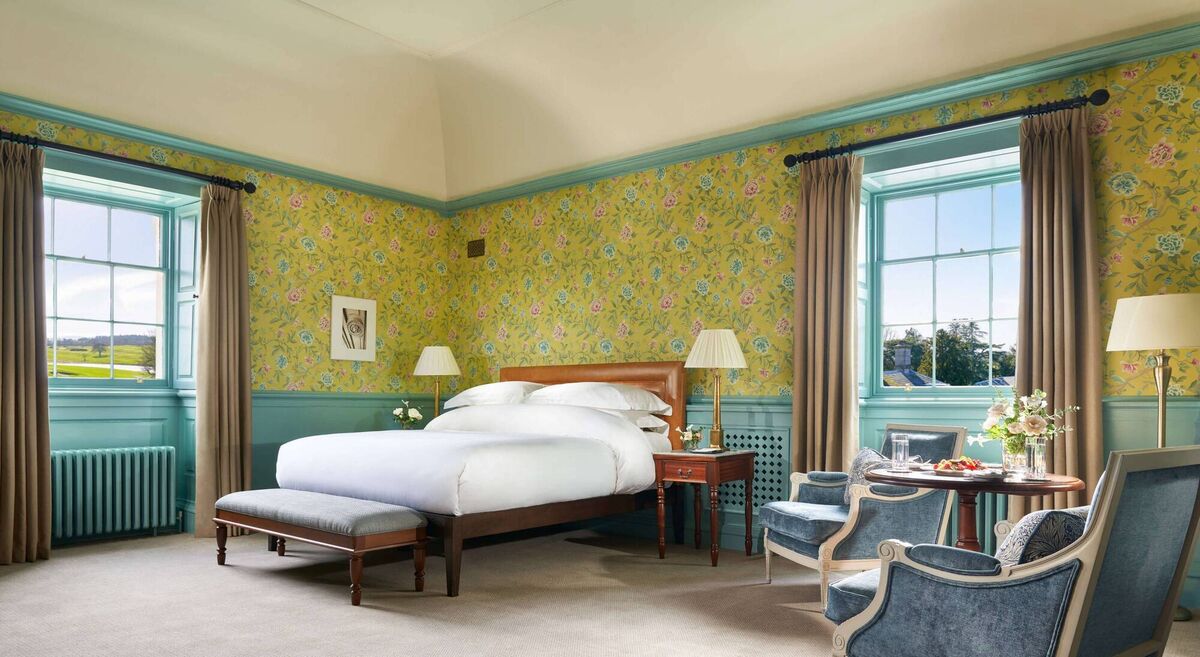
Under the creative guidance of McCauley Daye O’Connell Architects, the extensive multi-million-euro renovation of one of Ireland’s most historic country manors, Carton House, a Fairmont-managed hotel, was unveiled in June 2021.

All 170 guestrooms and suites have been fully refurbished and decorated at the one-time manor house. 

“The refurbishment has meant the guest experience of Fairmont Carton House was completely reimagined,” says Triona.

Bedroom in The Summer Suite: The wallpaper in Carton House was conserved and matched by David Skinner. 

Wallpaper specialist David Skinner was entrusted with conserving and matching the wallpaper throughout the manor house while William Edwards designed a bespoke range of fine bone china. “There are 44 rolls of hand-printed wallpaper used in The Morrison Room alone,” says David.

The writing desk in The Winter Suite.

The name “Carton” comes from the old Irish “Baile an Cairthe” or Land of the Pillar Stone, Triona Flood tells me, gesturing to the rolling parkland we hurtle past at 20km an hour. “The estate stretches over two counties, Kildare and Meath, and the lands at Carton belonged to the Maynooth estate of the FitzGerald family from 1176.”

Yes, these are the same FitzGeralds who were part of Strongbow’s invasion of Ireland, became Earls of Kildare in 1315, and went on to become one of the most influential families in Irish history over the next eight centuries.

While Maynooth was for a time regarded almost as a “capital” of Ireland, in more recent years, Fairmont Carton House has become a sporting hub — it’s where the Irish rugby team trains and facilities onsite include the two world-class 18-hole championship golf courses. These we pass en route to our destination, the shooting range, by the estate’s artificial lake.
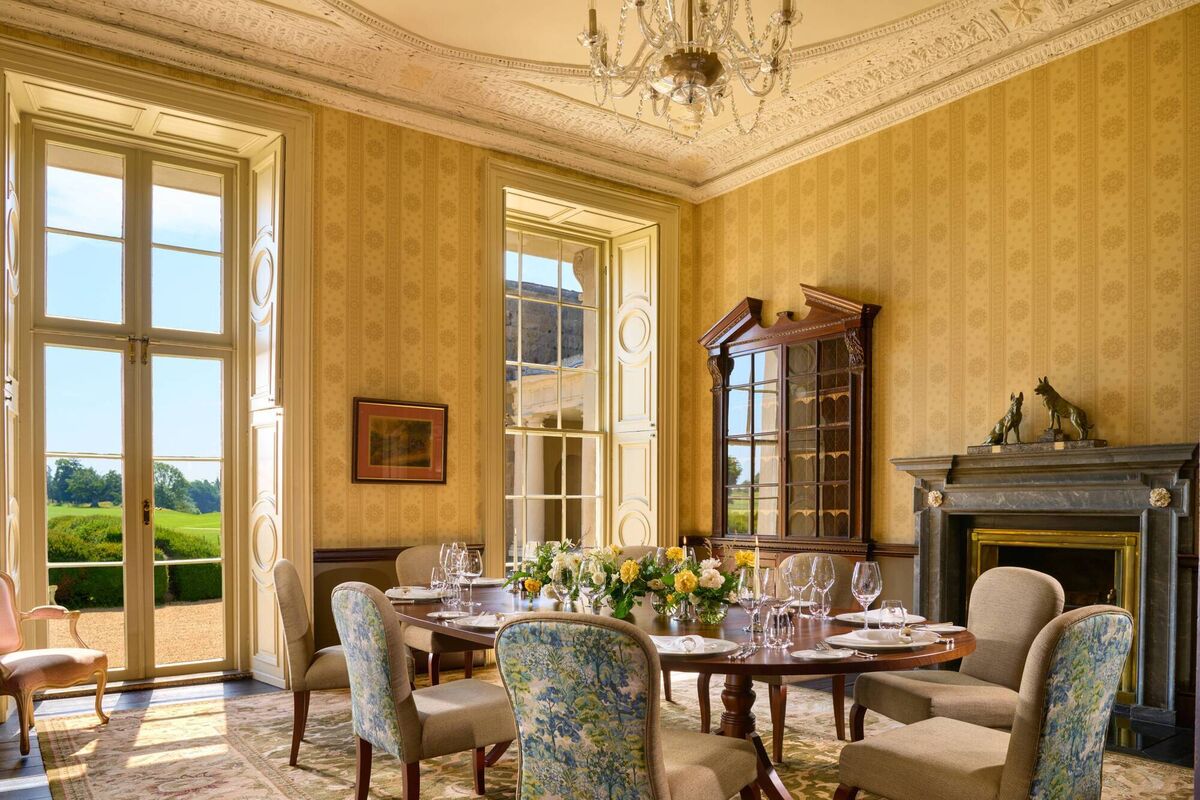
The Duke's study.
The Duke's study.

The nearby swans — and everyone else — can relax. No reflection on the estate’s sharpshooting tutors, but I’m not going to make a sniper any time soon.

However, Richard Castles (also known as Castle or Cassels) was on target in his chosen career. The aptly named architect was commissioned, in 1739, by Earl FitzGerald to design Carton House. “It cost £26,000 to build at the time,” adds Triona.

It was Castles who also created many of the most world-renowned Irish buildings — Westport House, Powerscourt House, and, in 1745, Leinster House which he built for the FitzGeralds.

The living area in the Presidential Suite.

Back to Carton House and, in 1747, James, the 20th Earl of Kildare (and, from 1766, the first Duke of Leinster) married Lady Emily Lennox. Lady Emily was the daughter of the Duke of Richmond. The story of the life and times of Lady Emily and her sisters was captured by the author Stella Tillyard and made into a miniseries for the BBC, The Aristocrats, which was filmed at Carton House in the 1990s.

The bedroom in the Presidential Suite. 

The sisters still keep an eye on proceedings. As we venture from room to exquisitely decorated room in the manor, their portraits ensure their vibrant presence is felt throughout the space.

Lady Emily was a fascinating chatelaine. She was known as “the queen of Ireland” because of her role as a political influencer, and her son Edward was a major figure in the United Irishmen.
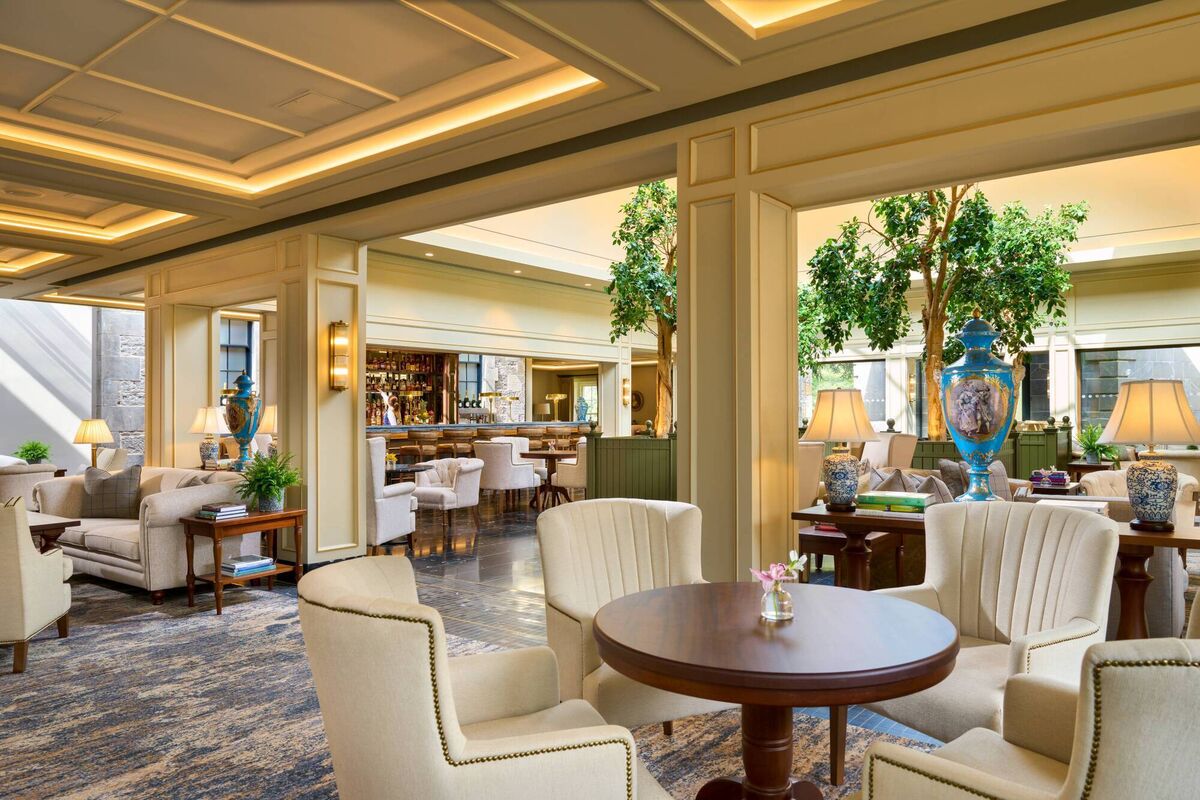
The courtyard bar. 
The courtyard bar. 

Emily, the second of seven surviving children of Charles Lennox, 2nd Duke of Richmond (who was descended from King Charles II of England), and James also lived in Frescati House in Blackrock and Leinster House in Dublin. They had 19 children together.

After her husband’s death, Emily married William Ogilvie in 1774.

Nine years her junior, Ogilvie had originally come to Carton as a tutor to her children. Altogether, Emily had 22 offspring and it is said that she designed the rose garden that overlooks the manor house to provide a secret hideaway for her children when they were playing.

The family cook was such a support to her, particularly in caring for the youngsters, that the pair became firm friends, says Triona.

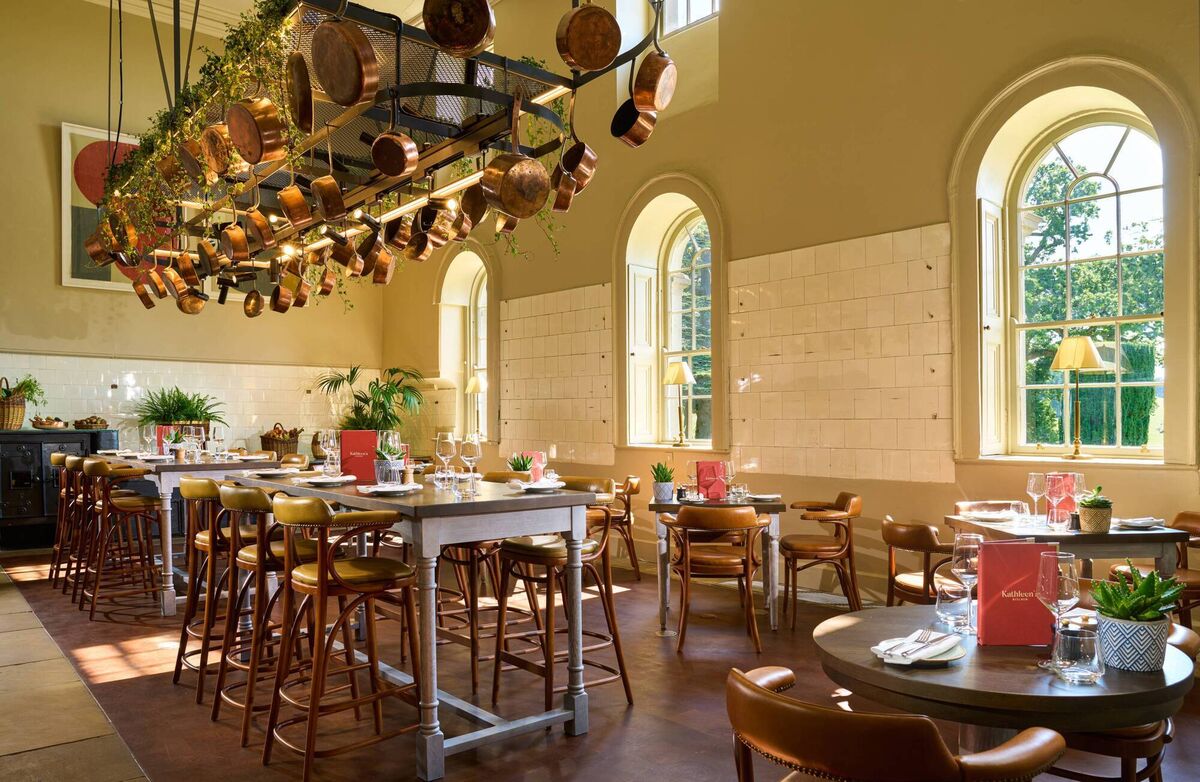
Kathleen's Kitchen, where the original kitchen was located. 

“Lady Emily insisted that the kitchen and its cast-iron stoves were moved from the basement, where the servants’ quarters would typically be, to the ground floor so the cook and her team could enjoy the views as they worked — not typical at all for a Palladian mansion in the 18th century,” adds Triona. 

It is after the cook that the modern-day restaurant, Kathleen’s Kitchen — located in the same space — is named.

The Gold Salon.
The Gold Salon.

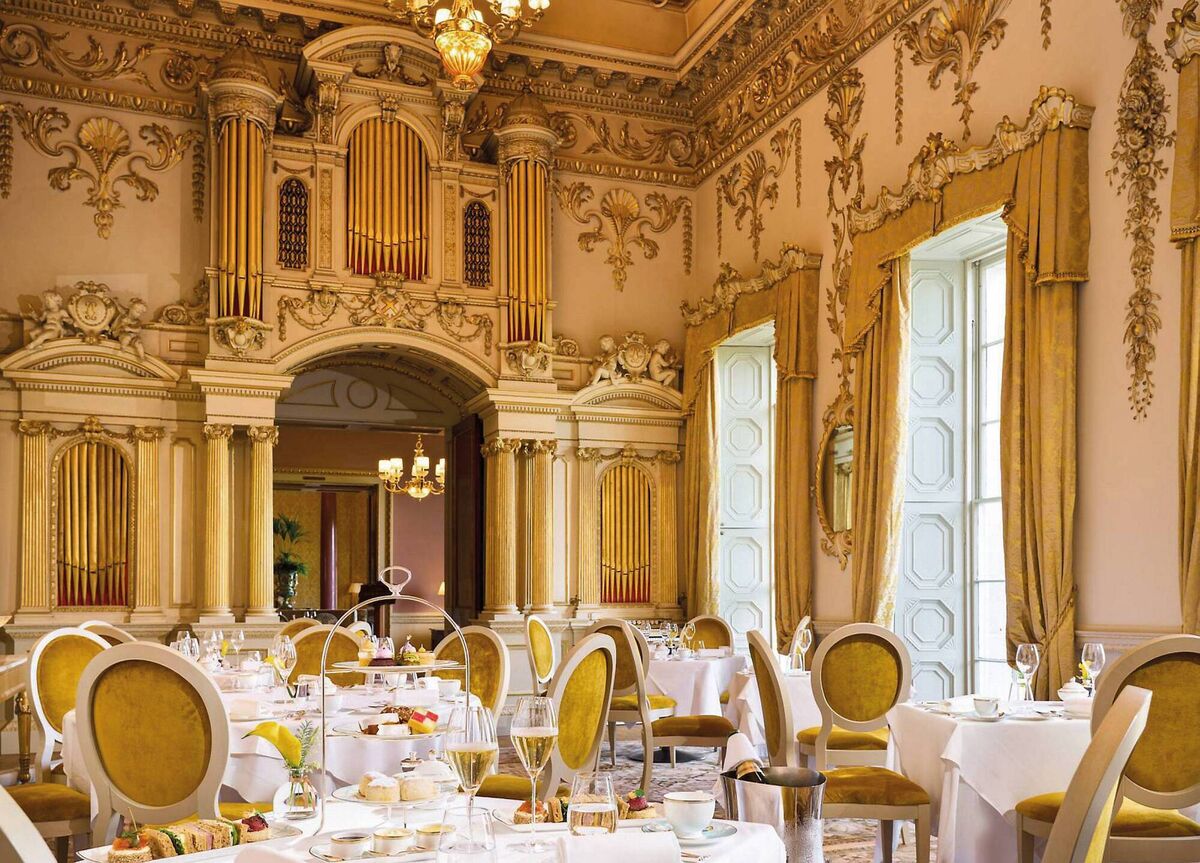
The Gold Salon


Dating back to 1739, the Gold Salon, which rises through two storeys, has been described as one of the most beautiful rooms in Ireland. The ceiling is deeply coved, featuring baroque plasterwork by the Francini brothers and represents “the courtship of the gods”.

The plasterwork, like the decoration on the walls, is picked out in gilt. At the east end of the room is an organ installed in 1857, its elaborate case designed by Lord Gerald FitzGerald, a son of the 3rd Duke.
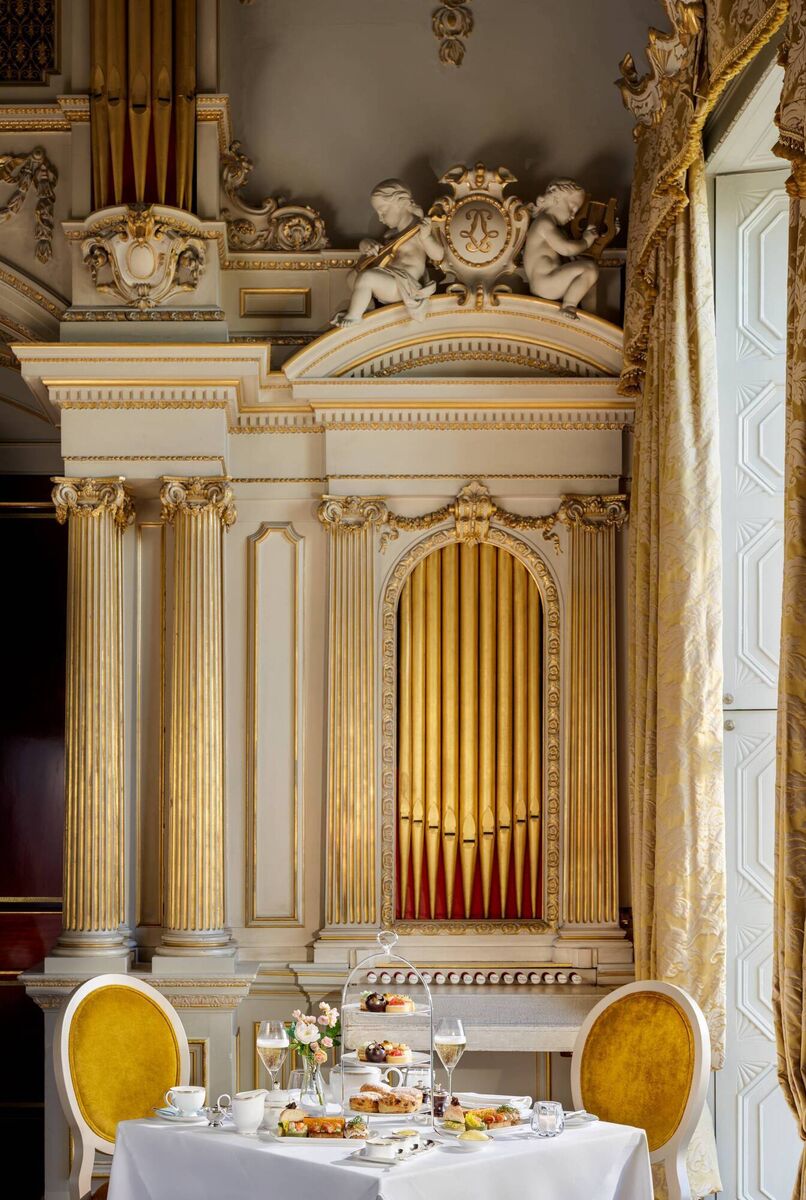
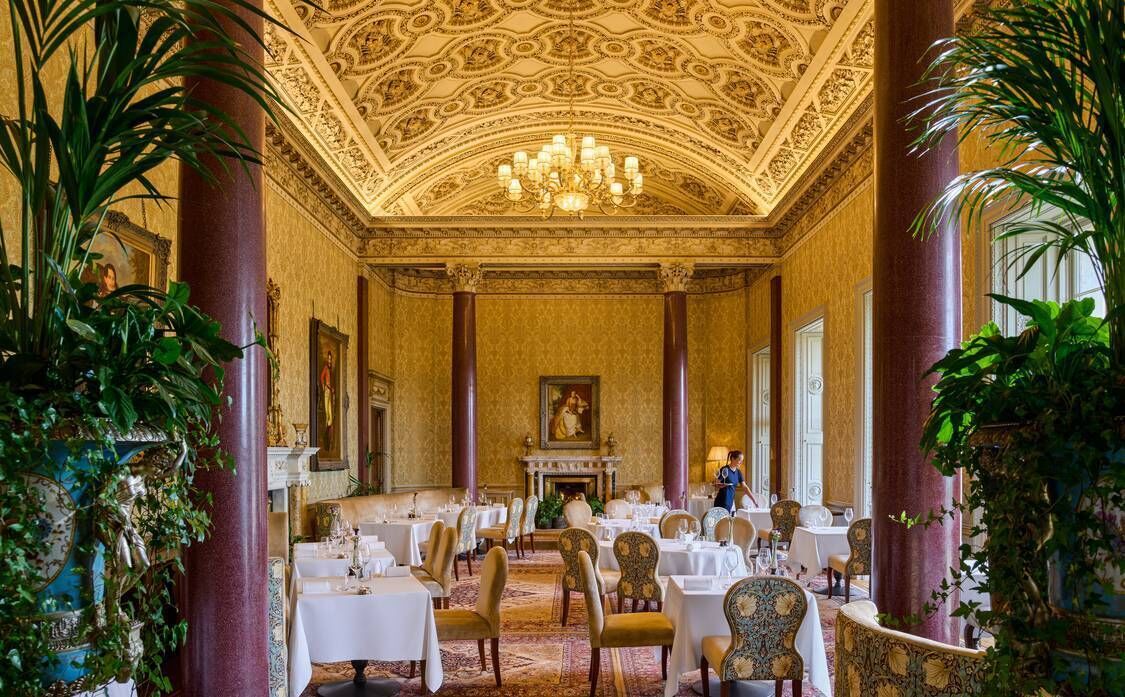
The door at this end leads, by way of an anteroom, to a great dining room named The Morrison Room after the architect Richard Morrison. It has a screen of Corinthian columns at each end and a barrel-vaulted ceiling covered in interlocking circles of oak and vine leaves.

Carton remained unaltered until 1815, when the 3rd Duke decided to sell Leinster House to the Royal Dublin Society and make Carton his chief residence.
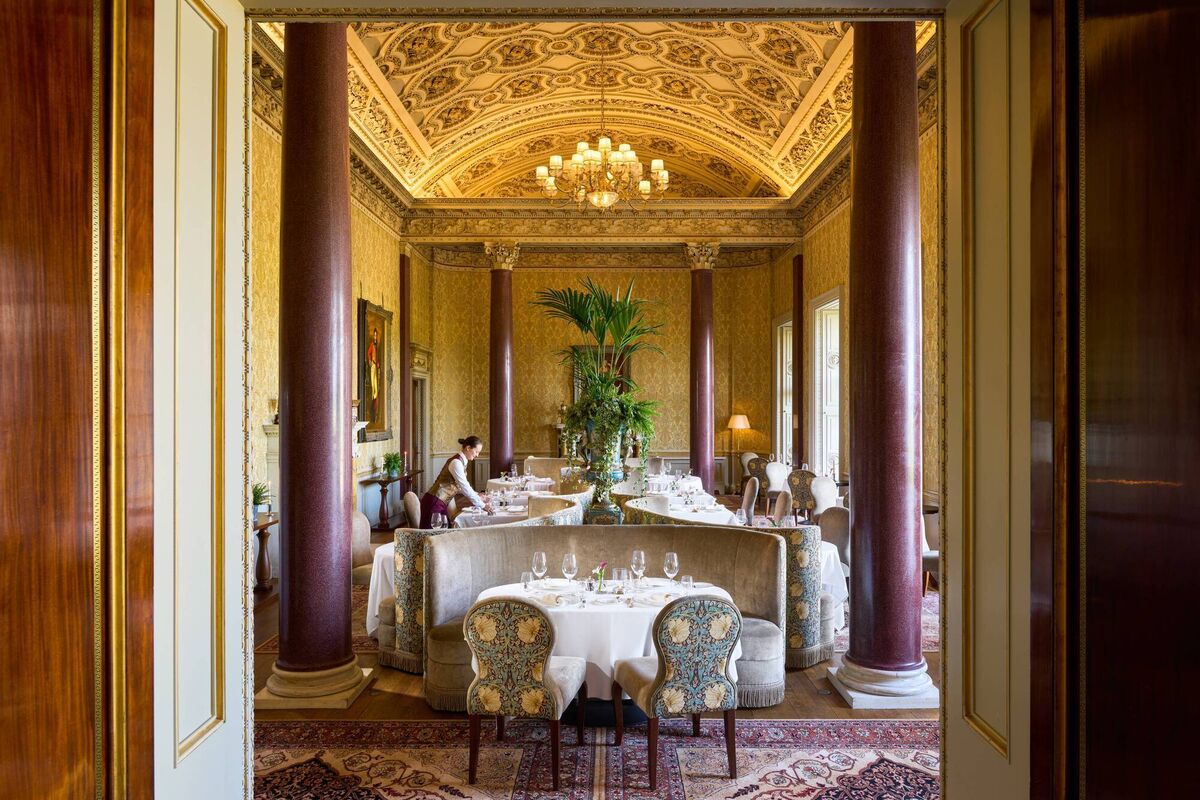
The Morrison Room is named after architect Richard Morrison.

He employed Richard Morrison to enlarge and remodel the house. Morrison replaced the curved colonnades with straight connecting links to obtain additional rooms including the famous dining room. At this time, the entrance to the house was moved to the north side.
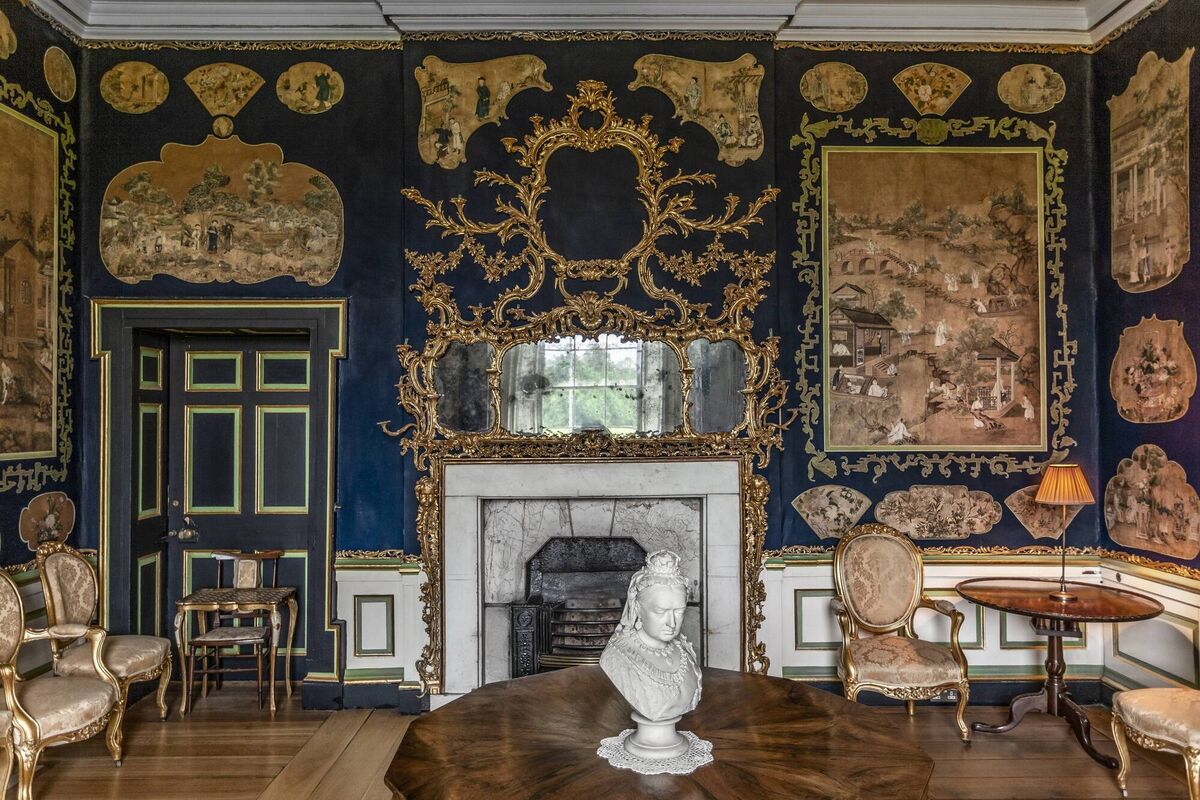
The Chinese Boudoir


The Chinese Boudoir was purpose-built for Queen Victoria. The monarch was believed to have had a fear of fire, so a bedroom was created for her on the ground-floor level of the house near the main door (as was also the case in Muckross House, Killarney, Co Kerry). 

The Chinese Boudoir.

To this day, the boudoir at Carton House remains exactly as it was in 1759, decorated with Chinese paper and a Chinese Chippendale giltwood over-mantel.
Queen Victoria is believed to have stayed twice at Carton (1849 and 1897), the lake on the grounds being created especially for her before her second visit,

as she had had a dream before her arrival of enjoying a boat trip on a lake at Carton House. At the time, however, no such lake existed.

Carton remained in control of the FitzGeralds until the 1920s. 

The Morrison Room.
The Morrison Room.

Lord Brocket purchased the house in 1949. In 1977, his son David Nall-Cain sold the house to the Mallaghan family, who transformed Carton into a golf and leisure resort, which was purchased by John J Mullen in 2017 and underwent restoration in 2019 and 2020.

Dining, work, and play


The Morrison Room in the manor house is now the fine-dining restaurant and has just been added to the Michelin Guide. Kathleen’s Kitchen serves a menu of locally sourced seasonal ingredients, and The Courtyard Bar serves light bites alongside an impressive wine, cocktail and spirits menu, with an outdoor terrace and carriage house to enjoy views of the estate. 

Fairmont Carton House Spa & Wellness offers a new treatment menu and thermal relaxation experience, while the resort also features 1,000 sq m of conference and events space.

More in this section

Revoiced

Newsletter

Sign up to the best reads of the week from irishexaminer.com selected just for you.

Cookie Policy Privacy Policy Brand Safety FAQ Help Contact Us Terms and Conditions

© Examiner Echo Group Limited