How to prevent slips, trips and falls outside your home
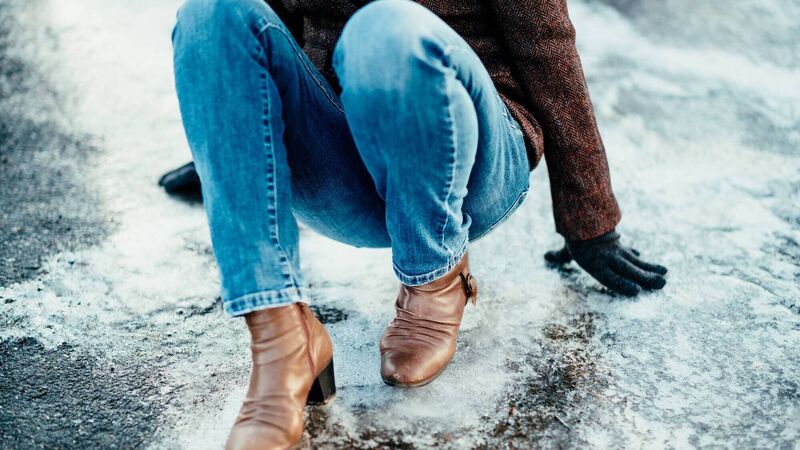
Put away a sack of rock salt in a dry shed right now to deal with icy conditions or even snowfall. Picture: iStock
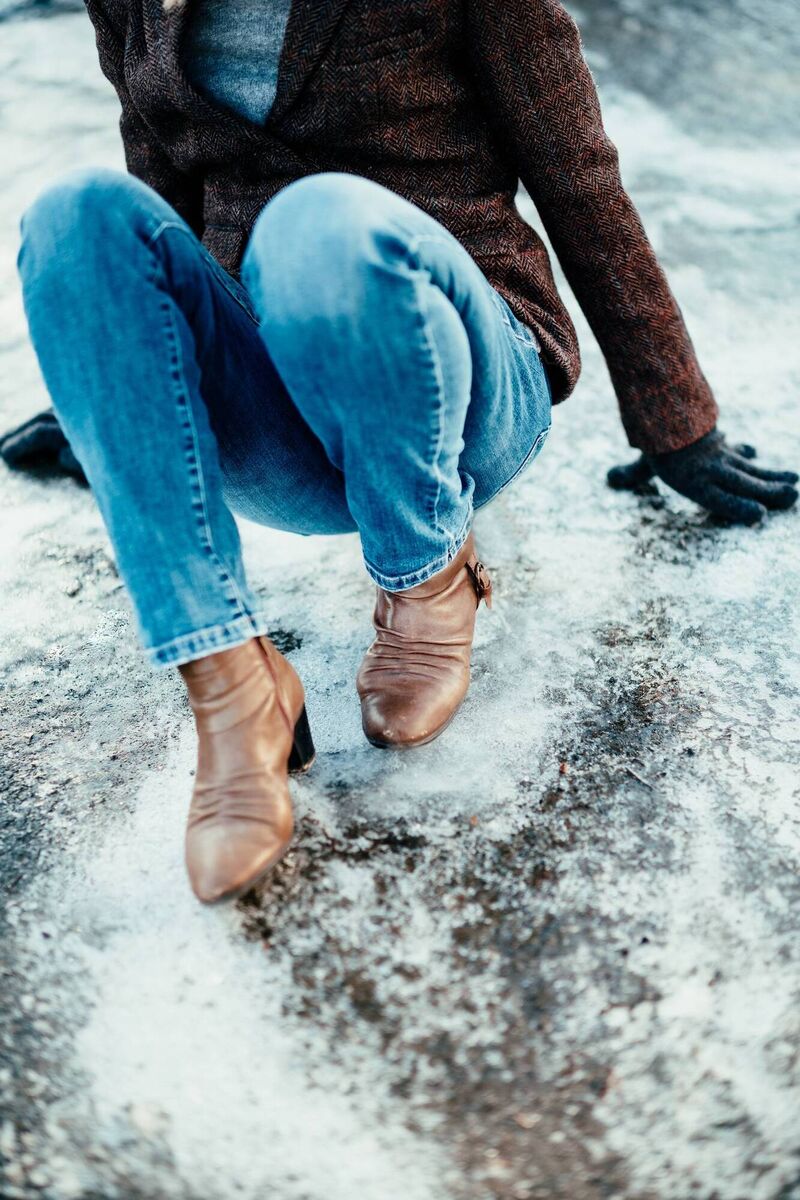
It’s freezing cold and dark outside — perfect for a painful pratfall, backside-over-ears outside your own beloved home.
Everything from ice and pooling water on slick tiles and paving, to the growth of algae and lichen can make for treacherous going especially in the half-light of a short winter’s day.
Swinging off the doorknob while scattering the shopping — well, there’s nothing to look forward to here.
Dealing with treacherous paving or ropey front steps, start by ensuring any rain has sufficient run-off.
Are drains and gullies clear? Soft joints in paving can suck down drizzle, but hard joints will need some means for the rain to sheet off to drainage points.
Failing this, the constant damp will encourage biological growth that could prove hazardous and will allow black ice to form which is often imperceptible to the eye.
Ideally, a patio should be at least 150mm below your house DPC (Damp Proof Course) and slope away from walls or fence by about 25mm over 1.5m. If you’re finding your paving is green and damp near the house, watch where the rain is flowing and consider getting the gradient rectified or introducing drainage grills to whisk it safely away.
Newly sealed smooth paving or patios, even under an appropriate finish, can bead water and be dangerously glassy until they wear in. Watch your step if it’s your first, cold season. If you’re dealing with an established green pathway in a shady spot, a power washer on a dry day is a good first step to clear the natural growth including knots of moss before treatment.
Don’t blow soft joints apart, and work at an angle to mitigate the power of the spray. Guide the murky wastewater off the pathway to a drain or you are simply spreading the joy, and it will all come back in an even bigger spread, hale and hearty. Cut back any overhanging planting that’s providing shade and keeping the pathways wetter for longer.
A stiff brush is fine for moving off lichen, algae and moss if you don’t have a washer, but it will be hard going and will require repeated efforts in the misery of winter. Brushing over the surface will disrupt emerging plants – so it is worth doing. If you want to double down and avoid all chemical patio cleaner (the classic Irish weapon is Jeyes Fluid) try a cup of washing-up liquid, or a good handful of baking soda and salt dissolved in a 10l bucket of warm water to clean off the pathways and steps. Vinegar in a spray bottle 1:1 with water is also an effective algae killer with regular use. Spritz and leave it to work.
Even where you use a heavier chemical product like sodium hypochlorite to remove fungi, algae, liverworts and lichen, natural greening is likely to come back on rough concrete. Go back to the drainage issues and ensure that the habitat is dry and less receptive to the microscopic invaders. Wet & Forget, which as it states is just sprayed on dry paving and left to work, is biodegradable, and free of bleach and ammonia, breaking down harmlessly. It also offers residual power, keeping growth at bay. The trouble is finding the couple of dry days needed for the ideal application for any of these products. €54.99 for 5l, clarkesofcavan.ie
What about relatively glossy surfacing like porcelain tile without a sufficient key or texture, outside the front door or on the patio near say sliding doors? Liberon do a brush-applied anti-slip coating that’s UV and water-resistant that won’t change the outward appearance of the flooring. Suitable for cement, stone, wood (not oiled decking) and highly polished tiling like marble, there are preparation instructions for each type of surface. A test area is recommended to ensure colour compatibility. Liberon Anti-Slip Coating, €20-€25 per litre depending on the supplier. Stonetex offers StepSafe, a sealant for extant glossy, polished and matt tiling that can be used indoors or out. Guaranteed for five years, it comes in at a somewhat bruising €77 a litre, tiles.ie.
If you have a rough, unpolished footing like concrete, simply spreading a little sand around will offer some traction, but just watch out that any loose abrasive doesn’t get tracked straight into the house.
Bleach is not suited to concrete. If you must use it and risk your border plants and grass, use as little as possible, highly diluted on natural paving stones only, following up with a really good soaking rinse.
Put away a sack of rock salt in a dry shed right now to deal with icy conditions or even (shrieks of Irish hysteria) snowfall. Around €11 for 10kg at any DIY outlet or agricultural supplier.
With steps, the dangers of going airborne are particularly worrying as you are at a height or can be pitched onto sharp, hard, angular materials even going inside. Damp in a shaded location, green growth and rainfall, all increase the danger. A simple fix: Anti-slip tape is easy to install, relatively cheap, and can handle everything from stair nosings to walkways, ramps and weird areas like ladder treads and indoor steps, boats and caravan entry points and even along pathways if you’re desperate.
Screwfix offers an Anti-Slip tape which is 100% weatherproof and in multiple layers with a gritty finish, it could save you a broken limb. Great for aluminium, wood tile, plastic, metal, and even concrete with a honed finish; 80m x 50mm, €20.45, screwfix.ie.
All anti-slip items will wear with use, so ensure you replace it completely as needed. Rigid aluminium plates and nosings that screw down on the steps will last longer and starts in the area of €20 a step. Try pittman.ie or your local DIY outlet for solutions, and consider a luminous colour to give you an idea where the risers are.
A wide rough mat intended for outdoor use can be a useful, stable landing point, and obviously will take the heavier muck off your shoes before coming back inside.
Always check that any rails or bannisters on your steps are in good condition coming into winter, and likely to hold you if you had to swing on them in the event of a fall. Ensure you can see your pathways and steps clearly when mounting them, as missing a riser could be jarring and leave you with potentially serious lower-leg injuries. Motion sensor spotlights are energy efficient and easily installed over one weekend to light your way.
- Got a home improvement or DIY question for our Home team? Email home@examiner.ie


Check out the Irish Examiner's WEATHER CENTRE for regularly updated short and long range forecasts wherever you are.
CONNECT WITH US TODAY



Be the first to know the latest news and updates