How to garden in Ireland's increasingly rainy climate
Peter Dowdall on the urban plots that look pretty, alleviate flood risk and enhance urban biodiversity
How to garden in Ireland's increasingly rainy climate

We are seeing heavier and more intense rains than we used to see when I was a child.

I don't suppose anyone truly knows what way our climate here in Ireland is going to end up in the long term and perhaps, not even in the short to medium term. 

We have been warned for many years now that we should expect more frequent, exceptional weather and weather events. The first time that I read that this was in our future was when I was in school and that is well back in the last century at this stage.

Sure enough, we have seen hurricanes in autumn, flooding at any time of the year and record-breaking high temperatures during the beautiful warm and dry July and August of this year. I really loved that period of warm, dry and sunny weather in Ireland this summer and early autumn. 

Rain gardens and living or green walls can play a huge part in alleviating flood risks. Picture: iStock

There were times when the heat felt a bit much perhaps but, knowing that rain and lower temperatures were certainly in our horizon, meant that I had no problem lapping up the Mediterranean way of life for the time that we could.

I’m not so sure that I could have enjoyed it if that future rain wasn’t a certainty as it isn’t, in so many parts of the world.

Now, as we are at the end of October, long, hot sunny days and temperatures in the thirties are a distant memory and the rain has returned and returned with a vengeance. We are seeing, as the predictions stated, heavier and more intense rains than we used to see when I was a child. 

More monsoon-like deluges over a period of hours. In times gone past, if we ever saw rain that heavy, it used to last for a few minutes and we would refer to it, rather descriptively, as a cloudburst.

In the garden we need to look at plants that will cope with all eventualities here in Ireland but, I think, far more importantly we need to look at how the garden and plants can help us as humans to counteract the effects of this changing weather.


Rain gardens are in effect, depressions in the ground that serve to hold excessive rainwater and within these are planted trees, shrubs, perennials and other plants, that can tolerate waterlogged conditions for two or three days at a time. 

These aren’t bog gardens or ponds as the water will drain away but the idea is to reduce the amount of water draining and to slow down the speed at which the water drains.

Rain gardens in urban areas offer perfect opportunities to trap and hold rainwater from hard surfaces and rooftops and at the same time, create aesthetically beautiful and important wildlife areas to enhance urban biodiversity.

In urban situations and in particular, Cork city, which is so low-lying and prone to flooding, rain gardens should be looked at along with green walls as a way to slow down water entering our storm drainage system.

Rain gardens aren’t just for urban areas however, in domestic gardens too they can play an important role as they can absorb 30% more rainfall than a lawn. They can also afford you the opportunity to grow a much broader range of plants than you may otherwise be able to, along with the added benefits to wildlife, attracting more birds and insects to the garden.

Once established, a rain garden should need little or no maintenance, except, perhaps for some cutting back from time to time. Using the correct plants therefore, is essential. As it is not a bog garden, in other words, it’s not going to be waterlogged all the time, you need to choose plants that can tolerate both wet and dry conditions. 

Birch trees are a good option in soils which are wet and waterlogged.

Remember this July and August, plants growing in such a garden will have to be able to survive in dry and warm conditions during these periods and later, in soils which are wet and waterlogged.

A few good plants for these conditions include Birch, if you want trees, Carex, Juncus and Miscanthus are suitable ornamental grasses, the range of perennials is broad and include calla lilies, lobelia cardinalis varieties, hemerocallis, hostas, geraniums, irises and some primulas and the range of shrubs too is vast, including weigelia, viburnums, berberis, hydrangeas and spiraea, sambucus and cornus.

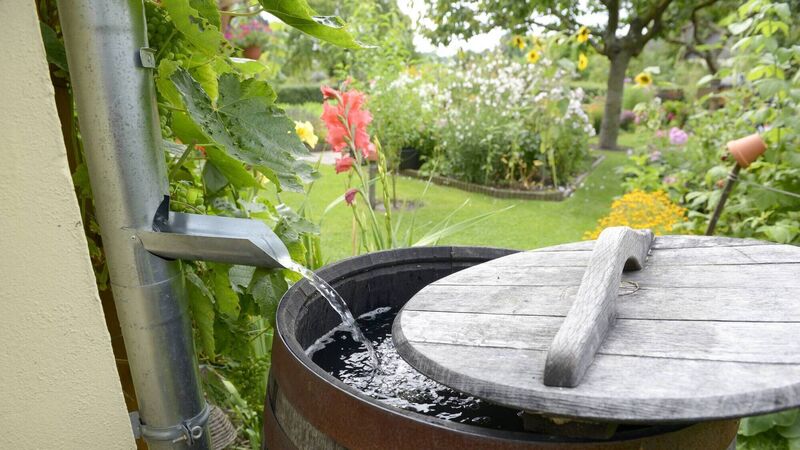
In your own garden, the place to situate such a rain garden is on a slight slope and ideally at a lower part of the garden, water from drainpipes, water butt overflows and other sources can be directed to the rain garden via pipes or ornamental rills.

Can you just imagine if Cork and other cities had pockets of planting such as these around the centre. They would look beautiful, sustain wildlife, and play an essential role in alleviating our flood risk, for one thing that is certain, is that rain and more heavy downpours are in our future, we can’t say we haven’t been warned.

x

CLIMATE & SUSTAINABILITY HUB

More in this section

Revoiced

Newsletter

Sign up to the best reads of the week from irishexaminer.com selected just for you.

Cookie Policy Privacy Policy Brand Safety FAQ Help Contact Us Terms and Conditions

© Examiner Echo Group Limited