Peter Dowdall: How to ensure your alpine plants thrive
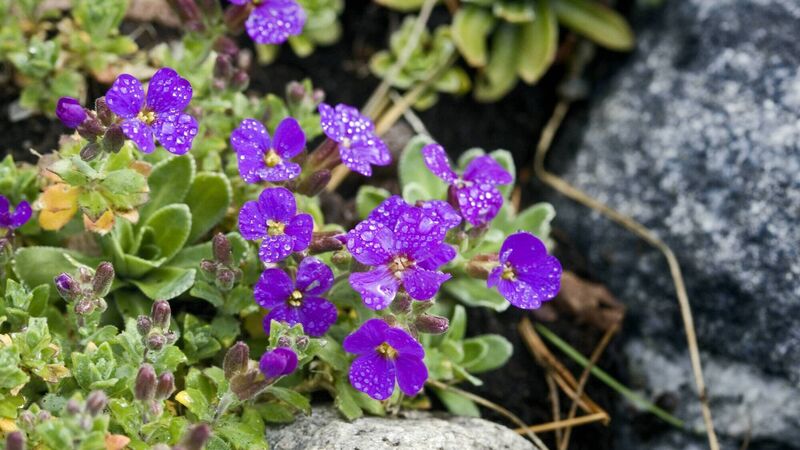
Little beauties such as this purple-flowering aubrieta can establish in the most hospitable-looking of places and soften everything from stone walls to cracks in footpaths. Picture: iStock
Have you noticed them popping up everywhere? Even the smallest crack in a wall or footpath is enough for them to grasp on to, to stay alive, turning the world purple. I’m talking about aubrietas, campanulas and other little alpine plants which are all opening up into full bloom at the moment.
It can take a bit of work to replicate what happens in nature with gay abandon, that is getting these little beauties to establish in cracks and crevices. The thing we must remember when attempting this is how it happens naturally.
An established aubrieta or other little alpine plant is growing away and sets seed. This seed is either carried by the wind, an insect or in a bird dropping and ends up in seemingly the most inhospitable of places where it germinates and develops, its roots travelling every which way in search of water, all the time anchoring the plant.
As the roots develop in this situation from a seed, it survives. Hundreds, perhaps thousands of seeds end up somewhere that they can’t survive but we don’t notice them, we never see them.
This, relationship between the seed, then seedling and later plant, with the wall or kerb is intrinsic to the plants survival. When we try and recreate it, using, small or large, pot-grown alpine plants, it very often doesn’t work. The reason for this is because we don’t attempt to understand the relationship.
Simply placing a ball of compost with roots, inside a crevice or small hole and hoping that it will grow and bedeck the wall with colour will rarely work. That plant, is in effect now simply growing in a pot and a pot which warms up substantially when the sun shines, drying out the roots systems.
The best way to help little alpines establish in such an environment is to use plants which are as small as possible with a small root system. Firstly, cram the crevice with as much topsoil, not compost, as possible and then soak it.
It can be awkward for the soaking not to wash away the soil so care is needed. Get the little plant in as firmly and as snugly as possible and hope for the best. Not enough though, to just walk away at that point, you will have to ensure that you are giving that plant water for several months. It hasn’t yet found where it can source water and reserves from the wall and so you will have to keep watering it to ensure it stays alive until it can fend for itself.

I often wax on about the virtues of campanulas in general and Campanula muralis in particular, as I adore its purple/mauve flowers and the fact that it stays in bloom for so long but there’s something so lovely about the aubrieta too that we often tend to overlook. A lot of these plants are considered too common to be regarded in modern day gardens but I am a huge fan of what they bring.
Colour, yes, low growing ground cover, yes but also, and in particular with the Aubrieta, the texture. It forms little hummocks of colour, which from a distance can look like furry carpets. Planted on a vertical wall or similar they will hang down like beautifully ornate horticultural pendants, brightening up the world when in bloom but always maintaining that form and softening wherever they are with their habit and form.
My mother grew some at home in her “rockery” for everyone had a “rockery” in 1980s Ireland and its probably there that I first encountered these little alpine treasures. I have found that if they are growing in soil which is too fertile, too rich, then what can happen is that the plant will nearly grow out of itself, the centre parts of the plant will turn brown in colour as all the green remains on the extremities.
To prevent or to slow this happening in the first place, add lots of horticultural grit and even gravel to the soil in which they will be growing and don’t feed them with plant food.
Also, just after flowering, grab the plant by the scruff of the neck so to speak and with a good sharp scissors, simply cut it back quite hard. You must be sure that you leave some greenery below where you cut, so that the plant can still photosynthesise and stay alive. What this does, is that it will force the lateral leaf buds along the stems which are lying dormant, to come into growth and what was rusty and brown looking will soon become a nice green hummock of colour once more.

- Got a gardening question for Peter Dowdall? Email gardenquestions@examiner.ie


CONNECT WITH US TODAY



Be the first to know the latest news and updates