Van Life: How to choose a campervan or motorhome 

Itching for four-wheeled freedom and summer life off the grid? See our guide to to finding a dream campervan or motorhome
Van Life: How to choose a campervan or motorhome 

The dream: Total freedom. Ensure you understand the running costs and realities before diving into a motorhome purchase. Renting one for a week’s break is a good way to get a feel for owning your own. 

Having lived over wheels for two periods of my life I’ve found the market in Ireland at a scorching price crest.

With camper-vans and motorhomes scarce and private sellers and dealers in a confident mood, it would be easy to lose all reason when venturing out to buy.

First of all, save yourself a lot of time, trouble, and shattered illusions by asking lots of practical questions before you view. It’s easier to face a prickling “f—off” (I had that twice by text) or a ghosting via email, than to spend two hours there and back to waste your time. Ignore the tenant “No time-wasters”. You must kick tyres and be a nerdy nuisance. This is a big buy, fraught with potential, expensive mistakes. Annual recreational tax and insurance can come in as low as €500 combined, but this is the least of your challenges.
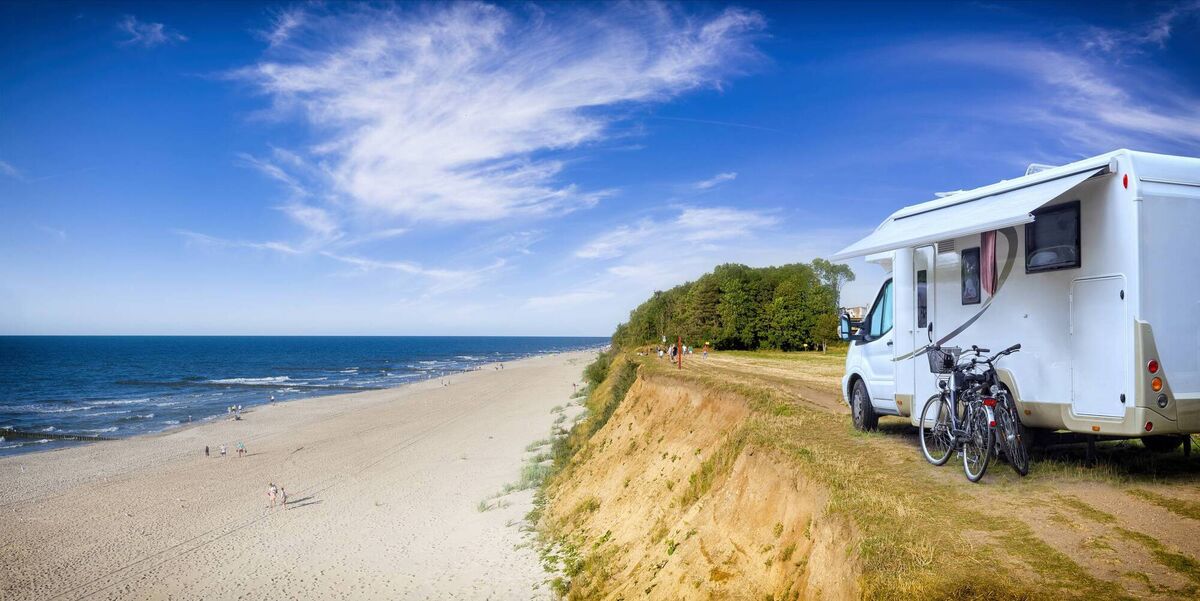
Motorhome and van life involves a variety of locations from fee-paid parks with amenities (including power for your battery) or wild camping. Having a second utility battery and solar battery will allow you leave the grid behind for a night or two.

Establish what you want and then take your time getting it. Smaller, compact, versatile camper-van or a plush living-room to go? If you are considering buying a pre-determined dream vehicle from the UK or Europe, be advised the dreaded VRT (also due if you convert from a van to a campervan) is inescapable at 13.3%. An assigned public servant in Revenue will determine market value using sources like Autotrader and commissioned dealer valuations. This often contended figure won’t be based solely on what you paid for the vehicle. Local Vat may have to be retrieved after the fact, depending on the overseas jurisdiction.

Coach-built motorhomes, as opposed to campers flipped from vans, are made up of two parts. There’s the base vehicle (Ford, Renault, and Fiat beds of 2l02.8l diesel are commonplace) with the habitation mounted over the axle, and sometimes flown over the cab. Above all else, you’re buying a vehicle. If you would not buy a 2002 car on a whim, why would you blithely slap down €25,000 on an aged ICE commercial truck on a Sunday afternoon?

Used commercials do not offer the driven comfort of a car. New motorhomes in the area of €80,000-€120,000, and flash purpose built campervans from €70,000-plus, have driven specs closer to cars, with liquid power steering, upfront captain chairs riding on air, and markedly improved handling to prevent frozen shoulders.

In a smaller camper under 10 years old, you might treat this as your everyday car if the insurance deal will allow for your estimated annual mileage. A 6.5m long c.2000 Ford Transit with a tree branch for a gear stick, will feel very different indeed. Not a problem for a seasoned light HGV driver, this can be exhausting for an everyday commuter, casting off for a three-hour voyage up the Wild Atlantic Way, their backside cramping.

Many motorhomes offered in Ireland are European imports and therefore left-hand-drives (LHD). Now, these are standard insurance wise and not a deal-breaker for a competent driver with their eye on continental touring. Some owners report that sitting on the ditch side is helpful in not going into the hedgerow on pinched rural roads, once you’re working off an oversized wing-mirror on the right hand side. Take a test drive.

Now the interior introspection. Will you be likely using the camper or motorhome just in the summer? Do you see yourself as a laid-back digital-nomad? How many of you are coming? How old are the children? Can you actually stand them, nose-to-nose (possibly feet to face) for a seven day getaway? There’s berths and berths. Skinny, foam beds slung across a VW T4 or foam clack-out sofas, will become bone aching hammocks for a teenage frame.

Have you ever actually stayed overnight in a vehicle? If not, hire something similar to your ideal. Try it out on a service rich camping site and off-grid (wild camping), utilising the leisure battery and any solar elements it may offer. This simple bit of experience — cheap at the price given the nerve-mangling financial disaster of a purchase — will either ignite your passion or slap you wide awake. My donkey-sized dogs slept on my face during my van-life, but I adored it in all other respects.

Combining living and transportation elements, some of the most awful examples I’ve viewed were not that old. They were deeply neglected and driven hard. Don’t fold to “Sure, we never use that yoke”.

Elements like the water and space heater/cooker/solar/and electrics including readers for the leisure batteries should all work, or budget for replacement. Look for the ease of access to the water tank, the LPG, and any cassette toilet from inside or out. Broken drawer latches, sticky doors, small stains, dings and rusty locks — not deal breakers. Coach-building varies from firm to firm — and can be very impressive with multiple configurations to choose from. Still, once it doesn’t run, it’s just a less than mobile home.

In what’s termed the habitation, your nose will give you the first clue. I travelled over a hundred kilometres once to see a compact van described as “stunning”. The pong and degradation still haunts me. Together with collision damage to the exterior and downright mechanical neglect, interior damp is the enemy of all campers and motorhomes. Accrued through simply sitting unused in the Irish weather (sans a breathable cover), leaks in the tanking of the shower and/or kitchen area, rain sucked into the habitation walls and any carpeting through penetration of the skin of the vehicle — you cannot mistake that acrid reek.

Seals on windows and roof-lights (especially with DIY modifications) can and do perish. Window nets and blinds stick with use and intense UV light. Materials fray and inevitably with furnished foam cushions — used campers can quickly become profoundly mouldy, stained, and smelly, requiring a full rip out and renovation of insulation and second-fix fabrics. Year-round tourers must have winterising insulation levels.

In motorhomes, weight is something you cannot ignore. It’s not simply about MPG, although that’s a painful reality in the current energy crisis. Look for a VIN-style plate either on the engine or sometimes inside the habitation door which will give you a set of figures.

The loaded weight is the first and vital one to pay attention to: the MTPLM (Maximum Technically Permissible Laden Mass). This is the weight that is legal for this motorhome with its payload (you, yours and peripherals like awnings, satellite dishes, solar panel or two leisure batteries — anything that wasn’t screwed down when the motorhome left the factory). If the MTPLM is over 3,500kg, fully loaded you need a C1 (light HGV) award on your license to legally insure and drive it.

Over 70? You will need to pass a simple medical to maintain any C1 status.

Vehicles plated as under 3500kg with their payload aboard, can be driven on a standard B license once you have the confidence. Don’t take the word of the seller. Newer, budget 6m-7m motorhomes have light (sometimes easily mangled) materials in the habitation to keep them under that 3,5000kg mark.

Where they shine is in the new goodies — smooth handling, crisp ergonomic interior design, two leisure batteries as standard, full safari rooms, app-based operation, solar (PV) to the roof and that new car scent with anti-bacterial, stain-resistant soft furnishing.

Have a mechanic check the vehicle thoroughly and look for a warranty with any dealer (with private deals, there’s simply no come-back). Include the bodywork (dinged interconnected panels of fibreglass can be difficult to replace/repair). Take a trip to the underside to look for signs of rust. Sealing of the underside has become popular — ask for a certification for this process if it’s touted.

Even with low miles and routine servicing (not unusual for these recreational vehicles), all cars, vans and small HGVs degrade through the differential, the gearbox, the gearbox, timing chain etc. Budget to replace and improve as necessary. Both factory-built and bespoke bohemian camper converted campers can have extraordinarily high miles once spun around Europe a couple of times. In this over-heated market, these old dears are still selling fast, raising pulses as we accelerate around DoneDeal every 24 hours to nail a new post.

The obligatory CVRT will pick up on most mechanical issues. If a commercial van has not been re-assigned as a camper on the logbook (a qualified inspection and payment of VRT), you should do this if you hope to sell on. Now, with the rosy glasses pushed up off your teary eyes, study our depreciation guide.

[READMORE]40282973[/READMORE]

x

More in this section

Revoiced

Newsletter

Sign up to the best reads of the week from irishexaminer.com selected just for you.

Cookie Policy Privacy Policy Brand Safety FAQ Help Contact Us Terms and Conditions

© Examiner Echo Group Limited