Islands of Ireland: Moylaun, a place of secrets
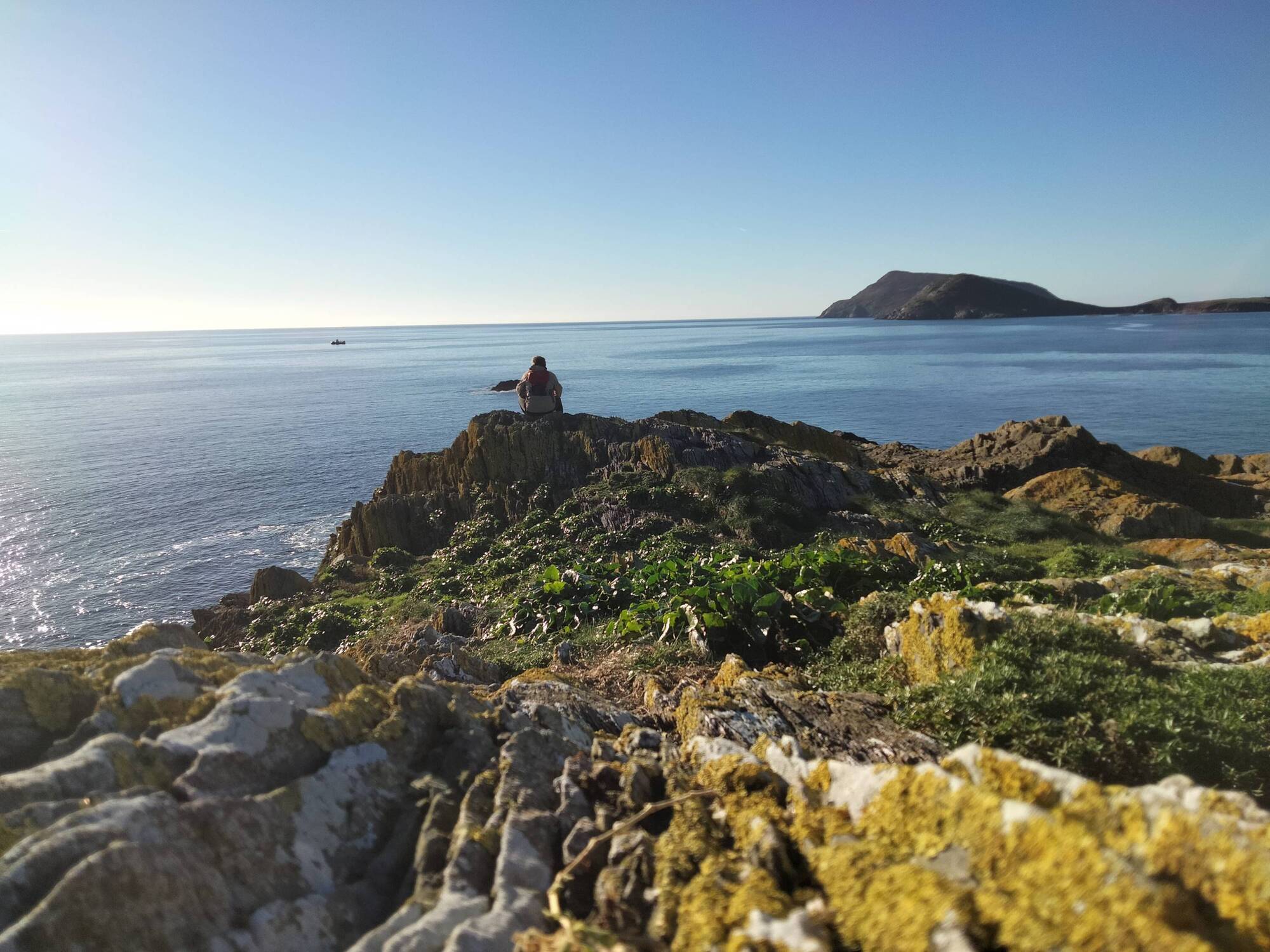
The Bull and the Calf islands are visible off the Beara Peninsula to the southwest
Islands of Ireland: Moylaun, a place of secrets

Moylaun Island, Derrynane, Co Kerry with Scariff Island in the distance. Picture: Dan MacCarthy

What a ringside seat to the unfolding of history the Co Kerry island of Moylaun has had. The Augustinian monks, en route to the Skelligs between the 6th and 12th centuries, rowed their currachs near here and possibly even to the island also. Ships from the Spanish Armada sailed past here in 1588. In the early 19th century the Liberator Daniel O’Connell hosted international visitors at his house in Derrynane, a stone’s throw away from Moylaun Island, as he agitated for Catholic emancipation.

The island lies at the end of the Iveragh Peninsula in Derrynane Bay. The Bull and the Calf islands are visible off the Beara Peninsula to the southwest. A little to the north are the mesmeric Skelligs: the two islands from this vantage on Moylaun resemble an overlay of interlocking bluish triangles — a motif as if from a Georges Braque painting.

The Beara islands and the Skelligs are south and north of the Derrynane group which has multiple minuscule islands. Also included in the set are Abbey Island where O’Connell’s wife Mary is interred.

Further out is the hilly Deenish where a farming family once eked out a living. And just beyond this island is the much hillier Scariff where a priest, Bráthair Rua was beheaded by Cromwellian forces in 1653. His skull is still on display in the Franciscan friary in Killarney. Between this pair and the lovely sandy beach adjacent to Derrynane House are the lumpy, grassy, forbidding Twoheaded Island and the smaller by half, Moylaun.

So what of Moylaun? A denizen of this wild place would have witnessed the Cromwellian boats assailing Scariff and would have heard the screams of the murdered priest. But was there ever such a denizen? There is no archaeological record to state that there was. There are no ruins, no pier, in fact no manmade artefacts of any description.

It is a damnably difficult place to reach and a choppy sea passage from the townland of Bunavalla must first be negotiated. Then comes the navigation of the lengthy flank of Twoheaded Island followed by another sea passage with swirling currents before Moylaun welcomes the kayaker with limpet-encrusted cliffs and surges that spill across jagged reefs. And it looks much higher than its recorded height of 22m. On the northern side, a pleasant bay opens out where an attempt at landing can be made. And sure enough, some low rocks allow a benign entry to this forbidding place which took this mediocre kayaker about 1,200 paddle strokes to attain.

It is a special feeling landing on a place where very few people can have set foot. Other kayakers have passed this way of course, and there are signs of an extensive grassy sward which implies regular sheep grazing. At the chosen landing spot large angular rocks fall to the sea as if pushed over by a schoolyard bully. So, no sign of human settlement but here and there some rock formations titillate with the possibilities of stone circles or other orthostats. Alas, without archaeological excavation Moylaun will keep its secrets. Skellig
Michael and Illaunloughan in this vicinity did attract monks over 1,500 years ago in the devotion of their lives to a higher being and it has to have been a possibility that this island too was surveyed for a monastery. It has sufficient shelter for a beehive cell or two and some attractive spots for an oratory. There is enough soil to grow crops and no shortage of rainwater to water them. The conditions are as good, if not better than at Skellig Michael.

And there was not much in the way of birdlife either on this November day, save the odd seagull and a trio of oystercatchers screeching past. Moylaun derives from the Irish word ‘Maolán’ meaning flat-topped, derelict, or bare. Historic references include Moland Island, Meelan Island and Meelaan. This is actually quite a beautiful island: what could be done with it? Nothing, just leave it be, would seem to be the apposite answer to that rhetoric. As daylight fades it is time to leave. Already, the cobalt vault of heaven is revealing some of its astral bodies. Venus rises! But it lies behind, to the west, so no guiding star.

  • How to get there: www.skelligcoastdiscovery.com or kayak from a pier at Bunavalla, 3km southwest of Derrynane. Moylaun Island is privately owned.
  • Other: logainm.ie
x

More in this section

Revoiced

Newsletter

Had a busy week? Sign up for some of the best reads from the week gone by. Selected just for you.

Cookie Policy Privacy Policy Brand Safety FAQ Help Contact Us Terms and Conditions

© Examiner Echo Group Limited