Peter Dowdall on how to go wild and recreate a hedgerow look
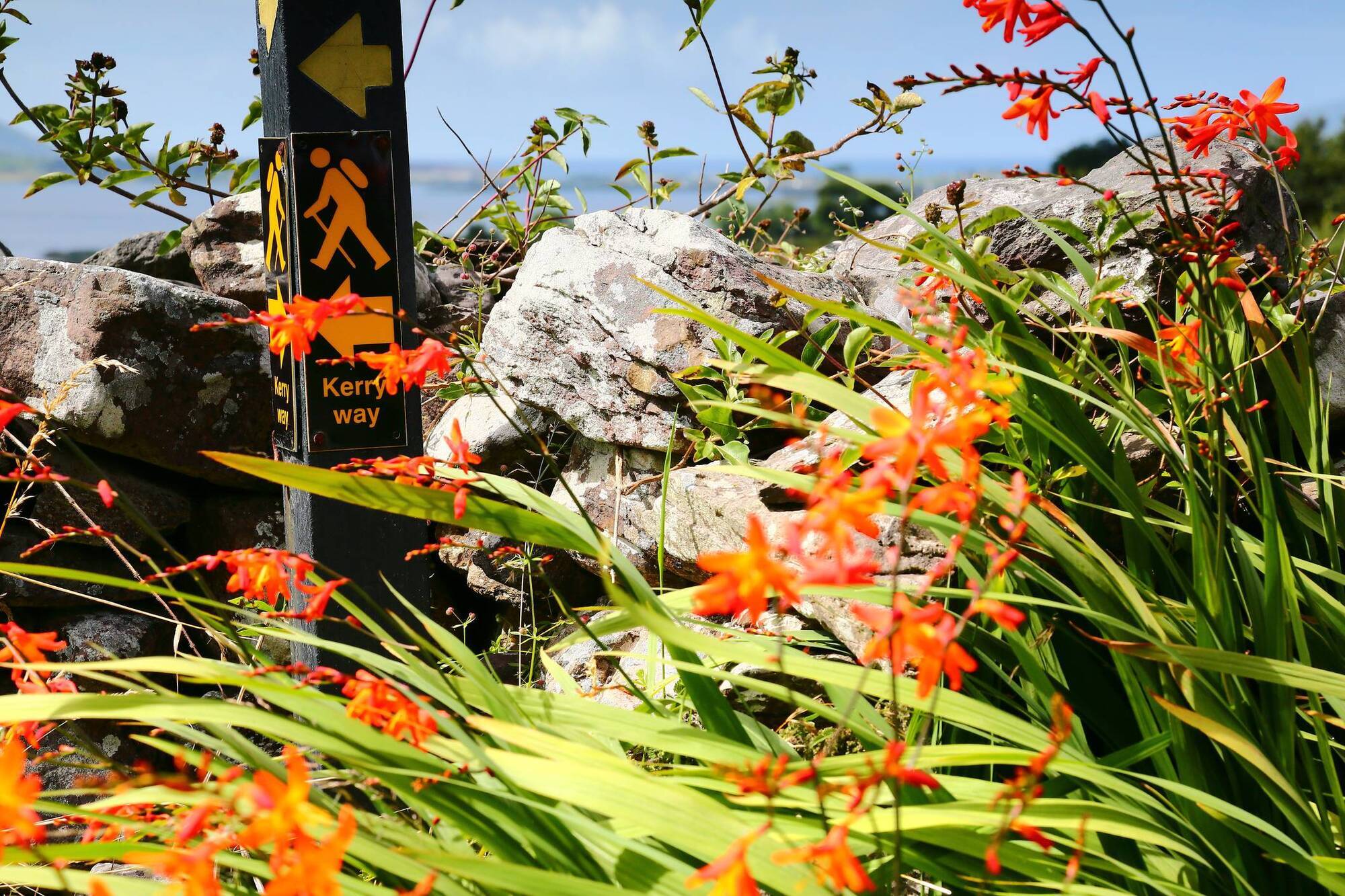
Originally from South Africa, montbretia is now more Irish than the Irish themselves having colonised many of our wild hedgerows but it is best left in the wild. Picture: iStock
How lucky are those of us who are able to enjoy a holiday or trip around Ireland at the moment?
The hedgerows and natural landscape are alive with colour and activity right now. Rosebay willowherb, honeysuckle, privet, valerian, cow parsley, buddleia and fuchsia are just a few of the species doing their thing right now.
Soon the purple loosestrife and montbretia will take over centre stage.
Admire them in the wild but leave them in the wild. Please don’t be tempted to “just take a slip”. I say that for several reasons, first among them, that it is illegal to remove a plant from the wild.
If everyone “just took one out of the ground” then that’s a few million removed from the wild, which most likely won’t survive the transplant at this time of the year.
All you will achieve is the death of a few wildflowers.
Another reason to leave them be is that they are most often better to admire in the wild where they can spread to their horticultural hearts' content.
Most of these are invasive to a greater or lesser extent and what you may have fallen in love with in the wild, will soon colonize much of your garden and your relationship with them will become fraught, to say the least.
Many of the species that I named above are non-native but have naturalised here, delighting in the climate and growing conditions of their new Irish home.
To recreate that wild hedgerow look, in your own garden you could look for some cultivated forms of these plants which will be much better-behaved garden residents.
Crocosmia x crocosmiiflora is the botanical name for what we refer to as the beautiful, orange montbretia.
It’s a thug and once introduced into the garden, nigh on impossible to remove.
Look instead for the regal, red Crocosmia ‘Lucifer’ or the yellow-flowering Crocosmia ‘George Davidson’ or ‘Yellow Lucifer’. These will grow in most soils and gardens but will delight best in a position in full sun and they will be much better behaved then their unruly first cousin.
Purple loosestrife, botanically named Lythrum salicaria, is native to Ireland and thrives in wet, marginal soils where it can become a problem in the wild.
Lythrum ‘Blush’ is a smaller growing cultivar with pale purple flowers which are adored by bees.
It will also set seed easily and if you want to prevent the build-up of too many plants in your garden, cut off the dead flower spikes before the seeds have a chance to disperse.
Buddleia, or the butterfly bush, will quickly colonise waste ground, particularly in urban areas.
It is difficult not to be totally in awe of its beauty whilst at the same time being aware of it being a nuisance. There are dozens of varieties and cultivars suited to growing in domestic gardens which will not become invasive.
‘Royal Red’ isn’t, in my opinion as red as the name suggests, more a deep purple in colour and a real show-off.
Buddleia ‘White Profusion’ is a vigorous growing white form that benefits from a hard prune each spring. T
hese are less vigorous than the wild form but vigorous none the less so be careful where you plant them and I would suggest not for smaller gardens.
If you want something, really, quite different, have a look for the orange ball tree. Correctly referred to as buddleia globosa, this is quite different in flower shape to other buddleias, forming orange coloured pom-pom like flowers in spring and summer.
Native to Chile, this buddleia is far more tender to low temperatures than the wild forms and while it should thrive in gardens to the south of the country it may struggle, the further North that you are located.
It may come as a surprise to many that the fuchsia flower, so synonymous with the west coast of Ireland is another foreigner.
Fuchsia magellanica is native to South America but has made itself so at home in Ireland over the centuries that it is now the symbol of West Cork and I cannot picture a hedgerow during the summer without seeing the beautiful blooms. I remember, during my college days in the UK, in the last century, others in my course being amazed that Fuchsia grew so prolifically in large parts of Ireland as it doesn’t over there.
Again, be aware that once established, Fuchsia, will like to spread and remain on-site!
There are far too many cultivated forms to name and they are, for me one of the most beautiful genus of plants out there. The flowers of the various varieties will differ in form and colour but all have beautiful, delicate and such intricate detail. Not all are hardy outdoors in Ireland, though many are so a bit of homework will be required if you want to grow them outdoors all year round.
• Got a gardening question for Peter Dowdall? Email gardenquestions@examiner.ie
CONNECT WITH US TODAY



Be the first to know the latest news and updates