Cork home with piano kitchen island struck a chord globally
David O'Brien's Black House was a runner-up in Home of the Year. Property editor Tommy Barker takes a look inside and out 
Cork home with piano kitchen island struck a chord globally

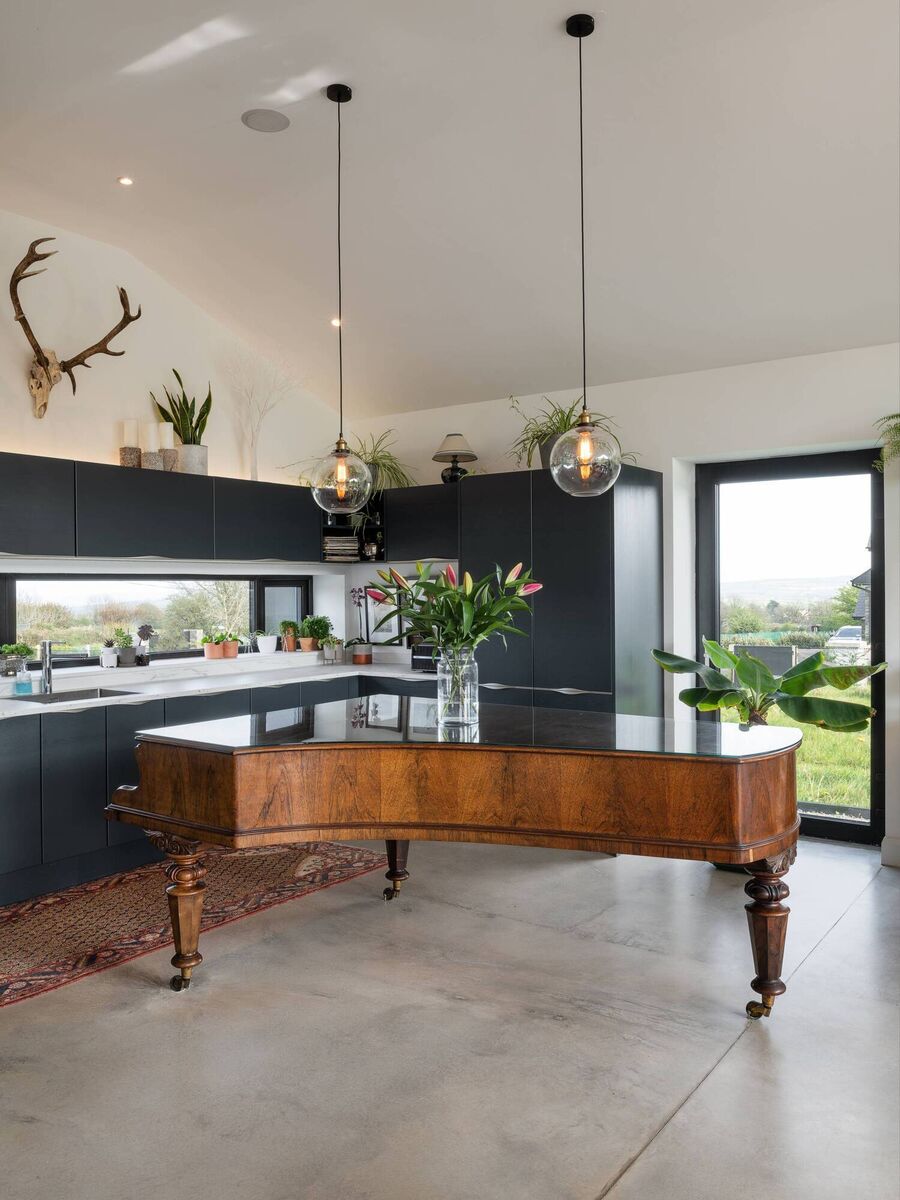
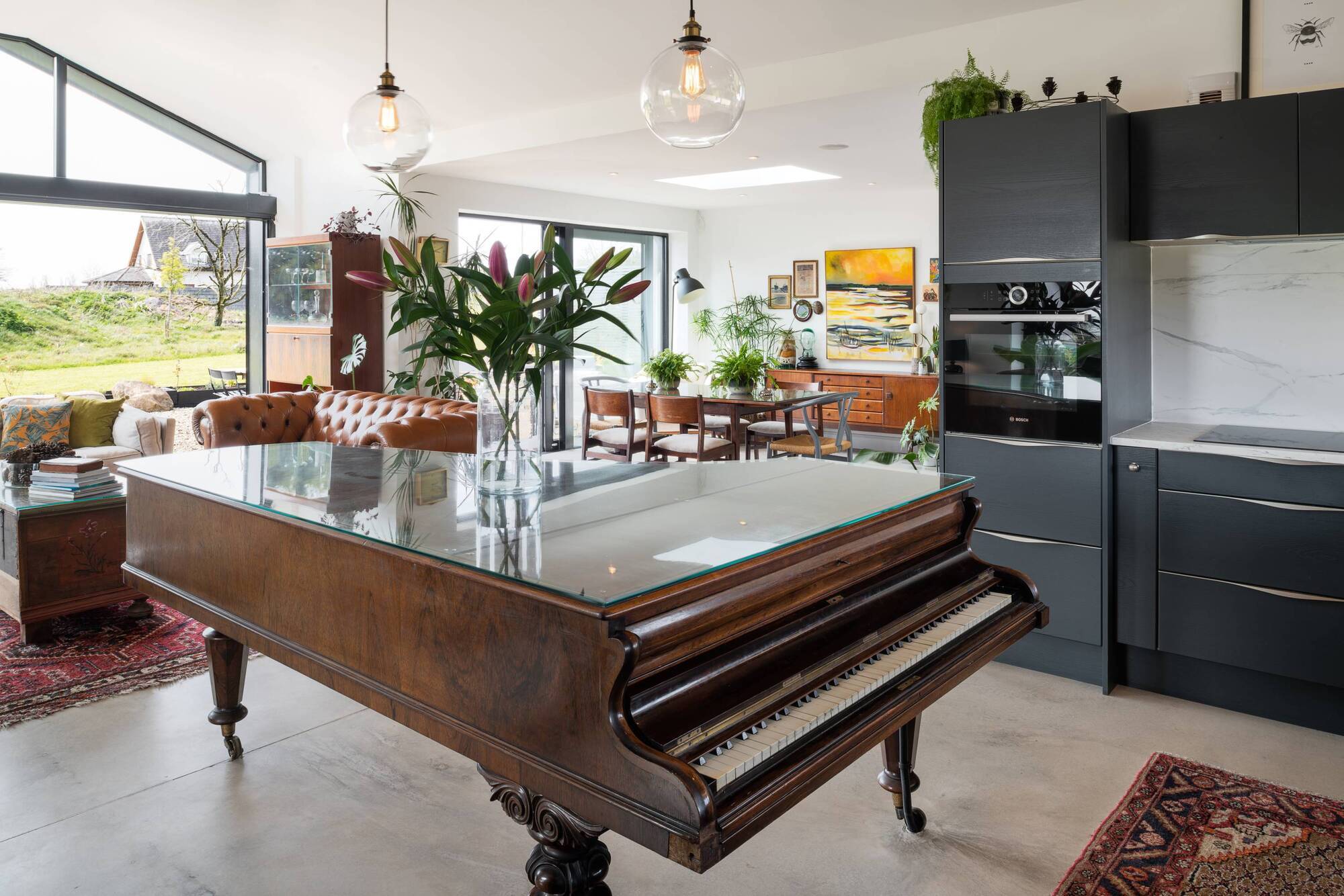
The piano kitchen island at David O'Brien's house.  Pictures: Jed Niezgoda

As if the steely black house wasn’t enough of a talking point when RTÉ’s Home of the Year kicked off, to a nation stuck in their own locked-down homes of a year’s duration thanks to an ongoing pesky global pandemic, a certain other item definitely struck a deep chord — yes, it was The Piano.
As the year drumrolls on, it probably now deserves a show of its own: a musical, surely?

Pity, though, that the title The Piano is already taken: who remembers the awards-garlanded 1993 movie starring Holly Hunter and Anna Paquin, who land down under on a New Zealand beach, with few possessions bar their piano, which plays an instrumental role too in that evocative film?

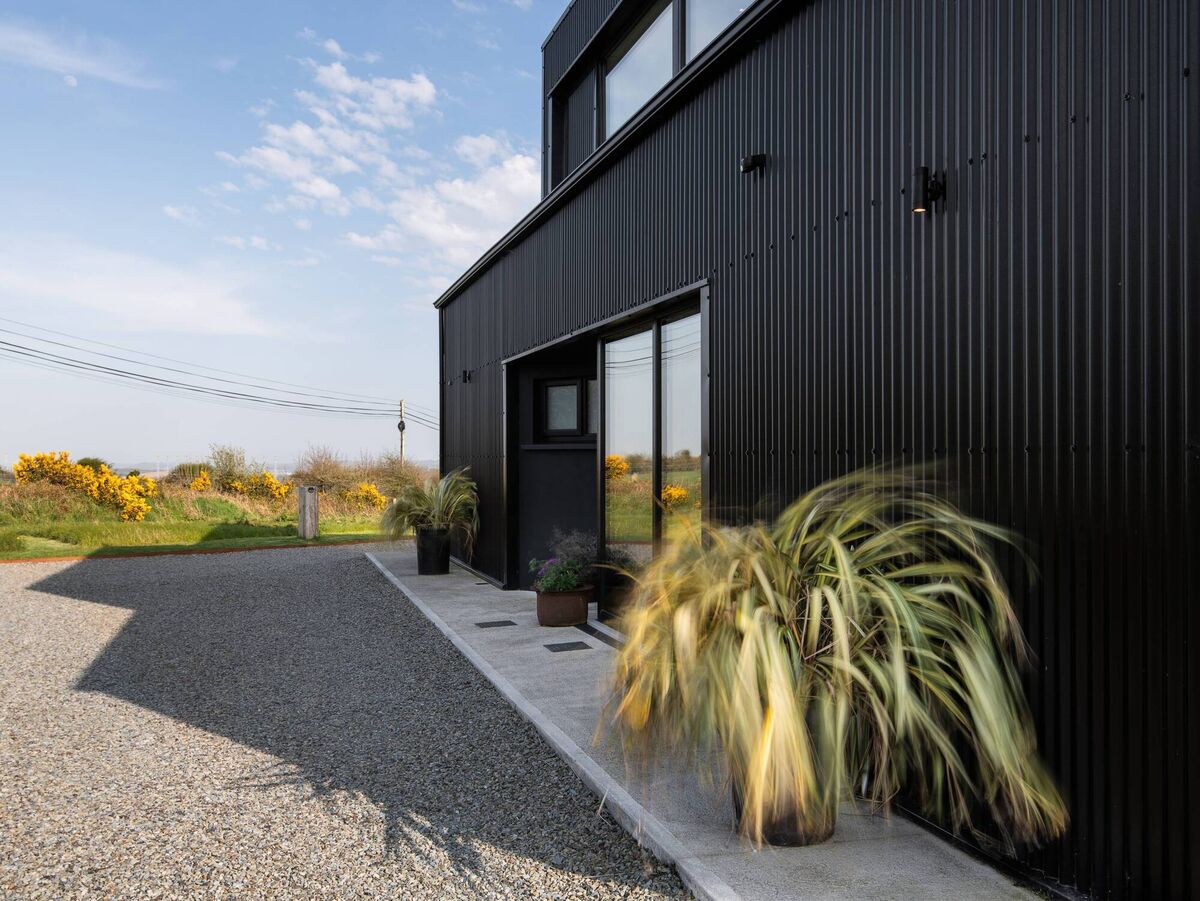
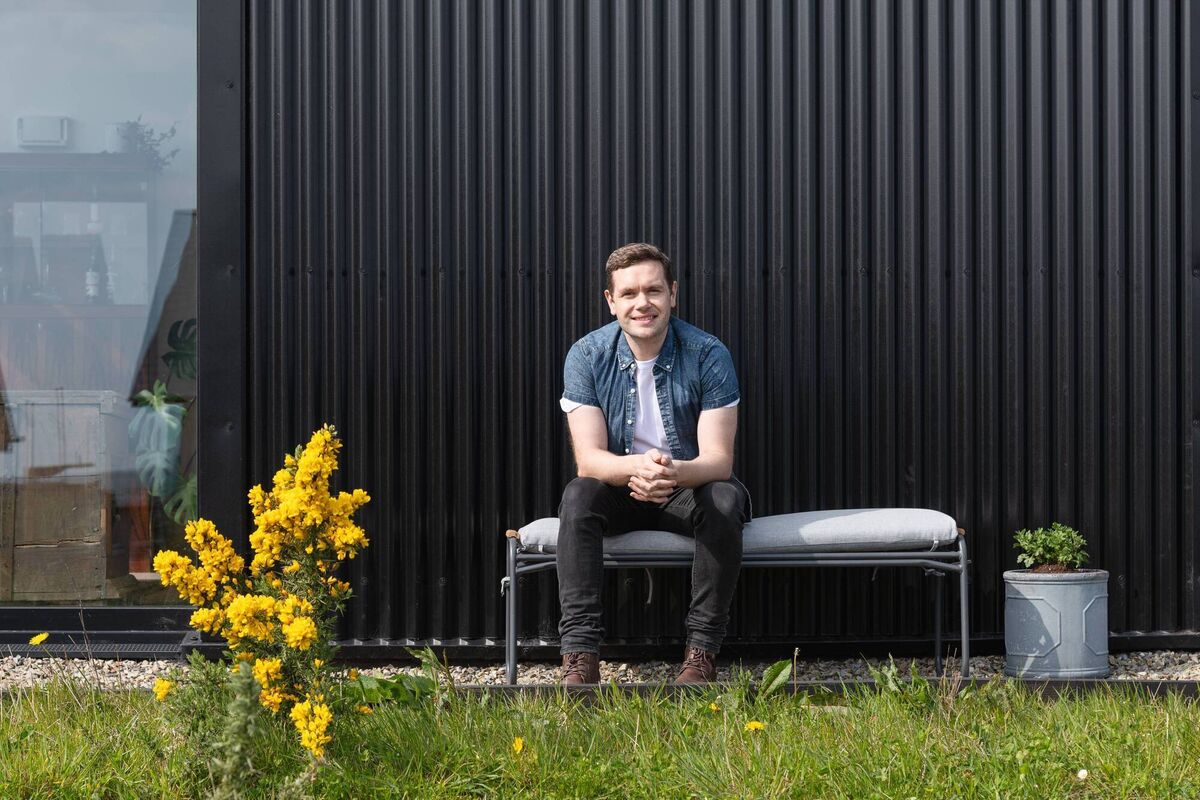
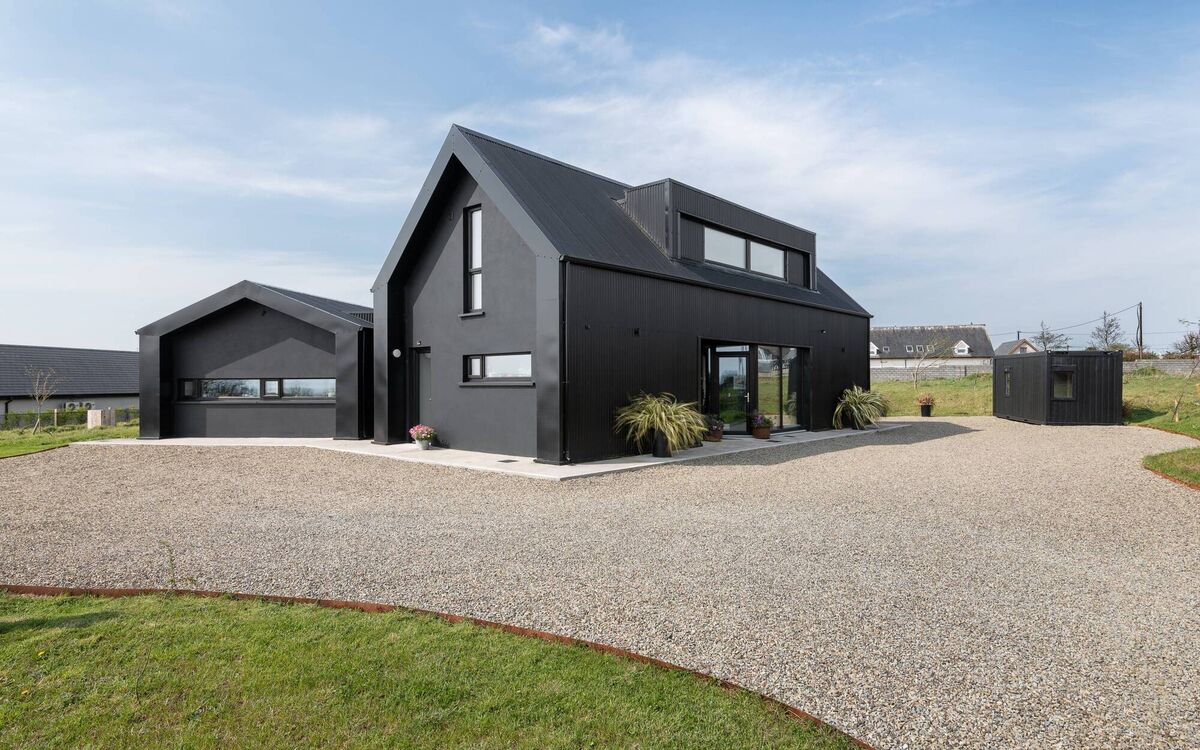
In this striking Black House, clad in black Tegral powder-coated corrugated steel, owner and co-designer David O’Brien’s piano didn’t have quite so far to travel to fetch up in a starring role in his home. But, there is a scene he recalls that was close to cinematic, or was at least deserving of a camera crew at the time.

He’d bought this 1860s rosewood grand piano eight years ago at a local Cork auction, about four years before he even went for planning permission for this home of note and which took two years to build.

It had belonged to a school principal on the city’s Old Blackrock Road, was made by a well-regarded maker John Broadwood & Sons…and he was the only auction bidder on it, despite having no place to house its bulk at the time of purchase.

Quite incredibly and wholly graciously his sister Triona stored it for him in her house nearby…along with some of David’s other auction purchases which, equally, were looking for a place to call home, acquired by this inveterate auction goer: he started as a nine-year child, accompanying his older brother Aidan, later started buying and now “I have over 20 years of gathering.”

Thankfully he now has this 2,200sq ft self-build home to accommodate and display some of his horde, built up from auction attendances, from Argos and Amazon to Buy & Sell and on to Done Deal, and all points in between, and at price points from the piano for €500, down to 50 cents for a chair.

Many members and generations of the wider O’Brien clan all live in close proximity to one another, up at the Lios Cross, at the Ballygarvan end of Cork Airport’s runway — which prompts David to say of his house design that “it’s part vernacular agricultural barn, and part aircraft hangar.”

For his key music on the move moment, he was able to drum up lots of strong arms from family and friends (six pairs), and in a scene slightly redolent of the classic PG Tips TV ad when a family of chimps moves an upright piano, this Grand Piano made its Grand Parade from one O’Brien household to another, through adjoining gardens and a field, with many hands making light work of the heavy load.

A medium-sized grand piano like this beauty weighs about 700 lbs, but it’s now firmly found a home, and found pride of place too. Heck, it even plays, having had a service and tuning overhaul a year or so ago by Midleton-based Moloney Pianos.

It serves as an island, looks a million dollars (did we mention it only cost €500?!) and is discretely anchored to a spot on the Black House’s polished concrete floor, with a power supply running up one of its three legs close to a clamp holding the castor in place so that it can rock, but it can’t roll.

After the TV show exposure in February (and, the house won through in the opening episode and made it to the final of Home of the Year, when it was very narrowly pipped) The Piano took on a life of its own, almost dividing a nation from those who thought it a lightbulb moment (it even has LED lighting on its undercarriage) to those who reckoned it hit a bum note.

The Piano got mentions and images posted across numerous social media outlets, in print, and made newspapers and magazines in the UK, Spain and even as far away as Argentina.

The Piano drove followers on David O’Brien’s own Instagram account from an already decent 15,000 at the start of 2021 to over 26,000 this summer.

It surely has spawned imitators far and wide too, and a demand for concert, grand and baby grand pianos. Now, as some of the immediate heat of exposure dissipates, Irish Examiner Home magazine caught up with Black House’s creator the said David O’Brien, and got the background story on how a passion for homes, and for design, takes hold.

FAMILY IN TUNE

Building, as it turns out, is in the family for two generations, David works in the family’s construction firm RJ O’Brien Building Contractors as a designer, along with his brother John who is the managing director.

It’s a particular source of regret to him though that his father Ray didn’t get to be part of this building project, as he had been able to do with some of David’s siblings, as he passed away just six years ago but, quite incredibly, he has a signature presence here in a most unexpected way.

As the build progress on this very distinctive one-off home progressed, David had wanted an over-sized door from the entry vestibule into the hallway and beyond and, as is his wont, he kept budget in mind, and went on the hunt.

He visited the carpentry workshop of South Wood, out in Aherla, run by Peter Healy who had been a friend and joinery supplier to his father Ray. He was told to feel free to scavenge around among the seconds and leftovers and “after an hour or two” he says, found the large, heavy hardwood shaker-style glazed door now happily ensconced in his Ballygarvan home.
Almost freakily, David’s brother John pointed out a name written in black marker on the side of the door: it read “Ray O’Brien.” It was a door that his father had ordered for a refurb job he was doing on Permanent TSB bank branch two decades ago, and which wasn’t needed at the end of the job, and languished in South Wood’s workshed all those years, untouched, until unearthed, uncannily, by another generation.

The name is left unvarnished on the door now, slightly obscured by a hinge, and there’s a serendipity to the fact that a “Ray O’Brien” memory swings in welcome to every visitor to his son David’s immediately identifiable home.

JUDGEMENT DAY

Among the more recognisable visitors were, of course, the trio of 2021 Home of the Year judges, Hugh Wallace, Amanda Bone and Suzie McAdam, who called in November, under a cloak of secrecy, for filming for this year‘s show.
“It was a brilliant distraction from all things Covid,” David recalls of the burst of effort needed for the crew’s arrival, and their unsparing scrutiny.

“Don’t get me wrong, it was a huge amount of work to get the house ready for the show. The contestants are sworn to secrecy, I was only allowed to tell close family and a few friends who I roped into helping me with cleaning, painting and gardening in preparation for the show,” says David, and the secrecy levels and ‘non-disclosure agreements’ followed right up to the show’s Final airing.

He says his home “was very much a labour of love and it really only hit me the day before filming that there would be three experts arriving to pass judgement on something I put my blood sweat and tears into.” He was ordered to make himself scarce for the visit….so he went all the way to the house next door, which so happened to be another O’Brien homestead, and spied out from an upstairs window.
“Thankfully Suzie, Hugh and Amanda, were all very kind!” he can say now, with much relief, and admits “the reaction after the show genuinely took me by surprise. I was astonished that the piano was such a talking point; it was very much a spur of the moment purchase, before I even went for planning permission! Pieces of furniture of this size just don’t fit in modern-sized homes,” he acknowledges, however, “it was one of those lightbulb moments. I

thought if it had a dual purpose I could justify the space it would take up.

“A huge part of buying the piano was to preserve it and to give it a new lease of life. I love that guests are drawn to gather around it when they visit,” he adds. He won’t allow for stools, though: he’s a fan of standing at islands, and says that in its dual purpose, as an instrument, it has not been altered, apart from having toughened glass cut and placed on top to protect it, a job done readily for him by Northside Glass, for less than the price of his bargain price piano.

The cheering, good news from a visit to Black House, is that style can be managed on a budget, it just takes patience, imagination, a bit of effort and, OK, a good eye and a flair for “the look”.

A trip to Iceland showed David the aesthetic appeal of corrugated finishes on houses there, and while many Icelandic houses are done in reds and greens, here, he opted for black, reckoning it blends and fits extremely well into the Irish landscape, whether in shadow or in strong light (his mother hated the black at first, but is now a convert, he smiles.)

THE BUILDING

This 2,200 sq ft build (not too big, not too small) is traditional block-built under its skin of black steel, in a Tegral product with a 30-year colour guarantee.

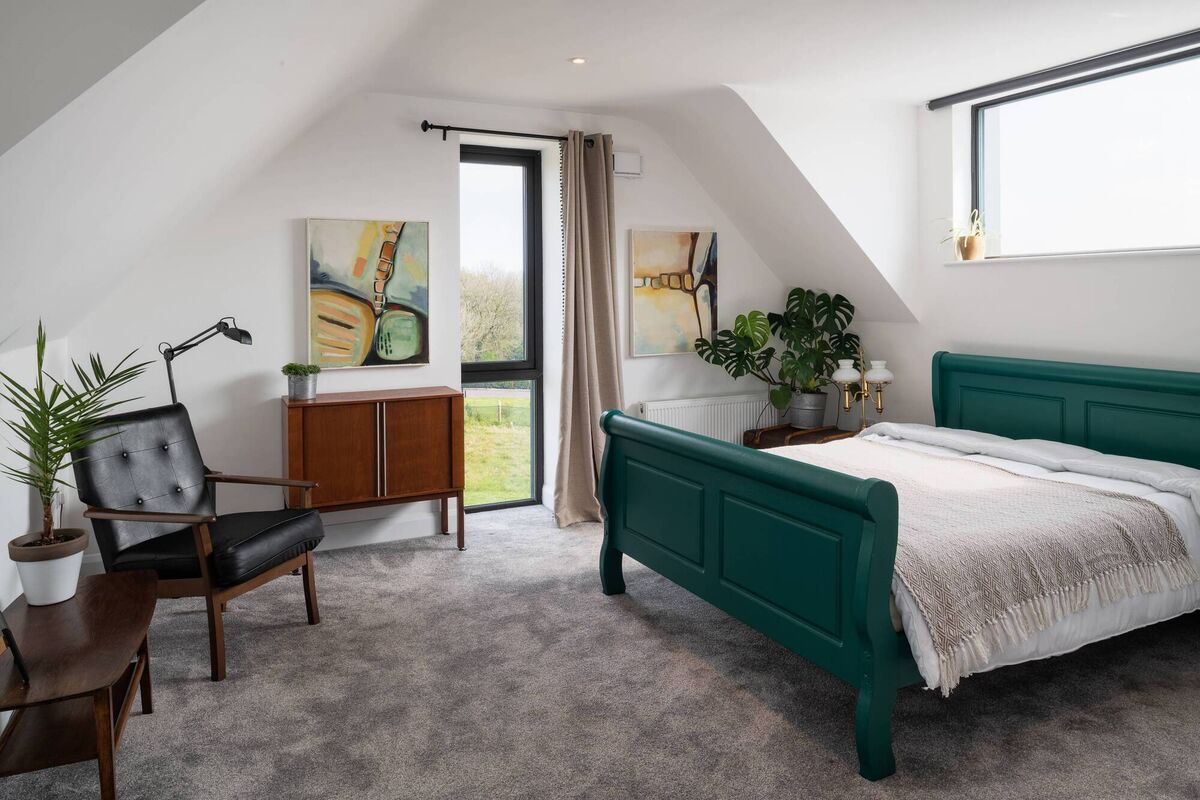
Working with CEA architects and engineers in Midleton, he also set up the first floor’s dormer bedrooms windows so as to give extra airiness and head-space, with glazing quite high up for privacy. It means the elevated views (we’re high up here, remember, Airport Hill high) can be admired when standing up, without the need for curtains or blinds.

His own en suite bedroom is at ground level, where there’s also a great utility and a main bathroom with a salvaged and re-enamelled cast iron bath; there’s another multi-purpose room/gym/home office/den, and then the rest of the ground floor is pretty much open plan kitchen/living dining and it’s incredibly accommodating.

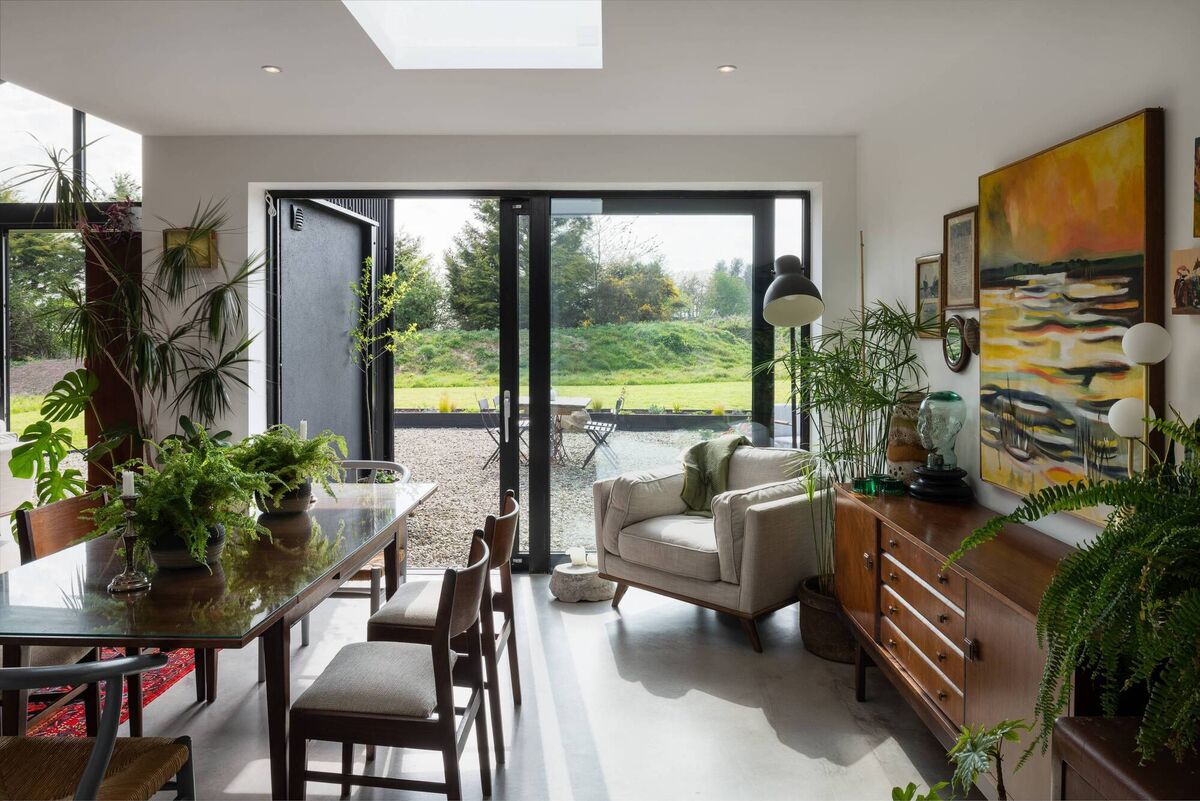
All is adorned with super-healthy house plants, from the familiar spider plants to more exotic ferns and papyrus plants. The gleaming health of the plants is testament to green-fingered care, of course, and also an abundance of light.
Windows here are a mix (all black frames outside, natch), most from Munster Joinery but the larger sliders at the gable end of the living area and apex above them were by the Cork firm 2020 Glazing. David reckons that he spent about €32,000 in all on windows, with Munster Joinery’s mix costing about €15,000 of that total.

The overall build budget for the full house (excluding the value of the site) was under €350,000, he reveals, and that pretty modest budget equates to about €160 per square foot, managed thanks to a nose for a bargain, and the willingness to wait for stuff he wanted rather that jump in and pay any price for it, along with of course the fact the builders were very much on side in this two-year process, started in 2017.

It has air to water heating, delivered underfoot with polished concrete floors downstairs, done by Concrete Concepts, and the house has just two radiators, antique style.

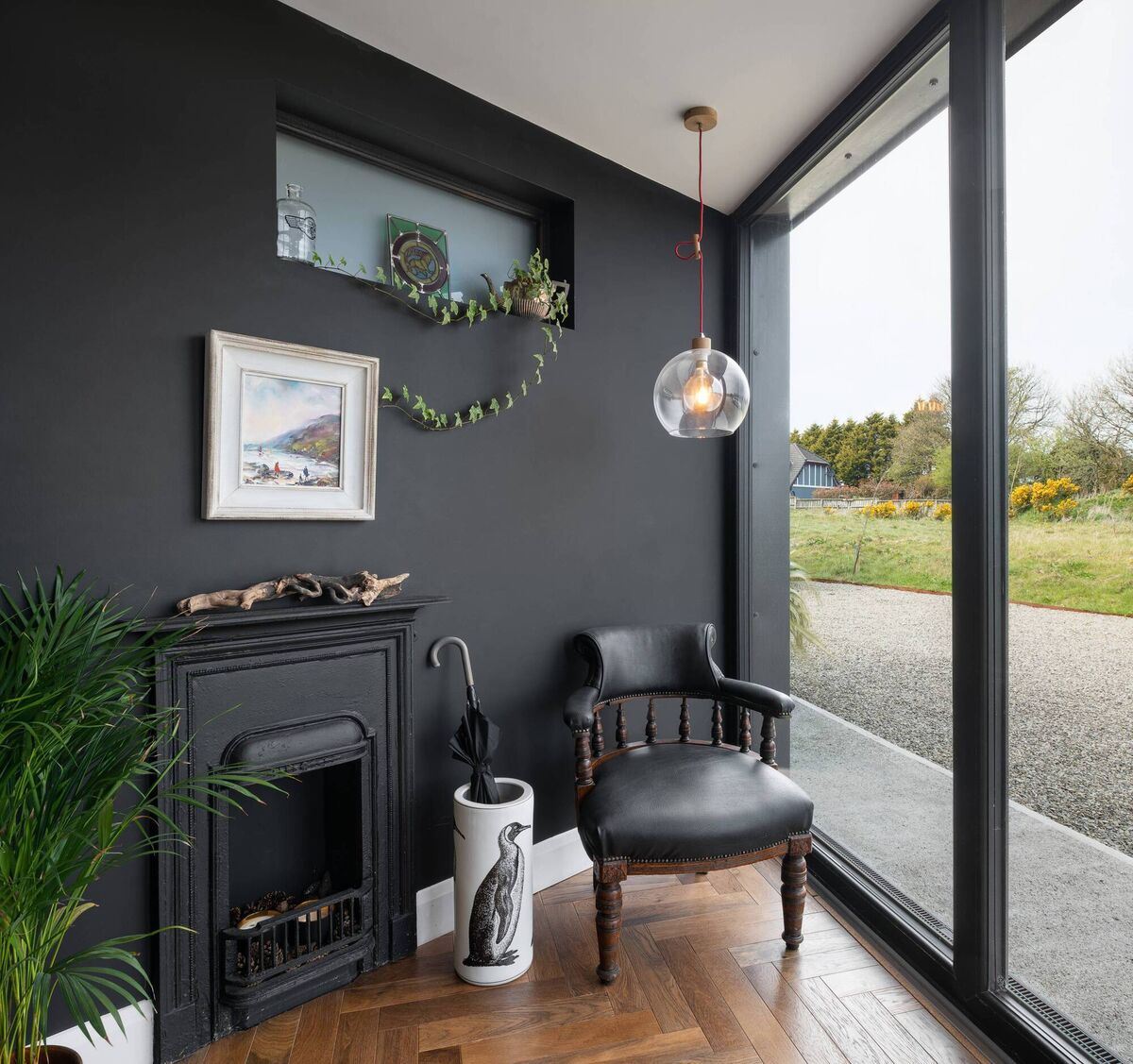
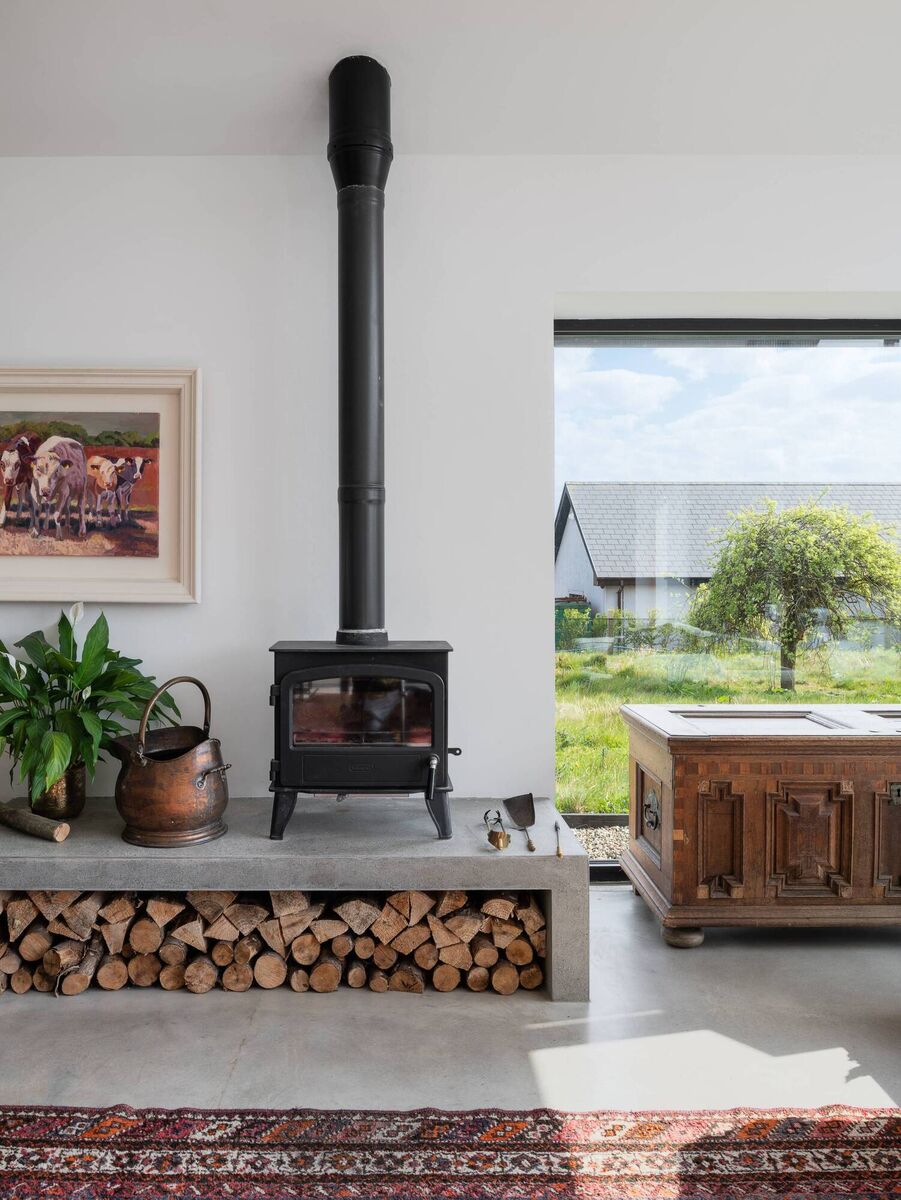
A Victorian cast-iron fireplace is given a diminutive price of place in the entrance vestibule (a deliberately small place on a façade facing the road where privacy was a priority), and in the main living area, a Dimplex wood-burning stove is set on a wide, raised plinth that also serves as a log store.

That plinth is a clever creation, testament to David and John O’Brien’s building pedigree, and David made it in concrete blocks laid on edge, and topped them with concrete lintels nearly two metres span, and then plastered and polished them to match the finish on the floor.

SITTING PRETTY

In this space too is a spot admired by HOTY judge Hugh Wallace, and it’s a tan-coloured 1890s leather Chesterfield sofa, which David reckons was recovered in the early to mid-1900s, nicely worn, with that patina that only old leather can achieve. He first spotted it on Done Deal priced at €2,500, and waited, and waited, until it was his for €500, sitting pretty, and with cash left in pocket.

Other furniture has similar tales to tell of watching and waiting, or just pouncing. There are old Belgian pieces, and French pieces, Persian rugs and ornate 400-year-old German coffer chests, as well as an old Ratners safe, originally used for holding jewellery, now holding nothing bar a birth cert and passport, under secure lock and key.

There’s also a lovely old Irish pine settle, stripped, which is in an alcove which sort of comes and goes from view....

What’s going on? Well the wall beside it moves, it’s a rolling plastered frame/wall with skirting board, on an overhead runner, which David uses to hides the fridge (“I hate looking at fridges”), sliding it back past the settle when he needs to access the fridge.
A slightly mismatched collection of chairs is ranged around a mid-20th century dining table, next to a sideboard of similar ’50s vintage and a roof light overhead is openable for ventilation but has a rain sensor so it closes at the first spatting of rain.

Around the corner, and past the piano island, the banks of kitchen units look high end, but are MDF given repeat coats of spray paint in a dark, raven blue-black hue, contrasting with white composite worktops.

They were a cost-effective choice, says David, done by Kitchen World on the Kinsale Road, and the budget for the kitchen, utility and built-ins in other rooms was about €11,000, he allows. Then, the kitchen was given a real luxe look with a splashback cut from large white stone tiles, left-over stock given to him gratis by Eden Tiles on the Tramore Road.

PARTY PLACE

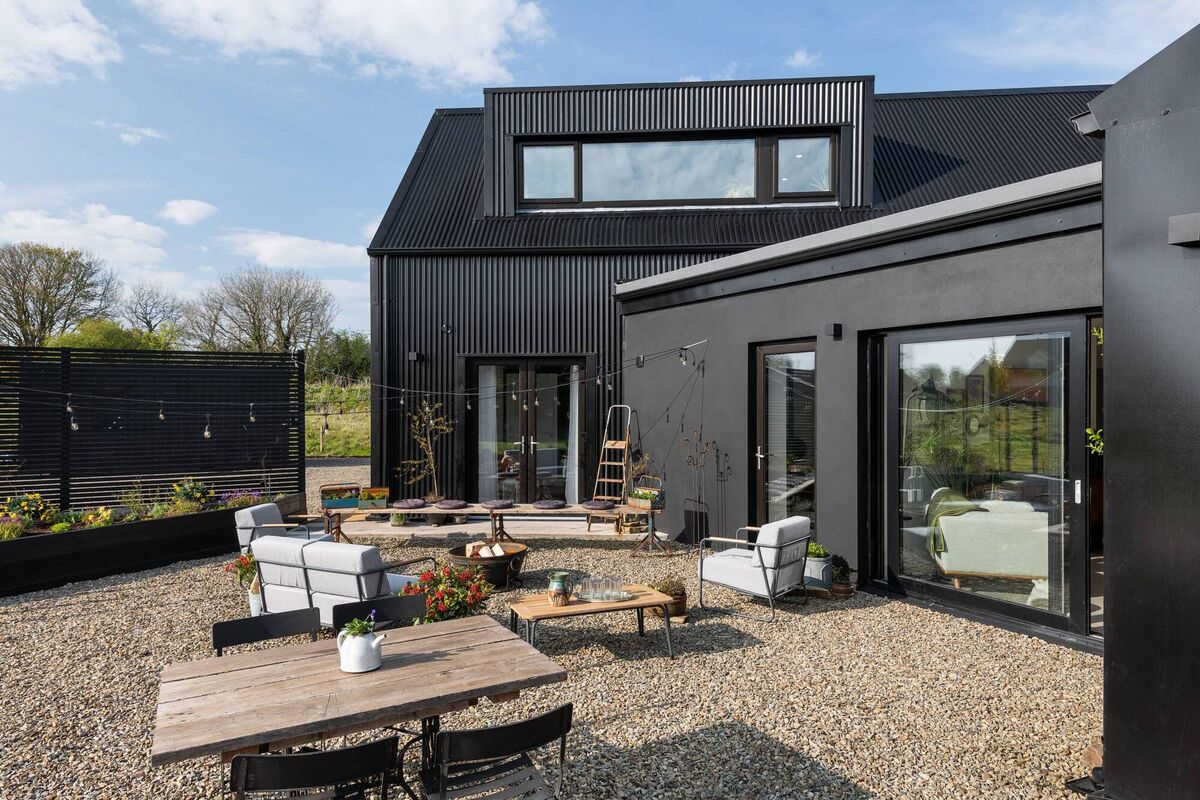
Reminders of the O’Brien clan’s building roots crop up again in Black House’s private and sheltered back garden/gravel patio, settled in the elbow or crook of the building’s two V-shaped wings with a straight link section between the two angles and with several access points.
It’s all set up for parties, with an outdoor fire, coloured LED lights are festooned off poles and pillars, weatherproof chairs and raised beds framed in recycled or repurposed scaffolding boards, painted black, and more scaffolding boards are pressed into service as tables on trestles, and as benches with cushions.

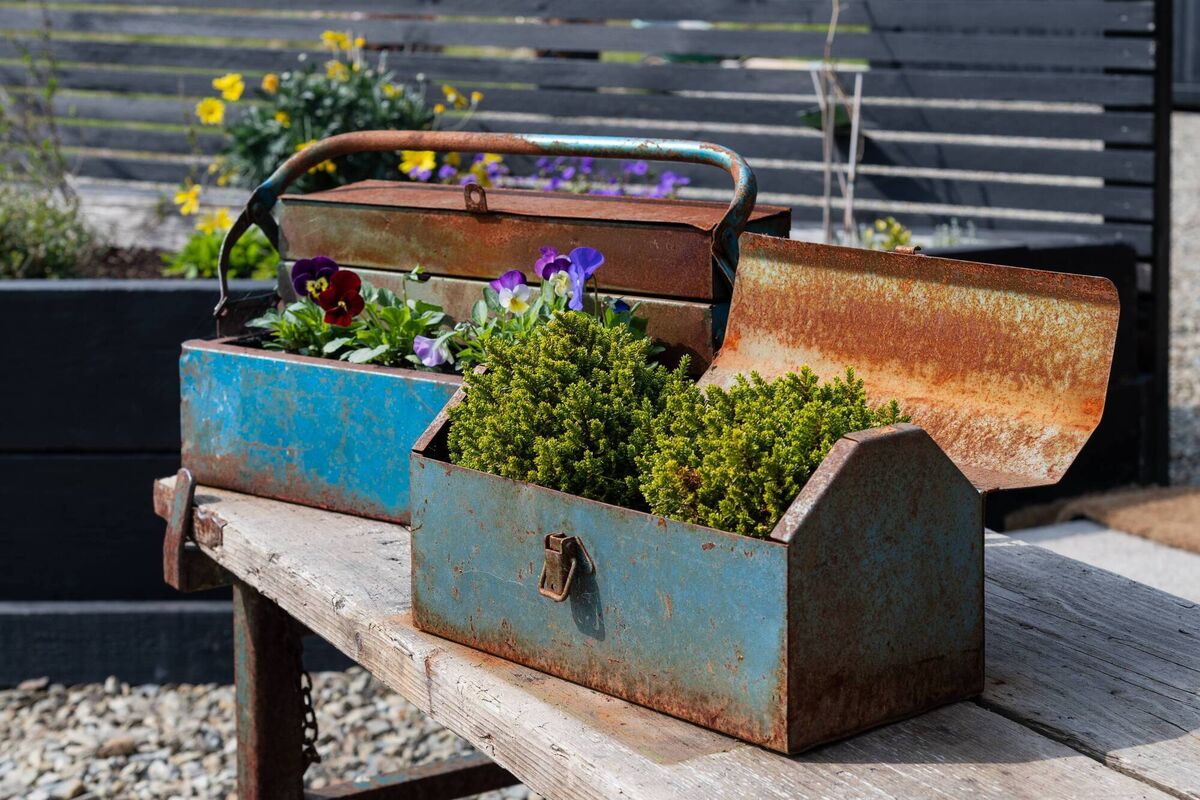
Cannily, an old step ladder can be used to hold flower pots, as does a rare hand-held small cement mixer the size of a kitchen MagiMix, whilst old, fold-out steel toolboxes (some bought, some heirlooms) are used as planters too, the more battered and rusty the better.

Dotted about, and out front, by the entrance, cheap black dustbins look quite the expensive part holding large spikey flax plants, blending like camouflage against the black walls of the building.

Meanwhile, the past few months have seen a contrast of the corrugated, crinkly black of Black House’s build, with the bright yellow of the encroaching gorse in the garden, which David is happy to let rampage as he waits for his other landscaping to mature, and just cuts the occasional path through drifts of long grass and wildflower meadows.

The rear party space has speakers for music, as does the vaulted ceiling in the main, lofty kitchen/living wing and, when that’s not rocking it out, well, did we mention there’s always The Piano?

Details: www.rjobrienbc.ie

More in this section

Revoiced

Newsletter

Had a busy week? Sign up for some of the best reads from the week gone by. Selected just for you.

Cookie Policy Privacy Policy Brand Safety FAQ Help Contact Us Terms and Conditions

© Examiner Echo Group Limited