Islands of Ireland: Furnished with many names
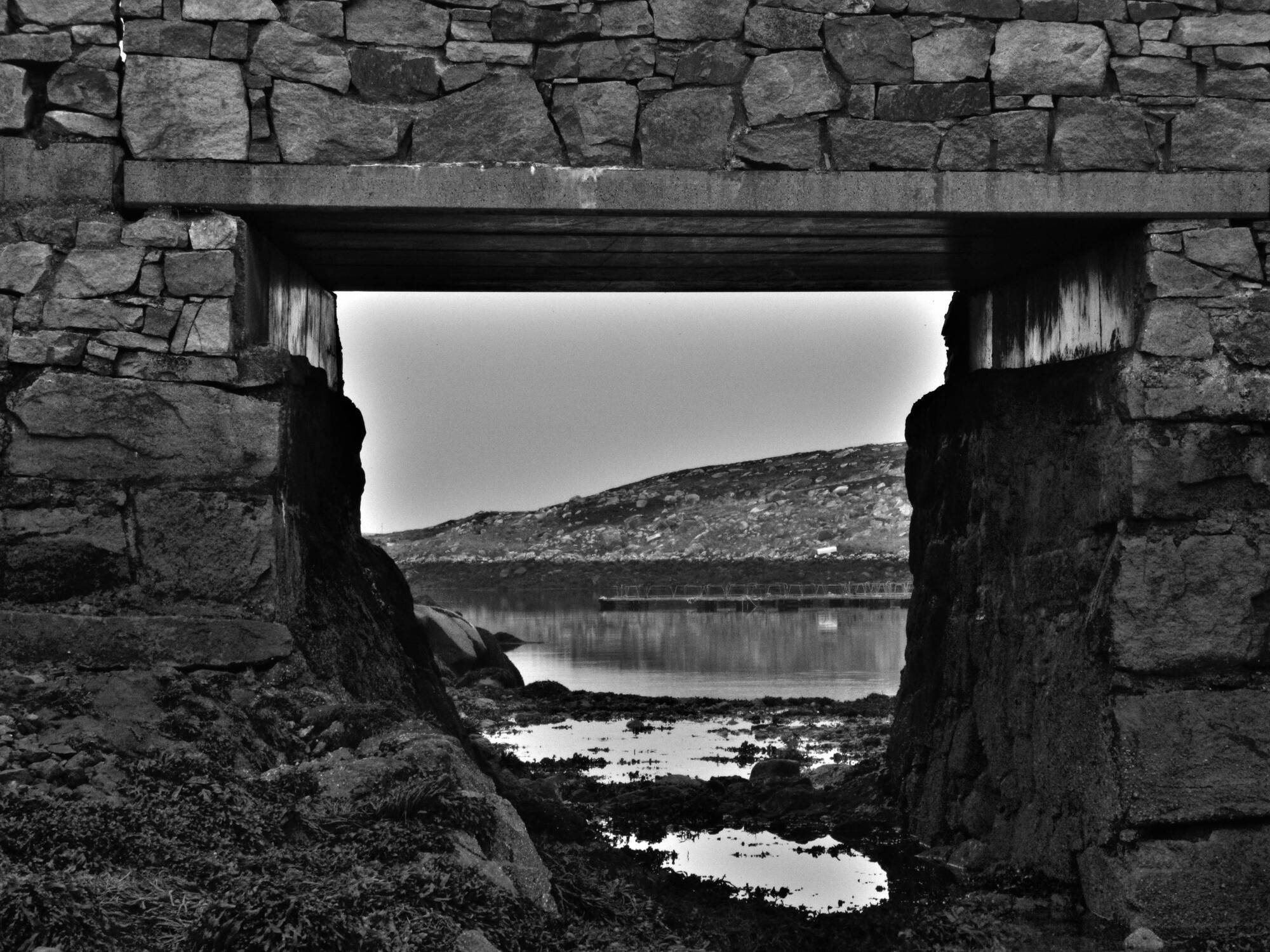
Throughout the 19th century this Connemara island was populated with an average of 150 people though much fewer call it home nowadays
Islands of Ireland: Furnished with many names

The island of Furnish, Connemara, Co Galway. Throughout the 19th century the island was
populated with an average of 150 people, though much fewer call it home nowadays. Picture: Dan MacCarthy

Among the myriad places to which the late mapmaker Tim Robinson descended to gather placenames, was Forinish, Co Galway. Not for him the crude ‘Furnace’ but instead the evocative Irish word, redolent with meaning, though by coincidence it almost amounts to the same thing.

Fornais also appears as Foirneis, Forinis, Feenish, Furnish, Furneish, Finnish and Finish, giving subeditors plenty of opportunity to furnish a good headline. Toponymists write that the name derives from a place where iron was smelted, such as at a forge. Versions of the name are plentiful in Ireland. So in this case, the forge on the island. Galway library mentions “a furnace was once there for burning timber for the manufacture of Iron, in which timber was burned”.

Dan McCarthy: 'The name derives from a place where iron was smelted, such as at a forge.'

In ‘Connemara: A little Gaelic Kingdom’ Robinson enthused about an afternoon he spent ambling around the rocky island — though it is connected by a causeway, so purists beware — in south Connemara. He chased up and down boreens, chatted to locals and brought his exceptional skill in mapmaking to the task of learning and recording the names of geographical forms with which he was presented.

At Áill na Máistreása (Rock of the Schoolmistress) he met a local man, Seánín, who showed him around the island and pointed out name after name of headland, inlet or manmade feature. This is exactly the kind of forensic detail which Meitheal Logainm is gathering around the country. The seven secondary school children on Tory Island, Co Donegal, recently collected over 400 such minor placenames on their far-flung island. Seánín showed Robinson the site of “wrecks and wrack”.

Another point was identified as Duirling and Chadáis, where bales of cotton once washed up. And, Duirling an Eabhair, the Stony Shore of the Ivory, referring to the wreck of a brig in 1862 whose cargo included beeswax, rum, firkins of oil and ivory horns.

Seánín then pointed out Crompán Sheanáit, Old Place Creek, near Na Seanbhallaí, The Old Walls, from where a pilot used to offer his services for ships sailing up to Galway.

If ever an island could be said to be alive, it is through such passionate naming and inventive remembered folk history, which revives old stories, customs, pastimes and even the lives of individual characters.

Travelling west from the village of Costelloe in mid-Galway, the driver will cross five causeways, in places some look not much higher than the rocky shores through which they weave, to reach Forinish. Four islands, all strung together like beads on a necklace of roads, will have been traversed too: Annaghavane Island, Letttermore, Gorumna, and Lettermullan. This is southern Connemara and the heart of an Irish-speaking redoubt known as Ceantar na nOileán with a population of around 2,000.

The island’s immediate neighbours are the scrappy Illaunnanarror and Illauncosheen to the east, Dinish to the north, and Inisherk to the west. Several of these islands were associated back in the day with poitín-making. Part of the reason for that was the difficulty of access for the gardaí to the labyrinthine arrangement of islands, islets, channels and generally inhospitable conditions.

The area is replete with holy wells as we saw a few weeks’ ago with Illaunnananima on the fringes of Ceantar na nOileán. Forinish has three.

Throughout the 19th century the island was populated with an average of 150 people though much fewer call it home nowadays. Forinish was connected to Lettermullan in the late 1880s, and by extension the mainland, when a widespread programme of works was instigated by the Congested Districts Board to alleviate poverty. Hundreds of local men were employed in projects. The causeway did not extend to Dinish however, so Forinish was an important point for those islanders on their way to the mainland. A schoolmistress was daily brought over to Deenish from Forinish to instruct 22 children there at the start of the last century, Forinish may lack the exquisite beaches of Dinish but it has its own rugged beauty, bookmarked at one end by the causeway and the other by the channel to that neighbour.

How to to get there: No need for a ferry for this one. Drive west 20km on R374 from village of Costelloe in Connemara.

Other: Connemara: A Little Gaelic Kingdom, Tim Robinson, Penguin; places.galwaylibrary.ie; meitheal.logainm.ie

x

More in this section

Revoiced

Newsletter

Had a busy week? Sign up for some of the best reads from the week gone by. Selected just for you.

Cookie Policy Privacy Policy Brand Safety FAQ Help Contact Us Terms and Conditions

© Examiner Echo Group Limited