Decluttering: Can organising your home organise your life? 

It's a silent drain on our spirit, perception and performance. We show you easy ways of escaping clutter's clutches at home
Decluttering: Can organising your home organise your life? 

Clutter is as much a tangle of the mind as a household disaster, potentially influencing your emotional and mental wellbeing. Pictures: iStock

Wasting time looking for things? Visually triggered by the omnipresent pile of nonsense? Cupboards or entire rooms you simply cannot use anymore, and quietly drowning in dross? Start small and start today, freeing yourself from irrelevant stuff and that gnawing anxiety.

Clutter is not grand maximalism

First of all, what is clutter? This is not a maximalism/minimalist interior design divide, a frustrating and common misconception in blogs and influencer twits and grams. 

Some of us prefer full shelves of comforting tat, loaded desks and cosy fat couches over low-slung Italian loungers and echoing empty rooms.
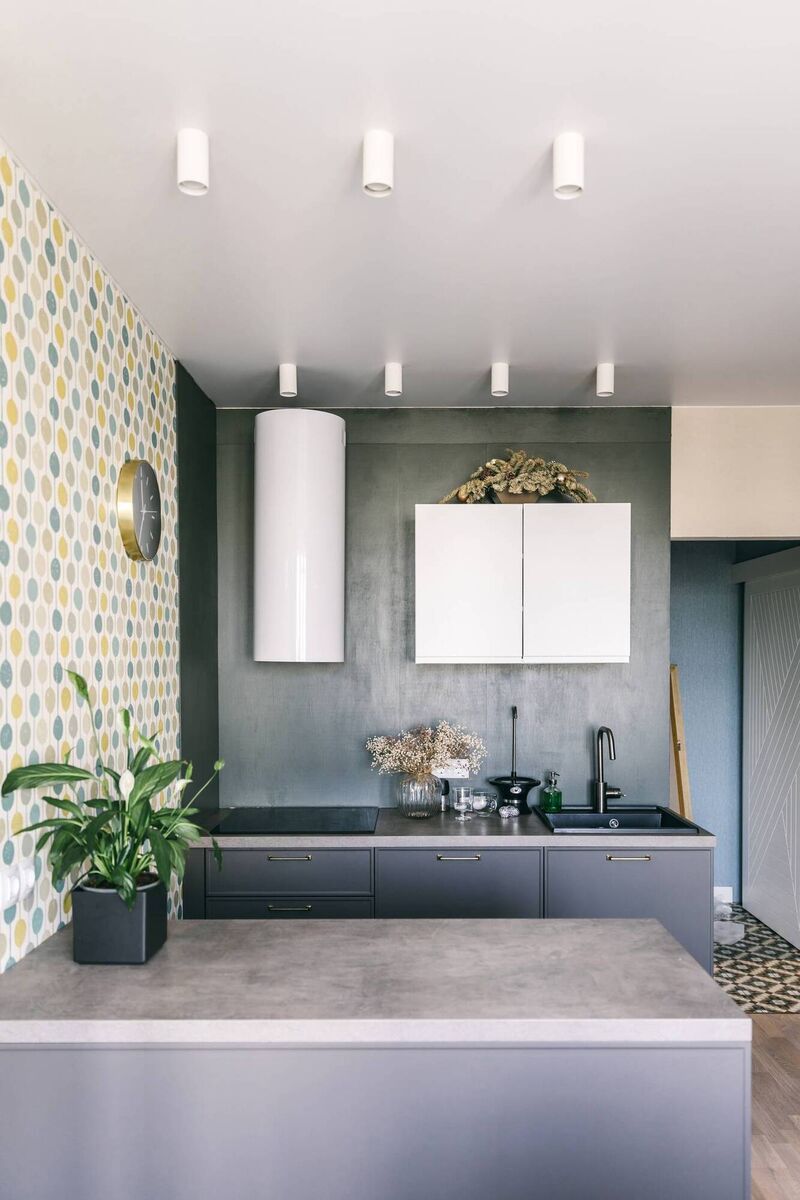
A well-organised kitchen area.

My house looks as if the movers are on the way — it’s so spare there’s tumbleweed rolling around the kitchen. Still, ten years ago, if you opened the wrong cupboard a tide of yellowing paperwork would fan out across the floor.

I was a crisp, resolute housekeeper, but a cunning procrastinator with multiple avoidance strategies, pushing off small decisions day after day into dark corners and behind doors — not always being in the moment where I would reap the best benefits longterm.

Some of us suffer from the trespass of fixed, sedentary goods, while others have trouble with sticking to systematised habits around consumable and disposable things floating in and out the front door — paperwork, waste and so on.

A healthy environment

The most general and proper definition I could find for clutter at home is “an overabundance of possessions that collectively create chaotic and disorderly living spaces”.

Having jaded squatter stuff without personal value in your self-created world doesn’t sound too bad, until you read anything published by world-renowned clutter specialist Joseph Ferrari, a professor of psychology at DePaul University in Chicago, including his co-authored “The Dark Side of Home: Assessing Possession ‘Clutter’ on Subjective Well-being” (2016).

The latest neuroscientific research reveals an unsettling collision between that hefty truckload of disparate, no-account belongings and the home-owner’s cognition, and emotional and physical health.

This includes the startling influence of perceived clutter on our ability to focus and on cortisol levels (the flight/fight hormone). Spiking cortisol is implicated in weight gain amongst other things.

Ferrari and his peers maintain that clutter in its more abundant form can “disturb your sense of home”.

That’s hard to accept before we’re ready to change. Simply being messy can strike at our sense of home? Profound stuff with hundreds of on-the-ground surveys of every age group across society to back it up.

You are not your stuff

Ferrari’s investigation of clutter reveals very serious issues around serial procrastination and hoarding. Most of us are (happily) not negotiating canyons of material in the corridors and a lost horizon of belongings swallowing every surface.

How and ever, as Prof Ferrari argues, the binding up of ownership and identity in a thing can effectively paralyse anyone from keeping their house in ideal working condition.

Still, we can approach some of the most emotionally radioactive things the same sensitive techniques used to clear those homes where the residents are all but buried alive.

In a feature for his college, Ferrari writes, “I’m very much interested in the meaning of home. What does home mean to people? In research, I’ve found that the more the clutter, the lower the sense of satisfaction with home.

“Extending that to procrastinators, people who are more indecisive hold onto their things because they can’t decide what to keep. I would suggest for people to focus on relationships, not relics. Life is not about me, it’s about we. It’s about us together.”

Team up on emotional baggage

My husband recently approached me for help in clearing his profoundly personal, two-decade-old Jenga of memories and irreplaceable mayhem in his office. Ferrari has some excellent advice for the sentimental “relics”, whether you’re trying to edit down baby clothes to a single piece with their smell still in the collar, or stirring through books you bought as a teen. Get some help to tackle that over-attachment.

“If you’re going to declutter, don’t touch the item,” Ferrari writes, “Don’t pick it up. Have somebody else hold the pair of black pants and say, ‘Do you need this?’ Once you touch the item, you are less likely to get rid of it.” (In conversation with Emilie Le Beau Lucchesi, NYT 2016)

Now, it’s up to my spouse to decide if he feels he “needs” his grandfather’s pipe-stand or letters from regrettable ex-girlfriends, even sealed up in a box to retain his sense of connectedness to a precious past — of course.

There’s an isolation and upset to coping with clearing by yourself. Teaming up (this could be with any close friend) worked well for us.

We could explore the memory enfolding the objects, briefly talk about the happening or person it touched on, and in some cases — find the strength to throw it away.

Establish a treasury

Decluttering is not about living with less, it’s about allowing ourselves to give more real attention to what we use regularly and what we truly love and value.

Yes, there are forms of mental illness where plastic bags of old tin cans become vital to a person’s sense of safety and balance. That’s not the case in most homes.

Outside of staging something flash and meeting current expectations of style in the big buys, most of us have a watercolour, soft-focus notion of those things we really like and want to see, use and enjoy in our spaces. It’s almost as if we sometimes feel we don’t deserve better. If you want to own something and it’s taking up room in the house — then own it. Take a beat to explore why it has to stay.

There are means with manageable daily goals to boil down the good stuff. Photographs can be digitised or taken out of weighty albums. The treasury can be curated, cut, organised and properly stored in a smaller quantity.

Storage purchases don’t solve problems

The more general daily paperchase is wearing. Random, cheap, indifferent stuff makes us pay for it again, every day, as we negotiate our way around it and give it room it doesn’t deserve.

Little wonder Marie Kondo and an army of declutter divas are adding more books to our bowing shelves.

The greatest piece of advice I ever gave or received regarding solving storage problems? Don’t buy in storage solutions to solve storage problems.

Cut back first, embrace the lifestyle and then sliding it out by its spine, donate that decluttering book to someone who needs it.

If there were an area of exception I would say it’s when winning the paperchase, and you can read my article on beating back the physical weight of bills and putting manners on some of your daily humdrum to magically create more time and stoke productivity here: irishexaminer.com/property/homeandoutdoors/arid-20465686.html

Anticipate the promise of pleasure

Ferrari describes procrastination, the action of inaction to do the necessary things, as “to delay the start or completion of a desired task to the point of experiencing discomfort.”


That’s the thing: it’s rare to do a clearout without feeling downright fantastic at the end of it.

There’s a spiritual bounce and sense of achievement and often some useful square metres delivered back to your life; useful/beautiful things (to paraphrase William Moore) can finally, truly be.

Like getting fit, living with less useless baggage is not one frenetic bike-ride in new spandex; it’s a committed lifestyle change.

If we don’t start discriminating about what’s coming into the home and how long it earns its stays depending on real need — we’ll just end up where we started. Knee-deep in nothing.

x

More in this section

Revoiced

Newsletter

Had a busy week? Sign up for some of the best reads from the week gone by. Selected just for you.

Cookie Policy Privacy Policy Brand Safety FAQ Help Contact Us Terms and Conditions

© Examiner Echo Group Limited