Damien Enright: Offering a helping hand at shore gets seal of approval
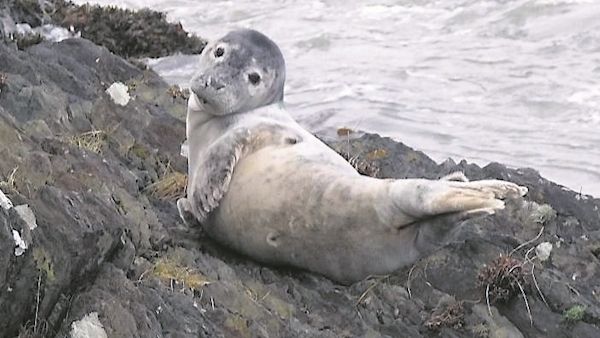
reflects on a close encounter with a stranded seal pup.
I assume that the baby seal, last seen marooned in a trough of rocks a metre and a half above the sea, will by now have been lifted by the high tide and delivered back to its element.
Stella, a long-term village neighbour, had told me about it. As I arrived, she and her children were leaving. They had, of course, been intrigued.
Later, I watched it until waves were breaking on the rocks a few feet below. There was no way it could lift itself out of the trough, its arms hardly bigger than my hands and its ‘legs’ like a tail, perfect for swimming but useless on land. It seemed resigned, trusting that the tide that had lifted it onto the rocks would lift it off again in time.
I’d like to have seen the relaunch, but, by then, it would have been too dark.
After tramping home along woodland paths deep in sodden leaves and streamlets under the ground-ivy, I met my wife who had just arrived in the car. Long stretches of the road on the other side of the bay were under two feet of salt water. Turning around to find another route, she was followed by a small cortege of cars through back roads and laneways only natural geographers and those with inbuilt compasses would know: I wouldn’t. Finally, she led herself and the grateful procession to the high road to Clonakilty via Timoleague, whereto they had been heading when the waters rose before them.
As she was leading others away from the sea, my metre-long pup seal seemed to be asking me to lead him/her into it. Not likely! Not only would he have weighed more than a hundredweight bag of cement (which his body-shape, less head and tail, resembled) but he might well have bitten my helping hand.
While I stayed an educated distance away, his eyes gazed endearingly at mine and, at one stage, he shifted his bulk towards me. The effort was mighty. Humping his belly even a few inches was an awesome task. The rocks weren’t smooth but dry, serrated and sharp-edged, naked of slippery seaweed, rocks only broached by the sea at high water and spring tides.
I took some photos with my phone.
It was hard to resist. I’d send them to grandchildren, and to my son, living on sea-girdled La Gomera in the Canary Islands, where his friends have salt in their blood and catch big fish and rescue oceanic birds or turtles caught in discarded nets.
They may have their bonito galore and madregal fishes, their ospreys and passing albatrosses, but they don’t have seals. Mobile phone pictures are excellent, and easy to send, and perfect to excite marine enthusiasts over a glass of wine.
The girls would be impressed by the soulful eyes and the cuddly shape and the youngster’s thick, rich fur, lightly blotched with grey.
Also, I’d snapped pictures of him scratching his nose with its flippers and playing hide-and-seek behind them, of him rolling on his back and showing his fat, down-covered stomach, of him bending his back legs (his tail) to almost meet his raised head in a near-perfect hoop.
Oh yes, they’d love the seal, and wish they had a tame one to cuddle.
Meanwhile, ask the Co Donegal fishermen’s’ wives what they’d think. Supporting their husbands, they would maintain that the future of their children is threatened by marauding seals which, as fish stocks reduce (thanks, in part, to marauding and poaching over-fishing) take, it would seem, what is now a significant part of their potential catch.
Seals weren’t a problem I heard mentioned when I lived in Co Donegal in the 50s and went to school with a boy from Killybegs whose father owned one of the biggest processors in Ireland.
There were enough fish to go around then. Not now. However, their decimation isn’t entirely due to the seals.
As the tide rolled in and lapped the rocks beneath him, he lifted his head. Perhaps something told him that it would be an hour yet before the wave broke over him, so he closed its eyes and took a nap.
Conserving his energy, perhaps he was, for the wide ocean coming to take him to its bosom. He would find dinner in the open water beyond the sandy surf.
Grey seal pups can swim immediately after being born (between September and November) and are weaned and must fare for themselves after just four to six weeks.
My seal may have been, say, 10 weeks old.
Poor child (but relaxed enough to nap and trust in nature to deliver him back to his element) I left him with the tide still rising, and the night coming down.
CONNECT WITH US TODAY



Be the first to know the latest news and updates