Damien Enright: Pigeons’ intelligence prove their worth in pecking order
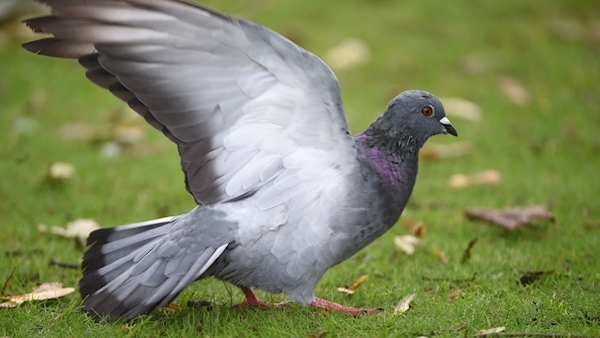
I LEARNED a lot about pigeons last week thanks to the remarkable belligerence of a sparrow. She took umbrage at a pigeon pecking the pavement near her, a fat, well-groomed pigeon, like most street pigeons here in Ibiza, in the Balearic Islands.
She, the sparrow, female, flew at the pigeon which, in shock, took off almost vertically, frantically flapping to build up speed. At some 12m above street level, it headed down the broad, traffic-free avenida, dodging between the substantial ornamental trees, the sparrow on its tail. Although three times her size, the pigeon swooped and dodged as if for its life. Its partner (I’ve learned that pigeons mate for life) flew parallel, but La Sparrow was not to be distracted. This pigeon had bugged her, and it was the target of her bile.
Down the avenida they winged, 150m. The pigeon was frantic; the sparrow was indefatigable. I watched from our balcony. The pigeon turned, and back they came at breakneck speed at treetop height, under, over and through the canopies.
Pigeons can fly at 96km/h, I’ve since learned. At last, it — and its mate — disappeared over the four-storey buildings across from ours. Only then did La Sparrow return to earth, and to righteously picking where she had been picking before. A cock sparrow, picking alongside, was still there (sparrows are monogamous, I discover, although females sometimes sneak off the nest to have, as Cockneys call it, “a bit o’ the uvver”). He’d left it to his partner to drive off the pigeon. It would have been beneath him, perhaps.
I was entertained and, subsequently, enlightened by this foray. I called my wife but it only lasted a minute; half my surprise was the speed at which they flew. Sparrows (I now learn) can fly at 47km/h, enough, over a short distance, with obstacles, to stay on the pigeon’s tail.
The pigeon’s 96km/h (60mph) was measured over a “moderate distance of 600 miles”. Speeds of 100mph have been recorded. The greatest horizontal speed and fastest endurance flight in the bird world is achieved by Homing Racing Pigeons capable of flying 1,100km in a single day, and of clocking 177km/h.The longest flight was of 55 days between Africa and England covering 11,000km, sometimes flying at an altitude of 1.8km or more.
The so-called city ‘rats with wings’ are, in fact, noble feral rock pigeons, adapted to an urban lifestyle. Natives to cliffs here and, at home, to our entire seaboard, from the west Cork coast to the Giant’s Causeway and back, they’re always in a hurry. They fly fast, never cruising, zooming, or planing on widespread wings.
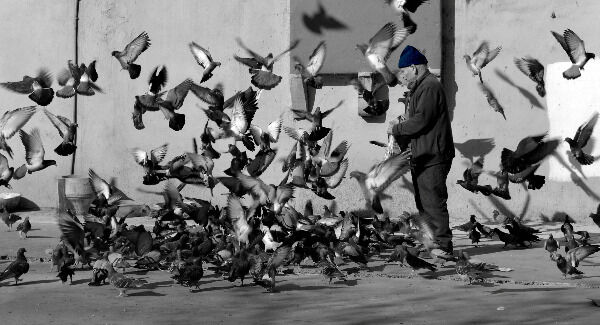
Their cousins, the fat wood pigeons of the Irish countryside, are the opposite. They spend hours sitting in trees, issuing fat, burbling coo-coo-coo choruses without variation.
Most birds have a phrase to their tweets, not lengthy perhaps — not like song thrushes, with their page-long song sheets, no two the same — but with some originality. Not so wood pigeons.
I’ve known the species since childhood. Wherever we lived, they haunted our household garden, and ate our baby brassicas. My father shot them with his .22 rifle, and very tasty they were on the plate.
I’ve always thought of them as being the dumb clucks of the bird world, all breast, coo and pout . Now, I discover that they’re amongst the brightest of birds, with an IQ that’s outstanding. They can recognise all 26 letters of the alphabet, can differentiate between photographs, and even two different human beings in a single photograph. They pass the ‘mirror test’ — the ability to recognise their own reflection — one amongst only six species that can do so, and the only non-mammal.
Like humans, they see in colour, and also see ultraviolet light, which we cannot.
They are used in search and rescue missions at sea. Their acute all-round vision enables them see floating debris, invisible to the human eye, and they are trained to alert pilots when they do.
Racing pigeons for sport goes back 3,000 years. Homing pigeons were used to relay the results of the ancient Olympic Games. Historically, they carried messages only one way; however, by placing their food at one location and their home coop at another, they learned to fly round-trips of 100 miles twice daily.
In wartime, pigeons carried messages through flak and firestorm. After the two world wars, 32 birds were recognised as heroes and awarded medals. One bird, released from a stricken British bomber sinking in the North Sea, flew nearly 200km quickly enough to alert rescuers who saved the crew.
Not long ago, the Taliban banned the keeping or use of homing pigeons in Afghanistan “for security reasons”.

CONNECT WITH US TODAY



Be the first to know the latest news and updates