By night, Ibiza is a delight, but don't spend every day there
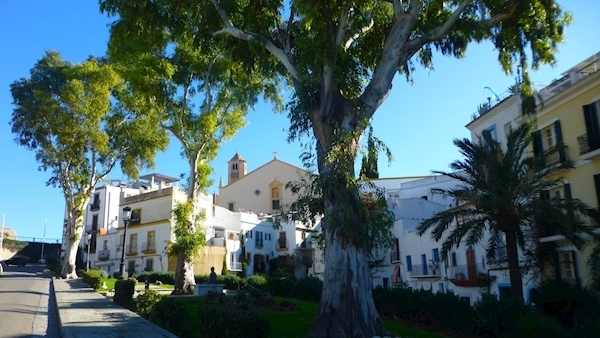
Last night, I went for a full-moon walk on this largely idyllic isle of Ibiza. It was with a group of 11 (or 12, counting a happy two-year old in a baby rucksack) led by a woman of impressive knowledge and fluency in English, Spanish, and Catalan, writes
Iām not usually a night-walker, or group walker, or indeed a āwalkerā at all. I find that self-described āwalkersā tend to be route marchers. They perambulate for exercise and fresh air. They see the countryside in passing. They have no time āto stop and stareā and might as well be on a treadmill in a gym.
I tend to be a laggard, a stroller, a royal pain in the rear for real walkers. Out in the country, I can hardly proceed a hundred metres without coming across something fascinating to waste time over. Last night, it was a mouse no bigger than a cockroach with red eyes hardly bigger than poppy seeds.
I suppose it was simply a local rodent, no big deal, but on a mountainside in moonlight it was worth pausing to look at. Robbie Burns highly regarded mice and apologised when he overturned their nest with his plough: āWee, sleeket, cowran, timārous beastie, O, what a panicās in thy breastie!ā et cetera. What diverted Robbie was certainly sufficient to divert me.
How enlightened it was of the Ibiza Tourist Authority to provide visitors and locals with close encounters with nature-at-night in a remote part of the island, on an unspoiled hillside, on ancient tracks. No pre-booking, no names, no passport numbers, no insurance waivers, and no fee charged.
We walked along unmade paths, white in the moonlight, through woods of stunted pines, hearing the sea meeting the shore below in whispers. There were no bats, nightjars, or pĆŗcas. Only the mouse, but the others were all too far ahead to see that.
They were, Iām sure, watching the moon moving through the clouds, admiring the moonlit Mediterranean framed between headlands and listening to its murmurs coming ashore. These pleasures could be enjoyed on the hoof, no need to stop. Walking in the light and shadow of the whitened-out paths was itself theatrical.

For me, it was also nostalgic. Iād walked such paths ā because there were no roads ā to the old farmhouse we rented on the Cap de Barberia, on Formentera, Ibizaās smaller sister island, many decades before.
That same house is now, almost certainly, a country palace, worth many millions of euro. Most country houses in Ibiza and Formentera, renovated fincas, and newly built, architect-designed copies are worth millions.
Excess is a byword in expat homes and in the foreign-owned motor launches in their harbours. Ibiza has become unaffordable, except for the super-rich or those who got here decades ago, like I did, but settled and bought properties then.
I didnāt buy. I was of the āall property is theftā school. Naive, certainly, but I have no regrets. Had I had the money and bought, I would have got stuck on the island, and a great deal of the experiences that I treasure, a great number of the places I have been to, and a great number of the people I have met wouldnāt have happened in my life.
Islands can be emotive prisons, prisons of the emotions, and, indeed, of lifeās energies and our infinite capacity for change. I see ancient hippies here and there, colourful and innocuous old-timers, their hearts still in the right place, but they seem not to have moved on. Paradise, I think, can be boring.
The island is, of course transformed. Its native people are among the most obliging and courteous I have met, and they have gone to the trouble not only, it seems, for commercial reasons, but for reasons of good manners and hospitality, to learn English.
Almost everyone speaks some English. Children learn the language in schools, and enthusiastically embrace it. There are uncountable English-teaching schools on the island. But there is a problem now.
Rents have climbed so high that teachers who are ānative speakersā cannot afford to live here. A school director tells me that rent for a year-round one-bed apartment (if one can find a long let) is, at least, ā¬1,500 per month while wages average ā¬1,200, more than this being impossible at the fees students can manage to pay.
Almost anywhere on the island, a one-bedroom apartment is a bargain to buy at ā¬240,000. Itās a shooting-itself-in-the-foot scenario for the islandās home economy. Local service workers, restaurant and bar staff, manual workers, and even tradespeople cannot afford to rent, never mind buy. High-end expats have both benefited and wrecked the economy. Many locals struggle to live here, or move away.