Damien Enright: This flier got land, many others are arriving in scores
When we arrived home in west Cork on this day last week, it was 3am Monday morning, writes .
Leaving our luggage in the hall, I climbed the stairs to the first floor and, flicking on the outdoor lights, stepped onto the balcony. Below, a spectacular picture met my eyes.
The entire backyard was “leaved with October blood”, as Dylan Thomas put it, carpeted in beech leaves, with hardly a half metre of gravel showing.
The net suspended over the central pond was laden with leaves in thousands, fallen from the trees above. Under the yard lights, the scene was theatrical, other-worldly. In the fortnight we’d been away, the ground of hard, grey gravel had become a carpet of soft gold.
Having borrowed from Dylan Thomas’s Poem in October quotation, I’ll borrow from Yeats Easter, 1916 and say that my humble yard “had changed, changed utterly”. Nature had made of it a stage, still and silent, set for a sylvan drama. At any minute a band of sprites would could come bouncing out of the west Cork undergrowth in winged boots and hats with a feather. All it needed was a hooting owl.
“Hail the transforming powers of nature!” the actors would chorus in concert. Thanks to the gales of autumn, blowing in our absence, “a terrible beauty”, had been born.
Having quoted two poets in four paragraphs, I feel that I should justify myself by quoting a third, TS Elliot. He said “Immature poets imitate; mature poets steal.” I am, of course, no class of poet, which is why I’m forced to revert to my schoolboy learning to help me describe the indescribable.
Immediately before beholding this enchanting tableau in my own backyard, and the warm relief of being home, we had adventures. Such events seem to have always dogged my days. I told my unfortunate wife when she agreed to marry me: “You’ll never have a dull moment but some of them may be awful!” These recent were at Cork Airport.
When picking up our car, it wouldn’t start. Rain bucketed from the heavens as I opened the bonnet in the windswept wastes of the Holiday Blue car park and fiddled with the electrics to no avail. Nature, indeed. Welcome home to Ireland.
The car park breakdown service man started and re-started the car with jump leads but left me rather too soon. The engine petered out again as I picked up my wife with the suitcases at arrivals. By now, the airport was deserted for the night, and we were stranded. We were spotted by a friendly airport policeman at half-past midnight.
The young policeman called a friendly mechanic who’d been working on another car. He diagnosed the problem as a stone-dead battery (11 years old, like the car), fitted a new one, fortuitously carried in his van, and saw us on our way.
By this time, had I had hair, I would have looked like a drowned rat. However, even our domestic, rat-eating heron wasn’t around when we reached home at 3.10am.
However, he turned up in the morning, knocking on our bedroom window, begging for breakfast as usual.
So from one flying chapter to another, so to speak. Did you know that grey herons from Russia and Scandinavia migrate south in winter? I’ve seen herons standing on the ice of frozen lakes in Czechia (Czech Republic) and wondered how they survived.
883119[/reamdore]I’ve just read a fascinating book about migrants. Authored by Anthony McGeehan, a lifelong Belfast birdwatcher and writer of many books, To the Ends of the Earth: Ireland’s Place in Bird Migration is packed with intriguing facts and explanations of why and how birds fly back and forth across oceans and continents every year.
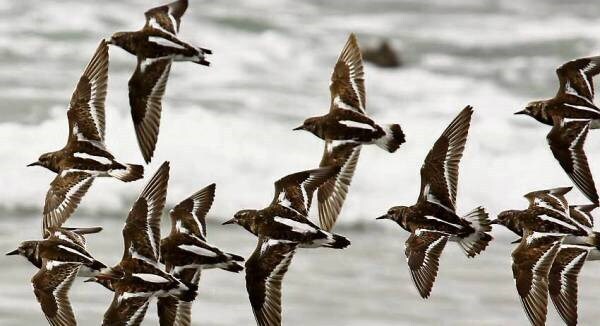
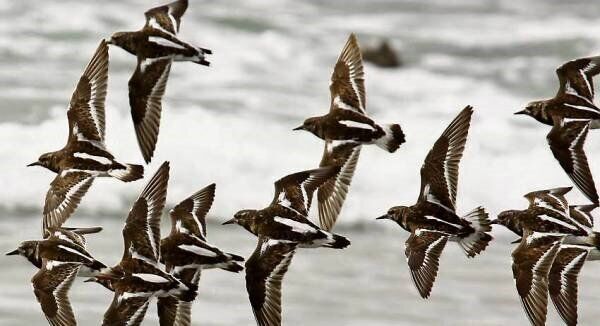
Migrating turnstones, scarcely bigger than starlings, fly 7,600km non-stop in six days; bar-tailed godwits fly non-stop from one side of Earth in a 175 hour flight. A tagged female godwit winged 11,700km direct from Alaska to New Zealand in a 9½ day-and-night direct flight. Both species of these generally disregarded avian miracles are common on Cork coasts.
Why do birds comfortably wintering in the tropics fly thousand of miles north to breed and hatch? There’s grub galore where they’re at, but even more on the northern tundras in summer and days are 20 hours long, so there’s more time to feed their progeny.
The book itself is beautiful, a hardback, intelligently illustrated, text-led volume, published by Collins Press at €29.99. It has maps, bird portraits, references to the extensive source material and quotations from scientific works, poetry, literature and song.
Today, as I write, the greatest individual threat to Mother Earth and every living thing upon it, Donald J Trump, at last faces controls. May the House of Representatives, our hope of salvation, exert power wisely and well.
CONNECT WITH US TODAY



Be the first to know the latest news and updates