Fabulous year for fungi as mushroom feasts fill my plate
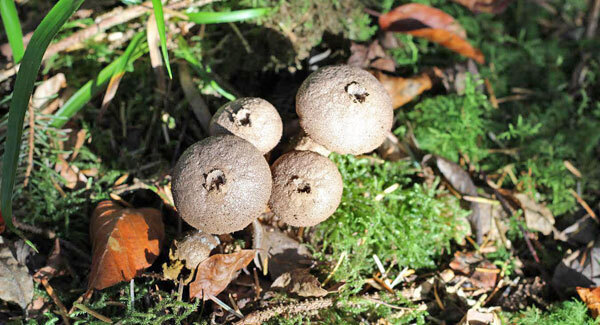
It’s a great year for mushroom, both field and forest, writes Damien Enright.

Fabulous year for fungi as mushroom feasts fill my plate

It’s a great year for mushroom, both field and forest, writes Damien Enright.

The long, hot summer tempted the fruiting bodies to surface. We find them here in Ireland in the abundance in which we find them in the high, dry forests of the Canary Islands.


The ‘roots’, the mycelium — a web of tiny filaments — are below ground, while the fruits pop up into the light. How well they are made, the protective umbrellas above the gills or sponges in which the spores develop and fall to the earth to grow a new generation! And they are beautiful, from delicate chanterelle to stout Boletus edulis, and delicious too.

Last week, we found soup-bowl size boletus caps supported on stalks round as my lower arm. Caught before they reach their finest moment and begin to go soft and gather moulds, one has a feast, or many mini-feasts, to savour from a single giant.

They may be cooked fresh from the woods or, for long term gratification, sliced wafer-thin, dried until crisp and then put in jamjars with the lids screwed tight.

Left for a week or a year, when the lid is unscrewed, the blast of mushroom bouquet will near knock one over and a dessertspoon of the contents will render an ordinary spaghetti, lasagna, risotto, moussaka, casserole, plain omelettes or soup into a repast to remember.

Of the boletus family, Boletus edulis is the king, indeed it is the King of All Mushrooms, and thus venerated wherever fine food is enjoyed. It can, sometimes, be bought fresh at farmers’ markets but is, mostly, sold dried. It is called ‘porcini’ in Italy, ‘cep’ in France, ‘steinpilz’ in Germany, in Britain ‘the Penny Bun’.

Edulis indicates that it is edible; ‘boletus’ probably comes from “clod”, because the round, fist-sized caps of some highly prized species are brown earth coloured, no doubt for camouflage. Squirrels, badgers and wild boar appreciate them too.

Boletes, in their various species, do not usually appear for sale in supermarkets. Commercial white button mushrooms are saprobes and can grow on compost beds in sheds with low light: boletes are mycorrhizal, and are symbiotic with trees. To cultivate a mushroom beside a specific tree would be both costly and complicated, and commercial attempts have met with little success.

Therefore, boletes are always collected from the wild, and uncommon in supermarkets. However, the good news for those that collect them is, because they are mycorrhizal (related to specific trees), they raise their elegant heads in the same places each year.

It was the unavailability of fresh wild mushrooms that made my 1970s weekend business in London so worthwhile. Living in Tottenham Court Road, at the centre of the city, I was adjacent to Percy Street, famous for its gourmet restaurants, particularly Greek.

On Friday evenings, I would drive the family to Wales, where we’d camp out and on Saturday collect mushrooms which that night I’d deliver to epicurean establishments such as The White Tower Restaurant.

The proprietors, gasping with delight, would readily part with pound notes. Thus, I would supplement my tutorial income, and the family would be healthier for the outing.

My family all collect mushrooms in the season, and those in Czechia and in Spain also had memorable harvests. A small boy, in Lower Bohemia, was especially proud of the boletus he’d found as big as his head, albeit crowned with blonde curls.

There are many kinds of Boletus, most of them delicious but some untempting to the palate or disturbing to the stomach. None are deadly, and those few that are stomach-unfriendly look like they will be.

However, as always,

I caution my readers to be careful with identification and to never risk white, gilled mushrooms found in the forest. Do careful homework. Use two books, or three — for comparison — when learning to identify those species which are good from those which are bad and select just half a dozen relatively common types to collect, avoiding the rest

The most collectible will be field mushrooms, a few unmistakable Boletus species, chanterelles, Parasols, Lawyer’s Wigs, Wood Blewits and Field Blewits, morels and Lactarius deliciosus (firm, bright orange mushrooms that exude red juice from their gills).

Readers will know that the largest and probably oldest living thing on earth is an Armillaria ostoyae mushroom, with mycelium covering 2,385 acres beneath Malheur National Forest in Oregon, USA.

Possibly 9,000 years old, its fruiting bodies are very similar to those of the Honey Fungus, Armillaria mellea, found in Irish forests and gardens and dubbed by Charlie Wilkins, popular ex-Examiner gardening correspondent, a killer because it “destroys untold numbers of garden trees and shrubs each year”.

More in this section

Revoiced

Newsletter

Sign up to the best reads of the week from irishexaminer.com selected just for you.

Cookie Policy Privacy Policy Brand Safety FAQ Help Contact Us Terms and Conditions

© Examiner Echo Group Limited