Vintage View: How to prepare for your first winter fire
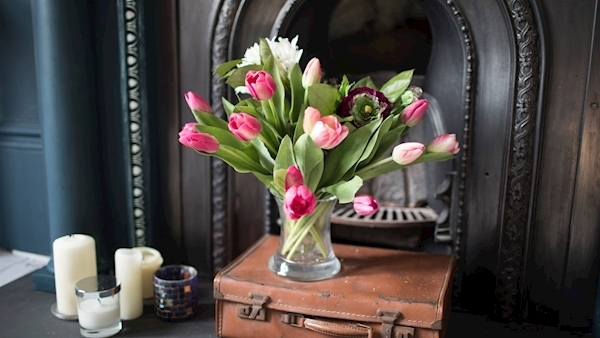
cleans up a vintage fire surround in time for that first winter blaze
Recently, I bumped into a regular reader of Vintage View at the delicious farmer’s market held in Dungarvan every Thursday (tip-off alert). She asked me for a reminder about how to clean marble and other elements of a vintage fireplace. So, given that polite prompt and the approach of the great chill — we thought we would give you a round up on caring for that flaming old dear.
Now, even with an efficient, smug stove pushed rudely into position, most homeowners will want to preserve the lovely period frame original to the date of their homes. Considering their reproduction right up to today, you really can’t do better than a classic Victorian or early Edwardian fire surround.
Re-instating? Take a contemporary shift, leaving out those frothy tiles. Chances are, refreshing a Georgian to Edwardian period piece, you are facing several elements — marble or painted stone sections to the front and returns, a mantle-piece, relief decorated cast iron antique tile panels and even a hearth.
Let’s start with the marble. A reminder - Marble is a metamorphic, limestone-like rock, and as such has an open porous crystalline structure flecked with pyrite inclusions. Those feathery veins mark areas of weakness in the stone. Raw and unsealed marble will suck liquids, waxes and oils down into these microscopic chambers, causing discolouration. The pyrite can cause rust stains to appear too — unsightly on white marble in particular.
First — do no harm. Approach your marble surround with gentle, inert ingredients and start dry working towards a barely damp clean, cloth. Forget even green, heroic eco-cleaning recipes — vinegar and baking soda, together with bleach, gritty cream cleaners and worst of all, solvent spray – disaster in an accumulating muck over time.
If you cannot get the dirt off with a wrung out microfibre cloth, move to soap flakes (Ph-neutral) dissolved in plenty of warm water and wipe and dry in quick succession. Dilute hydrogen peroxide may also lift ingrained marks, but just keep in mind that any moving stain is likely to spread. Painted surrounds (wood or stone) should be very carefully handled. If you see gilding or brushed decoration avoid any attrition or chemical applications. Try to accept a few domestic slings and arrows as part of the surrounds character. Finally, shine any marble up with a commercial marble polish, such as HG which comes in about €14 for 300ml. A more traditional mixture of waxes, Antiquax marble polish is about €8 a tin sourced on Ebay. Ban everyone from leaving cups and glasses on the mantle.
Cast iron elements are often the most beautiful features of a reception room surround and upstairs fireplaces may be completely delivered in cast iron. Made in 19th century Nouveau decoration, they really are worth treasuring even if you block the fire off to spare the draught. Before shining the surfaces, it’s vital to ensure the iron is clean and free from grime and rust. A proprietary rust cleaner and fine wire wool is a good start. Follow the maker’s instructions.
Everyone has their favourite from good old WD40 forward. Whatever you use, keep water off the metal. Some cleaners act as polishes or you can take the two steps. Ruskins do a Rust Remover, 125ml for around €5, which is handy inside and out for small jobs like this applied by hand (lay off the power tools with any relief decoration please). For simply dusting off, use a ‘tack’ cloth impregnated with resins can lift ground in grime with a bit of elbow grease. Try your local DIY shop for a set for your workshop — €10-€15 for a pack of 10.
Now the soul satisfying polish. Woodies stock Deville Black Stove & Grate Polish for €14 for a 100ml of thick paste — good for a clean/polish in one if the metal is just a bit gummed up with old silicone heavy sprays. Once clean, Liberon, who are so well respected for all their vintage surfaces products also so a really good polish for putting a gloss back into cast iron and redefining detail — €13 for 250ml tin that will last several seasons if shut properly to keep it moist.
Use these paste products sparingly to avoid a tacky finish. Use a cotton cloth and wear gloves. Allow the product to dry into the cast iron for four to six hours. Then using a cotton cloth buff the surface firmly to achieve a soft glow. There is some colour in the paste, so minor dings and scratches will be covered as you work. If you want a high shine, Stovax Grate Polish has a high degree of graphite inclusions for a silver/black shine — about €8 from Amazon or your Stovax stove dealer.
Now tiles. Panels of tiles are generally set in a metal frame held onto the fireplace with nuts. Check the panel is secure before you start applying physical pressure. Give the whole area a good clean to remove any loose debris and dust. The brush attachment of your vacuum hose is useful here. Next, clean the tiles. Malones do a scented dedicated tile cleaner for just €2.99 (malonescleaning.ie or at Tesco and many good supermarkets). Scented with lavender, it’s safe for a careful damp dust over marble too. Use a toothbrush to work into any relief decoration and wipe clean. Glazed tiles are difficult to scrape clean without leave scratches — use gentle oblique pressure and a blunt edge like a finger-nail at most.
Carefully applied, paint thinner can lift splashes of paint — I would consult a professional for this kind of work on good panels. If you want to touch up small areas of tile take a chip or an entire loose tile to your local DIY supplier, and find a close match in a high gloss ceramic paint. Where there’s a chip into earthenware of porcelain tile, you should seal the surface before repainting. Don’t expect utter perfection in a colour-match and with truly amazing tile panels – get help.
For large chips, try a two-part epoxy resin — fill and then paint. Old tiles generally won’t have grout spacing — don’t start thwacking at them with a grout rake — you’ll pull off the tiling. If you have to replace a tile, use a dedicated heat resistant material like Vitcas Heat Resistant Tile Adhesive,
300ml for €10. Cracked fire-backs and damaged cheek pieces? Again leave this to skilled hands and, remember, get any working open fire or flue checked and swept before you light up this winter.