Richard Collins: Do spiders show us how to fly without any fuel?
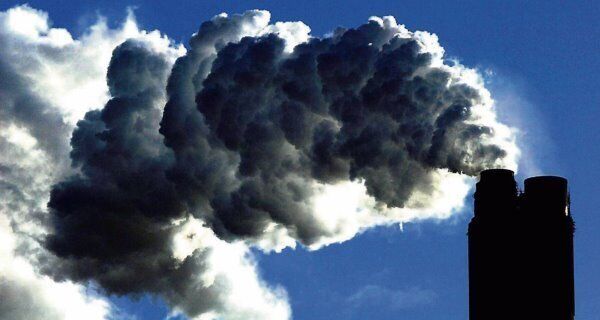
If our electricity came from renewables, instead of from fossil fuels, greenhouse gas emissions from vehicles would be greatly reduced, writes .
Aviation presents a more intractable problem. Currently responsible for 2% to 3% of emissions globally, it’s the fastest-growing source of human-induced CO2. Over a million people are airborne in ‘the city in the sky’, 24 hours a day, 365 days of the year, courtesy of fossil fuels. Almost 30m passengers will pass through Dublin Airport this year. Irish people fly, on average, six times annually, but, worldwide, 85% of people have never flown at all. With rising global affluence, demand for air travel will grow dramatically. Our current technology won’t be viable in the long run.
Can aircraft be powered sustainably? Aviation-grade fuels have been refined from vegetable oils, but vast land areas would be needed to grow enough plants even for present needs.
Fuelling aircraft renewably is a major problem, but some wingless creatures fly without any fuel whatsoever
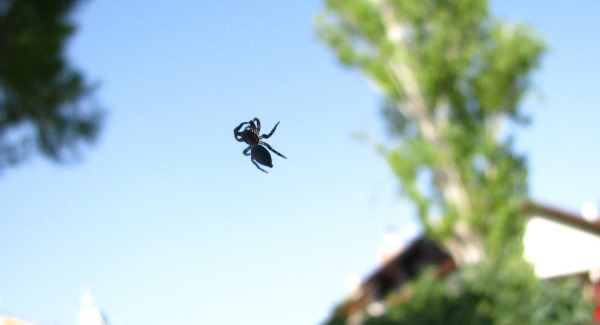
During his famous circumnavigation of the globe, in the 1830s, Darwin was intrigued by the occasional arrival of hundreds of spiders on the deck of the Beagle. They descended from the sky and, in due course, took off again. Despite not having wings, spiders turn up, not just on ocean-going ships, but on remote islands. They have been observed four kilometres up in the air. Darwin wondered if thermals, which birds of prey use to circle effortlessly, also help spiders get aloft? Evidently, wind-power is not the explanation; arachnids can be airborne even on calm days. How this is possible has intrigued zoologists.
As early as the 1800s, it was suggested that electric fields are somehow involved. Their role, however, had not been demonstrated and the flight mechanism spiders use remained a mystery.
Now, Erica Morley and Daniel Roberts, of Bristol University, have carried out a series of experiments, to unlock the secret. Their results have just been published in the journal, Current Biology.
Spiders, the researchers demonstrate, exploit a curious phenomenon known as the atmospheric potential gradient. Cosmic rays split up gas molecules in the ionosphere. The resulting ions turn the air mass into an enormous battery, the electrical potential between the air and the ground increasing with altitude. Even at sea level, the air isn’t always electrically neutral. Tension builds up in the atmosphere, until lightning discharges, during thunderstorms, reduce the electrical pressure.
The Bristol team simulated atmospheric potential differences inside a box, using electrically charged plates. Spiders were introduced to the box. When the plates were charged up, hairs on the spiders’ legs stood on end, just as human hair does during thunderstorms. As the potential was increased, the arachnids rose up on the spider equivalent of ‘tippy-toes’. Sufficient force was generated during the experiments to lift some of them off the ground. When the electricity was switched off, the behaviour ceased.
Spiders seem to monitor atmospheric electrical fields through their hair
When conditions are favourable, they begin the process of ‘ballooning’. Moving to a high point, they play out silky threads to form electrical ‘sails’, which respond to charge differentials in the air. Once airborne, spiders use the wind to carry them away.
The atmosphere holds huge amounts of energy. If only, like the spiders, we could find a way to tap into it. Bon voyage.

CONNECT WITH US TODAY



Be the first to know the latest news and updates