Islands of Ireland: Tower of strength on Devenish
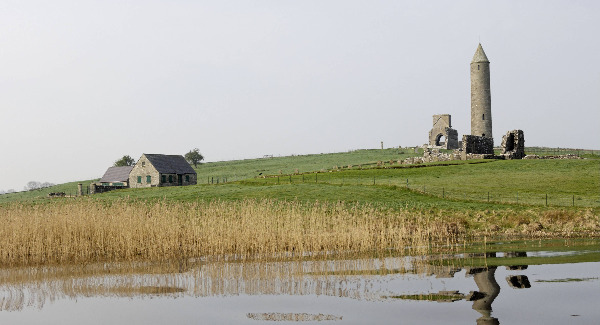
Approaching Devenish in Co Fermanagh through the rolling hills, rather than the rolling waves, the conical tip of a round tower peeps above the green fields. This is a great vantage point from which to inspire the faithful or watch out for the invader. And invaders there were too to this island monastery established by St Molaise in the sixth century.


Islands of Ireland: Tower of strength on Devenish

By Dan MacCarthy

Approaching Devenish in Co Fermanagh through the rolling hills, rather than the rolling waves, the conical tip of a round tower peeps above the green fields. This is a great vantage point from which to inspire the faithful or watch out for the invader. And invaders there were too to this island monastery established by St Molaise in the sixth century.

The Vikings left their calling card when laying waste and plundering the abbey in the years 837 and again in 923.

St Molaise’s house which dates from the 12th century, and named after the founder of the monastery, was used by pilgrims who wished to pray alone especially on the feast of Molaise on September 12. The stonework is perfectly interlocked and geometrically perfect. According to the modern display panel it has “delicate Romanesque interlace and honeysuckle motifs” . The building was later semi- dismantled and the stones carted off to be used as ballast.

In as welcoming a euology as probably can be written Cuimin of Conmor in AD 650 wrote:

“Molaise of the LakeLoved to live in a house of hard stoneStrangers home for the men of ErinWithout refusal, without a sign ofinhospitality”

The island was a centre of learning in common with many other monasteries in Ireland. However, The Annals of the Four Masters records the risk to the community of monks: “A fleet of Foreigners on Lough Erne plundered the islands of the lake and the territories around it to and from and departed the following summer.”

The Devenish Island round tower was built much later around 1157 after the son of a clansman was killed. Again the Annals: “Domnall son of Amhlaoibh O Maoil Ruanaidh king of fir Mhánach was burned by his own kinsmen in the round tower of Daimhinis.”

It is the most distinctive building on the island and at 30m was used for protecting people and treasures such as manuscripts when under attack.

The Devenish round tower has five floors with a bell in the top level instead of a window as in the other floors. The functionality of the bell gives its name to the tower — cloig teach or bell house. Four faces depicted on the upper level are probably the saints Molaise, Patrick, Columkille and Brigid. The graveyard has a unique 15th century high cross with carved heads and winding foliage motifs.

Devenish derives from Daimhinis or Ox island. It lies 3km north of Enniskillen, Co Fermanagh, in Lower Lough Erne. The lower lough is actually more northerly than Upper Lough Erne, so called as it is higher up the river. As if Northern Ireland wasn’t confusing enough to the outsider, part of the Republic of Ireland, the Inishowen Peninsula, is more northerly than the North of Ireland.

The reintroduction of the border just to the south of these lakes is a prospect so ridiculous as to be incomprehensible. It is bad enough dividing people but to divide fields and towns, a stream or a tree, is unimaginable. The River Erne links the two lakes having risen east in Co Cavan, and then flows northwest before disgorging into the Atlantic at Ballyshannon, Co Donegal. The two lakes have over 150 isles and islands but don’t worry, not all will feature here!

A more famous lake island in the region is Lough Derg around 40km northwest of Devenish. It too attracted many pilgrims in its day and still does. Also in Lower Lough Erne is Boa Island, named after the Celtic god Badhbh which features a two-faced stone carving on the island which recalls the two-faced Roman god Janus.

Under the care of the National Trust, there is a feeling about Devenish Island with its manicured lawns and immaculate stonework of being too perfect. No crumbling masonry or creeping ivy.

How to get there

Access to the island is from Enniskillen itself with several ferry companies taking the short trip to the island. A closer point allowing a swift kayak is from Trory pier a few kilometres northeast on the road to Irvinestown. Depart from Round O Jetty at Brook Park, Enniskillen ernetours.com or ladyofthelaketours.com

x

More in this section

Revoiced

Newsletter

Had a busy week? Sign up for some of the best reads from the week gone by. Selected just for you.

Cookie Policy Privacy Policy Brand Safety FAQ Help Contact Us Terms and Conditions

© Examiner Echo Group Limited