Tracing the origins of the turkey
Malene Lauritsen, of Exeter University, has just completed a detailed examination of the bones. According to a report on the Science Daily website, experts think they could be “the remains of the first ever turkey dinner in England”.
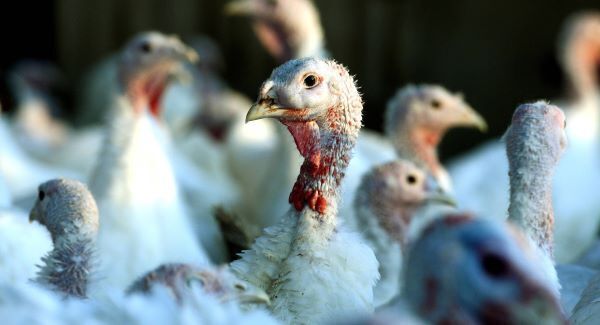
The turkey, a relative of the pheasants grouse and domestic chicken, is not a European species. It’s found east of the Rockies from Mexico to Canada in areas of open woodland with clearings. Writing to his daughter, Benjamin Franklin suggested that the turkey, not the bald eagle, should be America’s national bird.
“The bald eagle is a bird of bad moral character,” he wrote. “He does not get his living honestly.”
Too lazy to catch fish for himself, in Franklin’s opinion, he robs the osprey of its catch. The turkey “is in comparison a much more respectable bird and, withal, a true original native of America”.
It was thought that Europeans, arriving to the New World, misnamed the species because they thought they had reached Asia Minor. However, it’s more likely that the name originated on this side of the Atlantic. ‘Turkey cocks’ were domesticated birds brought to England in ships coming from the eastern Mediterranean; they had called at Spanish ports where they picked up turkeys.
Wild turkeys were hunted almost to the verge of extinction in the early 20th century. They had almost disappeared from Canada by 1940 and survived only in isolated pockets in the US. Hunting was curtailed and the bird reintroduced to its former haunts. Just as magpies began invading European cities 100 years ago, wild turkeys are now doing the same in America. Aggressive ones have become a nuisance in town parks and gardens.
“Turkeys may attack people they view as subordinates,” a Massachusetts Fish & Wildlife Division information leaflet warns and gives instructions on dealing with them.
Attempts to introduce wild turkeys to Europe failed. A population did ‘take’ in southern Austria in 1880. The birds survived for 60 years but were wiped out during the Second World War when supplementary feeding was withdrawn.
This, the largest of the farmyard fowl, was first domesticated by the Mayans in Guatemala over 2,000 years ago. English navigator William Strickland brought six turkeys to Bristol in 1526 and sold them for tuppence each. Although Exeter is 120km from Bristol, it’s just about possible that the two turkey femurs and an ulna, unearthed in Paul St, came from one of Strickland’s birds; they have been dated to the early 16th century.
Back then, roast swan was the dish of choice on festive occasions. Although not as big as a swan, the turkey offered several advantages as a table bird. It could be kept as a farmyard fowl, was easier to pluck and didn’t require a huge oven. The days of labour-intensive ‘swan upping’ were numbered, when adult swans were captured and pinioned from small boats and their cygnets rounded up on the ponds lakes and rivers of England. The temperamental and difficult captives were kept in fattening pits until the fateful day. Eating turkey had become common by the 1570s. James I, who ascended the English throne in 1603, had turkey rather than swan at Christmas, a tradition which has survived to this day.
Domestication was so successful that English emigrants took farm turkeys with them when they sailed to America. Irony of ironies; the American Thanksgiving turkey is of European descent.
- ScienceDaily. December 2017. Are bones discovered under an Exeter street from the first turkey dinner in England?
CONNECT WITH US TODAY



Be the first to know the latest news and updates