Gorse fires wreaking havoc on forgotten plants and animals
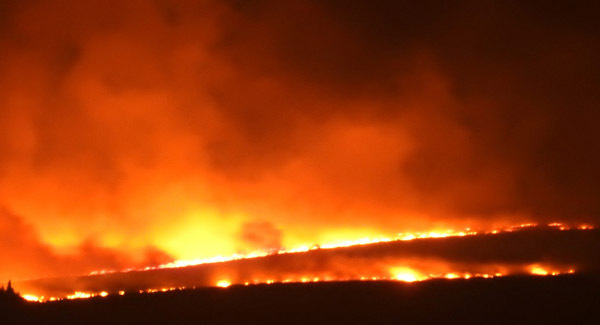
Butterflies and tiny, almost unseen, insects, for instance.
Ecologist Kevin Corcoran says the prostrate sea broom is an extremely rare plant now confined to a handful of locations on the West Cork coast, including the Sheep’s Head area where it shows off its yellow May blossoms. Sadly, he adds, just three plants now survive in this isolated outpost.
The common lizard, Ireland’s only reptile, is also vanishing and is unable to outrun flames which ravage its heathland home. Kevin, of the West Cork Ecology Centre, says that while no human lives have yet been lost in the burning of our fragile uplands, the decimation of nature is still extremely distressing.
“Instead, we should be steadfastly protecting our rich wildlife biodiversity and its uniqueness in Europe, proudly displaying it not just to our own citizens but especially to the increasing number of tourists that are attracted to our island,’’ he says.
As we’ve previously said in this column, we would scarcely have any environment left only for the EU, but EU and national wildlife laws, which ban hillside and heathland fires from March 1 to August 31, are perennially flouted. And those responsible never seem to be caught and prosecuted.
Previous government reports to the European Commission show that priority habitats, including blanket bog and heath, are under pressure from burning. Birdwatch Ireland and other environmental groups have long called for co-ordinated action by government departments to prevent the fires and enforce the law. Heritage Minister Heather Humphreys is coming under renewed pressure to scrap a proposal to extend by a month the burning period, which is described as reckless by Birdwatch Ireland.
However, Colm O’Donnell, of the Irish Natura and Hill Farming Association, which is calling for the extension, claims controlled burning is necessary to maintain the uplands in a state suitable for grazing and cultivation.
Traditionally, he says, hillfarmers burned off the mature vegetation in March when conditions were dry enough to carry out a controlled burn safely without affecting ground-nesting birds. Impacts of out-of-control fires on human health are oft overlooked.
Smoke particles, which can linger in the air for several days, can be breathed into the lungs with adverse effects on those with chest and cardiac conditions, experts warn. High levels of air pollution were recently recorded in Galway, with air particles from fires in the county being 20 times above normal levels.
CONNECT WITH US TODAY



Be the first to know the latest news and updates