Fish go deep on way back
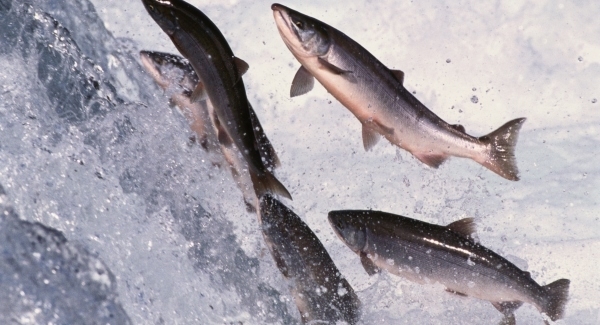
The life story of the salmon from its birth in an upland stream, in Ireland, to its Atlantic voyage of several thousand kilometres continues to fascinate.

Fish go deep on way back

Mystery surrounds this fish, not least how it manages to disappear for up to three years before returning to its river of origin.

However, research is continuing and modern scientific methods may help us to learn more about this true wonder of nature.

Inland Fisheries Ireland is a partner in a new EU-funded project under which young salmon (smolts) are being tagged with transmitters which will provide information about their journey.

Salmon spend the early part of their lives in freshwater rivers before migrating to sea to grow.

Life for them starts as an egg, no bigger than a pea, before they migrate to the Arctic, to the waters around west Greenland or the Faroe Islands.

Feeding continuously at sea, they store up enough energy to make the long and hazardous return journey to their birth stream where they lay their own eggs to ensure a new generation is born. Some make a return journey to sea while others die after spawning.

The latest project, called Smoltrack, enables people to follow the numbers of juvenile salmon making their journey down the River Erriff, Mayo.

The project is running in five other locations in Europe including in the North, England, Spain (two sites), and Denmark and will help determine the survival of young salmon during their migration.

Traps are used to catch the smolts for tagging before releasing them to continue their journey. Daily numbers of smolts counted in each system are uploaded for online viewing.

The Erriff is one of our premier salmon- fishing rivers and its smolt run typically occurs over six weeks in April and May. This year, the run started on April 3 and well over 400 smolts have been counted on the system.

They are tagged with small acoustic transmitters and their migration is followed by listening stations at various locations. This information will help scientists to understand the survival rates of the salmon as they move through the lower parts of rivers, estuaries and coastal areas, in addition to providing data on migration behaviour.

The aim is to provide new information which will inform future salmon management and conservation work.

Due to a large reduction in fishing for wild salmon, virtually all salmon consumed nowadays is the farmed variety. Yet, despite this and other conservation measures around the north Atlantic, scientists tell us wild stocks continue to fall for reasons, including pollution, predation and climate change.

  • www.fisheriesireland.ie/Fisheries-Research/smoltrack-project.html 
x

More in this section

Revoiced

Newsletter

Sign up to the best reads of the week from irishexaminer.com selected just for you.

Cookie Policy Privacy Policy Brand Safety FAQ Help Contact Us Terms and Conditions

© Examiner Echo Group Limited