Vintage view: Travelling antiques fair
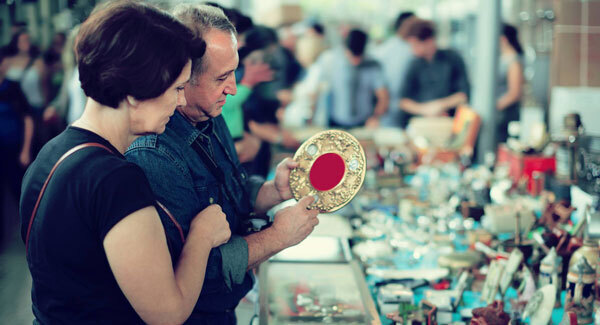
Everyone has one in the family. The one whose first question away from home, whether it be a quick city break in Cork, or the snow swept plains of Reykjavik in January, is: “Are there any markets or antiques fairs here?”
We are well served inIreland these days for good quality fairs, and you can find a list of events neatly organised by country at www.collectireland.com.
The not-to-be-missed are highlighted in Des O’Sullivan’spages here in the Irish Examiner and in www.artandantiquesireland.com.
Some fairs are flashy, up-scale multi-day spectacles, directed not just at the public but back at the trade, with dozens of exhibitors, talks, valuations, and more.
Others are more on the town hall spectrum, ringing the walls of a smaller space for a single day, but treasured for their charm; opportunities for every buyer; scone and tea corners, and community input.
The largest such happening in Europe is the Newark International Antiques & Collectors Fair in the UK, which covers 84 acres and hosts 2,500 sellers (next fair on June 2, www.iacf.co.uk/newark).
So, what’s the draw over an auction or boot sales? Well, first of all, at this time of year, it’s an exciting moment to have 15 to 50 dealers all in one room in a nice warm hotel or rural sports hall.
There’s a fantastic breadth of goods on offer. Don’t be fooled either — exhibitors, whether offering 18th century oak or costume jewellery — have gotten up early, paid a not inconsiderable stand fee and are there to sell.
Despite appearances, these are democratic, friendly occasions. For my €2-€5 entry, bashing through the swing doors, the glamour and cleverly-evoked vintage atmosphere of a good fair is a lip-licking treat.
Don’t be intimidated by the obviously expensive or openly knowledgeable clientelein attendance — the same rules for boot sales and flea markets apply here too, and sellers are not keen to repack their whole kit in the van.
Sellers know the importance of interpersonal play, and most are genuinely enthusiastic to talk about a collecting area, or their experience in finding this or that piece of stock.
I think dealers don’t get the nod they deserve for this generosity of spirit, often gifted to members of the public with clearly no intention of buying.
Some people say that going right instead of left around the room or tent will bring you to the good stuff before the more usual clockwise traffic, but that’s probably getting a bit too uptight. Dive in, wander, enjoy.
It’s time to hone in on what you want or justify a spontaneous find, and get negotiation rolling. Just as in auction viewing or buying privately, we are well armed today with the powers of an internet enabled mobile phone and the now widely-promoted free wifi when out on the prowl.
Take a turn around the room, ask questions, handle the thing if possible, and if there’s an item you like but no nothing about, fire up the iPhone or whatever device you have on hand.
Keep in mind, that guide prices for top London salesrooms and dreamers’ figures on eBay do not reflect what something will actually achieve in Tallow on a Sunday afternoon.
The seller is looking for meat on the bone, and if something has hung around cluttering up their stock for months (in some cases years), they may want shot of it.
Just get your arms around what you should be looking for in terms of identifying the thing, its condition and rarity and then start the conversation.
The price an experienced negotiator will achieve and the price a newbie collector can expect are sometimes poles apart — so you have some responsibility here.
aggling is expected. The time of day can also influence prices (though don’t be late if you want to see everything on offer). Before the doors even opened, some pieces will have been bought-in by one dealer from another and may be put away or back out on the table at a slightly juicier price.
It’s rare to be told what the asking price is and bursting with enthusiasm can be a weakness — we all know that — but playing Judith Miller doesn’t help either.
Don’t be rude (the know-it-all cheapskate/open aggressive declarations of ‘being ripped off’/ ‘I have a much nicer one at home’/ ‘I hate those rubbishy old things’, etc), are not good.
Children pawing through delicate goods and springing around upholstered furniture like rhesus monkeys — again, rude. Go back to the boot sales where they can run free.
These antique and vintage finds were not picked up on palettes at an antique wholesale warehouse, and the accounting can be complex. The figure the dealer must achieve to make a profit or breakeven or even pay for the diesel home is unknown.
Your job is to politely depress the asking price to as close to that baseline pain number as possible, making a deal acceptable to you both on that day, at that time with that individual.
“What’s your best price?” is a nice opener and rings with some past experience.
Pause, examine the thing and venture “can you do any better?”
I have used the “I only have €25 with me/ I’m working to a budget today” with a pathetic head shake and crushed look back to the piece. Was it the begging that worked? I’ll never know, but it didn’t cost me anything.
The walk-away rarely succeeds as pride is at stake— but part with a smile, and try checking back an hour later.
CONNECT WITH US TODAY



Be the first to know the latest news and updates