Gardens in Lismore Castle to last many lifetimes
If we’re lucky enough as gardeners, then any garden we create will be tended after our departure — whether that’s to a new home or our final exit when we shuffle off the mortal coil.
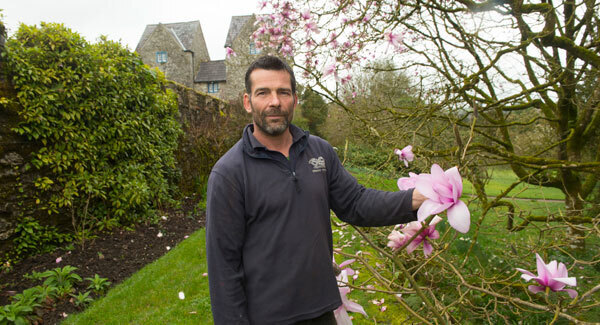
I found myself recently enjoying a tour of the beautiful gardens in Lismore Castle with Darren Topps. Darren is the head gardener there and is full of enthusiasm, knowledge and vision but is also very aware of the need to be sensitive.
Sensitive to the existing gardens and also to the team at Lismore.
You see Darren has only been in situ for less than four years, having travelled from The Eden Project in Cornwall and he is working with a dedicated and passionate group of gardeners, many of whom have been there since childhood.
Matthew Tull grew up in the gardens at Lismore, his father before him was the head gardener and Matthew grew several of the plants that you will see when you visit, from seed as a young boy.
He knows every blade of grass and every twist and turn in the place. A garden like Lismore can do that to you. It can become part of you, so you are scarcely able to imagine life without it.

Whilst there has been a castle in Lismore since 1185, the gardens were developed by the sixth Duke of Devonshire or the Batchelor Duke as he was known.
He developed a close relationship with Joseph Paxton who was developing the gardens at Chatsworth in the UK (the Devonshire seat and home to one of the world’s finest private art collections), and with his help, he also further developed the gardens at Lismore.
Vast peat beds were created in the Lower Garden with ericaceous soil brought from the Knockmealdown mountains.
In these bands of peat, which run the breadth of the garden, were planted collections of Rhododendrons, Camellias and Magnolias which can be admired in their awe-inspiring glory now, nearly two hundred years later.
This was the height of the fashion for plant collections and collectors and many specimens would have been gifted to the Duke, (who also quite possibly funded some of the plant hunting expeditions).
The finest specimens of Magnolia campbellii that you are likely to see anywhere are here, and seeing them in full bloom, should be on the top five things to do for any self-respecting garden visitor to, or on, these islands.
It’s not just the sheer scale of them, it’s the simply spectacular amount of blooms, the size of the blooms and the scent.

Standing near this array of trees, one is quite simply enveloped by their magic, the flouncy pink flowers and the perfume, which you don’t quite appreciate with younger specimens. It’s their maturity which gives them this majesty.
Further on then, you have the loderi Rhododendrons from Leonardslee, my favourite of all the Rhodos for their luxuriant blooms and again, scent, such an important and often overlooked feature in any garden.
It gets into that most delicate of our senses and truly makes you become part of the garden. Without it, the garden is just aesthetics.
Further down in the Lower Garden you will experience the Yew Avenue, a truly enchanting walkway dating back maybe five or six hundred years.
It was here, when the castle was owned by Walter Raleigh that Edmund Spenser is said to have penned his most famous work, The Faerie Queen and wandering through the arched Taxus, you can imagine that time — for it really has a magical aura.
Wonderful as all this is, it’s all history, important and relevant history but still of the past and in the same way that you would like the new homeowner to maintain and improve what you created, it is now time for Darren Topps and his team under the patronage of the current owners, Lord and Lady Burlington, to come to the fore and put their 21st century stamp on the place.
After walking the upper and lower gardens and hearing of Darren’s plans and upcoming projects for the next year and for the year’s ahead, I was already feeling tired for him, conscious of the level of work in front of him.
And slightly envious too perhaps, for this is a place that any gardener would want to work with, but it was only when we got back to the courtyard that Darren told me that this was the main project for this autumn.
I nearly did a double take, what about all the things that we had just looked at, the redesigning of the paths, building of walls, realigning levels and extending of beds, were they not ‘major’ enough projects?

The courtyard is to be dug out and redone. Now, in truth there is little to admire from a gardener’s point of view in this space and I could already feel myself brimming over, such is the level of potential here with the four walls creating a little micro-climate all of its own.
Darren’s brief is to create a romantic, verdant, relaxed space that looks like it has been there for a hundred years or more, so that when you come up the walkway from the lower garden the courtyard opens up in front of you like a living work of art.
I shudder to think what lies ahead for Darren as he starts to excavate this area.
Pipes, services and different levels that we we would all have to deal with in our own homes will be here — but remember — this has been a castle since the 12th century and before that, St Carthage had set up a seat of monastic learning on the site in the year 636AD.
I have no idea what lies underground or what Darren will create here — he was short on info, happy to let me know that there is a drawing — and not in a rush to tell me much more.
However, looking at the way in which the team in Lismore care for the place and how much their ‘new’ head gardener already cares and feels for the place, I am confident that their next developments will be something special and will further enhance this rather beautiful old place.