New house? Time to go contemporary
“Back in my day, we didn’t have flying houses, but we were happy. They were simpler times!” These may yet be the immortal words of the Generation Y’ers to their grandchildren. Who knows?
As an architect who works primarily on domestic and residential projects, it’s easy to notice emerging trends among the latest generation of young homebuilders and the contrast with that of their parents’ generation. While not as dramatic as flying houses, there are trends that are slowly changing how we live.
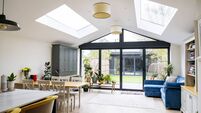
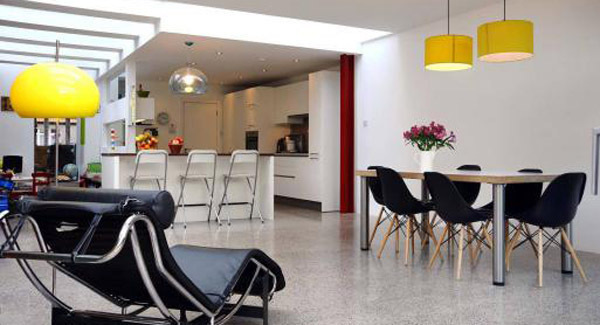
Sacrificing the “good room” for a “great room,” is one clear example. Contemporary, open-plan design now tops the ‘want-list’ for the vast majority of young Irish couples building or redesigning their homes.
Open-plan design wasn’t always so popular in this country, however, and there are a number of obvious reasons for this. Firstly, our innate fear of being cold. Before this age of highly-insulated houses, the bigger the room, the harder it was to heat, which meant, a large open-plan living space would have been a “right bloody headache.”
Secondly, for anyone who grew up in a modest sized three- or four-bed semi-d, having a large open-plan living area would’ve likely meant sacrificing the separate sitting room or the “good room” as it was known.
Back then, such an action would have been punishable by death, or at least tarnished your reputation among the neighbours who would’ve been forced to witness the horrifying scenes of unwashed dishes in the kitchen sink when invited in for tea.
Younger homeowners of today, however, seem more than happy to sacrifice a separate sitting room for a larger, open-plan living space, especially where space or budget constraints mean having both isn’t an option.
Open-plan living is not a luxury reserved for those with larger abodes. In fact, small/medium sized homes generally benefit most from these spaces.
It is, of course, one of the key advantages of open-plan design, that it makes small houses feel larger. When we remodelled our own house, we sacrificed the separate sitting room and created a large open-plan space to the rear, which spans the full width of the house.
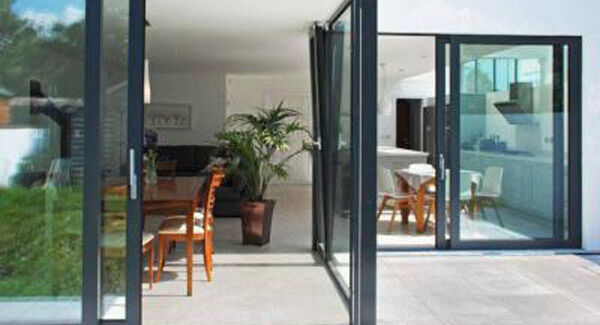
A number of the neighbours who visited the house, after the work was done, asked us what size extension we had a put on. We hadn’t extended at all. Their own house was the exact same footprint, but ours was open-plan.
Open-plan living is also a reflection of this always-on, “fingers-in-pies”, multi-tasking generation.
You come home, stick the dinner in the oven, sit down to watch 10 mins of Netflix, go to the table and jump on your laptop to send a few emails, before going back to the oven to check on your spiced beef (it is Cork after all; some things will never change) and then wolfing it down in four minutes while Skyping your mate in Toronto.
Daily chores/tasks, which may have been separate and distinct once-upon-a-time, are now so intertwined and concurrent that they no longer fall within the parameters of separate kitchen, dining, and sitting rooms.
If a traditional dining-room was an employee it would’ve been fired a long time ago: “You mean to tell me you perform one function, work less than 30 minutes a day and you have your own office?”
Feng shui? “But, Dave, isn’t that just a load of nonsense?” Yes. Yes it is... for the most part. If you own a Feng Shui crystal, and it’s not being used as a doorstop or a paper weight, it’s safe to say it’s doing absolutely nothing.
Stop buying expensive rocks! Or, if you wish to continue in this practice, please drop me a line, I’m digging up the back garden and I’d be happy to do you a good deal on the contents.
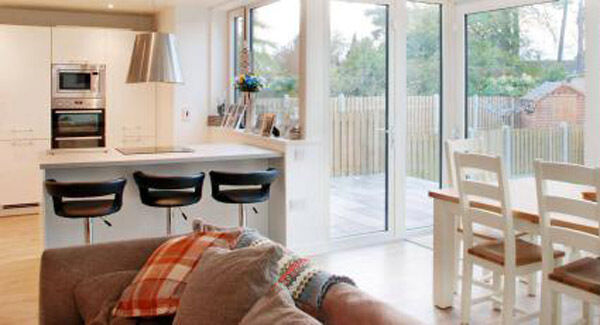
Having said all that, however, there are certain principles of Feng Shui that actually warrant consideration when it comes to house design. For example, the orientation of your living space, the positioning of your windows, the amount and quality of light and ventilation in your house, as well as the location and layout of the primary rooms within your house are all tenets of Feng Shui.
There have been many studies from behavioural scientists in recent years offering empirical evidence that the design of the places we inhabit affects our thoughts, moods, and behaviours.
Whether you call this Feng Shui, or something that leaves you less exposed to a mocking from friends and family, doesn’t really matter: even mindful Generation Yers are unlikely to utter the words, unless on a yoga retreat.
However, they do seem to give it significantly more consideration than their predecessors when designing or re- designing their home, and for good reason. It may be the difference between a happy home life and your other-half hurling the toaster at you from the opposite side of your poorly designed kitchen.
If only you had an expensive rock to throw back.
Generation flat-pack? If you know a house-owner in their 20s or 30s who can’t tell you what the Swedish meatballs in Ikea taste like, more than likely it’s because they’re vegetarian. No new house is complete without a weekend trip to Ikea.
You’ve just bought or built your first house, your funds are running uncomfortably low and you want cheap furniture that looks like designer furniture. The quality is reasonable, it looks good and it costs less than the price of the fuel to get you there. Perfect.
Gone are the days when you bought furniture that would not only last your lifetime, but that you could pass on to your kids. Let’s be honest: That €6 ‘Lack’ coffee table probably won’t end up being a family heirloom. If you were a fly-on-the-wall in Ikea, I’d imagine you’d hear a lot of conversations that sound like this:
Partner 1: “What do you think of this chest of drawers?”
Partner 2: “Eh, I dunno. It’s grand, I suppose.”
Partner 1: “It’s only €25.”
Partner 2: “Feck it, will we get two so? If we don’t like them we can just throw them out.”
Not even a house is necessarily “permanent” anymore. I can’t imagine that 30 years ago, the words “first-house” were spoken by too many people, but then again, 30 years ago, “building” your own furniture required more than a screw-driver and 20 minutes of your time.
Smart homes? “Did you leave the immersion on?” This question, that has been a staple of Irish society for so long, but will soon be a thing of the past, thanks to smart homes. It may still be several years before fully smart homes are ubiquitous, but this current generation of new house owners have already got the ball rolling.
Smart thermostats, such as Nest, Hive, and Heat Genius are being installed in ever-increasing numbers by new homeowners. These thermostats can be set-up to know when you’ve left the house in the morning, so they turn off the heating. They know when you’re coming home, so they turn it on.
Smart appliances have been slower to take off than smart heating, but will undoubtedly become must-haves for young homeowners in the next few years. Already, there are smart washing machines and dishwashers that you can control remotely. There are smart fridges with internal cameras linked to your phone so that you can see the contents of your fridge when you’re passing the shop, and buy milk if you’re running low.
It can also let you know when certain foods are likely to be gone off, or suggest recipes based on the contents of your fridge. There are smart coffee machines that link up to your smart watch and know when you’re tired by monitoring your heart rate which prompts it to ask “Would you like a coffee?”
I can hear the cries of “ridiculous”: you might have a point, but in the last six months I’ve seen two grown men playing Pokémon-Go while lifting weights in the gym, a lady in her 80s snapchatting while on the train to Dublin, and I caught a glimpse of myself watching a TV show that shows people watching TV shows, so I don’t know what’s normal anymore.
What remains to be seen is how all this smart technology will affect the architecture of homes, but I can fully imagine that before this newest generation of homeowners are 80 year-olds snapchatting on the train, we will have houses where all the internal walls are movable and automated so you can remodel you home in a matter of minutes with just a few clicks on your phone, and many of us will own houses that will rotate and morph so that whatever room you’re in will always be facing the sun… Failing that, we’ll at least know when it’s time to buy milk

CONNECT WITH US TODAY



Be the first to know the latest news and updates